
Deadly Helicopter Crash in Rio Kills 4, Mayor Demands Action
Four people died Saturday when a tourist helicopter crashed into Tijuca National Park near Vista Chinesa in Rio de Janeiro. The victims included a Colombian grandmother, aunt and cousin in the city for a girl's 15th birthday. Mayor Eduardo Cavaliere demanded tougher oversight of helicopter tourism, as investigators opened a probe into Rio's second deadly helicopter disaster in under two months.
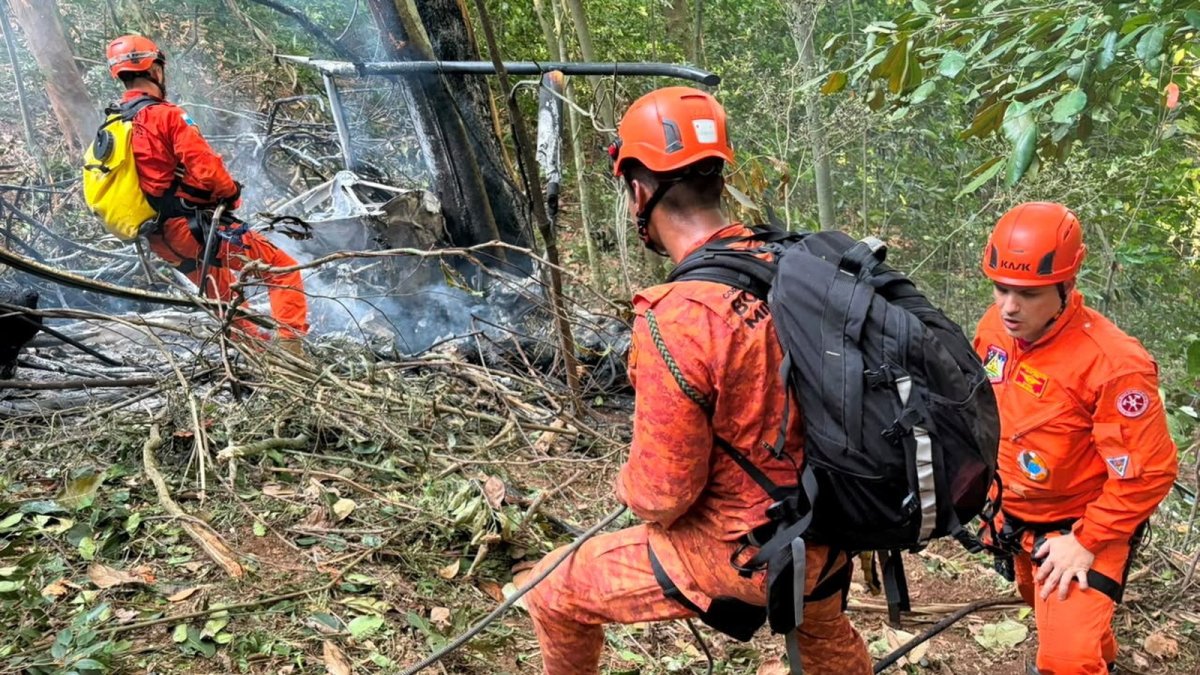
RIO DE JANEIRO — Four people are dead after a tourist helicopter crashed Saturday into the forested slopes of Tijuca National Park near Vista Chinesa, turning a family celebration into unthinkable loss. The victims include a Colombian grandmother, aunt and cousin who were in Rio for a 15th birthday. Firefighters are still recovering remains from a hillside so steep that access is measured in hours, not minutes.
Deadly Helicopter Crash in Rio Kills 4, Mayor Demands Action
Rio de Janeiro, Brazil — The crash was reported Saturday afternoon in one of Rio's most iconic green spaces, a dense Atlantic rainforest preserve that wraps around the city's mountain ridges. The aircraft came down near the Chinese-pagoda-inspired lookout known as Vista Chinesa, made famous in the 2011 animated film "Rio."
The Crash
The helicopter went down in Tijuca National Park, a mountainside forest with very dense vegetation, near Vista Chinesa. Firefighters confirmed the pilot and three women "burned to death" and released images showing the smoking remains of the aircraft on a steep, hard-to-reach hillside. The park is one of the largest urban forests in the world, and this section of it is notoriously difficult to navigate.
The crash took place Saturday, August 8, 2026. Authorities did not immediately release the pilot's name or the origin of the flight. CENIPA, Brazil's aeronautical accident investigation body, was expected to lead the probe, with ANAC, the civil aviation regulator, supporting. The dense forest and mountainous terrain make evidence collection difficult. Investigators will likely focus on weather, mechanical failure and pilot decision-making.
The Victims: A Family Trip Cut Short
Colombian Consul General Diana Paez told AFP that the three women were part of a family group that traveled to Rio to celebrate a girl's 15th birthday — a quinceañera. The birthday girl's grandmother, aunt and cousin were killed. They had boarded a first helicopter flight because the aircraft could only fit three passengers; the girl was supposed to take a second flight later with her father and his partner.
Paez said the consulate helped Brazilian authorities identify the victims — a difficult task because of the condition of the bodies. She expressed condolences on behalf of Colombia and asked for privacy for the family. The tragedy has become an international story, partly because it happened in Brazil and partly because it destroyed a family that had come to South America's most famous city for a milestone moment.
Rescue and Recovery
Rescue teams faced a nightmare operation. The crash site sits deep inside Tijuca National Park, a sprawling urban forest of steep ridges, thick canopy and narrow trails. Firefighters released images showing the wreckage smoldering on a hillside, the fuselage charred and broken. There were no survivors. First responders had to cut through vegetation and secure the slope before they could reach the burned aircraft.
Officials did not say how long the recovery operation would take, but the terrain made it clear: this would not be quick. The remote location also complicated the identification process. Brazilian authorities worked with Colombian diplomats to confirm who was on board. For now, the priority is bringing the victims down and giving their families closure. It is a task no family should ever have to wait for.
Mayor Demands Action
Rio Mayor Eduardo Cavaliere did not wait for the investigation to call for change. He asked ANAC to "take immediate action to intensify oversight and ensure safety in helicopter flights that are circulating with increasing frequency in our city." He suggested suspending flights "for a week or two" while new safety measures are implemented. It was a direct challenge to an industry that has grown quickly.
On X, Cavaliere wrote: "My solidarity to the families of the victims of the helicopter accident that happened today near Vista Chinesa within the Tijuca National Park." His message was blunt: the city's growing helicopter culture needs a hard look. The mayor said he was in contact with ANAC and made clear he wants answers before more tourists take to the skies.
A City Still Reeling From June's Collision
The two tragedies differ in setting and dynamics, but both underscore how crowded Rio's airspace has become. On June 14, 2026, two helicopters collided midair over Recreio dos Bandeirantes in western Rio, killing six people — including American singer Oliver Tree and Argentine YouTuber Gaspar Prim — in an incident above a populated residential zone that raised immediate questions about separation standards and pilot visibility. August's loss occurred inside Tijuca National Park near Vista Chinesa, where dense forest and rugged slopes complicate navigation, emergency landings, and rescue operations. Together, they suggest not random misfortune but systemic stress on an airspace system that combines sightseeing corridors, private helicopters, and air taxi services. For safety experts, such a pattern points toward a need for real-time traffic coordination, stricter route design, and closer monitoring of tourist flights.
The June crash may have prompted collective mourning, yet there was no visible overhaul of Rio's airspace management before another fatal accident. Now two disasters in under two months have put pressure on authorities to treat the problem as an emergency. Aviation specialists typically look first at airspace coordination: how helicopters are separated, how busy helipads interact with approach paths, and whether sightseeing rules include minimum altitudes, weather limits, and pilot rest requirements. They also examine helipad density across the city and the balance between commercial aviation and recreational or tourist activity. Without such data, any response risks being symbolic rather than systemic.
Rio's Helicopter Tourism Boom
Rio's geography is a pilot's dream and a regulator's puzzle. Dense landmarks line a narrow strip between forested mountains and the sea, allowing helicopter tours to pack iconic sights—Christ the Redeemer, Sugarloaf, the lagoon, and Tijuca's green slopes—into a single short ride. Operators have responded with helipads scattered through affluent neighborhoods and a network of informal flight corridors that often pass over national parkland. That geography maximizes scenic appeal but compresses routes into crowded airspace. Sightseeing flights share the skies with news, police, corporate, and private helicopters, and each circuit over the Tijuca massif adds complexity to local air traffic.
The industry thrives because short rotation times mean more flights per day, and tourists willingly pay for a spectacular aerial view that avoids Rio's traffic-clogged roads. For hotels and travel agencies, helicopter packages are high-margin add-ons with strong social-media appeal. This economic incentive has fueled rapid growth. Public scrutiny, however, has lagged behind: helipads are physically remote to most residents, accident data is slow to circulate, and the benefits of aerial tourism are concentrated among operators and outfitters rather than the broader population. As a result, years of expansion have occurred without a comprehensive public debate about noise, emissions, risk, and the cumulative burden on Rio's airspace.
Safety Questions Loom
ANAC, Brazil's civil aviation regulator, is responsible for certifying aircraft, licensing pilots, overseeing maintenance programs, and defining operational rules for commercial flights. Its mandate also extends to airspace-related decisions, in coordination with air traffic control authorities. But oversight on paper does not guarantee effective oversight in practice, especially when sightseeing operations blur the line between scheduled charter and on-demand tourism. After two fatal accidents in two months, inspectors will likely review whether operators truly comply with maintenance intervals, whether pilot duty limits are respected, and whether safety management systems are functioning. The public will be watching to see if ANAC's response is driven by data or by public pressure.
Low-altitude sightseeing flights over Rio introduce particular risks. Mountain terrain can generate shifting winds and sudden cloud, increasing pilot workload during scenic commentary and navigation. A mechanical failure near Vista Chinesa leaves few safe places to land, because the national park is dense, steep, and remote from emergency services. A thorough investigation would therefore combine flight recorders, radar tracks, and maintenance logs, while also reconstructing the weather conditions at the moment of the crash. Investigators would compare the accident profile with other helicopter incidents in similar terrain and evaluate whether the flight corridor itself should be restructured. The central question is whether this was isolated bad luck or a warning about a flawed oversight regime.
The Bottom Line
The joy of a fifteenth birthday celebration is now overshadowed by funeral arrangements. The grandmother, aunt, and cousin had traveled to Rio to honor a girl's quinceañera, a milestone in Latin American family life that symbolizes the transition from childhood to young womanhood. Instead of memories and photographs, the family is left with grief, and Colombian relatives must navigate bureaucratic and emotional distances to repatriate the bodies. The tragedy is not just a Brazilian aviation story; it is an international human story, and the Colombian family's loss will be felt across borders. It also reminds us that every helicopter accident statistic hides a specific chain of plans, hopes, and ordinary people.
Rio's mayor asking ANAC to intensify oversight and suggesting a one-to-two-week suspension of tourist flights is a significant step. It signals that tourism activity can be temporarily halted when public safety is in question. Other tourist-heavy cities around the world face the same tension: helicopter tours are marketed as premium experiences, but the regulatory infrastructure may not keep pace with rising demand. From metropolitan sightseers in New York to mountain flights in alpine regions, a common question is emerging—does rapid aviation tourism growth outpace the safety rules designed to govern it? Brazil's public response, shaped by two disasters in under two months, could become an example of how to reconcile economic interests with the obligation to protect lives.
By Jessica Ali, Staff Writer
This article was produced with AI-assisted research and editorial support. Sources: AFP, Al Jazeera, Reuters, Inquirer.net.
What's Your Reaction?
 Like
0
Like
0
 Dislike
0
Dislike
0
 Love
0
Love
0
 Funny
0
Funny
0
 Wow
0
Wow
0
 Sad
0
Sad
0
 Angry
0
Angry
0

Editor-in-Chief at Global1.News. Atlanta-based journalist who cuts through the BS and tells it like it is. Lead anchor, host, and the voice you hear when the spin stops and the truth starts.













Comments (0)