
Swift Is Still Falling, a Day After the Space Force's Reentry Call
NASA's Neil Gehrels Swift Observatory is still in orbit a day after the U.S. Space Force predicted it would re-enter, ending a 22-year mission that logged more than 2,000 gamma-ray bursts. A commercial rescue failed in August, and NASA says it is still working out what fills the gap in rapid cosmic alerts.
The telescope is still up there, folks, a day after the U.S. Space Force said it would come down. NASA's Neil Gehrels Swift Observatory was predicted to re-enter on or around Friday, October 30, 2026, and as of Saturday's reporting it is still in orbit and still being tracked. No agency has announced a reentry.
Swift Is Still Falling, a Day After the Space Force's Reentry Call
Cape Canaveral, Florida — The aging NASA telescope is barely clinging to space after a failed rescue effort left it tottering lower and lower, and the question now is not whether it comes down but when, and what fills the hole it leaves.
Still Up There, a Day After the Call
Here is where things stand, and I want to be precise because this is exactly the kind of story where precision gets lost. The U.S. Space Force predicted Swift would come crashing down on or around Friday, October 30, 2026. That was the estimate. Saturday's reporting still describes the spacecraft in orbit, still being tracked, with no confirmation that a reentry has occurred. NASA's own end-of-mission announcement said the observatory is expected to re-enter the atmosphere in the next few weeks. Those two timelines do not agree, and I am not going to pretend they do. One is a Space Force prediction tied to a specific date; the other is a NASA expectation stated in weeks. Both are attributed, both are on the record, and neither has been confirmed by an actual reentry. The Space Force is tracking the telescope's dwindling path. Until an agency says otherwise, Swift is up there.
A One-Minute Reflex That Changed Astrophysics
To understand why anyone cares about a falling telescope, you have to understand what it was built to do. Swift was designed as a satellite dedicated to studying gamma-ray bursts, outbursts that came and went so quickly that no one could target them with large telescopes to learn more. The mission's principal investigator at NASA's Goddard Space Flight Center, S. Bradley Cenko, explained the problem plainly: Swift needed to detect and locate gamma-ray bursts, communicate their position to other observatories, and then swing its telescopes around to image the burst locations before their afterglows faded out. "This typically took Swift about a minute to do," Cenko said. That is the whole mission in one sentence. A minute. A swivel. A name that told you exactly what it did. And that reflex, repeated thousands of times, is why the observatory mattered far beyond its original design life.
What Survives the Fire
Most of the telescope is expected to burn up in the atmosphere. That is the ordinary outcome for hardware in low Earth orbit, and it is the outcome NASA plans for. But not all of it. According to NASA's Brad Cenko, the mission's chief scientist and its principal investigator at Goddard, a handful of pieces made of denser-than-lead tungsten and some mirror parts could survive reentry. Any surviving wreckage will most likely plunge into the ocean. But swaths of Africa, Australia, India, Southeast Asia, and Central and South America are within the reentry zone. A NASA spokesperson, Alise Fisher, told Space.com that NASA expects most of the Swift spacecraft to burn up, "but some components are expected to survive reentry. The risk of harm coming to anyone on Earth is unlikely." Darren McKnight, senior technical fellow at LeoLabs, told Space.com the observatory's "dry mass and instruments are such that it will likely disintegrate sufficiently upon reentry to not pose a ground casualty hazard." He added one caveat worth keeping: "However, it has both an X-ray telescope and optical telescope, so the internal workings of those devices might survive."
The Rescue That Stopped Seven Miles Short
NASA did not simply watch Swift sink. Intense solar activity over the past few years dragged it down faster than usual, and the agency hired Katalyst Space a year ago to mount a rush rescue. The company had around one year to design, build, test, and launch a satellite that would meet, grab, and lift Swift. The LINK spacecraft took off from Kwajalein Atoll in the Republic of the Marshall Islands in July aboard a Northrop Grumman Pegasus XL rocket. Then it ran into trouble. LINK developed issues with its ability to control its orientation, and NASA and Katalyst announced August 19 that LINK would not proceed with capturing and boosting Swift. The AP reports the three-armed robot got no closer than 7 to 9 miles (12 to 15 kilometers) to the telescope before it plunged back to Earth in September. NASA's own account says only that LINK would not proceed with capture and boost and instead attempted rendezvous and proximity operations. Those accounts do not match in detail, and I am giving you both.
Why It Fell
This is not a malfunction. All satellites in low Earth orbit experience atmospheric drag, and recent solar activity increased that effect on Swift, which began to sink rapidly. The sequence matters. The team switched off the Ultraviolet/Optical and X-ray telescopes in February to help minimize drag and extend the satellite's time in orbit to support the boost effort. Use of the third instrument, the Burst Alert Telescope, was halted in April to reduce power consumption so Swift's solar panels could be positioned to further reduce drag. After the boost mission ended without an attempt, the team turned two instruments back on August 26 and Swift restarted science observations, which the team had paused to minimize drag. The return to observations increased drag on the spacecraft, and Swift again began to sink rapidly. On October 20, Swift reached 171 miles (275 kilometers). There it could no longer compensate for the increased drag and entered safe mode. The operations team at Penn State in University Park then sent a command that effectively ended Swift operations to prepare it for re-entry.
Two Decades in Numbers
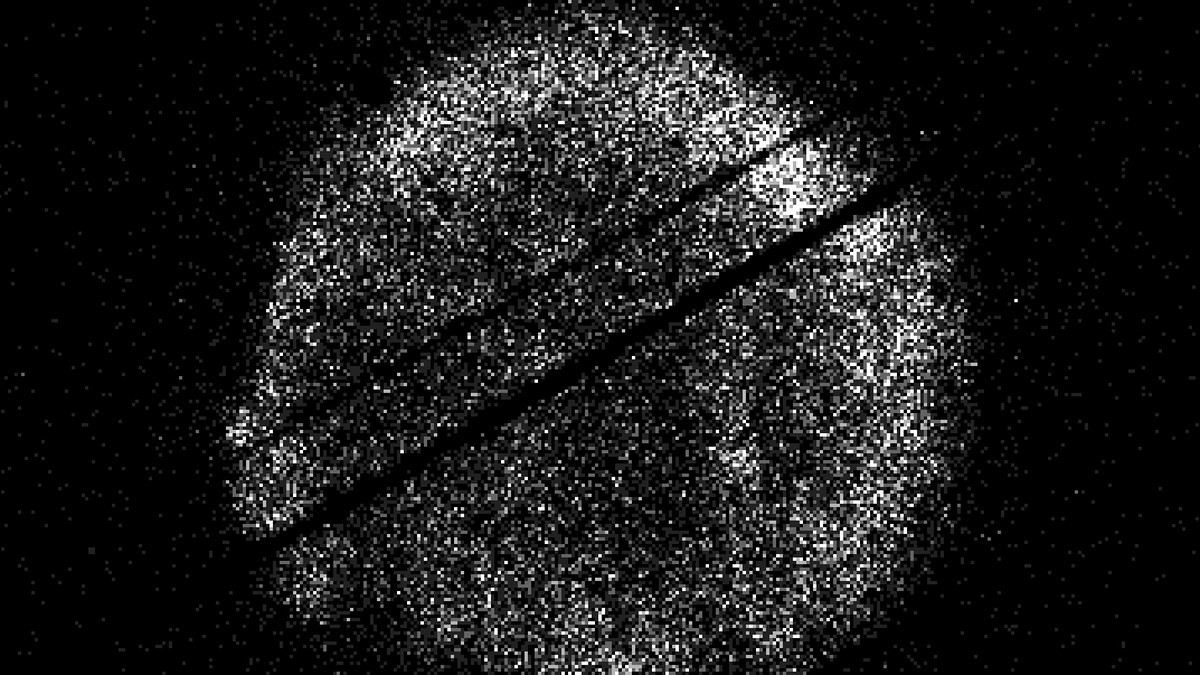
Swift blasted off on November 20, 2004, to search for some of the biggest explosions in the universe, gamma-ray bursts and supernovas, and it went to work the following month. It was designed for a two-year primary mission. It was productive for more than 10 times as long, according to Shawn Domagal-Goldman, director of the Astrophysics Division at NASA Headquarters in Washington. In its storied career, Swift observed more than 2,000 gamma-ray bursts, the most powerful explosions in the cosmos. It studied more than 1,400 supernova explosions, witnessed stars shredded by black holes, monitored active galaxies, conducted an all-sky X-ray survey, studied asteroids and comets, and more. Swift data has contributed to about 7,000 published scientific papers. Its archive holds nearly 22 years of brightness measurements of all kinds of cosmic outbursts, multiwavelength spectra, and more than 1.5 million images from its Ultraviolet/Optical Telescope. The full dataset spans approximately 12 terabytes, the storage equivalent of about 600 high-definition movies. In 2018, NASA renamed the mission to honor Neil Gehrels following his death.
The Night It Caught a Three-Hundredths-of-a-Second Burst
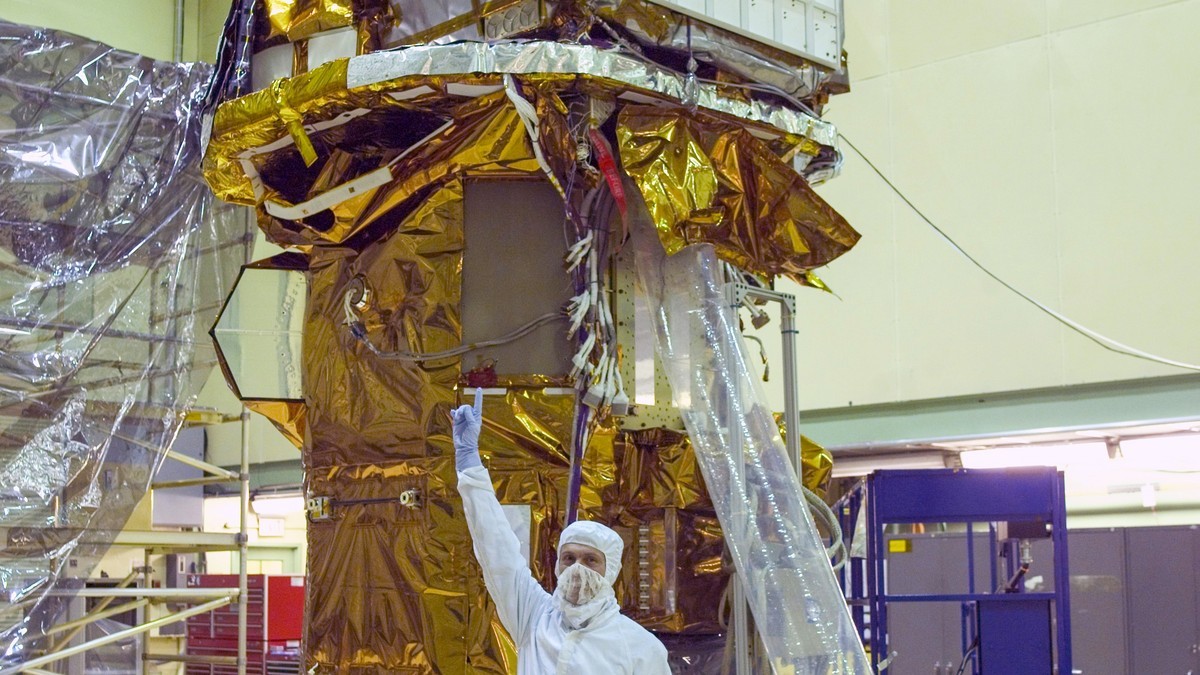
One milestone deserves its own section, because it is the cleanest example of what that one-minute reflex bought astronomy. In May 2005, Swift achieved a first with GRB 050509B, a burst that lasted just 0.03 seconds. Swift turned to the burst fast enough to detect 11 X-ray photons, making this the first short burst with a detected afterglow. Those observations validated long-standing theoretical models, showing that short gamma-ray bursts likely come from mergers of two neutron stars, objects with the mass of the Sun that have been crushed to the size of a city. Think about the timing required. A burst that lasts three hundredths of a second, and a spacecraft that has to be pointed at it before the afterglow fades. That is the mission's superpower in a single event, and it is why the observatory's name was not marketing. It was a job description.
October 20: The Last Observation
Swift conducted its final observation on October 20. That is the date to hold onto, because it is the last clean line between a working observatory and a falling object. What ended the mission was not a failure and not an accident. It was drag, arriving on schedule, at an altitude where the spacecraft could no longer hold itself steady enough to do the job it was built for. NASA's announcement was blunt about the mechanism, and the sequence inside it is worth reading slowly: the spacecraft reached that point, could no longer compensate, and dropped into safe mode. Then the operations team at Penn State in University Park sent a command that effectively ended Swift operations, a deliberate shutdown rather than a collapse. John Nousek, the mission's operations director and a professor of astronomy and astrophysics at Penn State, had been expecting the moment for two decades. "We've known this day would come since before Swift was launched," he said. "At least in low-Earth orbit, what goes up must come down. And that end is catastrophic."
The Gap Nobody Has Filled Yet
Here is the part that should worry you more than the falling hardware. NASA considered Swift a first responder for the Hubble and Webb space telescopes and others that would follow its alerts and provide deeper investigations. Scientists are still figuring out how to fill the gap. Domagal-Goldman said NASA is exploring its ability to use and augment the agency's fleet of existing space telescopes, from fast-to-orbit commercial capabilities to efficient, innovative new missions. He also said Swift leaves an extraordinary archive of multiwavelength observations that will fuel new discoveries for decades more. But an archive is not a reflex. A dataset cannot swing around in a minute and tell the rest of the world where to look. Nousek's hope, as he put it in an email, is that "the lessons learned by the successes of Swift can be applied to new generations of space missions to accelerate our discoveries about the universe." That is a hope, folks, not a replacement.
What Happens Next
So what do you actually watch for? One thing: an official announcement. Until NASA or the U.S. Space Force says the telescope is down, the honest position is that it is still up there and still being tracked. Treat any screenshot, any viral clip, any claim that wreckage has been found in a field or that a country has been hit as unconfirmed, because nothing in the public record supports it. When that announcement comes, it will most likely describe pieces of tungsten and mirror assemblies falling into ocean, with the small chance that they do not. That is what the physics says. What I will not do is dress up a prediction as a confirmation. Folks, this telescope spent twenty-two years telling the rest of astronomy where to look. The least we can do is get its last chapter right.
By Jessica Ali, Staff Writer
This article was produced with AI-assisted research and editorial support. Sources: Associated Press, NASA Science (Goddard Space Flight Center), Space.com and Britannica. Photographs: NASA. Cover: Global 1 News editorial image.
What's Your Reaction?
 Like
0
 Dislike
0
 Love
0
 Funny
0
 Wow
0
 Sad
0
 Angry
0

Editor-in-Chief at Global1.News. Atlanta-based journalist who cuts through the BS and tells it like it is. Lead anchor, host, and the voice you hear when the spin stops and the truth starts.















Comments (0)