
Tape is so not dead that Fujifilm will increase production capacity 5x
Fujifilm’s decision to crank up LTO tape production five‑fold is a loud signal that the old‑school backup market isn’t dead yet. The move comes on the heels of a shaky 2025 where LTO shipments actually fell, but the company is betting that the AI‑driven data explosion will turn the tide.
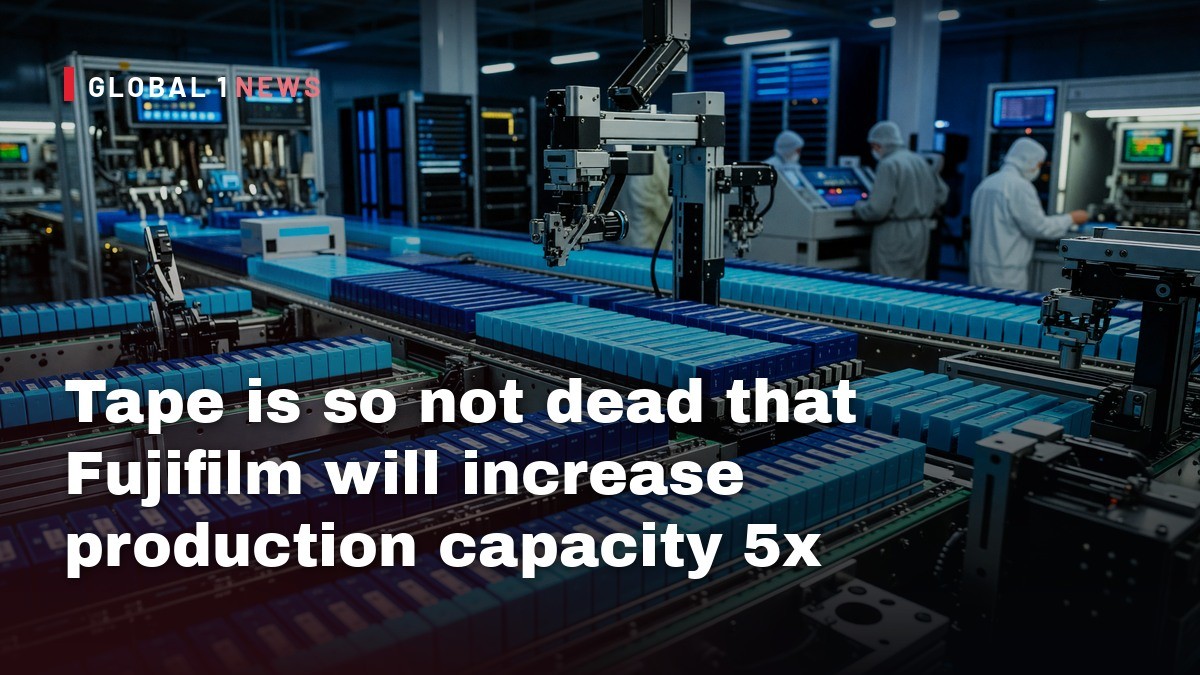
Fujifilm’s decision to crank up LTO tape production five‑fold is a loud signal that the old‑school backup market isn’t dead yet. The move comes on the heels of a shaky 2025 where LTO shipments actually fell, but the company is betting that the AI‑driven data explosion will turn the tide. For anyone running an independent hosting operation, this is a reminder that tape, despite its reputation as a relic, still offers a cost‑effective, low‑risk storage tier that hyperscalers can’t ignore.
Why Fujifilm is Doubling Down on Tape
The Register reported that LTO cartridge shipments dropped to 160.3 exabytes in 2025, down from a record 176.5 exabytes the year before. Fujifilm’s announcement to pour ¥10 billion into expanding its Odawara plant over the next two years is a direct response to the LTO program’s optimistic forecast for 2026. The company cites the “rapid spread of generative AI and cloud services” as the engine driving exponential data growth, and positions tape as the secure, efficient vault for that data.
From a founder’s perspective, the logic is simple: tape’s per‑gigabyte cost remains dramatically lower than spinning disks or SSDs, especially when you factor in power and cooling. The investment is not about chasing flash‑sale hype; it’s about locking in a supply chain for a medium that can hold petabytes of cold data without the ongoing OPEX of active storage.
What the Numbers Mean for Hosting Providers
Even though 2025 saw a dip, the LTO program noted a strong rebound in the second half of the year and is forecasting record sales in 2026. That rebound is the sweet spot for providers who need to hedge against volatile cloud pricing. Tape’s native capacities of 30 TB and 40 TB per cartridge (LTO‑10) give you a predictable, scalable tier for archival workloads that don’t require instant access.
Compression can push those figures beyond double, but remember that decompression adds latency. In practice, most customers using tape understand that it’s an offline or near‑line tier – they’re not expecting sub‑second retrieval. That expectation aligns perfectly with the economics of tape: you pay a fraction of the cost per terabyte and avoid the hidden fees that hyperscalers slap on egress and long‑term storage.
The Generational Roadmap: LTO‑11 to LTO‑14
The LTO program has already charted four more generations, with a new format arriving roughly every four years. LTO‑11, due around 2029, will double capacity to 70 TB per cartridge. LTO‑12 pushes that to 120 TB, LTO‑13 to 210 TB, and LTO‑14 to a staggering 365 TB. Those numbers are not speculative; they’re part of the official roadmap.
For a hosting business, this roadmap offers a clear upgrade path. You can start with LTO‑10 now, lock in pricing, and then migrate to higher‑capacity cartridges as they become available, spreading the cost of the migration over several years. The key is to design your archival architecture with forward compatibility in mind, because LTO‑10 drives can no longer read previous generations – a break in backward compatibility that could bite if you’re not prepared.
AI and the Data Deluge: A Real Driver
Fujifilm’s justification hinges on AI’s appetite for data. Training large models and running inference pipelines generate terabytes of raw output daily. That data needs a home that’s cheap, durable, and secure. Tape fits that bill. The statement from Fujifilm emphasizes “securely and efficiently” storing the “enormous amounts of data accumulated through AI training and inference.”
From the trenches, I’ve seen AI projects fill up SSD arrays in weeks, forcing teams to offload to cheaper media. Tape is the natural dump‑off for data that’s no longer “hot.” If you can automate the tier‑down process – moving data from primary storage to tape after a set retention period – you cut storage spend dramatically while still meeting compliance and backup SLAs.
Cost Realities vs. Hyperscaler Hype
Hyperscalers love to tout “pay‑as‑you‑go” pricing, but the fine print often includes egress fees, API call charges, and hidden latency penalties. Tape, on the other hand, is a capital‑expense investment that pays for itself over years of use. Fujifilm’s ¥10 billion spend is a one‑off that secures a supply pipeline; it’s not a recurring subscription.
For independent providers, the lesson is to diversify storage tiers. Relying solely on cloud object storage can erode margins, especially when data grows at AI‑scale rates. Incorporating tape gives you a lever to negotiate better terms with cloud partners, or to simply keep a chunk of your data off‑cloud and out of their pricing traps.
Operational Challenges and Best Practices
Running tape isn’t a set‑and‑forget operation. You need reliable robotics, proper environmental controls, and a disciplined cataloging system. The LTO‑10 drives only read the current generation, so you must plan for periodic hardware refreshes. That’s a cost you need to factor in – but it’s still a fraction of the ongoing cloud spend.
Best practice from my own shop: keep a small “cold‑storage” pool of LTO‑10 drives on‑site, use a simple barcode‑based inventory, and automate the ingest process with scripts that write directly from backup servers to tape. Schedule regular health checks – tape degrades over time, and a bad batch can corrupt months of archives. The payoff is a resilient, offline backup that can survive ransomware attacks that cripple online storage.
Actionable Takeaways for Founders
First, treat Fujifilm’s expansion as a market validation. Tape isn’t a niche hobby; it’s a strategic asset for data‑heavy workloads. Second, audit your current storage mix. If more than a quarter of your data sits in a “cold” tier, consider shifting a portion to LTO‑10 now and lock in pricing before the next generation spikes.
Third, build a migration roadmap aligned with the LTO generational schedule. Allocate budget for drive upgrades around 2029 when LTO‑11 arrives – the capacity jump will make a noticeable dent in your footprint. Finally, leverage tape as a negotiation chip with cloud vendors. Show them you have an offline alternative, and you’ll force better pricing on their active storage tiers.
In short, Fujifilm’s five‑fold capacity boost is a wake‑up call that tape is still a viable, cost‑effective layer in the data storage stack. For independent hosting providers, ignoring it means leaving money on the table and exposing yourself to the volatility of cloud pricing. Embrace tape, plan for the generational upgrades, and you’ll keep your margins healthy while your customers’ data keeps growing.
— Allan Ali, Founder
This article was produced with AI-assisted research and editorial support. Reporting is based on the source material cited below. Sources: The Register; theregister.com; Global1.News (31 October 2026).
By Allan Ali, Global1.News
What's Your Reaction?
 Like
0
 Dislike
0
 Love
0
 Funny
0
 Wow
0
 Sad
0
 Angry
0

Publisher of Global1.News. Automation architect, systems builder, and the guy making sure the truth gets published.















Comments (0)