
South Korea's First Perfect LEET Scorer Found in Cardiac Arrest as AI Cheating Scandal Deepens
Lee Jin-woo, the first person to score perfectly on South Korea's law school entrance exam, was found in cardiac arrest at a Seoul motel after failing to appear for a livestream he had promised as proof he had not cheated. Police have not released a cause.
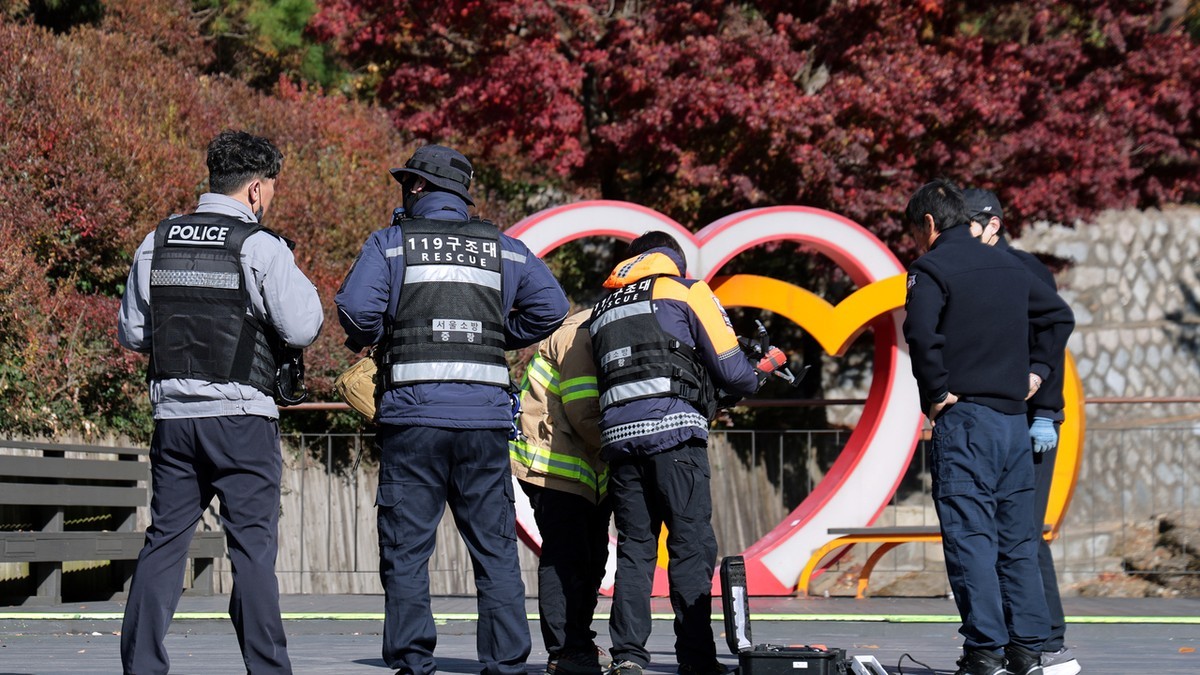
On the morning Lee Jin-woo was supposed to prove, live on camera, that he had not cheated, the seat reserved for him at a cram school in southern Seoul stayed empty. By early afternoon, police had found the 32-year-old in cardiac arrest at a motel near Cheonho Station in the city's east.
South Korea's First Perfect LEET Scorer Found in Cardiac Arrest as AI Cheating Scandal Deepens
Seoul, South Korea — A national exam-integrity crisis that opened with a confession about a hidden camera has reached its most human point, and South Korea is now arguing about two things at once: whether its high-stakes tests can still be trusted, and who was supposed to look after the young man at the center of the storm.
The Morning He Did Not Arrive
Lee had agreed to appear at the IDA Admissions Research Institute in Daechi-dong, the cram-school district of Gangnam, by 8 a.m. on Thursday. The plan was extraordinary by any standard: he would answer all 56 Korean-language questions from this year's college entrance exam within 65 minutes, and the entire attempt would run live on YouTube, from the first page to the marking.
He set the terms himself. He would hand over his belongings on arrival, pass through a metal detector, change clothes, and submit to endoscopic checks of his ears, nose and mouth to rule out a hidden earpiece. The institute's livestream drew more than 240,000 viewers from about 6:30 a.m.
He never came. His phone had been switched off since the previous day. At 8:35 a.m., when question papers are handed out, the institute ended the session, explaining that once the exam is under way an accomplice could feed answers in by some other route. A Korean-language instructor who attended as an observer told reporters he felt his work was being mocked. The institute then asked the public to check that Lee was safe.
A Report at 8:42, and a Motel Near Cheonho
At 8:42 a.m. police received a report expressing concern for Lee's safety. Officers went to his home in Gwanak District and found he had not been there. Korean outlets differ on the timing: some say he left on the evening of Nov. 17, others on the morning of Nov. 18. He had spent a night at a motel in Gwangjin District and checked out that morning.
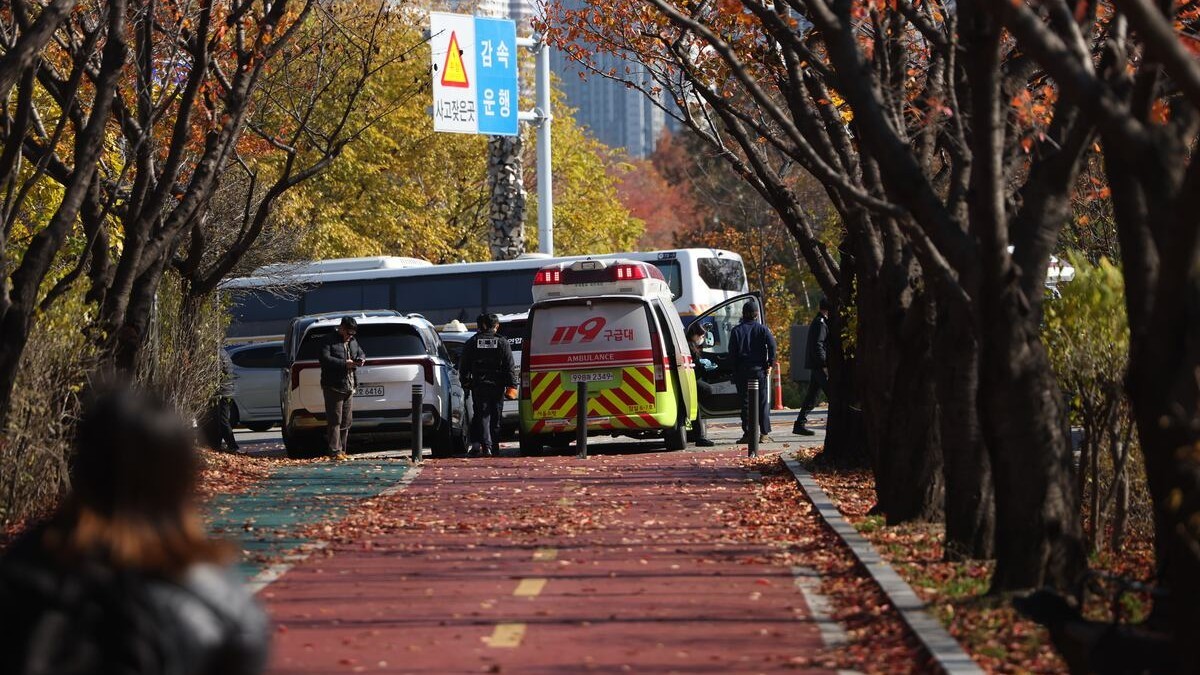
From there the trail ran east and then south. Police confirmed he took a taxi toward Songpa District, and search teams worked the waterways near Seongnaecheon, with rescue crews and a drone over the hillside at Achasan.
His phone briefly registered near Cheonho Station in the early afternoon. At about 1:12 p.m., officers and firefighters found him in cardiac arrest at a motel there. The Seoul Metropolitan Police Agency said it would determine the cause "through autopsy and other procedures" once a death is finalized. No cause has been given.
The Score That Started the Doubt
Nothing about Lee's record looked ordinary. By his own account he finished the 2012 college entrance exam with grades between six and eight across the board, on a nine-tier scale where higher numbers are worse, and a grade seven in Korean when he sat it again years later. He entered Korea University to study political science and international relations, then, having missed a single question on last year's entrance exam, entered Seoul National University's school of dentistry this year.
The result that made him famous came on the Legal Education Eligibility Test, the exam that gates admission to law school. Lee answered all 70 questions across its language-comprehension and reasoning sections correctly, the first perfect score in every section since the test was introduced in 2008.
He became a public figure on the strength of it, explaining his methods on YouTube and in interviews, and an admissions firm, Sidae Injae, signed him as a "brain coach."
What the Answer Sheet Showed
The suspicion did not come from a leak or a whistleblower. It came from the paper Lee released himself. On the sheet, questions 25 through 29 carried erased answers that had been replaced with new ones, and the erased answers matched, in order, the correct answers to questions 24 through 28.
That one-question shift is the detail that turned a curiosity into a national argument. To Lee's critics it looked like a list of answers transcribed one row out of step. His explanation was that he worked straight through the paper without skipping passages, and that his concentration faded toward the end, producing careless corrections rather than copied ones.
No authority has found that Lee cheated on the law exam or on any other test. The police investigation into him was opened only this week, and it was opened on the strength of complaints from lawyers, not on a finding by an exam board.
The Confession That Set It Off
The pressure on Lee did not begin with him. On Sunday, Han Won-seok, 34, the top scorer in this year's tax accountant qualification exam, admitted on his lawyer's YouTube channel that he had cheated. "I cheated on the tax accountant examination," he said. "I sincerely apologize for the harm my wrongdoing has caused so many people."
His scores had been almost impossible to ignore: 397.5 out of 400 in April's first round, answering 159 of 160 questions correctly, then 663 out of 800 in the written second round, which made him overall top scorer. Four proctors who supervised him reported noticing nothing.
According to police findings reported by SBS, Han attached a miniature camera to a roll of correction tape, modified a permitted calculator to work as a wireless keyboard, sent photographs of the questions to a laptop at home running an AI model, and read the answers back on an ultra-small monitor. Investigators say he built the rig between December last year and February. He was questioned for 13 hours, placed under a travel ban, and his home was searched.
A Government Scrambling on Exam Day
The political response was immediate. Prime Minister Han Seong-sook convened eight ministries and agencies on Nov. 16 and ordered a pan-government emergency response team for the college entrance exam, which hundreds of thousands of students sat on Thursday. Test-takers must hand in every smart device and be screened during the exam, and the science ministry is reviewing a plan to cut public Wi-Fi at every test site while papers are open.

At the presidential office, policy chief Ha Joon-kyung chaired a meeting that considered thermal imaging cameras and warned that "the fairness of examinations is directly tied to public trust." Results will now be screened after the fact for implausibly high scores, with confirmed cheaters facing nullified results, restrictions on sitting future exams and criminal referrals.
On exam day itself the state used the emergency alert system. Messages went out at 8:30 a.m. and at random intervals after that, ringing for 10.5 seconds at maximum volume on every phone in the country, with no option to refuse them. Carrying a phone at all is now disqualification. Education Minister Choi Kyo-jin asked students to switch devices off and hand them in before the first period.
The Book, the Contract, the Complaints
For Lee, the perfect score became a business. He published a book, "Brain Axel," through his own imprint in September, and Korean outlets reported it reached the top of a major retailer's self-development chart. An admissions firm, Sidae Injae, signed him as a "brain coach" and has since ended the contract.
On Wednesday two lawyers filed complaints against him. One, Bang Min-woo, accuses Lee of obstruction of official duties, obstruction of business and document offenses. The other, Park Eun-seon, adds a fraud allegation, arguing that a book sold on the strength of a fraudulent score takes money by deception. The Seoul Metropolitan Police Agency assigned both complaints to the financial crimes team of its metropolitan investigation unit, citing the seriousness of the case.
Seventeen people who bought the book filed a civil claim at the Seoul Central District Court seeking refunds and damages totaling about 3.65 million won. The YouTube channel that first platformed him has made its video private.
What Is Not Established
Several things need to be said plainly. No court, exam board or police finding has established that Lee cheated. He denied it repeatedly and said he would prove it in public. The investigation into him was days old when he was found.
His medical condition has not been described beyond cardiac arrest, and no cause has been released. Police have said only that a forensic examination would follow if a death is confirmed. Nor does anything on the record establish a link between the accusations and what happened on Thursday; that connection is one the coverage is inviting and the evidence does not yet support.
Even small details remain unsettled. Yonhap's English service gives Lee's age as 33, while Korean outlets report 32. The accounts of when he left home do not match. What is not in dispute is that a man who promised to appear somewhere at 8 a.m. did not appear.
A Country That Runs on Exams
South Korea's exam system is not a school-leaving ritual; it is the sorting machinery of a society. One day in November shapes which university a student enters, and the credential exams that follow shape which profession they may join. The law exam and the tax accountant exam are gates to careers that carry real status, and an entire industry of preparation has grown up around passing them.
That system rested on an assumption that has now failed in public: that a proctor in the room means a paper cannot be compromised. A camera the size of a button, a calculator quietly refitted as a keyboard, and a model running on a laptop at home are enough to break it. The measures announced this week are aimed at the hardware. None of them redesigns the test.
There is a second question, and it is harder. A country that decides someone is a symbol of cheating, and lets a livestream audience of hundreds of thousands gather to watch him prove otherwise, has created a pressure no 32-year-old should carry alone. Accountability for exam fraud and care for the person accused of it are not opposites, and this week treated them as if they were.
What Comes Next
Police are waiting on the medical outcome before deciding how the investigation proceeds. The exam Lee was supposed to sit went ahead on Thursday under a regime that required every candidate to hand in their smart devices and sent emergency alerts to every phone in the country, and its results will be screened in the weeks ahead.
The questions the cancelled livestream was meant to answer are still open: whether the score was earned, how far the cheating went beyond one tax accountant with a modified calculator, and whether any safeguard announced this week would have caught him.
For a system that measures people by single days, the harder lesson may be that it never built a way to catch someone who is falling.
If you or someone you know is struggling, South Korea's suicide prevention line is 109, LifeLine Korea can be reached at 1588-9191, and the Crisis Counseling Center at 1577-0199. International helplines are listed at befrienders.org.
By Jessica Ali, Staff Writer
This article was produced with AI-assisted research and editorial support. Sources: Yonhap News Agency, The Korea Herald, Korea JoongAng Daily, Chosun Ilbo, SBS News, The Korea Times, Financial News Korea. Photographs: Yonhap via The Korea Herald; Kim Myeong-nyeon via Chosun Ilbo; Yonhap via Korea JoongAng Daily.
What's Your Reaction?
 Like
0
 Dislike
0
 Love
0
 Funny
0
 Wow
0
 Sad
0
 Angry
0

Editor-in-Chief at Global1.News. Atlanta-based journalist who cuts through the BS and tells it like it is. Lead anchor, host, and the voice you hear when the spin stops and the truth starts.















Comments (0)