
Supreme Court Asked to Freeze Mail-Ballot Rule Block as Voting Begins
Trump administration asks the Supreme Court to freeze a federal judge's block on a new USPS mail-ballot rule as North Carolina becomes the first state to mail absentee ballots for the 2026 midterms. Judges and a whistleblower warn the untested system could disenfranchise voters.
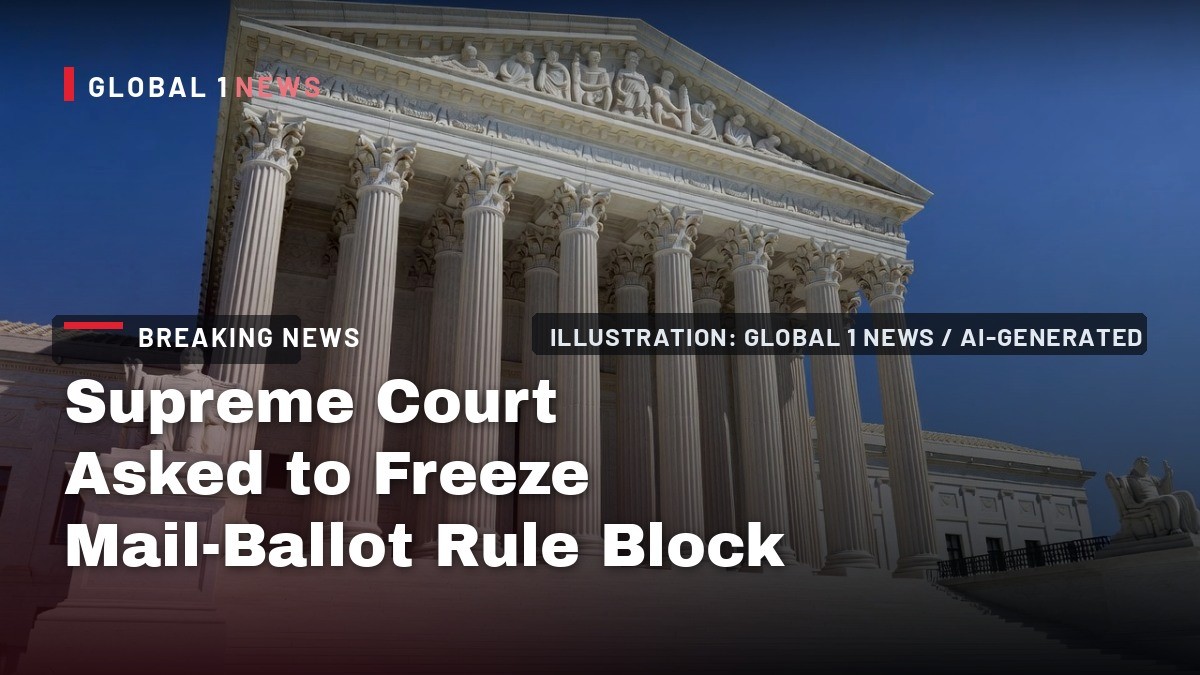
The Trump administration went to the Supreme Court on Thursday afternoon, asking the justices to freeze a federal judge’s order blocking key parts of a new U.S. Postal Service rule for mail-in ballots — a filing that landed just hours before North Carolina was set to become the first state to mail absentee ballots for the 2026 midterm season. The emergency application, filed by Solicitor General D. John Sauer, targets a temporary restraining order issued by U.S. District Judge Indira Talwani in Boston, and it marks the latest escalation in a legal war over whether the Postal Service can effectively gatekeep who gets to vote by mail.
An Emergency Filing With a Clock Ticking
The administration’s move is procedural but urgent. Sauer asked the Supreme Court to freeze Talwani’s Aug. 27 TRO, which blocks the Postal Service from enforcing several provisions of its new “Ballot Mail for Federal Elections” rule — specifically, uniform envelope-design requirements and a requirement that states upload their mail-voter lists to a USPS online portal. The TRO is set to expire Sept. 14, and Talwani was weighing whether to extend her order at a hearing set for around Sept. 10 when the administration appealed to the 1st Circuit and then to the high court.
The timing is not coincidental. North Carolina begins mailing absentee ballots Friday, Sept. 4, kicking off the 2026 midterm voting season nationwide. Sauer warned of “serious irreparable harm” if the TRO stands, arguing that once North Carolina and Alabama start sending ballots, “those ballot envelopes enter the mailstream, there is no retrieving them.” That is the core of the administration’s emergency pitch: the damage, if the rule is blocked, happens immediately and cannot be undone.
But the judge who imposed the block sees a different kind of damage. At a hearing Thursday, Talwani pressed Department of Justice attorney Michael Velchik on whether the portal — the system that would govern the entire mail-ballot process — was even operational. “I don’t even have a declaration from the Postal Service: This is how it will work. I don’t have it. I have nothing,” she said, according to court records. She described the government’s approach as running an “experiment.” Velchik’s response was a repetition of agency assurances: USPS would “fully implement the rule.” He also conceded the central legal question: “The $64,000 question is, is this authorized by the statute?”
What the Postal Service Rule Actually Does
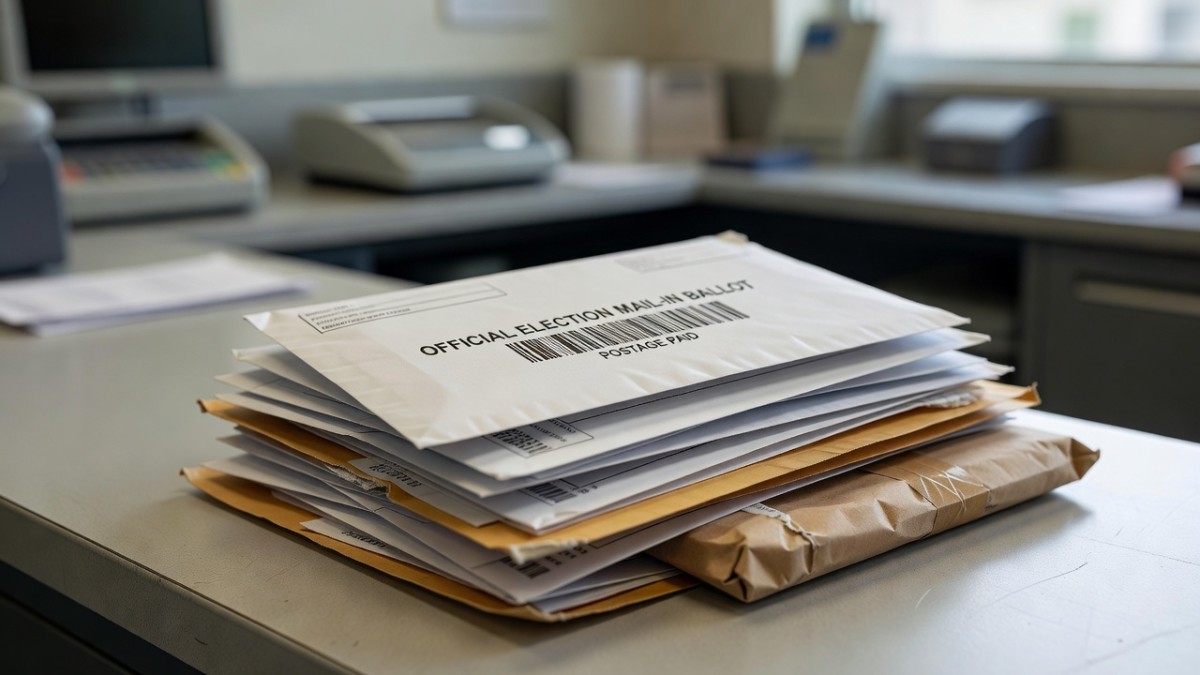
To understand the fight, you have to understand the rule itself. Published in August, the USPS final rule imposes uniform ballot-envelope design requirements, mandates barcodes on all mail-ballot envelopes, and requires states to upload their lists of mail-voter recipients to a USPS online portal. The Postal Service says it will not deliver ballots for election officials who do not comply. In plain terms: if your state doesn’t follow USPS’s new playbook, your ballot may never arrive.
The rule traces back to a March 2026 executive order signed by President Trump, titled “Ensuring Citizenship Verification and Integrity in Federal Elections.” That order directed the Department of Homeland Security to build lists of adult U.S. citizens per state, ordered the attorney general to prioritize prosecutions of state and local officials who issue ballots to ineligible people, and required states to hand the USPS lists of mail-ballot recipients. Crucially, it barred USPS from mailing ballots to voters who were not on the agency’s own “enrolled” lists.
Trump has long opposed mail voting and has falsely blamed it for his 2020 loss, even though he sometimes votes by mail himself. He says the order targets non-citizen voting. Studies and audits consistently show non-citizen voting is incredibly rare. But the rule’s practical effect, according to election officials, is a forced overhaul of their operations — with ballots and envelopes already printed for the 2026 cycle.
The administration calls the requirements “modest envelope-design and addressee-information requirements.” Election officials call them impossible to implement in time. The gap between those two descriptions is the heart of the litigation.
The Legal Fight: From Executive Order to Supreme Court Doorstep
The lawsuit began in federal court in Massachusetts, where a coalition of 23 states plus the District of Columbia, led by California, sued the administration. Their argument is constitutional: the order conflicts with the Constitution’s grant to states of power over the “Times, Places and Manner” of congressional elections. Twelve states, led by Alabama, intervened on the administration’s side.
In June, Talwani barred implementation of the challenged restrictions through Nov. 3, 2026, in the 23 states and D.C. The 1st Circuit declined to pause her order. On July 27, the administration and the Alabama group asked the Supreme Court to step in.
In late August, the Supreme Court did — but not on the merits. In an unsigned 10-page opinion, the justices let the administration begin implementing the order, ruling that the states’ challenge was premature because the order had not yet been carried out. No injury yet existed, the Court said. The justices explicitly did not rule on the order’s legality. That distinction matters: the Court was not blessing the policy; it was saying the states had sued too early.
That ruling opened the door for the Postal Service to publish its final rule in August. And that rule, in turn, triggered the current TRO. On Aug. 27, Talwani blocked the administration from requiring compliance with several provisions — the envelope design and portal submission requirements — for 14 days. She was weighing whether to extend the block at a hearing set for around Sept. 10. The administration, rather than wait for that hearing, went straight to the Supreme Court.
The Portal Problem: An ‘Experiment’ With No Takers
Talwani’s frustration Thursday was not abstract. She was asking a basic question: Does the system the government is forcing on states actually work? The answer, based on the record before her, was unclear at best. No state has opted into the portal system. None of the 12 states that intervened on the administration’s side have announced they would voluntarily use it. The government is mandating a system that no one is choosing to use.
At the hearing, Talwani also confronted Missouri Solicitor General Lou Capozzi, who represents the pro-administration states. “You want the voters in your states to be disenfranchised,” she said. Capozzi denied it flatly: “There is no risk that people would be disenfranchised.”
That exchange captures the stakes. The administration’s position is that the rule is a reasonable anti-fraud measure. The challengers’ position is that it is a solution in search of a problem — one that will inevitably leave legitimate voters without ballots. The judge’s pointed question to Capozzi suggests she believes the latter. The administration’s emergency filing suggests it believes the former is worth risking an election over.
For voters, the practical question is simple: If you requested a mail ballot, will it arrive? Under the new rule, ballots must be physically brought to post offices before mailing. If one barcode on a batch registers an error, the entire batch is thrown out — even if it contains tens of thousands of legitimate ballots. That is not a hypothetical glitch; it is a design feature of the system.
The Whistleblower Warning: A System Not Ready for Prime Time
The concerns raised in court are echoed by a whistleblower report made public this week, reported by NPR on Sept. 1. The report says USPS has not properly tested the portal. It also warns that the agency’s ballot-envelope verification policy could mean many voters do not get ballots in time for the midterms — or at all.
That is not a minor operational hiccup. It is a systemic risk. The rule requires ballots to be physically brought to post offices before mailing. If a barcode registers an error, the whole batch is rejected. Election officials have said they cannot comply with the directives in time — the requirements could force a complete overhaul of their operations, with ballots and envelopes already printed. The whistleblower report suggests the Postal Service itself may not be ready to run the system it is demanding states use.
Sauer’s filing dismisses the TRO as a “partial nullification” of the Postal Service’s efforts to address “the risk that the federal mails will be used to perpetrate voter fraud.” But the evidence of that risk is thin. Studies and audits show non-citizen voting is incredibly rare. The administration’s own portal has no state users. The system’s own test results are, according to the whistleblower, inadequate.
The administration’s argument boils down to this: the rule is modest, the fraud risk is real, and the harm of delay is irreversible because ballots cannot be retrieved once mailed. The challengers’ argument is that the rule is unworkable, the fraud risk is phantom, and the harm of implementation is irreversible because voters will be disenfranchised. Both sides claim irreparable harm. Only one side has a whistleblower report and a federal judge saying the system is an untested experiment.
What Happens Next: A Sept. 8 Deadline and a Looming Decision
Supreme Court Justice Ketanji Brown Jackson, who handles emergency applications from the 1st Circuit, has set a Sept. 8, 10 a.m. EDT deadline for the challengers to file their response. Any decision is likely to come in the middle of next week at the earliest. That means the TRO will almost certainly remain in effect through North Carolina’s Friday mailing kickoff and into the following week.
The practical effect of that timeline is significant. North Carolina begins mailing absentee ballots Friday. A few Wisconsin municipalities already sent mail ballots earlier this week. If the Supreme Court sides with the administration, it could freeze Talwani’s TRO and allow the Postal Service to enforce its rule immediately — potentially halting or invalidating ballots already in the mailstream. If the Court sides with the challengers, the TRO stands, and the case moves forward on the merits.
For ordinary voters, the stakes are not abstract. If you live in one of the 23 states that sued, and you requested a mail ballot, your ballot’s fate may depend on a barcode system that has not been tested, a portal no state has joined, and a legal fight that is moving at emergency speed. The administration says the rule protects election integrity. The challengers say it protects nothing but the ability to suppress votes. The Supreme Court will decide, likely within days, which risk it considers more urgent.
The constitutional question underneath it all is not new: Who controls federal elections? The Constitution gives states the power over the “Times, Places and Manner” of congressional elections. The administration’s order and the USPS rule effectively transfer a chunk of that power to the federal executive branch. The 23 states say that is unconstitutional. The administration says it is a necessary exercise of federal authority over the mails. The Supreme Court’s late-August opinion sidestepped that question. It cannot sidestep it forever.
For now, the immediate question is narrower: Can the Postal Service enforce a rule that no state has opted into, that a whistleblower says is untested, and that a federal judge says feels like an experiment? The answer will come in a matter of days. But the consequences — for voters in North Carolina, Alabama, Wisconsin, and across the country — will last through November.
By Jessica Ali, Staff Writer
This article was produced with AI-assisted research and editorial support. Sources: Associated Press via PBS NewsHour, NPR, SCOTUSblog.
What's Your Reaction?
 Like
0
Like
0
 Dislike
0
Dislike
0
 Love
0
Love
0
 Funny
0
Funny
0
 Wow
0
Wow
0
 Sad
0
Sad
0
 Angry
0
Angry
0

Editor-in-Chief at Global1.News. Atlanta-based journalist who cuts through the BS and tells it like it is. Lead anchor, host, and the voice you hear when the spin stops and the truth starts.











Comments (0)