
Mexico Walks a Tightrope: Tariffs, T-MEC Review, and the Shadow of Canada's Defiance
A recent DW News report asks a pointed question: Canada stood up to the Trump administration and walked away from trade talks — what is Mexico's plan? The answer, unfolding in Washington, Ottawa, and Mexico City, is a delicate balancing act between economic integration and national dignity.
A recent DW News report asks a pointed question: Canada stood up to the Trump administration and walked away from trade talks — what is Mexico's plan? The answer, unfolding in Washington, Ottawa, and Mexico City, is a delicate balancing act between economic integration and national dignity.
Mexico Walks a Tightrope: Tariffs, T-MEC Review, and the Shadow of Canada's Defiance
Mexico City, Mexico — The North American trade landscape shifted dramatically this summer, and Mexico is now navigating a path between Washington's tariff hammer and Ottawa's defiant example. As the United States and Canada remain locked in a trade dispute that saw negotiations collapse in August, Mexican officials are pursuing a quieter, more pragmatic strategy: keep talking, keep negotiating, and keep the world's most integrated manufacturing region from fracturing further.
The T-MEC Crossroads
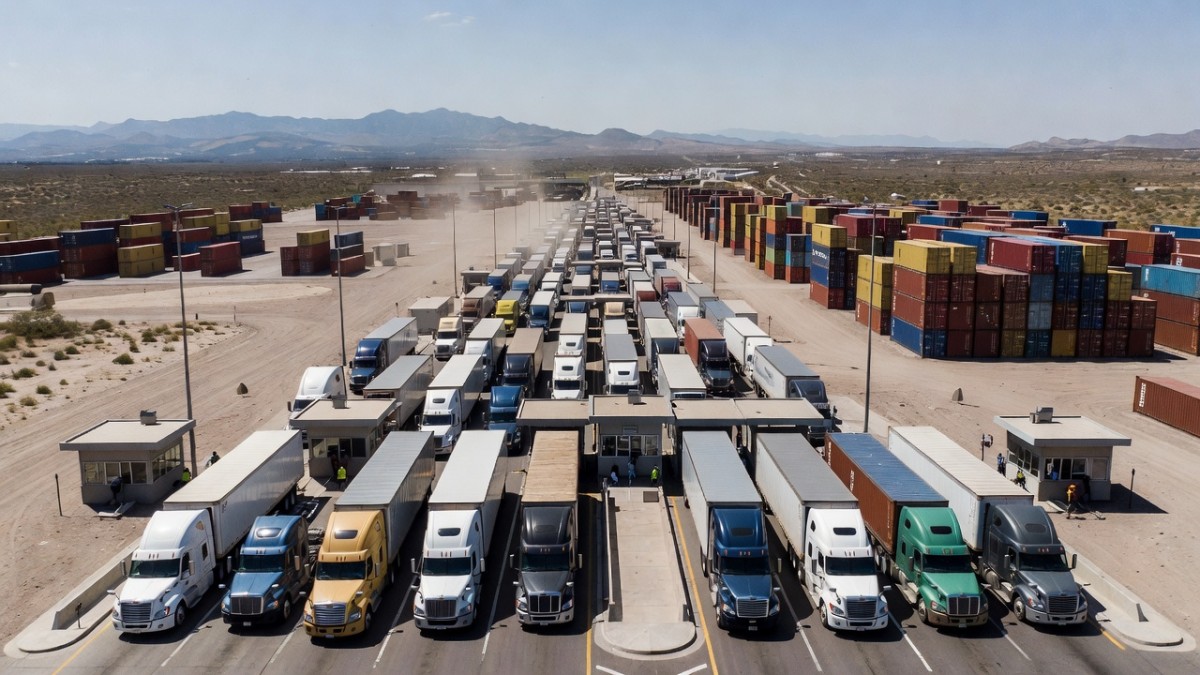
On July 1, 2026, the United States declined to extend the US-Mexico-Canada Agreement (T-MEC) for a full 16-year term, triggering annual joint reviews of the pact through 2036 unless the three countries later agree to a longer extension. The pact remains in force, but the uncertainty is palpable from the maquiladoras of Ciudad Juárez to the auto plants of Silao and Saltillo.
The Trump administration has imposed Section 232 tariffs of 25 percent on Mexican- and Canadian-built cars and trucks, and 50 percent on steel and aluminum, justified on national-security grounds. Mexico argues these tariffs are unjustified and contradict the spirit of North America's deeply integrated manufacturing supply chains — where a car crossing the border may have its engine block cast in Monterrey, its electronics assembled in Guadalajara, and its final assembly completed in Detroit or Hermosillo.
Canada's Defiance: A Test Case
Canada's experience offers both a warning and a template. Negotiations between Washington and Ottawa collapsed on Aug. 21, with Canada suspending talks after rejecting last-minute U.S. demands. Prime Minister Mark Carney said Ottawa would not compromise on French-language and cultural protections, describing the late U.S. changes as unfair and uneconomic.
The U.S. response was swift: 50 percent tariffs on roughly US$20 billion of Canadian goods — some reports cite up to US$27.6 billion — including cement, honey, hockey sticks, beer, dairy, plywood, and appliances. Canada answered with dollar-for-dollar retaliatory tariffs on about 700 U.S. products — steel, dairy, appliances, agricultural equipment, pulp and paper, and electronics — with rates of 15, 25, and 50 percent, set to take effect Sept. 8, 2026. President Trump has said tariffs on Canadian cars, trucks, auto parts, and steel would rise to 50 percent in January 2027.
On Sept. 3, U.S. Commerce Secretary Howard Lutnick told CNBC that Canada "blew up" a nearly completed deal for domestic political reasons and predicted Canada would soften its position after mid-October by-elections. The next day, U.S. Trade Representative Jamieson Greer told Fox News that Canada walked away from "the best deal in the world" and said the deal's future now lies in Canada's corner.
Speaking in Thunder Bay on Sept. 4, Carney said Canada is ready to negotiate a durable agreement that serves both countries "when the Americans are ready," and repeated that Canada will match U.S. tariffs dollar-for-dollar to protect Canadian workers, farmers, and businesses. He also said Canada is expanding trade ties with other countries.
Mexico's Diplomatic Push
Mexico has chosen a different route. Economy Secretary Marcelo Ebrard met U.S. Commerce Secretary Howard Lutnick on Wednesday, Sept. 2, on the sidelines of a G-20 innovation ministerial in Chapel Hill, North Carolina. Ebrard pushed for progress on U.S. tariffs on Mexican cars, steel, and aluminum; they also discussed bilateral trade and regional technological innovation. Tech executives including Nvidia's Jensen Huang, OpenAI's Sam Altman, Meta's Mark Zuckerberg, and Tesla/SpaceX's Elon Musk attended the event.
At her Sept. 3 morning news conference — la mañanera — President Claudia Sheinbaum said her government is working "very hard" to reach an agreement with the Trump administration that would reduce U.S. tariffs on Mexican steel, aluminum, and vehicles. "We're doing well and we hope to be able to reach a beneficial agreement," she said. She reiterated that Mexico is among the best-positioned countries in trade with the United States because the majority of Mexican exports enter the U.S. duty-free under the T-MEC, but Mexico wants an even better arrangement on steel, aluminum, and automobiles.
The Stakes for Mexican Industry
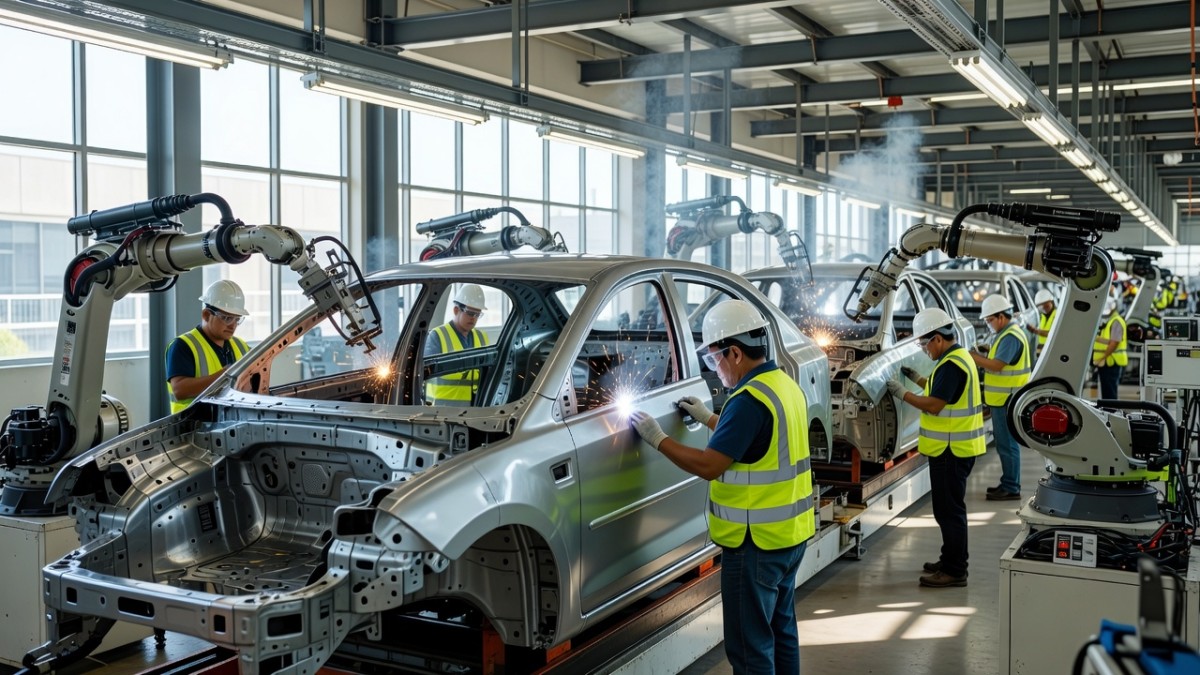
The numbers tell a sobering story. Mexican steel exports to the United States fell 36.6 percent in 2025 to about US$2.24 billion, according to industry data cited by Mexico Business News, and Mexico dropped from the third- to fifth-largest supplier of steel to the U.S. market. Capacity utilization at Mexican steel mills sank to a 25-year low of about 55 percent — a figure that translates into idle furnaces in Monclova and layoffs in the industrial corridors of the north.
Automakers assembling in Mexico face the 25 percent tariff on vehicles, and U.S. negotiators have pushed for stricter rules of origin, including proposals that certain vehicle electronics sourced from Asia count against North American content requirements. For plants in Puebla, where Volkswagen has operated for decades, or in Silao, home to major truck assembly, these rules could reshape supply chains that took a generation to build.
Ebrard has argued that Mexico has the best trade deal available and has noted Mexico is the United States' number-one customer — that no country buys more from the United States than Mexico, more than China, Germany, and Japan combined. More than 80 percent of Mexican exports to the United States enter without tariffs, a fact Sheinbaum emphasized at her morning press conference.
Impact on Mexican Communities
Behind the trade statistics are real people. In Ciudad Juárez, the maquiladora workers who assemble electronics and medical devices for export watch the news from Washington with anxiety — their paychecks depend on factories that operate on thin margins and just-in-time delivery. In Monterrey, steelworkers at plants that have supplied U.S. construction and energy projects for decades face the prospect of reduced shifts. In Tijuana, families whose livelihoods depend on cross-border commerce — from customs brokers to truck drivers to restaurant owners — feel every tremor in the trade relationship.
The peso, export industries in the automotive and steel sectors, and millions of jobs in the maquiladora and manufacturing economy are sensitive to the outcome of the talks. When the peso weakens against the dollar, it is not an abstract financial statistic; it means higher prices for imported food and goods in the tianguis and supermarkets of working-class colonias across the country.
Reactions and Responses
Mexico and the United States have held successive rounds of bilateral talks tied to the T-MEC review. The most recent round ended without concrete agreements, but Ebrard said the two sides continue to advance and try to bring positions closer based on shared economic integration. The next round of bilateral negotiations is scheduled for the first half of September.
Greer has told the U.S. Senate it would be difficult for President Trump to accept renewal of the pact if Mexico does not cooperate on issues such as the 1944 bilateral water treaty and security cooperation. That linkage — trade tied to water and security — adds another layer of complexity to an already intricate negotiation.
For Mexican officials, the contrast with Canada's approach is instructive but not necessarily a model to copy. Canada has a diversified economy and can absorb the shock of U.S. tariffs more readily. Mexico's economy is far more dependent on the U.S. market — roughly 80 percent or more of Mexican exports go north — making a full rupture unthinkable for either side.
What to Watch For
The next round of bilateral negotiations, scheduled for the first half of September, will be the clearest signal of whether Mexico's patient approach is yielding results. Ebrard has said the two sides are trying to bring positions closer, but concrete agreements remain elusive.
Mexico's strategy appears to be one of persistence and proximity: keep the channels open, emphasize the mutual benefits of integration, and avoid the public confrontation that characterized the Canada talks. Sheinbaum's message is consistent — Mexico wants a beneficial agreement on steel, aluminum, and automobiles, and believes its position as the United States' top customer gives it leverage that Canada does not possess.
The coming weeks will test whether that calculation holds. If the September talks produce tangible progress on tariff relief, Mexico's approach will be vindicated. If not, the pressure will mount on Sheinbaum's government to consider more forceful responses — even as the annual T-MEC reviews loom and the 2036 horizon grows closer. For the workers of Monclova, Silao, and Ciudad Juárez, the outcome is not an abstract policy question. It is the difference between a stable paycheck and an uncertain future.
By Rosa Martinez, Staff Writer
This article was produced with AI-assisted research and editorial support. Sources: DW News, Reuters, Mexico News Daily.
What's Your Reaction?
 Like
0
Like
0
 Dislike
0
Dislike
0
 Love
0
Love
0
 Funny
0
Funny
0
 Wow
0
Wow
0
 Sad
0
Sad
0
 Angry
0
Angry
0

Latin America/Andes Correspondent at Global1.News. Based in Bogota, covering politics, environment, energy, and social movements across the Andean region. Passionate about environmental journalism and communities protecting their land.















Comments (0)