
St Kitts and Nevis Prime Minister Dr Terrance Drew is in good spirits and continuing his recovery in Miami, telling the region on Thursday that "there is nothing alarming to report" as doctors press on with investigations into the illness that felled him at home last weekend.
The 49-year-old head of government, who has led the twin-island federation since August 2022, was struck down on the evening of Sunday, August 30 with a constellation of worrying symptoms — persistent nausea, vomiting, pain on the left side of his neck, a mild headache, dizziness, and difficulty with balance and walking. He was rushed to the Joseph N.
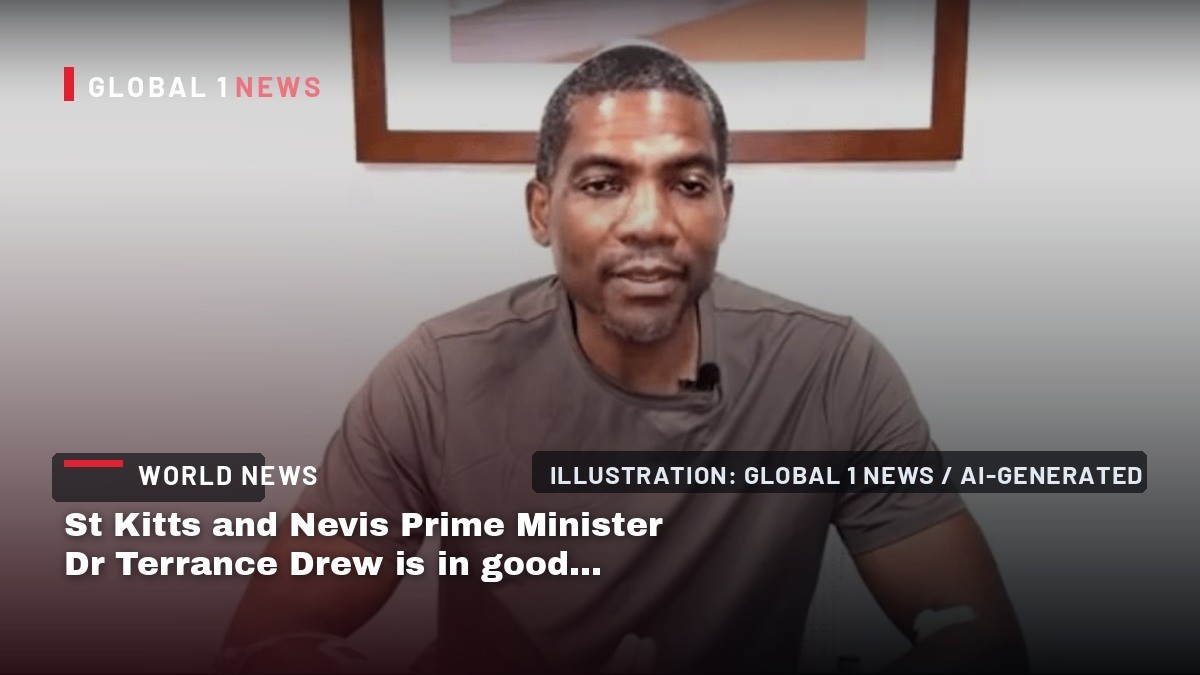
The 49-year-old head of government, who has led the twin-island federation since August 2022, was struck down on the evening of Sunday, August 30 with a constellation of worrying symptoms — persistent nausea, vomiting, pain on the left side of his neck, a mild headache, dizziness, and difficulty with balance and walking. He was rushed to the Joseph N. France (JNF) General Hospital in Basseterre, where he was monitored for roughly 18 hours before his medical team made the call that has become all too familiar across the Caribbean: transfer the patient abroad for specialist care.
From St Kitts, Drew was flown to Martinique, where he was admitted to the intensive care unit of the University Hospital of Martinique (CHUM) on the evening of Monday, August 31. By Wednesday, September 2, he had been moved again — this time to Baptist Hospital in Miami, Florida, for what reports describe as a comprehensive medical assessment. The Miami Herald has confirmed he is in Miami "amid medical scare," though the Cabinet Secretariat in St Kitts has not officially named the overseas facility.
In a televised address from South Florida on Thursday, September 3, Drew sought to calm nerves back home. He said he had gone for a gentle walk that morning, described his condition as stable and improving, and stressed that doctors were continuing their investigations. He did not name a diagnosis.
For a region that has watched this story unfold with a mixture of concern and recognition, the episode has opened up difficult conversations about the fragility of Caribbean health systems, the routine evacuation of seriously ill patients — including prime ministers — and the delicate question of how much the public is entitled to know about the health of its leaders.
What happened: a sudden collapse and a rapid medical evacuation
The timeline of Drew's illness moves quickly, as these things often do when a head of government falls seriously ill on a small island. On the evening of Sunday, August 30, Drew fell ill at his home in St Kitts. He first consulted doctors, including resident neurologist Dr Laguna, before being admitted to JNF General Hospital in Basseterre. There, he was monitored for approximately 18 hours. His treating physicians confirmed he was awake, alert and in stable condition, but recommended an overseas transfer for specialised observation and precautionary monitoring. That recommendation was described as a cautionary measure rather than a response to a disclosed specific diagnosis — a careful formulation that has remained consistent throughout the official communications. Regional counterparts reportedly persuaded Drew to travel to Martinique rather than another destination, weighing the speed and quality of care available on the French Caribbean island. Barbados Prime Minister Mia Mottley was reported to have helped arrange Drew's admission to hospital services in Martinique and posted a message of support on social media. Drew has reportedly expressed gratitude for the treatment he received in Martinique and intends to raise the matter with fellow CARICOM leaders, noting that hospital services on the French Caribbean island are often overlooked by the region. By Wednesday, September 2, Drew had left Martinique and was admitted to Baptist Hospital in Miami for a comprehensive medical assessment, according to reports citing Martinique media. The move to the United States suggests a longer road of investigation and monitoring lies ahead.The unconfirmed stroke report: what we know and what we don't
Here is where the story demands precision, because rumours have a way of outpacing facts in moments like these. Martinique media, including Martinique La Premiere, have reported that medical examinations at CHUM indicated a stroke — a cerebrovascular accident. They reported that treatment was led by intensive-care Professor Dabor Resiere, that Drew's condition stabilised, and that medical teams were optimistic he would not suffer lasting effects. But that reported diagnosis has NOT been publicly confirmed by the Government of St Kitts and Nevis or by Drew's own medical team. It remains, at this stage, a media report — credible, perhaps, but unconfirmed. What is confirmed is that Drew, a qualified medical doctor who studied medicine in Cuba and is a Diplomate of the American Board of Internal Medicine, fell ill with symptoms that included dizziness, balance problems and difficulty walking — symptoms that can indeed be associated with neurological events. He is 49 years old, below the typical global average age for stroke, which most commonly affects adults over 60 but increasingly appears in younger populations. But the official line remains cautious. Drew is being treated. Investigations are continuing. The diagnosis has not been publicly named. That is the disciplined, accurate way to report this story, and it is the way Caribbean journalists must continue to frame it until the Government of St Kitts and Nevis or Drew's medical team says otherwise.Government continuity: Hanley steps up, business as usual
While Drew receives care abroad, the machinery of government in St Kitts and Nevis has not missed a beat — at least on paper. Deputy Prime Minister Dr Geoffrey Hanley has been named Acting Prime Minister under the constitutional order of succession. Hanley has temporarily assumed the Finance, Health, and Human Resource Management and Social Security portfolios, while Attorney General Garth Wilkin has taken on National Security, Citizenship and Immigration. Before departing St Kitts, Drew summoned his Cabinet and instructed ministers that government business should continue as normal. That instruction — reported by Caribbean360 and corroborated by regional outlets — speaks to a leader determined to maintain stability even as his own health hangs in the balance. The Cabinet Secretariat has pledged ongoing updates to the public, though the absence of a disclosed destination or timeline introduces what analysts have described as a period of managed uncertainty for the federation's economic and policy agenda. Opposition leader and Nevis Island Administration head Mark Brantley has extended well wishes for the PM's swift return home. The Haitian Association of St Kitts and Nevis has also offered prayers for his recovery. In a small federation, where politics can be fierce but community ties run deep, the expressions of cross-party goodwill have been notable.A regional healthcare conversation: the reality of medical evacuation
For Caribbean people watching this story, there is an uncomfortable familiarity to it. When serious illness strikes in the region — whether it be a prime minister, a schoolteacher or a grandmother — the same calculus applies. Small-island health systems, however dedicated their staff and however hard they work, often lack the intensive-care capacity, specialist expertise and diagnostic equipment needed for complex cases. Patients are stabilised locally, then transferred. Trinidadians know this reality intimately. Our own patients routinely travel to Barbados, to Martinique, to Miami, to New York, or further afield when the diagnosis is serious and the local system cannot provide the required care. We have all known someone who has made that journey, often at great personal and financial cost. Drew's own reported point — that Martinique's hospital services are often overlooked by the region — is a telling one. The French Caribbean island has sophisticated health infrastructure, and in this moment of crisis, it was Martinique that received the Prime Minister of St Kitts and Nevis when he needed urgent specialist care. Barbados helped arrange it. Miami is now providing the comprehensive assessment. The episode reinforces longstanding concerns about health infrastructure across the region and the pressure on CARICOM leaders to strengthen regional healthcare cooperation. If a prime minister must be evacuated for care, what does that say about the systems available to ordinary citizens? How many lives might be saved if regional governments invested collectively in centres of excellence, so that a patient from St Kitts could be treated in Barbados or Trinidad rather than flown to Miami? These are not new questions, but they are given fresh urgency when the patient is a head of government.Transparency and public concern: the delay that troubled residents
There is another dimension to this story that Caribbean people have been discussing with some unease: the delay in telling the public. News of Drew's medical evacuation reached the public in St Kitts and Nevis only after some time had passed, leaving many residents initially unclear on the Prime Minister's whereabouts and condition. In an age of instant communication, that gap between event and announcement created space for rumour and speculation to flourish. Caribbean people expect to hear about their leaders' health. We are a region of close-knit communities, and our leaders are not distant figures — they are people we see at cricket matches, at funerals, at community events. When a prime minister disappears from view without explanation, people notice, and they worry. There is, of course, a legitimate tension here. A leader has a right to medical privacy. Details of diagnosis and treatment are personal matters, and no one should be forced to disclose intimate health information under public pressure. But there is also a public interest dimension: citizens have a right to know that their head of government is receiving appropriate care, that the constitutional order of succession is functioning, and that the business of government continues. Drew's televised address from South Florida on Thursday was an attempt to bridge that gap — to show the region that he is alert, stable, and in good spirits. His words were carefully chosen: "there is nothing alarming to report." Not a clean bill of health, not a diagnosis, but reassurance that the situation is under control. For now, that may have to be enough.What happens next: investigations continue, return timeline unknown
The immediate future remains uncertain. Drew is in Miami, receiving care at an undisclosed facility that reports identify as Baptist Hospital. His medical team is continuing investigations. The Cabinet Secretariat has pledged ongoing updates. No timeline has been given for his return to St Kitts and Nevis. No diagnosis has been officially confirmed. The reported stroke diagnosis from Martinique media remains unconfirmed by official sources, and it would be irresponsible to treat it as fact. What is clear is that Drew is stable, improving, and in good spirits. What is clear is that Deputy Prime Minister Hanley is directing the day-to-day machinery of government, with Attorney General Wilkin covering the national security portfolio. What is clear is that the constitutional order of succession has functioned as designed. And what is clear, above all, is that people across the Caribbean are wishing Dr Terrance Drew well. He is a doctor himself, a man who trained in Cuba and qualified in internal medicine, who has spent his political career advocating for better health outcomes for his people. Now he is the patient, far from home, relying on the care of colleagues in Martinique and Miami. The region watches and waits. We send our prayers, our good wishes, our hopes for a full and swift recovery. And we reflect, once again, on the fragility of health in small island states — and the urgent need for stronger regional cooperation in healthcare, so that no Caribbean citizen, prime minister or otherwise, should have to leave home to receive the care they deserve. The investigations continue. The updates will come. And the Caribbean community, as it always does, will hold its collective breath and hope for the best.By Sharon Sahatoo, Staff Writer
This article was produced with AI-assisted research and editorial support. Sources: Caribbean360, WIC News, Jamaica Gleaner (CMC), Dominica News Online, Miami Herald.
What's Your Reaction?
 Like
0
Like
0
 Dislike
0
Dislike
0
 Love
0
Love
0
 Funny
0
Funny
0
 Wow
0
Wow
0
 Sad
0
Sad
0
 Angry
0
Angry
0

Sharon Sahatoo
Caribbean Correspondent at Global1.News. Based in Port of Spain, Trinidad, covering Caribbean politics, economy, energy, climate, and culture. Amplifying the voices and stories of the Caribbean region.














Comments (0)