
Forde passes heritage to next generation at Ellerton Primary
At a crisp November morning in St George, the children of Ellerton Primary School gathered under a fluttering flag to hear a tale that stretches back sixty years – the night Barbados swapped the Union Jack for a broken trident, signalling a new dawn of self‑rule.
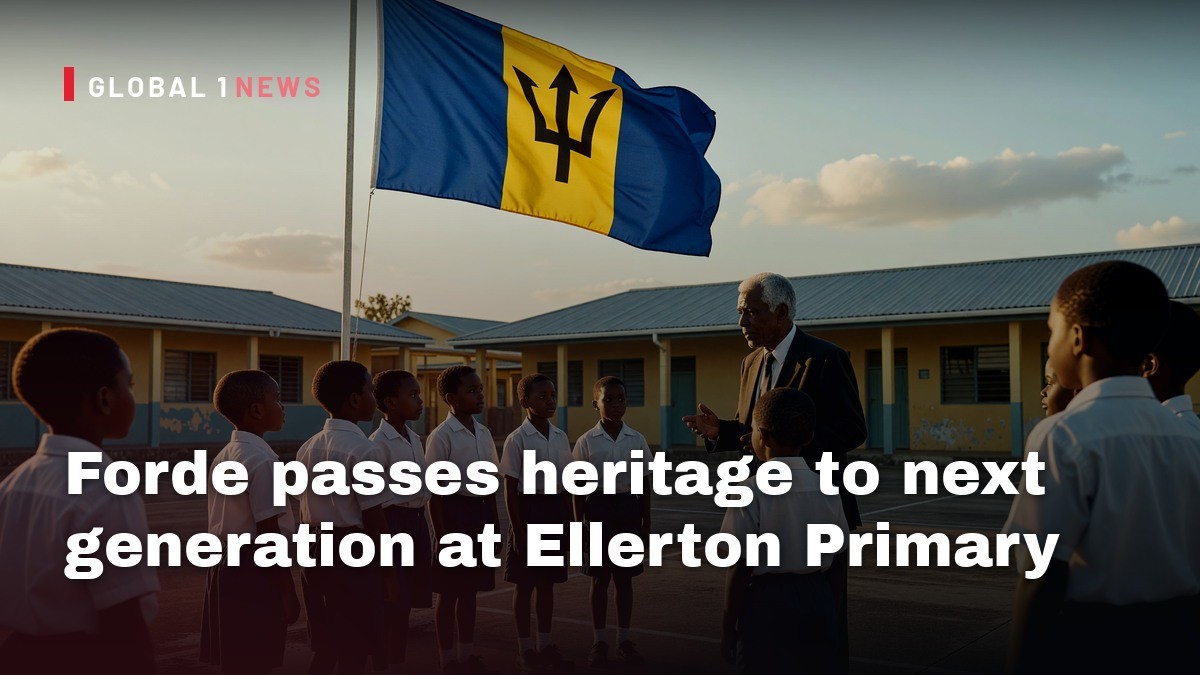
At a crisp November morning in St George, the children of Ellerton Primary School gathered under a fluttering flag to hear a tale that stretches back sixty years – the night Barbados swapped the Union Jack for a broken trident, signalling a new dawn of self‑rule. Veteran Michael Forde, a member of the Barbados Legion and former Defence Force soldier, stood before the eager pupils and took them on a journey to 30 November 1966, reminding them that the island’s heritage must stay alive in the minds of the younger generation as the nation approaches the 60th anniversary of Independence.
Remembering the Midnight of 1966
Forde began by painting a vivid picture of that historic night. As midnight approached, the lights around the Garrison Savannah were switched off, plunging the area into darkness. In that blacked‑out moment, the Union Jack – the emblem of British rule – was lowered, and the newly designed national flag was hoisted in its place. The veteran’s description of the darkness and the ceremonial lowering of the Union Jack helped the children grasp the gravity of the transition from colonial rule to a government “of the people, for the people, by the people”.
He stressed that the flag’s colours – ultramarine, gold and black – and the broken trident at its centre are more than decorative elements. They represent the island’s identity, its sea‑borne history and the resilience of a people who have weathered centuries of external control. By recalling the exact moment the lights went out, Forde gave the pupils a sensory link to an event that shaped the nation’s modern story.
The Flag’s Design and Its Symbolism
Beyond the dramatic lowering of the Union Jack, Forde explained how the flag itself came to be. In a national competition that drew 1 029 entries, art teacher Grantley Prescott of Parkinson Memorial School submitted the design that would become the nation’s emblem. The selection process, though not detailed in the ceremony, underscored a collective desire to craft a symbol that truly reflected Barbadian aspirations.
The broken trident, central to the flag, is a nod to the island’s historic ties to the sea and its former status as a British colony (the original trident was a symbol of the British Empire). By breaking the trident, the design signalled a break from the past and a forward‑looking stance. The ultramarine blue evokes the surrounding Caribbean waters, gold reflects the sunshine that bathes the island, and black acknowledges the African heritage of many Barbadians. Forde’s explanation helped the children see the flag not just as cloth, but as a narrative stitched in colour and shape.
Linking Past to Present: Lessons for the Youth
For Forde, the flag‑raising ceremony was not merely a historical recount. He urged the pupils to understand that the freedoms they enjoy today were hard‑won. “We were not always what we are now, but we were then governed by others,” he told them, highlighting the importance of remembering the struggles that preceded independence. By connecting past hardships to present opportunities, he encouraged a sense of responsibility among the young Barbadians to safeguard their hard‑earned liberty.
He also reminded the children that the story of independence is a living one, not a static page in a textbook. The act of raising the flag, he said, symbolised continuity – a passing of the torch from one generation to the next. The children’s faces, he noted, represented that continuity, ensuring that the narrative of self‑determination remains vibrant and relevant.
School Leadership Embraces Cultural Pride
Principal Karen Sealy‑Cox echoed Forde’s sentiment, urging the pupils to “celebrate their identity” through Barbadian culture – from soca music and local dialect to the island’s festivals. She highlighted how everyday courtesies, such as saying “good morning” and “good afternoon,” form a unique part of Barbadian social fabric. By linking these small gestures to a broader cultural pride, Sealy‑Cox reinforced the idea that heritage lives not only in grand events but also in daily interactions.
The principal also drew attention to national icons who embody Barbadian excellence. She named the late Sir Garfield Sobers, cricket legend; Hayley Matthews, captain of the West Indies Women’s Cricket team; and global superstar Rihanna as figures whose achievements inspire pride. By showcasing these role models, Sealy‑Cox encouraged pupils to see themselves as part of a lineage of Barbadians who have made their mark on the world stage.
Values at the Heart of the Curriculum
Sealy‑Cox tied the cultural celebration to the school’s academic theme for the year: “Grow with Purpose, Rooted in Values”. This motto, she explained, urges children to harness their abilities to make a positive difference. The values she highlighted – honesty, respect, discipline, service and environmental care – are framed as essential qualities for responsible citizenship. By embedding these principles within the school’s programme, the leadership aims to nurture not just academically capable students, but ethically grounded future leaders.
The emphasis on environmental stewardship is particularly resonant for an island nation facing climate pressures. While the ceremony did not delve into specific policies, the call to “care for the environment” aligns with broader regional concerns about rising sea levels and the need for sustainable development. The school’s focus on these values signals a holistic approach to education that blends cultural heritage with forward‑looking responsibility.
Celebrating Heritage Through Literacy Week
The flag‑raising event also marked the kickoff of a series of activities leading up to Independence Day. Among these, the school’s Literacy Week, scheduled for 23 to 27 November, promises a period of “high celebration”. While the specific programmes for the week were not detailed, Sealy‑Cox indicated that it would provide another opportunity to bring pupils closer to their cultural roots while reinforcing the importance of literacy.
Literacy, she noted, is a cornerstone of empowerment. By linking reading and writing skills to cultural exploration, the school aims to ensure that the next generation can both appreciate their heritage and articulate its significance in a modern context. This approach mirrors the broader Caribbean educational push to integrate local history and literature into curricula, fostering a sense of belonging alongside critical thinking.
Why Heritage Matters in a Changing Caribbean
Barbados, like many of its neighbours, is navigating a complex mix of economic pressures, climate challenges and shifting regional politics. In such a climate, remembering the moment when the island asserted its own identity becomes more than nostalgic reflection; it is a reminder of the agency that Caribbean peoples possess. Forde’s message to the Ellerton Primary pupils – that heritage must stay alive – resonates across the region, where younger generations are called upon to shape policies on energy, tourism and disaster preparedness.
By grounding the ceremony in the lived experience of the children, the school and its veteran guest reinforced a timeless lesson: the past informs the present, and the present shapes the future. As Barbados moves toward its 60th Independence anniversary, the stories told in classrooms, on flag‑poles and during community celebrations will continue to anchor the nation’s journey, ensuring that the spirit of that midnight in 1966 endures in the hearts of the next generation.
This article was produced with AI-assisted research and editorial support. Reporting is based on the source material cited below. Sources: Barbados Today; barbadostoday.bb; Global1.News (04 November 2026).
By Sharon Sahatoo, Staff Writer
What's Your Reaction?
 Like
0
 Dislike
0
 Love
0
 Funny
0
 Wow
0
 Sad
0
 Angry
0
Caribbean Correspondent at Global1.News. Based in Port of Spain, Trinidad, covering Caribbean politics, economy, energy, climate, and culture. Amplifying the voices and stories of the Caribbean region.










Comments (0)