
Nova Scotia Mourning Woman Who Died in Province’s Severe Flooding: Premier
Nova Scotia’s premier says the province is in mourning after a woman died during the severe flooding that affected Cape Breton Island this weekend. The death has cast a sombre shadow over an already difficult weekend for communities grappling with washed-out roads, rising rivers, and states of local emergency. Nova Scotia RCMP confirmed Sunday that they had located the body of a woman from Cleveland, N.S., after she was reported missing on Saturday morning....
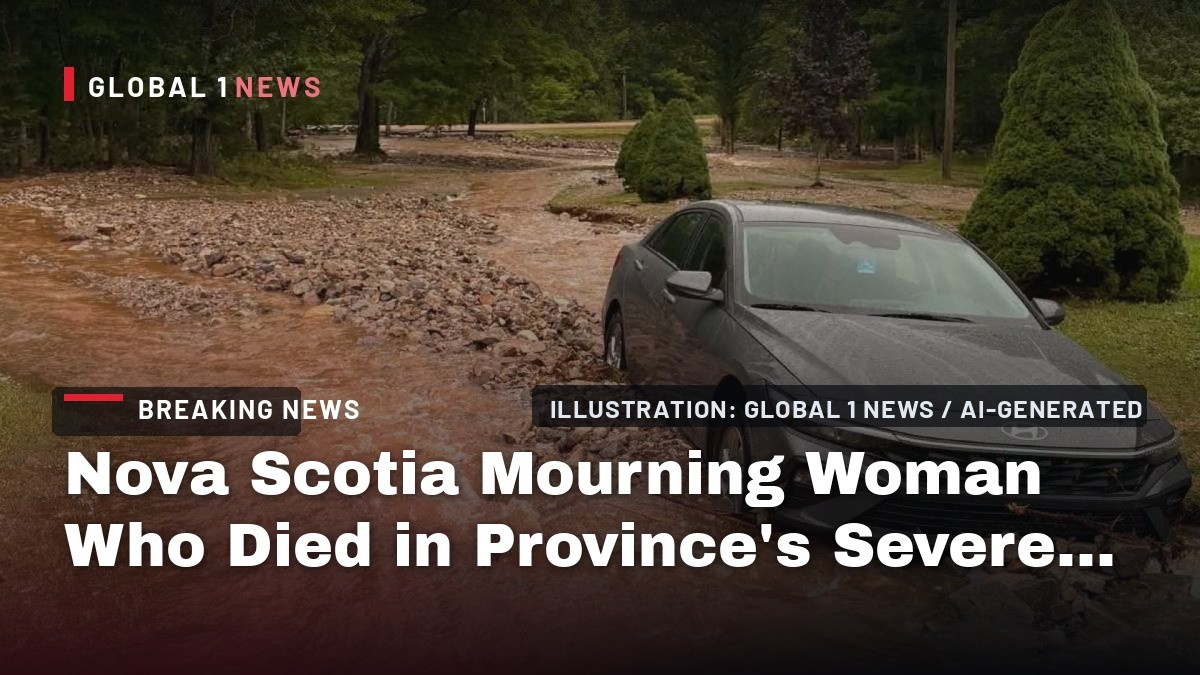
Nova Scotia Mourning Woman Who Died in Province’s Severe Flooding: Premier
Nova Scotia’s premier says the province is in mourning after a woman died during the severe flooding that affected Cape Breton Island this weekend. The death has cast a sombre shadow over an already difficult weekend for communities grappling with washed-out roads, rising rivers, and states of local emergency.
Nova Scotia RCMP confirmed Sunday that they had located the body of a woman from Cleveland, N.S., after she was reported missing on Saturday morning. Police said they found her vehicle parked near her residence on the far side of a flooded bridge. The death is not believed to be suspicious, RCMP said, though the circumstances remain under investigation as part of the broader flooding response.
“My thoughts are with her loved ones and everyone who is grieving this tragic loss,” Premier Tim Houston wrote on X, offering condolences on behalf of the province. The premier’s statement came as emergency officials continued to assess the scale of the damage, with the full picture unlikely to emerge until floodwaters fully recede.
States of Emergency Remain in Effect Across Three Counties
As of Sunday morning, states of local emergency remained in effect for Inverness, Victoria, and Richmond counties on Cape Breton Island. All three municipalities declared local emergencies Saturday in response to severe flooding and widespread infrastructure damage. The declarations give municipal officials additional powers to coordinate response efforts, manage road closures, and direct resources where they are needed most.
The province issued emergency alerts over the weekend warning that multiple roads had been closed and that conditions remained dangerous. Nova Scotia Emergency Management urged residents to stay off the roads unless travel was “absolutely necessary,” noting that road conditions can change quickly and that flooded roads may be damaged or unsafe beneath the surface.
“Road conditions can change quickly, and flooded roads may be damaged or unsafe,” the agency said in a post on X. People were asked to check conditions before leaving home, follow all road closures and barricades, avoid driving through floodwater, and turn around if they encounter flooding or a damaged road.
Rainfall Totals Exceed 200 Millimetres in Some Areas
Environment Canada had forecast up to 120 millimetres of rain in some areas between Friday and Monday, with certain regions expected to see rainfall rates of 10 millimetres per hour at the storm’s peak. Those projections were exceeded in several parts of Cape Breton, according to the weather agency’s preliminary data.
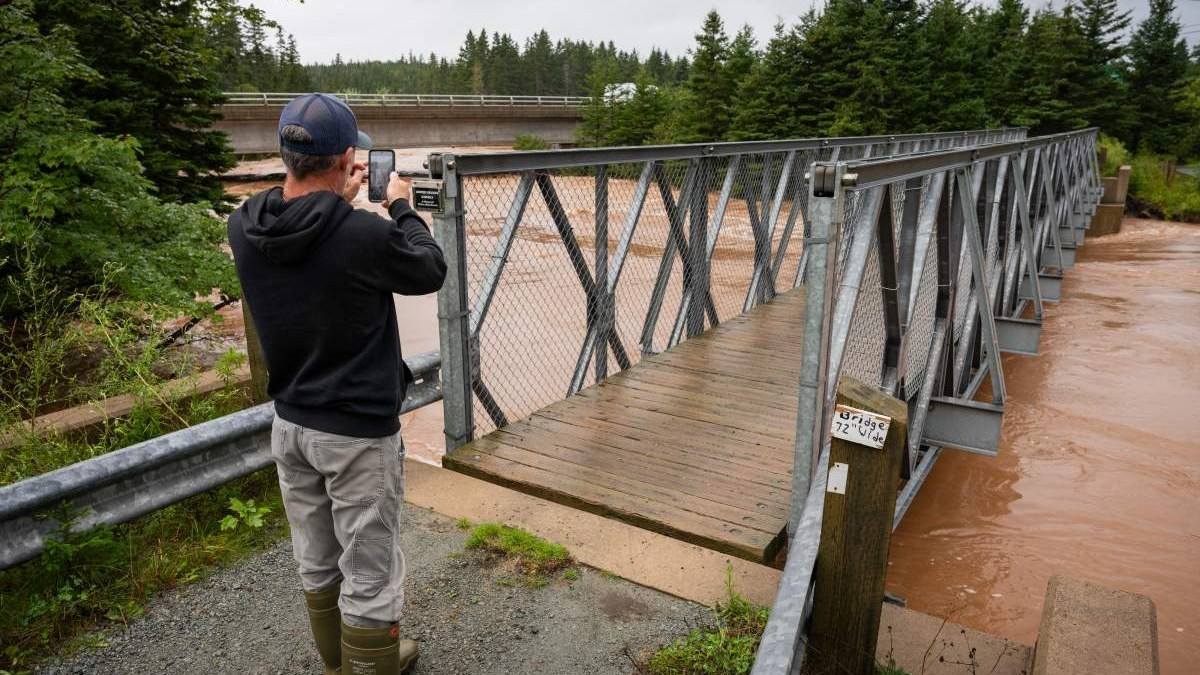
More than 100 millimetres was recorded in multiple locations across the island, including 130 millimetres in Ingonish Beach and 105 millimetres in Sydney. In Richmond County, officials reported more than 200 millimetres of rain had fallen, with bodies of water such as the River Tillard rising to within inches of bridges that span them.

The sheer volume of water overwhelmed local drainage systems and turned normally modest streams into fast-moving torrents. In some areas, the force of the water was enough to undermine road surfaces entirely, leaving gaping holes where asphalt and concrete once provided a solid crossing.
Infrastructure Damage Visible Across the Island
One of the most striking examples of the storm’s destructive power could be found near Marble Mountain in Inverness County, where a section of road was washed out entirely. A large hole opened where the concrete gave way into the water below, a stark illustration of how quickly the storm transformed familiar routes into hazardous obstacles.
Premier Houston said Saturday afternoon that he had joined Richmond MLA Trevor Boudreau earlier in the day at the command centre in Port Hawkesbury to speak with the team coordinating the response. He said crews were actively assessing the damage, but cautioned that the full extent would not be known until after the storm ended and floodwaters receded.
“Once this storm has passed, we will pull crews and equipment where needed from other areas of the province to repair roads and infrastructure as fast as we can,” Houston said on X. The commitment reflects the scale of the challenge facing the province, where rural roads are often the only lifelines connecting small communities to hospitals, schools, and supply routes.
Weather Warnings Lifted, but Showers Persist
Environment Canada has ended its rainfall warnings for Nova Scotia, but the agency advised Sunday that another 10 to 20 millimetres of rain was still possible in some areas. The heaviest rain was expected to taper off Sunday morning, though scattered showers could continue into Monday, prolonging the risk of additional flooding in already saturated areas.
The national weather service’s cautious outlook reflects the reality that even modest additional rainfall can cause problems when the ground is already waterlogged and rivers are running high. Emergency officials are monitoring water levels closely, particularly in areas where rivers like the River Tillard have already approached the underside of bridges.
For residents of Cape Breton, the storm is a reminder of the growing frequency of intense rainfall events in Atlantic Canada. While each storm is distinct, the region has experienced a number of significant flooding episodes in recent years, straining infrastructure that was often designed for less extreme conditions. Municipal and provincial officials have increasingly called for investments in climate resilience, including upgrades to culverts, bridges, and drainage systems.
Community Resilience in the Face of Adversity
Despite the damage, there are signs of the community resilience that has long defined rural and coastal Nova Scotia. Neighbours have been checking on one another, volunteers have offered assistance to those displaced, and local officials have been working around the clock to coordinate the response. The command centre in Port Hawkesbury has become a hub of activity, with representatives from multiple agencies working together to prioritise repairs and ensure public safety.
The province’s emergency management framework is designed to respond to exactly this kind of event. Municipalities declare local states of emergency, which are then supported by provincial resources and, if necessary, federal assistance through programs such as the Disaster Financial Assistance Arrangements. These mechanisms allow for a coordinated response that can draw on resources from across the province when local capacity is stretched thin.
Premier Houston’s visit to the command centre alongside MLA Boudreau underscored the importance of provincial-municipal collaboration in times of crisis. The two leaders spoke with the team about the “extensive damage” and the steps being taken to address it, according to Houston’s social media posts.
Safety Message Reinforced as Cleanup Begins
As the storm moves off and cleanup begins, officials are reinforcing the safety message that proved tragically relevant this weekend. The death of the Cleveland woman is a stark reminder that floodwaters are unpredictable and dangerous, even in familiar places. Vehicles can be swept away by water that appears shallow, and roads can collapse without warning.
Nova Scotia Emergency Management has urged residents to treat all flooded roads as potentially hazardous, regardless of how well they know the area. Barricades are placed for a reason, officials said, and ignoring them puts not only the driver at risk but also the first responders who may be called to assist.
The province has said it will provide updates as damage assessments are completed and repair work begins. For now, the focus remains on ensuring the safety of residents, supporting those who have lost loved ones or property, and beginning the long process of rebuilding what the storm has taken away.
As the waters recede, the full extent of the damage will become clearer, and the province will have a better sense of what is needed to restore roads, bridges, and other infrastructure. Until then, officials are asking for patience and caution from residents who may be eager to return to normal routines.
The loss of life in Cleveland has made this storm more than an infrastructure challenge; it is a human tragedy that will be felt across the province. In his statement, Premier Houston spoke for many Nova Scotians when he expressed sorrow for the woman’s family and friends. “My thoughts are with her loved ones and everyone who is grieving this tragic loss,” he said.
As Cape Breton begins the slow work of recovery, the memory of this weekend’s events will linger. The storm has tested the region’s resilience, and while the physical damage may take months to repair, the community’s determination to rebuild and support one another is already evident.
Tags: Nova Scotia flooding, Cape Breton flooding, Tim Houston, states of emergency, severe weather, flood death, Nova Scotia news
By Alex Thompson, Staff Writer
This article was produced with AI-assisted research and editorial support. Sources: Global News (globalnews.ca).
What's Your Reaction?
 Like
0
Like
0
 Dislike
0
Dislike
0
 Love
0
Love
0
 Funny
0
Funny
0
 Wow
0
Wow
0
 Sad
0
Sad
0
 Angry
0
Angry
0

Canada Correspondent at Global1.News. Based in Toronto, covering Canadian politics, energy, trade, and US-Canada relations. Provides the Canadian perspective on North American and global affairs.















Comments (0)