
SpaceX Rocket Debris Crashes Into the Moon in Rare Accident
A four-tonne chunk of SpaceX rocket the size of a school bus just slammed into the Moon at seven times the speed of sound. This was no controlled landing. It was an accidental cosmic collision that carved a fresh crater and flung lunar dust outward in a dramatic plume. The impact happened early Wednesday near the Einstein Crater, and it is forcing all of us to confront how quickly space is filling up with our leftovers.
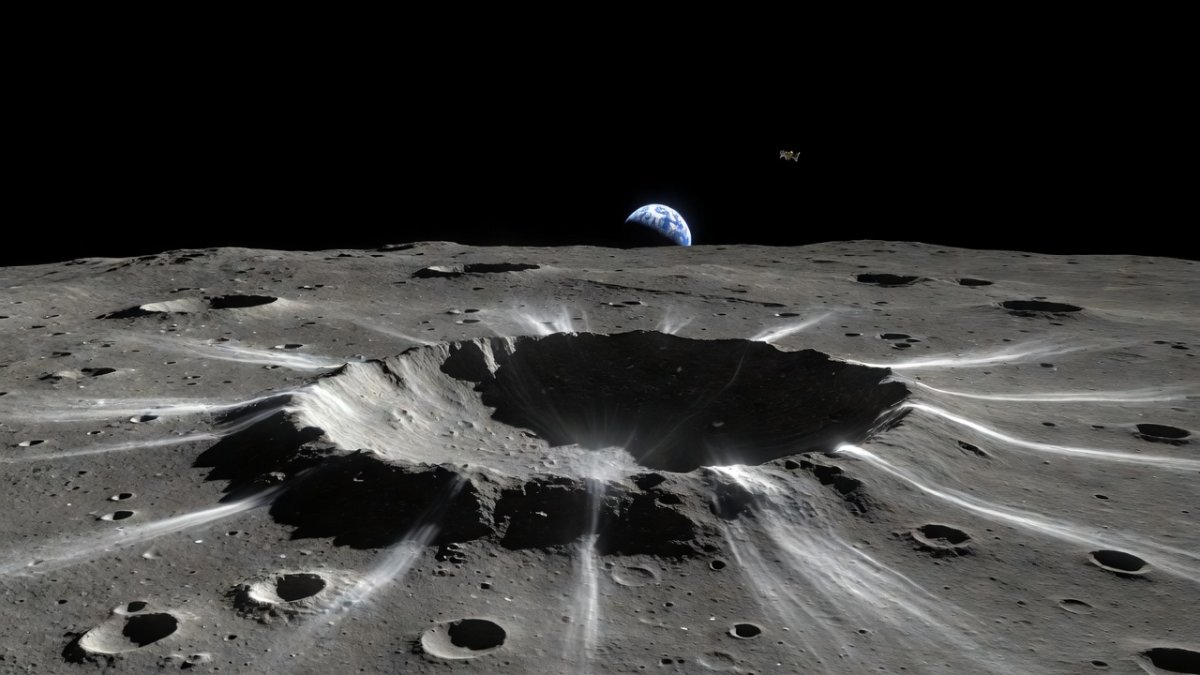
A four-tonne chunk of SpaceX rocket the size of a school bus just slammed into the Moon at seven times the speed of sound. This was no controlled landing. It was an accidental cosmic collision that carved a fresh crater and flung lunar dust outward in a dramatic plume. The impact happened early Wednesday near the Einstein Crater, and it is forcing all of us to confront how quickly space is filling up with our leftovers.
SpaceX Falcon 9 Debris Crashes Into Moon
CAPE CANAVERAL, United States — A discarded second stage from a Falcon 9 rocket launched in early January 2025 from Kennedy Space Center struck the Moon early Wednesday, marking only the second known accidental rocket impact on the lunar surface. The stage had carried a Firefly Aerospace lunar lander and stayed in space because the mission demanded extra thrust that kept it from re-entering Earth’s atmosphere. Over 18 months, gravitational tugs from the Sun, Earth, and Moon slowly bent its path until collision became unavoidable.
The Moment of Impact
The object hit at roughly 8,700 km/h, packing the punch of about three tonnes of TNT. NASA expects the strike to have blasted a crater roughly 60 feet wide and 12 feet deep. Ejecta of dust and rock sprayed outward from the site near the Einstein Crater. Because the impact occurred on the visible edge of the Moon, ground telescopes could not immediately spot the flash. The physics here is straightforward: high-speed collisions on airless bodies create clean, sharp craters that reveal subsurface material in seconds. Orbiters like NASA’s Lunar Reconnaissance Orbiter and South Korea’s Danuri will capture the fresh scar and the lingering plume, giving scientists a clear before-and-after record of how lunar soil reacts to sudden strikes.
The Falcon 9 second stage hit at 5,400 miles per hour, turning its four tonnes into a battering ram that outruns any rifle bullet by a wide margin. That speed delivered the force of three tonnes of TNT, enough to blast a crater sixty feet wide and twelve feet deep while shaking the surrounding regolith like a massive conventional bomb. You feel the raw power when you picture metal punching through lunar rock at seven times the speed of sound.
On an airless world the miles-long dust plume sends ejecta flying far beyond the impact zone because nothing drags the particles down. The crater's depth-to-width ratio will show scientists how much energy stayed in the ground versus what got scattered outward in the plume. Orbiters from NASA and South Korea will map those patterns to refine models of artificial strikes.
How Gravity and Fuel Choices Set the Course
After launch, the Falcon 9 second stage vented its remaining fuel and could no longer maneuver. Solar activity and the combined gravity of Earth, Moon, and Sun gradually altered its orbit until the path pointed straight at the lunar surface. SpaceX director Julianna Scheiman told reporters this week that the trajectory resulted from a mixture of solar activity and gravity forces. Rocket stages on Earth-orbit missions normally fall back and burn up, but lunar missions leave hardware in deep space where small perturbations add up over months. The Falcon 9 mission flew under NASA’s Commercial Lunar Payload Services programme — the same programme that will carry more private landers to the Moon in the coming years. This shared pathway means future missions will navigate an increasingly cluttered cislunar environment where one stage’s leftover trajectory can influence planning for the next.
Bill Gray's April report already mapped the collision months ahead using orbital calculations that tracked the derelict stage through solar activity and gravitational tugs from the Sun, Earth, and Moon. Astronomers watched the months-long countdown as the path bent toward the Einstein Crater region with no way to steer away. The timeline unfolded exactly as predicted once the stage lost its ability to maneuver.
NASA's CLPS programme buys commercial rides like the Firefly lander to build a private lunar economy, which means more stages and more traffic heading to the Moon. The extra thrust needed for that January 2025 launch left the Falcon 9 second stage in space instead of a controlled reentry, adding one more object to an increasingly crowded cislunar path.
What the Crater Will Reveal
NASA’s Lunar Reconnaissance Orbiter and South Korea’s Danuri spacecraft have already shifted their instruments to study the site. They will capture before-and-after images and track the ejected dust plume even though daylight hid the initial flash. The new crater offers a natural experiment in lunar surface mechanics. Scientists can measure how regolith behaves under sudden high-energy impacts and refine models used for future landing safety. General crater physics tells us the depth-to-width ratio will help estimate the energy transferred into the ground. A brand-new crater serves as a scientific gift, exposing subsurface material never altered by billions of years of space weathering.
Expert Voices on the Unplanned Event
NASA spokesperson Jimi Russell stated the impact poses no danger to Earth and that scientists plan to gather lunar data while improving tracking techniques. Independent astronomer Bill Gray, speaking to The Associated Press, noted it highlights carelessness in disposing of leftover hardware and warned that things are getting crowded up there. Reuters and The Guardian both reported similar assessments from tracking experts. Al Jazeera emphasized the growing international concern over uncontrolled objects sharing lunar approaches. Even this accident yields useful data for refining tracking techniques, which NASA has stated as a goal. SpaceX explains the trajectory resulted from solar activity and gravity forces that proved unpreventable, and both agencies are now discussing prevention steps, though the Moon still lacks any traffic cops, cleanup crews, or rules against littering.
Previous Lunar Crashes Set the Stage
This marks only the second accidental rocket debris strike on the Moon. In March 2022 a Chinese Long March 3C stage created an unusual double crater on the far side. NASA’s own 2009 LCROSS mission deliberately crashed a stage to study the resulting plume. Recent soft-landing attempts by Russia, India, and Israel also ended in hard impacts, showing that reaching the Moon remains unforgiving even with modern guidance. Each event adds data points about how different masses and velocities reshape the surface. Israel’s Beresheet lander, which crashed in 2019, carried tiny tardigrades — microscopic animals known for surviving radiation — that may still be on the lunar surface. Such biological remnants join the growing inventory of human artifacts now scattered across the Moon, turning each new impact into both a scientific opportunity and a reminder of unintended legacies.
The 2022 Chinese Long March 3C impact on the far side carved an unusual double crater because two masses struck near-simultaneously, leaving side-by-side scars instead of one clean bowl. That event stood out from single-body strikes and gave researchers a rare look at how clustered hardware behaves on contact. It remains the only prior known accidental lunar debris hit.
In 2009 NASA's LCROSS mission deliberately drove a Centaur stage into the south pole and analyzed the ejected plume for water ice, proving that even planned crashes can deliver solid science. The data confirmed ice in permanently shadowed regions and showed how impact studies can support future exploration without extra hardware.
Space Junk Accountability in the Artemis Era
Thousands of pieces of orbital debris already force active satellites to dodge constantly. When rocket stages meant for lunar missions cannot return to Earth, they become long-term hazards. Scheiman confirmed NASA and SpaceX are now discussing ways to prevent future unintended lunar impacts. The Moon is no longer an empty destination. With NASA’s Artemis program, private landers, and multiple nations planning bases, every uncontrolled object raises the risk that discarded hardware could damage future infrastructure. Unlike Earth orbit, no single agency owns cleanup duty on the Moon. End-of-mission rules for deep-space hardware remain thin, leaving stages to drift until gravity decides their fate. Bill Gray points to a certain carelessness in how leftover hardware is handled. As Artemis and other programs plan permanent bases, the risk grows that new structures could sit among someone else’s trash. Without clear disposal standards, each mission adds to a problem that will only compound as traffic increases.
What Comes Next for Exploration and Policy
Watch for the first high-resolution images from the orbiters in the coming days. Those pictures will show exactly how much material was thrown out and whether the crater matches predictions. The event also pushes regulators to tighten end-of-mission requirements for lunar missions so stages either deorbit safely or are placed in stable graveyard orbits. Artemis timelines call for more landings, and multiple nations plus private firms aim to build on the Moon. This impact serves as a clear signal that traffic rules and disposal standards must come before any base risks damage from wandering debris.
Artemis aims to return humans to the Moon for sustained presence, and the dozens of planned missions will each add new variables to cislunar traffic. Every lander, stage, and payload increases the chance of unintended encounters unless disposal practices tighten. This latest impact shows how quickly the environment changes when multiple nations and companies operate at once.
The Artemis Accords set surface behavior guidelines, yet no binding international rules cover deep-space hardware disposal, leaving gaps that this crash highlights. Without a single agency owning lunar cleanup, events like these push regulators to close the loopholes before traffic grows denser.
By Jessica Ali, Staff Writer
This article was produced with AI-assisted research and editorial support. Reporting is based on sources cited in the article.
What's Your Reaction?
 Like
0
Like
0
 Dislike
0
Dislike
0
 Love
0
Love
0
 Funny
0
Funny
0
 Wow
0
Wow
0
 Sad
0
Sad
0
 Angry
0
Angry
0

Editor-in-Chief at Global1.News. Atlanta-based journalist who cuts through the BS and tells it like it is. Lead anchor, host, and the voice you hear when the spin stops and the truth starts.















Comments (0)