
Trump unveils expanded Quad agenda at Manila summit
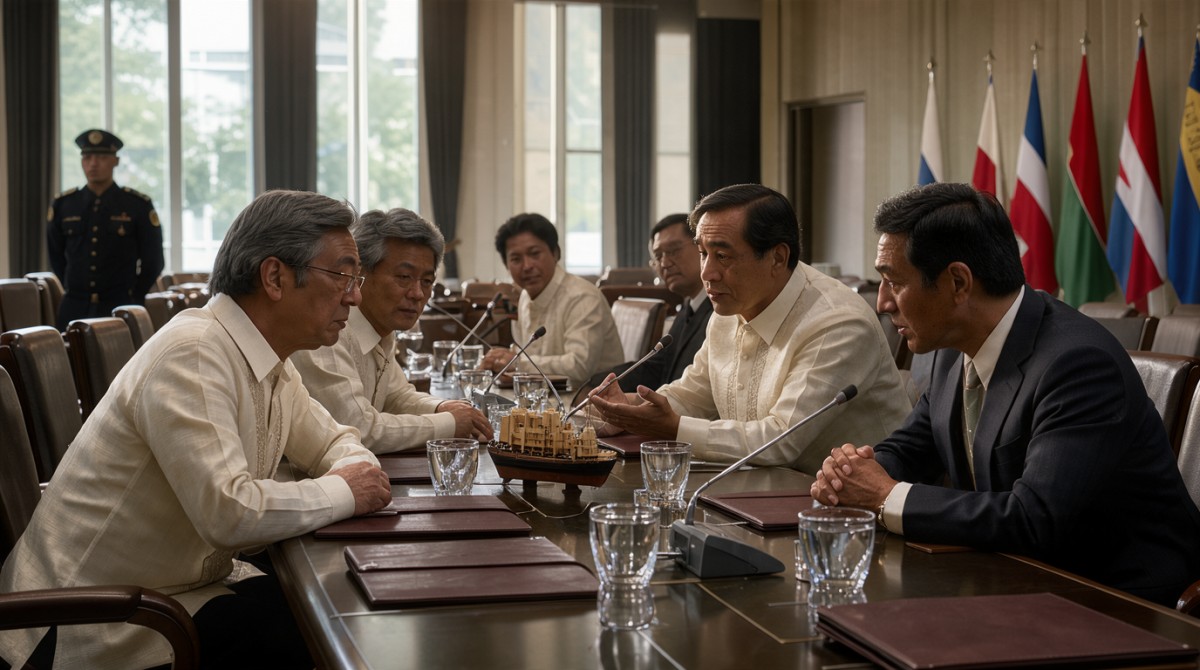
In a striking display of diplomatic choreography on the sidelines of the ASEAN summit in Manila, US President Donald Trump announced a suite of new initiatives that could reshape security, economic and technology cooperation across the Indo‑Pacific.
In a striking display of diplomatic choreography on the sidelines of the ASEAN summit in Manila, US President Donald Trump announced a suite of new initiatives that could reshape security, economic and technology cooperation across the Indo‑Pacific. The announcement, captured in an Al Jazeera English video report on 17 November 2026, outlined expanded maritime security ties, a fresh artificial‑intelligence accelerator, and a commitment of more than $85 million to broaden trusted AI ecosystems throughout the region. While the Quad – comprising the United States, India, Japan and Australia – is a partnership rooted in the Pacific, its ripple effects are already being felt across Africa, where nations watch closely for opportunities to link into new supply‑chain corridors and technology platforms.
Maritime security: a new patrol aircraft exercise
The first pillar of the Manila declaration centres on maritime security. President Trump and his Quad counterparts pledged to deepen cooperation through a new exercise that will involve maritime patrol aircraft. This initiative is designed to enhance surveillance and response capabilities over the contested waters of the South China Sea and beyond. By integrating assets from the United States, India, Japan and Australia, the Quad aims to present a coordinated front against any attempts to destabilise vital sea lanes.
For African coastal states, the emphasis on maritime safety resonates strongly. Nations such as Nigeria, Kenya and Mozambique rely heavily on maritime trade routes that connect them to Asian markets. A more secure Indo‑Pacific could translate into smoother cargo flows, lower insurance premiums and greater confidence for shipping lines that ply between West Africa and Asia. Moreover, the prospect of joint training and technology transfer opens doors for African navies to benefit from advanced patrol aircraft techniques, should bilateral agreements be pursued.
Analysts note that the Quad’s focus on patrol aircraft, rather than larger warships, signals a preference for surveillance and deterrence over direct confrontation. This approach aligns with the broader trend of using “presence” to maintain stability, a strategy that African maritime security frameworks have increasingly adopted through initiatives like the Gulf of Guinea Maritime Security Programme.
AI accelerator: building trusted ecosystems
Technology was the second major theme of the Manila summit. President Trump unveiled an AI accelerator initiative, accompanied by a pledge of more than $85 million to expand access to trusted AI ecosystems across the Indo‑Pacific. The funding is earmarked to support the development of AI tools that meet stringent security standards, ensuring that critical data and algorithms remain insulated from hostile actors.
In the African context, the promise of a trusted AI ecosystem is both an opportunity and a challenge. Countries such as Nigeria and South Africa are rapidly expanding their digital economies, yet they grapple with concerns over data sovereignty and the infiltration of foreign AI platforms that may not align with local regulatory frameworks. The Quad’s AI accelerator could serve as a model for African regional bodies seeking to establish their own trusted AI networks, possibly through partnerships with Quad members willing to share best practices.
Furthermore, the injection of $85 million, while modest compared with the scale of global AI investment, signals a willingness to fund pilot projects and capacity‑building programmes. African start‑ups focused on AI could look to this fund as a potential source of seed capital, especially if they can demonstrate alignment with the Quad’s security criteria. The emphasis on “trusted” ecosystems also dovetails with Africa’s own push for data localisation laws, suggesting a converging policy trajectory that could facilitate smoother collaboration.
Quad Business Leaders Forum: a gateway for African investors
The Manila declaration also set the stage for the first Quad Business Leaders Forum, slated for 2027. This forum will bring together senior executives from the United States, India, Japan and Australia to discuss trade, investment and supply‑chain resilience. While the agenda is still being fleshed out, the very existence of such a platform hints at a widening of economic engagement beyond the traditional Pacific focus.
African business communities are watching closely. The Quad’s emphasis on securing supply chains for critical minerals – a sector where Africa holds a dominant position – could open new avenues for African exporters. Nations like the Democratic Republic of Congo, Zambia and Ghana, rich in cobalt, lithium and rare earths, may find themselves on the radar of Quad investors seeking to diversify away from single‑source dependencies.
Moreover, the Business Leaders Forum could become a conduit for African entrepreneurs to pitch innovations to a global audience. By aligning their proposals with the Quad’s priorities – such as AI‑driven solutions, clean energy technologies and secure logistics – African firms could secure partnerships, joint ventures or technology licences that accelerate domestic industrialisation. The forum’s timing, a year after the Manila summit, provides a clear roadmap for African ministries of trade and industry to prepare participation strategies.
Critical minerals agreements: Africa’s strategic leverage
One of the less publicised but highly significant components of the Manila announcements was the plan to forge new critical minerals agreements among Quad members. While the video report did not detail specific deals, the very mention underscores the growing importance of mineral supply chains in geopolitics. The Quad’s focus on securing these resources reflects a broader global scramble to reduce reliance on any single supplier, a concern that resonates deeply with African producers.
Africa’s vast reserves of cobalt, nickel, lithium and rare earth elements place the continent at the heart of this competition. By engaging proactively with Quad initiatives, African governments can negotiate terms that protect their national interests, such as ensuring fair pricing, local value‑addition and environmental safeguards. The Quad’s interest could also spur investment in mining infrastructure, from rail links to port upgrades, benefitting regional development.
However, the African perspective also demands vigilance. Past experiences with extractive partnerships have shown that without robust governance frameworks, resource exploitation can lead to environmental degradation and community grievances. The Quad’s emphasis on “trusted” ecosystems in AI and security may translate into expectations for transparent, responsible mining practices – an opportunity for African states to leverage the Quad’s standards to raise the bar for all future contracts.
Geopolitical implications: balancing great‑power competition
The Manila summit took place against the backdrop of heightened great‑power rivalry in the Indo‑Pacific, particularly between the United States and China. By expanding Quad cooperation, President Trump signalled a clear intent to bolster a collective front that can counterbalance Beijing’s growing influence. This strategic positioning has reverberations for Africa, where many countries maintain delicate diplomatic balances with both Washington and Beijing.
African nations have long benefited from Chinese investment in infrastructure, while also receiving development assistance and trade opportunities from the United States and its allies. The Quad’s new initiatives may tilt the calculus for African policymakers, prompting them to diversify partnerships and avoid over‑reliance on any single power. For instance, the AI accelerator could offer an alternative to Chinese AI platforms, while the maritime security exercise could provide a template for joint patrols with Western navies.
Furthermore, the Quad’s focus on supply‑chain resilience aligns with Africa’s own agenda to reduce dependency on external sources for critical inputs. By engaging with Quad members, African countries can access alternative technology stacks, financing mechanisms and standards that complement existing relationships, thereby enhancing strategic autonomy.
Looking ahead: Africa’s role in the evolving Quad landscape
As the Quad’s agenda unfolds, the continent stands at a crossroads of opportunity and responsibility. The Manila summit’s announcements – from maritime patrol exercises to AI funding and critical minerals deals – present concrete entry points for African engagement. Ministries of foreign affairs, trade and technology across the continent will need to craft coordinated strategies that capture the benefits while safeguarding national interests.
Key steps include establishing dedicated liaison offices to monitor Quad initiatives, negotiating observer status or partnership agreements for the upcoming Business Leaders Forum, and aligning domestic AI policies with the “trusted” standards promoted by the Quad. In the maritime domain, African coastal states could explore joint training programmes that leverage the Quad’s patrol aircraft expertise, enhancing regional security against piracy and illegal fishing.
Ultimately, the Manila summit underscores a broader shift: security, economics and technology are increasingly intertwined in a single geopolitical tapestry. For Africa, the challenge is to weave its own threads into that tapestry, ensuring that the continent’s voice is heard, its resources are respected and its peoples reap the dividends of a more secure, innovative, and diversified global order.
By Sarah Okafor, Staff Writer
This article was produced with AI-assisted research and editorial support. Reporting is based on the source material cited below. Sources: Al Jazeera English video report (17 November 2026); Al Jazeera English; Global1.News
What's Your Reaction?
 Like
0
 Dislike
0
 Love
0
 Funny
0
 Wow
0
 Sad
0
 Angry
0

Africa Correspondent at Global1.News. Based in Lagos, covering politics, business, technology, and culture across the continent. Focused on telling African stories beyond the headlines — the innovation, entrepreneurs, and communities shaping the region's future.











Comments (0)