
A Copa Wingtip Struck a UPS Jet in Miami, 69 Days After Five Died at the Same Airport
A Copa Airlines 737 wingtip struck the nose of a taxiing UPS 767 at Miami International Airport, leaving two people with minor injuries as the FAA investigates.

The wingtip of a Copa Airlines Boeing 737 struck the nose of a UPS Boeing 767 on a taxiway at Miami International Airport on Saturday night. Two people were treated at the scene for minor injuries. Nobody was taken to a hospital. That is the whole of it, and it is the best news anyone at that airport has had in sixty-nine days.
A Copa Wingtip Struck a UPS Jet in Miami, 69 Days After Five Died at the Same Airport
Miami, Florida — For the second time since September, passengers at one of the busiest cargo gateways in the United States got off a plane and looked at damage that should not have happened on the ground. This time the aircraft were moving slowly, this time the injuries were minor, and this time the story is not the collision. It is the calendar.
What Happened at the Intersection of Two Taxiways
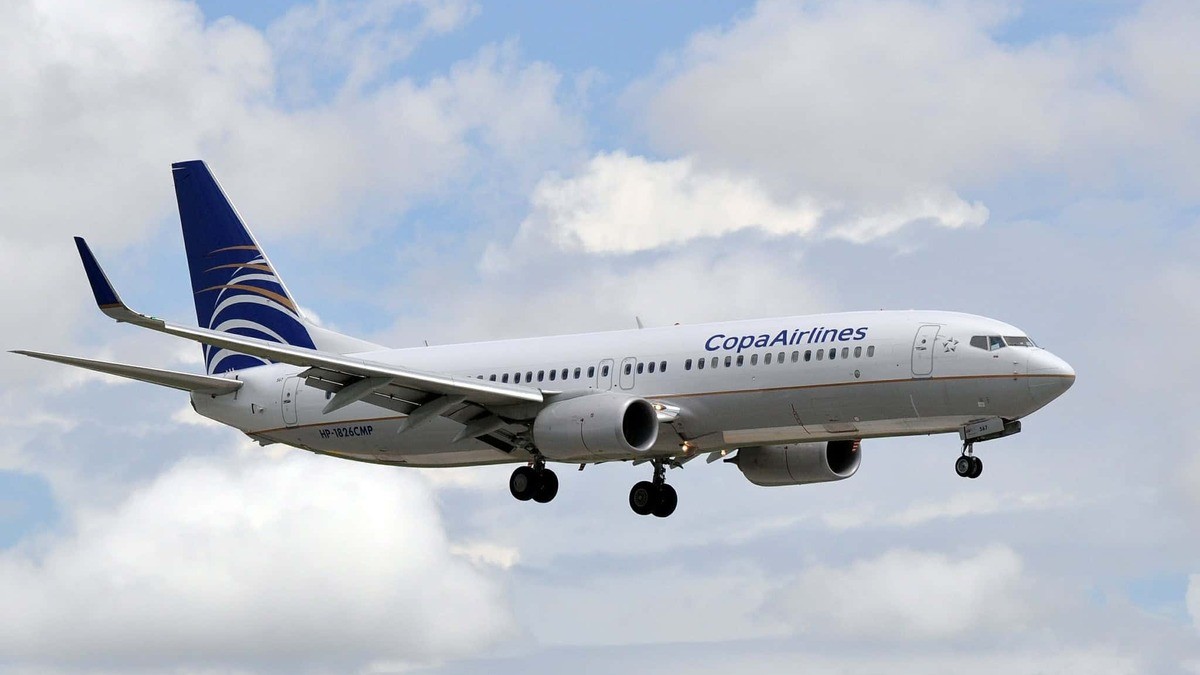
Greg Chin, communications director for the Miami-Dade Aviation Department, said an arriving aircraft and a departing aircraft made contact at the intersection of two taxiways at approximately 9:15 p.m. He said flights were being directed to other taxiways and that there was no impact to airport operations. The Federal Aviation Administration identified the aircraft: the wingtip of a Copa Airlines Boeing 737 struck the nose of a UPS Boeing 767 while both were taxiing. The FAA said air traffic controllers had told the UPS crew to give way to the Copa flight, and that the agency is investigating. UPS Flight 358 was taxiing for departure to Bogota, Colombia. Copa Flight 427 had just landed from Panama City, Panama, and was heading to its gate. Copa is headquartered in Panama City. AeroCorner, working from Flightradar24 tracking data, put Copa's aircraft on the ground as CM427 at about 9:01 p.m. and recorded no departure for the UPS freighter, which was scheduled on a 767 registered N336UP.
First There Were No Injuries. Then There Were Two.
Chin's first statement, given to CBS News Miami, read plainly: "There are no reported injuries." His follow-up statement said two patients were treated on the scene by Miami-Dade Fire Rescue for minor injuries and did not require medical transport. Miami-Dade Fire Rescue put its own response at 9:07 p.m., saying firefighters assessed two patients and that no one was transported. Copa Airlines said the flight carried 166 passengers and six crew members, that airport paramedics evaluated two passengers for what preliminarily appeared to be minor injuries, and that all other passengers and all six crew members were reported to be in good condition. Reports do not say whether the two people treated were passengers or crew. The airline said everyone had disembarked and the aircraft was at the terminal.
"Somebody Hit Us"
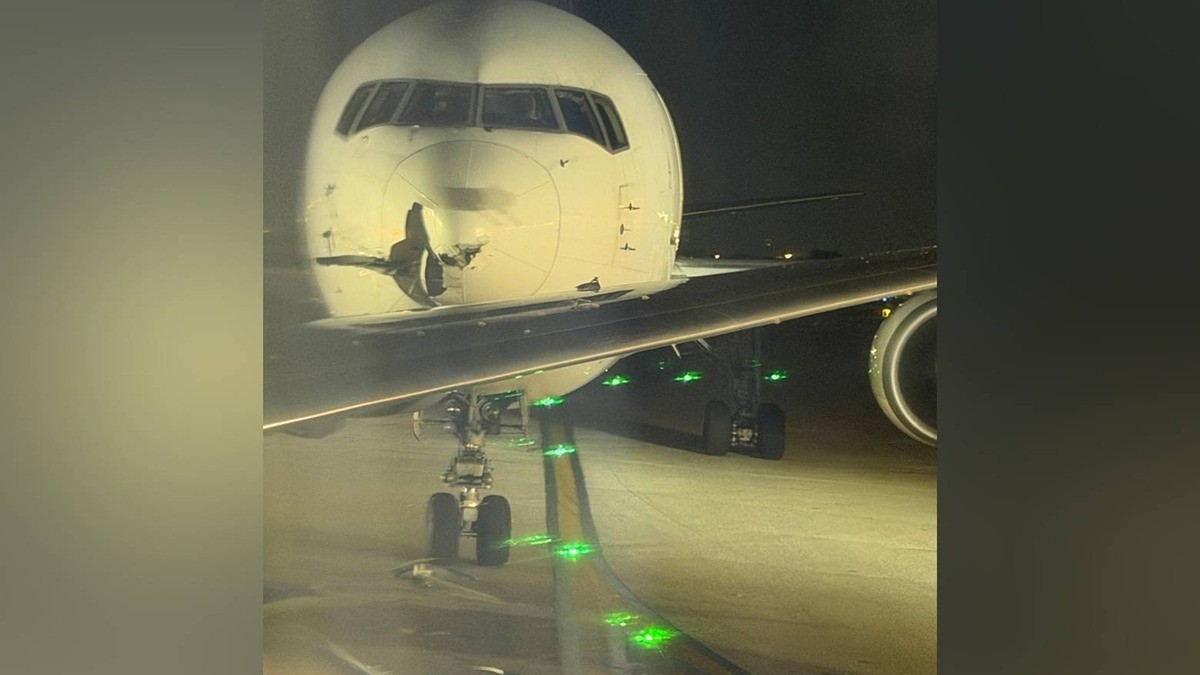
Air traffic control audio, published by ATC.com and quoted by CNN and Simple Flying, carries the exchange in the crew's own words. The Copa pilot reports first: "Somebody hit us." The controller reminds the cargo crew that it had been "supposed to give way to the 73 there," then asks directly: "UPS 358, did you hit that aircraft?" The answer from the UPS flight deck: "Yeah, we went too far and then he... he clipped us with the wing." Moments later the Copa pilot comes back with a detail no dispatcher wants to hear: "It seems that we are missing the left wingtip." The controller told the Copa crew to hold position and confirmed fire trucks were on the way. CNN published a photograph showing the UPS aircraft's nose crumpled, with what it described as a gaping hole in the panels. Neither airline's statement describes the damage.
The Checklist Nobody Wants to Run While Taxiing
Simple Flying, working from the same radio recording, reports that a UPS pilot told the controller the crew was in the middle of a checklist for a runway change. A runway change can mean reprogramming the flight management computer while the aircraft is already rolling, and the trade publication notes that FAA taxiing guidance calls for cockpit workload to be kept to a minimum and for at least one pilot to stay focused outside the aircraft. That detail is reported context, not a finding. The FAA has said only that its controllers told the UPS crew to give way, and no agency has assigned a cause. The distinction matters: in a taxiway collision the aircraft are intact, the people are usually fine, and the explanation has to come from procedure rather than wreckage.
Sixty-Nine Days Earlier, Five People Died on the Ground Here
The National Transportation Safety Board's docket for investigation DCA26MA352 records what happened at the same airport on 6 September 2026. At about 1353 eastern daylight time, 21 Air flight 7598, a Boeing 767-33A registered N1997A, overran runway 30 after landing at Miami International and struck two ground passenger vehicles. The two crew members aboard sustained minor injuries. Five people on the ground sustained fatal injuries, and three people on the ground sustained serious injuries. The aircraft sustained substantial damage, including a postcrash fire on the right wing. The flight was a domestic cargo service operating on behalf of Amazon.com Services LLC under Part 121, from San Juan, Puerto Rico, to Miami. The parties to that investigation include the FAA, Boeing, GE Aerospace, 21 Air, Miami-Dade Aviation, the controllers' union and the airline's pilots' association.
What the Preliminary Report Says, and What It Does Not
The board's preliminary material, published in October, records that both recorders were recovered and read out in Washington. The cockpit voice recorder held more than two hours of good quality audio across four channels; the flight data recorder held roughly 54 hours of data across more than 400 parameters. CBS News Miami reported that the jet hit a perimeter fence, crossed a street and came to rest about 1,200 feet beyond the end of the pavement, and that the first officer had warned the aircraft was coming in too fast. Bloomberg reported the preliminary finding that a controller cleared the aircraft to land without passing on wind information, which FAA procedures require when a tailwind exists. Reuters reported that investigators had not yet interviewed the pilots. That investigation remains open. Nothing in it has been concluded.
The Day After America's Skies Reopened
The collision landed on the back of a week in which the FAA stopped every departing flight in the country. The agency ordered a nationwide ground stop on Friday, and lifted it at 8:15 p.m. Eastern after more than four hours. Transportation Secretary Sean Duffy warned that night that operations would be slow to return to normal while airlines repositioned aircraft and crews. FAA Administrator Bryan Bedford said on Saturday that the schedule should be back to normal by the end of Sunday. Of 41,000 flights scheduled for Saturday, more than 6,400 had been cancelled by Saturday night, according to FlightAware figures carried by WTAE, which also reported more than 800 Sunday cancellations. Other snapshots taken later the same night ran higher. Those are different clock readings of a moving number, not a contradiction.
Fifty Billion Dollars, Requested on Monday
Duffy will formally ask Congress on Monday to authorise 50 billion dollars in emergency funding to overhaul the American air traffic control system, Bloomberg reported. At a press conference on Saturday he had already pointed at the machinery, describing archaic equipment at a 'remote location' and a contractor, L3Harris, switching lines from old copper wire to fibre when communications stalled. He called the company the department's legacy provider. He did not claim to know the fault: "What we're working to determine was whether we had incompetence — meaning, was it user error or installation error from L3Harris — or did they install a faulty router? We haven't determined what the fault was." Whatever happened on that taxiway on Saturday night, the money argument being made on Monday is about the system around it.
Ground Collisions Are Not Rare. They Are Just Usually Quiet.
Simple Flying notes that last month a Delta Air Lines Airbus A350-900 struck the horizontal stabiliser of an Air Canada Boeing 777-200LR while taxiing at Los Angeles International Airport; the Air Canada jet was being towed to its gate when the Delta wingtip lodged in its tail. Miami's particular exposure is cargo. Bloomberg describes it as the busiest airport in the United States for total freight, with almost 3.5 million tonnes shipped in 2025. Reuters, covering the September crash, called it the third busiest for freight. Both descriptions are on the record. What is not in dispute is that a very large amount of freight and a very large number of people move across the same concrete every day, and that the aircraft involved in Saturday's collision were both moving slowly enough that nobody was seriously hurt.
What to Watch
Four things now. The FAA's investigation will establish the sequence on the taxiway and whether the give-way instruction was acknowledged, misheard or simply missed. The damage assessment will decide whether a 767 freighter and a 737-800 fly again this week, and neither airline has said. The September investigation will keep running in parallel, with its findings still ahead of it. And on Monday the money question lands in Congress. For travellers the practical position has not changed: check the flight, expect residual disruption while the schedule resets, and remember that the taxiway is where a very expensive aircraft is at its most vulnerable and its least dramatic.
By Jessica Ali, Staff Writer
This article was produced with AI-assisted research and editorial support. Sources: CBS News Miami, ABC News, CNN, The New York Times, The Boston Globe, The Straits Times (Bloomberg), Reuters via Investing.com, Simple Flying, AeroCorner, WTAE, the Daily Mail and the National Transportation Safety Board investigation docket DCA26MA352. Photographs: Tomas Maliar via ABC News; Eric Salard via AeroCorner; CBS News Miami. Cover: Global 1 News editorial image.
What's Your Reaction?
 Like
0
 Dislike
0
 Love
0
 Funny
0
 Wow
0
 Sad
0
 Angry
0

Editor-in-Chief at Global1.News. Atlanta-based journalist who cuts through the BS and tells it like it is. Lead anchor, host, and the voice you hear when the spin stops and the truth starts.















Comments (0)