
Sky Sues Two Irish Households Over 'Dodgy Box' Use in First Case of Its Kind
Sky has lodged civil copyright proceedings in Wexford Circuit Court against two households over their use of 'dodgy boxes', believed to be the first action in Ireland aimed at users rather than sellers. The broadcaster seeks damages and aggravated damages.

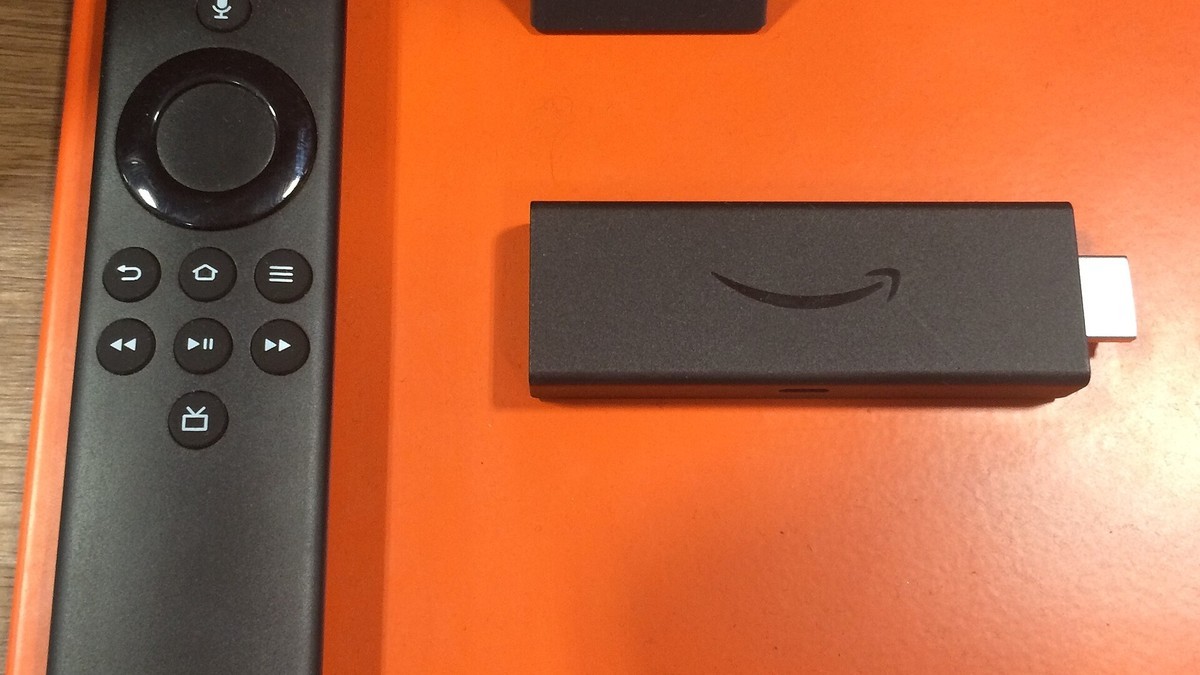
Two households in County Wexford are being sued over what they watched on television. Not for selling anything. Not for running a service. Not for a warehouse full of modified Fire Sticks. For paying for a subscription and using it — and that distinction is the entire story.
Sky Sues Two Irish Households Over 'Dodgy Box' Use in First Case of Its Kind
Wexford, Ireland — Sky has lodged legal papers against two householders in what is believed to be the first civil action in Ireland taken against the people who use illegal streaming devices rather than the people who sell them. The broadcaster confirmed the proceedings in a statement.
The First Time the Viewer Is the Defendant
The case sits in Wexford Circuit Court, where papers have been lodged against two separate households. Until now, enforcement in Ireland has pointed at the supply side: shops and resellers of modified boxes and Fire Sticks have been fined, sued and in some cases jailed. The customer at the end of the chain was treated as a market to be dried up, not a defendant to be pursued.
Sky's own confirmation is blunt about the change in posture. The broadcaster says the two individuals "infringed our copyright by purchasing an unlawful subscription to an illegal IPTV service" — purchasing, not distributing. The action is civil rather than criminal, which means the question before the court is money and injunctions, not a criminal record, and that no finding of any kind has yet been made against either household.
What Sky Is Asking For
According to the Irish Independent's reporting, Sky is seeking damages and aggravated damages under Ireland's copyright legislation, the Copyright and Related Rights Act 2000. The sums claimed in the two cases have not been published.
Aggravated damages are the part worth watching. They are not a fixed tariff but a discretionary addition a court can make on top of ordinary compensation, and in a copyright claim against a household that was warned and did not stop, that is precisely the argument a rights holder would want to run.
Sky's statement to the Irish Independent sets out its position plainly: "Sky has made all reasonable efforts to engage with these individuals, including providing opportunities for them to resolve the matter outside of court, but to no avail." It adds: "There are real consequences to engaging in piracy, and Sky will continue to take targeted action against those who enable, profit from and engage in such illegal services."
The Service That Started This
None of this began with a household. It began with a Wexford man named David Dunbar, of Manor Crescent, Roxborough Manor, who ran an IPTV service called IPTV is Easy and sold subscriptions for €80 to €100 a year. Sky traced payments primarily to his Revolut account. He was fined €30,000 for contempt over breaches of court orders requiring him to preserve data, and he consented to judgment against him for some €480,000 over his infringement activity.
His account statements, once obtained, described a business with two tiers. Over roughly three and a half years, they showed payments of €118,992 from resellers and a further €72,414 plus £9,256 from end users. Twelve resellers and 304 customers had sent money through Revolut. That paper trail — not a raid, not a seizure — is what turned a Wexford operator into a list of names.

How Sky Got the Names
The list was not volunteered. In March, Mr Justice Brian Cregan granted Sky a Norwich Pharmacal order in the High Court, compelling Revolut Bank UAB to hand over details of 304 subscribers and 10 resellers who had paid for the service. Revolut's counsel, John Freeman, told the court his client was neutral on the application and would supply the information on an encrypted spreadsheet within 28 days.
Two details from that hearing matter now. Sky's barrister, Theo Donnelly, said the information was expected to be used to take legal actions against resellers and some of the end users, and conceded it "would just not be possible" to bring cases against all 304 subscribers. Proceedings had already issued against two of the twelve resellers. And Mr Justice Cregan noted Sky's undertaking that the data would be used only for the purpose of initiating proceedings against alleged infringers.

The Letters, and the Two Weeks
In May, Sky sent what it called a first wave of cease-and-desist letters to around 200 individuals who had paid for an unlawful subscription to the service. The vast majority lived in Wexford, but recipients were also contacted in 18 other counties, including Cork, Dublin, Galway, Wicklow and Limerick. Each had two weeks.
The letter described itself as a legal letter and told recipients to stop using illegal IPTV services and switch off access immediately. It said Sky would resolve the matter if they signed undertakings promising not to do it again within a fortnight, and warned that a signed promise broken later carried its own consequences. It also warned that failing to respond would be treated as a lack of cooperation, and that a claim could include an injunction, damages and legal costs. Anyone worried was told to seek independent legal advice.
The €1,200 Question
Money has already changed hands in Wexford. Several householders who initially declined to stop eventually agreed to pay €1,200 each to avoid a court appearance, and other recipients signed undertakings and paid nothing at all. The exact number who settled has not been disclosed.
What the €1,200 is not matters as much as what it is. It is a settlement figure offered to close an individual dispute, not a penalty written into law and not a sum that attaches automatically to anyone else who owns such a device. The two households now in court declined that route. Whatever a judge decides in their cases will be the first judicial answer to a question Irish rights holders have been circling for years: what does the end user actually owe?
Not Just Sky in the Room
Sky is the name on the papers, but it is not the only rights holder with skin in this. Clubber TV, which carries GAA matches, LOITV, which sells League of Ireland games, GAA+ and Premier Sports were all made available through the same service, and Sky says those rights holders "fully support our enforcement action".
The approach is not uniquely Irish either. In Britain, the Federation Against Copyright Theft said it contacted more than 1,000 people in late 2025 after criminal investigations, warning them to stop or risk prosecution. Its chairman, Kieron Sharp, called illegal streaming "not a harmless shortcut" that can expose viewers to fraud, malware, harmful content and the theft of personal data. There, owning a jailbroken streaming device is not in itself unlawful; using it to reach copyrighted material is. Britain's Intellectual Property Office estimates millions of people access content illegally, including about 3.6 million for live sport.
The Case Against the Case
The weakest link in any action of this kind is the evidence, and the sceptics have been saying so since the letters went out. Dr Amy Thomas, a lecturer in intellectual property and information law at the University of Glasgow, told the BBC that identifying someone is not the same as proving copyright infringement. On the data alone, she said, it could be difficult for Sky to prove that the people named actually streamed illegal content.
Her conclusion was sharper still. "Courts are not big fans of speculative invoicing for alleged copyright infringement," she said, describing the letters as designed to have "more of a deterrent effect" rather than to establish what anyone actually owes. That is the tension at the heart of the Wexford files: a payment to an operator proves a payment, and a defendant is entitled to put Sky to proof of what happened on the screen afterwards.
Four Hundred Thousand Living Rooms
The numbers explain why a broadcaster would spend years and legal fees chasing a €100 subscription. Estimates put the use of dodgy boxes or modified Fire Sticks at roughly one in five Irish households — almost 400,000 homes. Earlier this year, reports suggested around 318,000 households in Ireland watched June's Champions League final between Arsenal and Paris Saint-Germain through such a device, against 434,000 who watched it on RTÉ 2.
Sky's own investigator told the High Court that infringement tends to peak around this time of year, with Premier League football a very significant selling point alongside Formula 1 and the majors in golf, and that Sky was anxious to act against five resellers still trading before the season ended. Live sport is the product that cannot be downloaded later, which is exactly why it sits at the centre of both the piracy market and the crackdown.
What Happens Next in Wexford
The two cases will proceed through Wexford Circuit Court, where the households can defend the claims, contest the evidence, or settle on the courthouse steps. Costs will follow whichever way it goes. Nothing in the filing establishes liability, and a civil claim is not a conviction.
What the outcome will settle is narrower but more consequential than any single household's bill: whether a payment record plus a warning is enough for an Irish court to award damages against a viewer, and how much. Sky's closing line to the Irish Independent frames the stakes in its own terms: "By taking this action, we are protecting our content, protecting consumers and supporting the long-term sustainability of the creative industries." For roughly 400,000 households with a stick in the back of the television, the answer is now a matter of public record in the making.
By Jessica Ali, Staff Writer
Photographs: an Amazon Fire TV Stick and its remote by TaurusEmerald via Wikimedia Commons (CC BY-SA 4.0); Commercial Quay in Wexford by Colin Park via geograph.org.uk (CC BY-SA 2.0); the Four Courts, Dublin, by Alanlaighleisphotography via Wikimedia Commons (CC BY-SA 4.0). Cover: Global 1 News editorial image. This article was produced with AI-assisted research and editorial support. Sources: Irish Independent, The Irish Times, Irish Examiner, Irish Mirror, Cork Beo, Balls.ie, BBC News.
What's Your Reaction?
 Like
0
 Dislike
0
 Love
0
 Funny
0
 Wow
0
 Sad
0
 Angry
0

Editor-in-Chief at Global1.News. Atlanta-based journalist who cuts through the BS and tells it like it is. Lead anchor, host, and the voice you hear when the spin stops and the truth starts.













Comments (0)