
Texas Just Slammed the Brakes on AI Data Centers — and the Whole Industry Should Be Paying Attention
Texas Gov. Greg Abbott halted new data center grid connections until audits are complete, with ERCOT's queue of 1,800 projects representing 474 GW — five times the state's record peak demand. The AI buildout just lost its biggest ally.
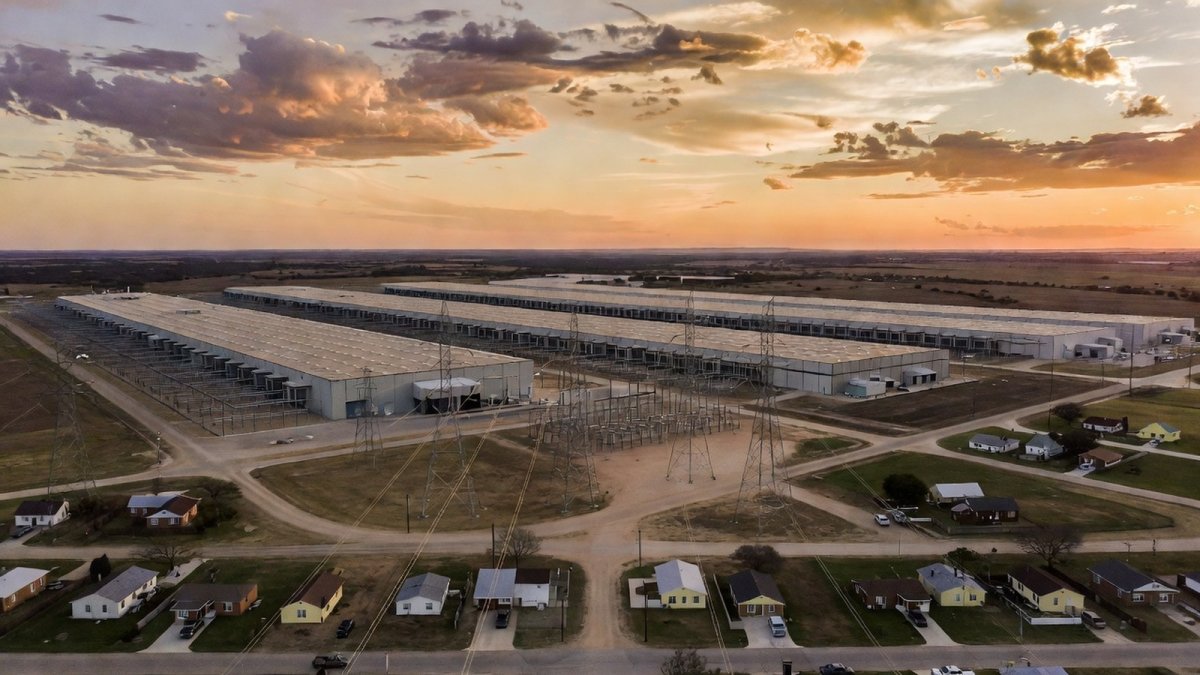
Texas Just Slammed the Brakes on AI Data Centers — and the Whole Industry Should Be Paying Attention
Let me tell you something that's been sitting with me since Monday. The state that spent the last three years selling itself as the AI epicenter of America — the one with the cheap land, the cheap power, the tax breaks, the "come and build it" attitude — just hit the pause button. Not a zoning hearing. Not a community protest that got covered locally. I'm talking about the governor of Texas standing up and telling the grid operator to stop letting data centers plug in until somebody audits the whole damn queue.
Governor Greg Abbott announced on August 3 that he's directing the Public Utility Commission of Texas and ERCOT to do a "comprehensive verification and audit" of every data center in the interconnection process. And here's the part that should make every person running an independent hosting business sit up straight: any project that fails the audit gets denied connection to the Texas grid. "Texans must come first," Abbott said. I've been watching this industry for a decade, and I can tell you — that sentence right there is the sound of the pendulum swinging.
The Texas Story — What Actually Happened Monday
Let me put the numbers on the table, because this is where it gets real. ERCOT is currently tracking more than 1,800 projects in its interconnection queue, representing over 474 gigawatts of connection requests. Read that again. Four hundred seventy-four gigawatts. That's more than five times Texas's record peak electricity demand. And Abbott says about 90 percent of those new power requests are coming from data centers.
The ERCOT queue is a pipeline, right? Not every project in it gets built. A lot of them die on the drawing board. But even ERCOT's own forecast says data center demand and other factors could drive statewide electricity demand to double the current record by 2032. So the state that leads the country in adding new power generation is looking at a queue five times bigger than its peak demand and saying: we don't actually know what's in this pipeline, who owns it, or what it's going to do to our communities. That's not a political stance. That's a due-diligence failure on a scale I've never seen in this industry.
And the audit isn't just about power. Abbott wants to know about tax breaks — and this is where it gets spicy. That data center tax break Texas passed with bipartisan support back in 2014 has ballooned into more than $1 billion in tax breaks every single year. The Texas Tribune reports the state could lose $3.2 billion in sales tax revenue over the next two years. Not eventually. Over the next two years. The governor also wants water consumption data, cooling system details, ownership structures, and what the facilities are doing about noise, light, setbacks, and emergency response for the neighbors. The Texas Tribune has identified at least 335 data centers already operating in the state, with another 248 planned. And the state had no central database of them until journalists went and built the damn thing themselves.
The Numbers Nobody in This Industry Wants to Read
I've written a lot of words about the AI buildout hitting walls — power walls, water walls, community walls. But Texas is different, because Texas was supposed to be the escape hatch. When Virginia started taxing and New York started moratoriuming, the industry's answer was: go to Texas. Cheap land, no income tax, a deregulated grid, and a governor who called his state the "epicenter of AI development" less than a year ago.
That escape hatch just closed. And it closed because the math stopped working. Let me run it for you. A tax incentive that was supposed to be a modest draw is now a billion-dollar-a-year giveaway. A grid queue that used to hold a handful of serious projects now holds 1,800 and counting. Ninety percent of the new demand on the grid is one industry. When one customer class becomes ninety percent of your new load, you don't have a growth story anymore. You have a single point of failure wearing a data center badge.
There's another wrinkle the industry doesn't like talking about. The Data Center Coalition — the trade group that represents some of the biggest tech companies in the world — came out in support of Abbott's directive. Here's the quote from their spokesman Dan Diorio: "Done correctly, this review can showcase the good actors in the data center industry rather than delaying them unnecessarily." Let me translate that from trade-association speak: even the lobbyists know the bad actors are making everyone else look bad, and they're hoping the audit separates them before the politicians do something worse.
Virginia Is Heading the Same Direction — and Canada Just Did the Math
Now here's where I tell you this isn't a Texas thing. It's a pattern. In Virginia — the number one data center market in the country — two Roanoke Valley Republicans and a Democratic lieutenant governor are all calling for a special legislative session over the Dominion Energy–NextEra merger. Two other state senators from opposite parties, Democrat Russet Perry of Loudoun County and Republican Richard Stuart of Westmoreland County, want a special session over a state report on groundwater. The report found Virginia's Coastal Plain aquifer is under serious strain and has "virtually no capacity" to support major new demands. Data centers drink a lot of water, folks. When Republicans and Democrats are both calling for emergency sessions about power and water, the honeymoon is over.
And then there's Canada, where the policy conversation just flipped upside down. A piece published August 3 made the case that Canada's entire data center policy was designed around an "intelligence-scarcity model" that stopped being true on July 27. The argument is brutal in its simplicity. Canada's National AI Strategy says commercial players may need 5.5 gigawatts by 2030. But the country already runs about 337 megawatts of AI data center capacity, with more than 20 gigawatts under planning or development. Every AI prompt sent in Canada in a day draws about 16 megawatts on average and fits inside roughly 51 megawatts of provisioned capacity. Do the division yourself: the gap between what Canadians actually consume and what's being proposed is a factor of roughly four hundred. Nobody can explain that gap. Open-weight models like Moonshot's Kimi K3 shipped their weights publicly. Google reported a thirty-three-fold reduction in the energy of a median Gemini text prompt in twelve months. When the scarcity assumption dies, every 500-megawatt proposal built on that assumption becomes a stranded asset waiting to happen.
The Counter-Argument — "They'll Just Build Their Own Power"
Now let me address the pushback, because I hear it every time I write one of these. The argument goes like this: the moratorium only applies to grid connections. Data centers that build their own on-site power — gas turbines, diesel generators, the works — can bypass the whole thing. And the ERCOT region doesn't even cover the entire state, so projects in places like El Paso are outside the moratorium's reach. Texas is big. The industry will route around it.
Here's my problem with that argument. It's technically true and strategically wrong. The Floodlight nonprofit has already documented AI companies using a permit loophole in Texas to install gas-powered turbines and backup diesel generators on site without environmental reviews or community outreach. You know what happens when you skip the environmental review and the community outreach? You get what Texas is going through right now — a governor who's seen the complaints, read the surveys, and decided the industry can't be trusted to self-report. Building your own power doesn't make you invisible. It makes you a gas plant. And gas plants in residential areas have a way of generating their own political backlash, ent? The on-site power route buys you maybe eighteen months before the same audit, the same survey, and the same moratorium catch up with you.
What This Actually Means for Independent Hosting Providers
Alright. Here's where I stop being the guy who's worried and start being the guy who runs a business. If you're an independent hosting provider, this Texas story is not a spectator sport. It's a market signal, and it's moving your costs right now.
First — treat "cheap power" states as a shrinking resource. Texas was the release valve for data center demand. If the release valve closes, that demand doesn't disappear. It goes back to the states that still have capacity — and they're already raising prices or hitting their own limits. Every colocation contract you sign should have power cost escalation clauses built in, because the era of stable power pricing is over in the states that matter.
Second — do your own water and power diligence before you lease. Abbott's audit is going to drag data center water usage into the light, and disclosure laws are coming. If you're looking at a facility, ask the operator for their WUE — water usage effectiveness — and their actual power source. If they can't answer, that's your answer. Walk away. The providers who can document their resource footprint are going to be the ones who survive the regulatory wave.
Third — position yourself as the transparent alternative. The whole Texas mess happened because the industry refused to answer basic questions about power, water, tax breaks, and ownership. Independent hosting providers don't have that luxury — and that's an advantage. Publish your power mix. Publish your water usage. Publish who owns the building and what the neighbors think of you. When the politicians come looking for scapegoats, the operators who were already transparent get left alone. The ones who hid the ball get audited to death.
Fourth — watch the stranded-asset wave coming in secondary markets. Canada's math — 20 gigawatts under development against 51 megawatts of actual daily demand — is not unique to Canada. When the scarcity narrative breaks, a lot of half-built and pre-leased capacity is going to hit the market at distressed prices. Keep your powder dry. The shakeout is coming, and the independent operators with cash and discipline will be the ones buying capacity at fifty cents on the dollar.
The Bottom Line
Here's what I actually believe after watching this week. The AI infrastructure buildout just lost its most important ally. For three years, the industry could always say "we'll build it in Texas" — and Texas said yes to everything. That's over. The governor of the second-biggest data center market in America just told the grid operator to stop plugging things in until the industry proves it can answer basic questions about power, water, and money. And he's up for reelection, which means this isn't a one-week story. It's a platform.
The scarcity era of AI infrastructure — build it fast, ask questions later, let someone else deal with the grid — is ending. What replaces it is going to be slower, more transparent, and a hell of a lot more honest about what this stuff actually costs. For the independent hosting providers who've been running lean, answering questions, and treating their customers like people instead of workload units, this is not bad news. It's the moment the playing field finally levels.
Texas just asked the industry to show its homework. If you can't show yours, you're going to have a problem. If you can — you're about to have the best decade of your business.
— Allan Ali, Founder
This article was produced with AI-assisted research and editorial support. Reporting is based on sources cited in the article.
What's Your Reaction?
 Like
0
Like
0
 Dislike
0
Dislike
0
 Love
0
Love
0
 Funny
0
Funny
0
 Wow
0
Wow
0
 Sad
0
Sad
0
 Angry
0
Angry
0

Publisher of Global1.News. Automation architect, systems builder, and the guy making sure the truth gets published.















Comments (0)