
Trump, Xi and Putin to Hold First Trilateral Summit, With Ukraine Left Off the Agenda
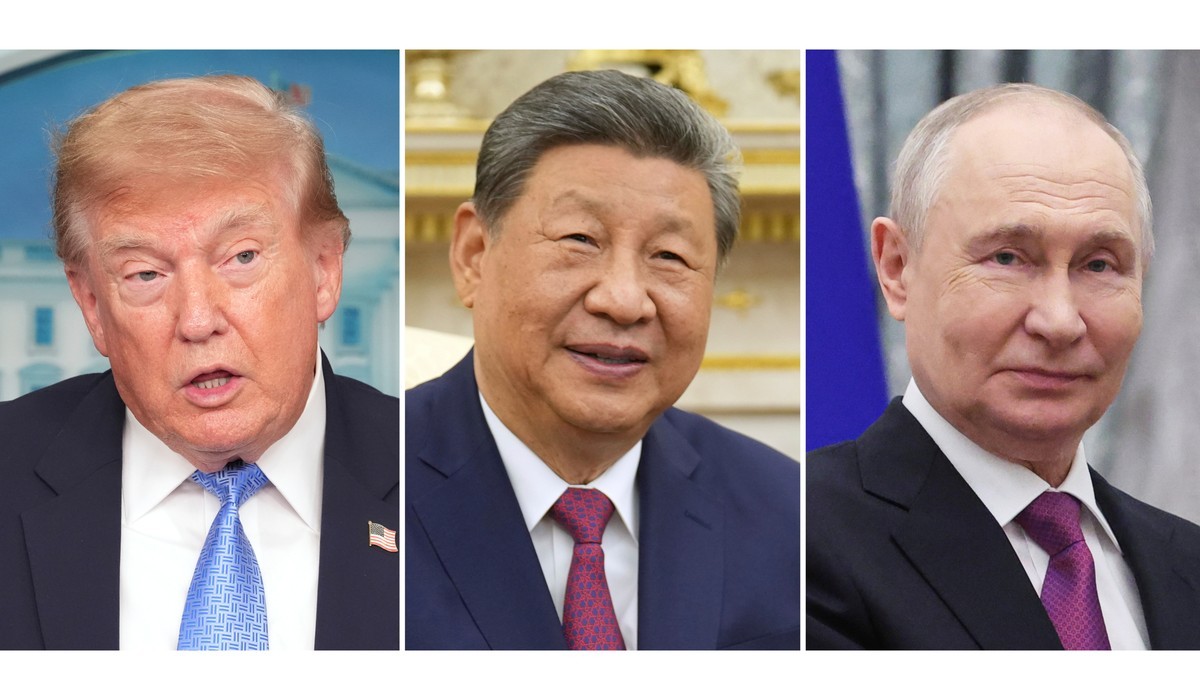
The White House confirmed Friday that Donald Trump, Xi Jinping and Vladimir Putin will hold the first trilateral summit of the three nuclear powers, on the sidelines of APEC in Shenzhen next week. Nuclear arms and Iran are on the agenda. Ukraine is not. In Dublin, Europe named a five-power team.
For the first time in history, the leaders of the United States, China and Russia will sit in one room. The White House confirmed on Friday night that Donald Trump, Xi Jinping and Vladimir Putin will meet next week on the sidelines of the APEC summit in Shenzhen. The stated agenda is nuclear weapons and Iran. Ukraine is not on it. Earlier the same day, in Dublin, Europe answered by finally naming the team it wants at the table.
Trump, Xi and Putin to Hold First Trilateral Summit, With Ukraine Left Off the Agenda
Washington — The announcement came on a Friday night conference call, in the flat language of a scheduling notice, and it described something that has never happened.
The Confirmation From the White House
Olivia Wales, a White House spokesperson, told reporters: "President Trump will conclude his visit to China with a trilateral meeting between the president of the United States, the president of the People's Republic of China and the president of the Russian Federation." The setting is the Asia-Pacific Economic Cooperation summit in Shenzhen, the southern Chinese city that went from fishing village to technology hub in a matter of decades. Trump is due to arrive late on Wednesday for a two-day gathering of the 21 APEC economies, and to hold bilateral talks with Xi on Thursday, their fourth meeting since Trump returned to office in 2025. Trump has met Putin face to face seven times, most recently in Alaska in August 2025, and Xi eight times, including a state visit to Washington in September. But never all three together.
Why These Three, and Why Now
The frame is arms control, and it is broken. New START, the last nuclear pact between Washington and Moscow, expired in February, leaving the two largest arsenals on earth without caps for the first time in more than half a century. When it lapsed, Trump rejected Russia's proposal to extend the two-country deal for another year and demanded "a new, improved and modernized" agreement that includes China. The United Nations urged both sides to agree a new framework without delay. Wales said Trump "has made it clear that, among other topics, he will discuss the reduction of nuclear weapons in the world, whose proliferation President Trump believes is very dangerous." Expectations, however, were being managed downward before the plane left. "We do not expect to get to any kind of agreement," a senior US official said, describing the meeting as "the entry point, the first conversation, certainly at the leader level, between these countries."
The Arsenals on the Table
The numbers explain why Washington wants a third chair. The Pentagon estimates China's arsenal at more than 600 warheads, against more than 5,000 each for the United States and Russia. The Stockholm International Peace Research Institute ranks them Russia first, the United States second, China third. With the American and Russian stockpiles dwarfing its own, Beijing has shown little interest in a nuclear pact, and China has been building rapidly without a pact in place. That asymmetry produced the bluntest line of the week from an unnamed US official: "We do think it's time for China to sort of step up, you know, to the adults' table, if you will, and have adult conversations about adult things." Whether Xi wants the substance of that, or only the prestige of the room, is the first question Shenzhen will answer. Beijing has positioned itself at this summit as a defender of free trade and multilateral rules, and an exclusive three-way table is a different kind of photograph.
Ukraine Is Deliberately Not on the Agenda
The most consequential detail is the one left out. Trump intends to discuss the Iran war with Xi and Putin but not the war in Ukraine, according to a senior US official, who said Ukraine is a separate "track" that China is not part of, so raising it would not be "appropriate". There is no bilateral with Putin scheduled; the two men will appear at events and at the trilateral together. No plan exists for Trump to engage North Korea. Elon Musk is the only business leader in the delegation and will not be part of any official meetings. Nor will Trump raise the espionage investigation centred on Alice Huang, an alleged Chinese intelligence agent who allegedly had a romantic relationship with Nvidia chief Jensen Huang. A senior official said Washington does not negotiate American export controls with Beijing, calling them national security matters settled through the administration's own interagency process. Each of those points was confirmed by US officials briefing reporters.
Europe's Answer, From a Summit in Dublin
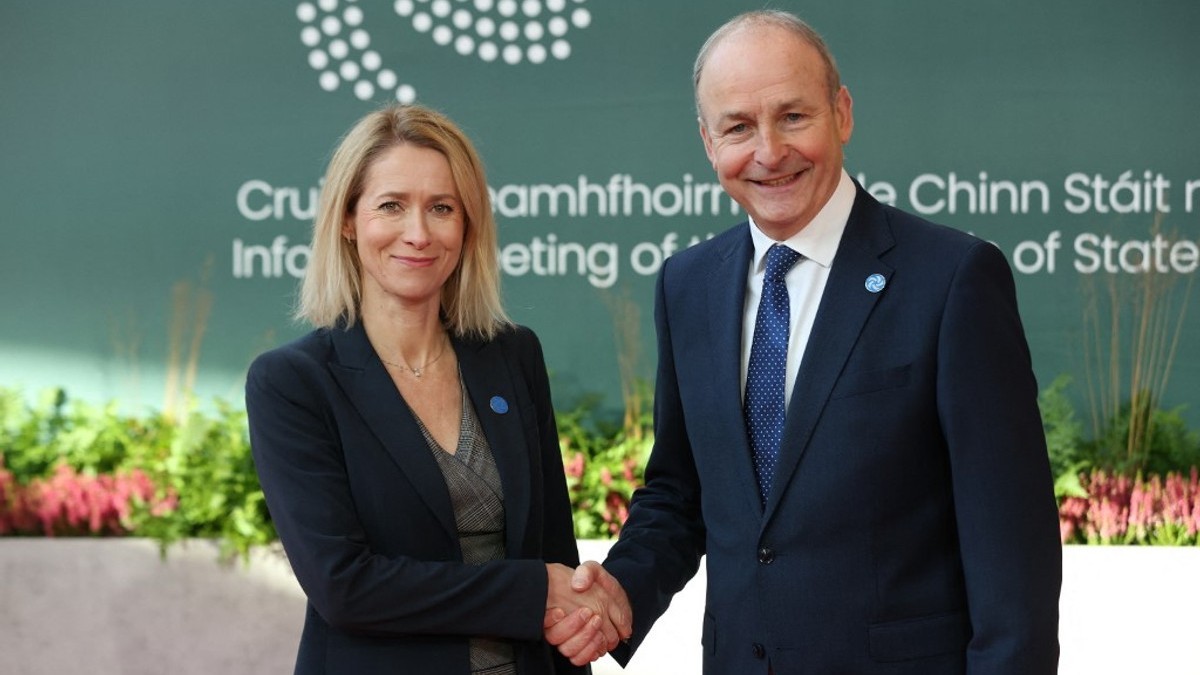
On the same day, in Dublin, the European Union held an informal leaders' meeting and said out loud what it thought of the whole architecture. Kaja Kallas, the bloc's foreign policy chief and a former Estonian prime minister, rejected Moscow's claim to have security grievances at all. "We have one aggressor and one victim, and the aggressor does not have security concerns. Nobody has ever attacked them. They have attacked others," she told reporters. Then the warning: "First we need a ceasefire. If we start to talk about what Russia is asking regarding the security architecture, we actually walk into the traps that Russia is setting us, which is that we divert the attention away from that there is no ceasefire." "I mean, keep the focus, people," she added. She also made the case for herself, without much camouflage. "I know that the Russians don't want me, but, you know, do we have a say who is representing Russia? No, we don't," Kallas said. "They don't want anybody strong on the other side because they want to push through their maximum demands, like they have always done." Her summary of the mandate was one line: "I'm not representing myself. I'm representing 27."
Europe Finally Names a Team of Five Powers
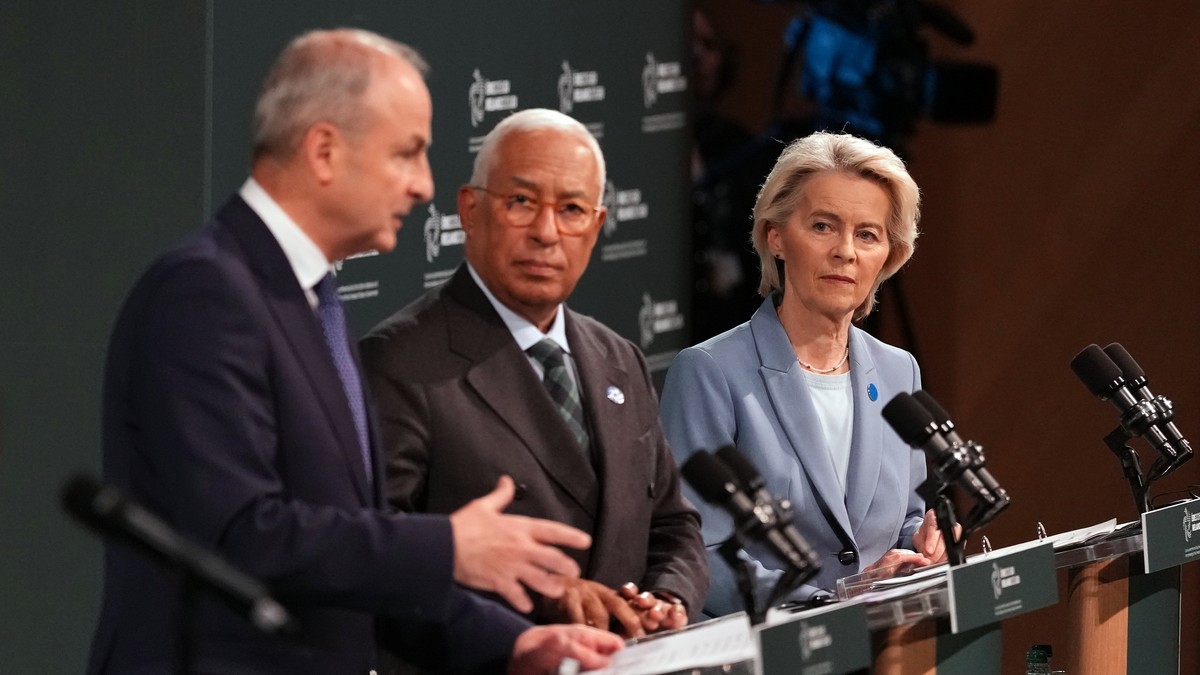
After months of division over who speaks for the continent, the European Council president, Antonio Costa, settled it. Europe's team will be the five major military powers — Britain, which is not in the bloc, plus France, Germany, Italy and Poland — together with the EU institutions. "Europe must speak with one clear voice and united voice in all discussion that shape the future of Ukraine and the security of our continent. And this is ultimately a team effort," Costa said. EU officials said the representatives were likely to be national security advisers from the five, plus delegates from the European Commission and the European Council, with NATO also expected to be represented. Representatives from Britain, France, Germany, Italy and the EU attended talks in Abu Dhabi this week, where Moscow and Kyiv both cited progress but no breakthrough on territory.
Merz Says Europe Already Has a Security Order
The Kremlin's offer to discuss European security architecture first drew a flat rebuttal from Berlin. Friedrich Merz called it "the same old game" and said Europe and Washington had agreed a clear message. "There will be no discussions about Ukraine without Ukraine, and no discussions about Europe without Europe. Furthermore, there is no need to talk about European security architecture. We have that already," the German chancellor said. Poland's Donald Tusk said his view was shared by many others, and that there "can be no revision of Europe's security architecture" — which, he said, is exactly what Putin is demanding. Latvia's Andris Kulbergs called such talks "a trap". The numbers behind the unity are worth noting: forty European countries signed a declaration on Thursday that any matter affecting European security should be decided with Europeans involved. Ursula von der Leyen, the European Commission president, put it more simply, calling it "self-explanatory that Europe is included in the peace talks to safeguard our interests, but also to support Ukraine". Ireland's prime minister, Micheal Martin, said the question of who speaks for Europe "needs to be resolved", and should be settled "within the next week or two".
What the Kremlin Says
Moscow's language was carefully conditional. The Kremlin said on Friday that Russia would be open to European countries taking part in peace talks if it saw they genuinely intended to contribute to peace, while Russian officials continued to insist a broad agreement on Europe's security architecture must come before the details of the war. Dmitry Peskov, the Kremlin spokesman, dismissed comparisons to Yalta, the 1945 meeting where the United States, Britain and the Soviet Union carved up post-war Europe and agreed the shape of the United Nations. Any deals reached in Shenzhen could not be imposed on others, he said, though he still called a meeting of "countries such as Russia, China and the United States" extremely significant, adding that no one should "impose any particular view of global order".
Kyiv's Fear and the Analysts' Read
Neither Beijing nor Moscow had officially confirmed their participation as of Friday night, and Chinese state media reported only that Xi would hold "bilateral" talks, without mentioning a trilateral. Volodymyr Zelenskyy has voiced concern that the meeting could become a platform for a Ukraine deal discussed behind Kyiv's back. Analysts read the guest list differently. "I think the key for Putin was that this was very much about signaling a desire to talk to the president and talk to Chairman Xi in a way that suggests that they're making decisions on Ukraine, which obviously the Ukrainians and the Europeans don't like," said Edgard Kagan, a former US ambassador now at the Center for Strategic and International Studies. Hoo Tiang Boon of Nanyang Technological University said the guest list works against Beijing's own pitch: "You sort of run counter to Chinese support of multilateralism." The backdrop gives the meeting its weight. Beijing is Moscow's largest trading partner, a relationship that has deepened since Putin sent troops into Ukraine in 2022, and the two declared a "no-limits friendship" before the invasion. Trump, for his part, has just waived sanctions to allow the import of millions of tons of Russian diesel, a decision European capitals read as softening.
What Happens Next Week
Trump's Asia trip begins with an ASEAN summit in the Philippines on Tuesday. Wales said the journey would "secure historic wins to the American people and advance America's interests in the Indo Pacific". He lands in Shenzhen late on Wednesday, holds bilateral talks with Xi on Thursday, and closes the visit with the three-way session. US outlets differ on the exact day of the trilateral. No agreement is expected, and none was promised. The questions that will matter are narrower: whether Beijing and Moscow formally confirm the meeting at all; whether a nuclear conversation survives China's stated lack of interest in any pact at all; and whether Europe's new team gets more than a chair. "I hope that we are not just at the table, but we are actually also really influencing the outcome of these negotiations," Kallas said.
By Jessica Ali, Staff Writer
This article was produced with AI-assisted research and editorial support. Sources: NBC News, BBC News, CNN, Al Jazeera, Reuters, RTE, The Hindu (AFP), Kyiv Post, Vatican News. Cover: Global 1 News editorial image. Photographs: AP via Al Jazeera; Paul Faith/AFP via Kyiv Post; Virginia Mayo/AP.
What's Your Reaction?
 Like
0
 Dislike
0
 Love
0
 Funny
0
 Wow
0
 Sad
0
 Angry
0

Editor-in-Chief at Global1.News. Atlanta-based journalist who cuts through the BS and tells it like it is. Lead anchor, host, and the voice you hear when the spin stops and the truth starts.












Comments (0)