
South Korea's Constitutional Court Orders Birth Registration for Foreign Children
In a landmark unanimous decision announced on August 27, 2026, the Constitutional Court of Korea has determined that the absence of a legal mechanism for registering the births of foreign children born within the Republic of Korea is unconstitutional. The ruling, which addresses a significant gap in the nation's family law framework, compels the National Assembly to establish a legislative system for universal birth registration.
In a landmark unanimous decision announced on August 27, 2026, the Constitutional Court of Korea has determined that the absence of a legal mechanism for registering the births of foreign children born within the Republic of Korea is unconstitutional. The ruling, which addresses a significant gap in the nation's family law framework, compels the National Assembly to establish a legislative system for universal birth registration. This decision marks a pivotal moment in South Korea's legal and social evolution, directly confronting the status of children who have, until now, existed in a bureaucratic void.
South Korea's Constitutional Court Orders Birth Registration for Foreign Children
Seoul, South Korea - September 6, 2026 - The court's finding of a "legislative omission" is a profound legal development. It acknowledges that the state has failed in its constitutional duty to provide a pathway for every child born on its soil to obtain an official record of their birth. This is not merely an administrative correction; it is a redefinition of the state's relationship with the most vulnerable members of its society, irrespective of their nationality or their parents' immigration status.
The Legal Void: Understanding the "Legislative Omission"
The core of the issue lies within the Act on Registration of Family Relations. This statute, which governs the system of family registration ( hobok), has historically restricted the ability to register births to Korean nationals. Consequently, a child born in South Korea to foreign parents has no legal avenue to obtain a Korean birth record. This creates a precarious situation where the child's very existence is not officially recognized by the state in which they are born and reside. The Constitutional Court's ruling identifies this as a clear "legislative omission," meaning the National Assembly has failed to enact necessary legislation to fulfill a constitutional obligation. The case was brought before the court by a Vietnamese national, identified only as "A," who entered South Korea on a nonprofessional employment visa. He married B, also a Vietnamese national, in 2016. Their child was born in South Korea in 2019 but could not be registered under Korean law. The birth was only officially recorded in 2020, under Vietnamese law through the family's embassy. This delay and the legal limbo experienced by the family highlight the practical consequences of the legislative gap. The court's reasoning elevates the right to be registered immediately after birth to the status of an "independent fundamental right." While not explicitly stipulated in the text of the Constitution, the court reasoned that this right is a fundamental prerequisite for realizing the general right to personality. It allows a child to demand the minimum safeguards necessary to grow up healthy under the protection of parents and family. Without this initial legal recognition, a child is denied the foundational step to accessing all other rights and protections afforded by the state.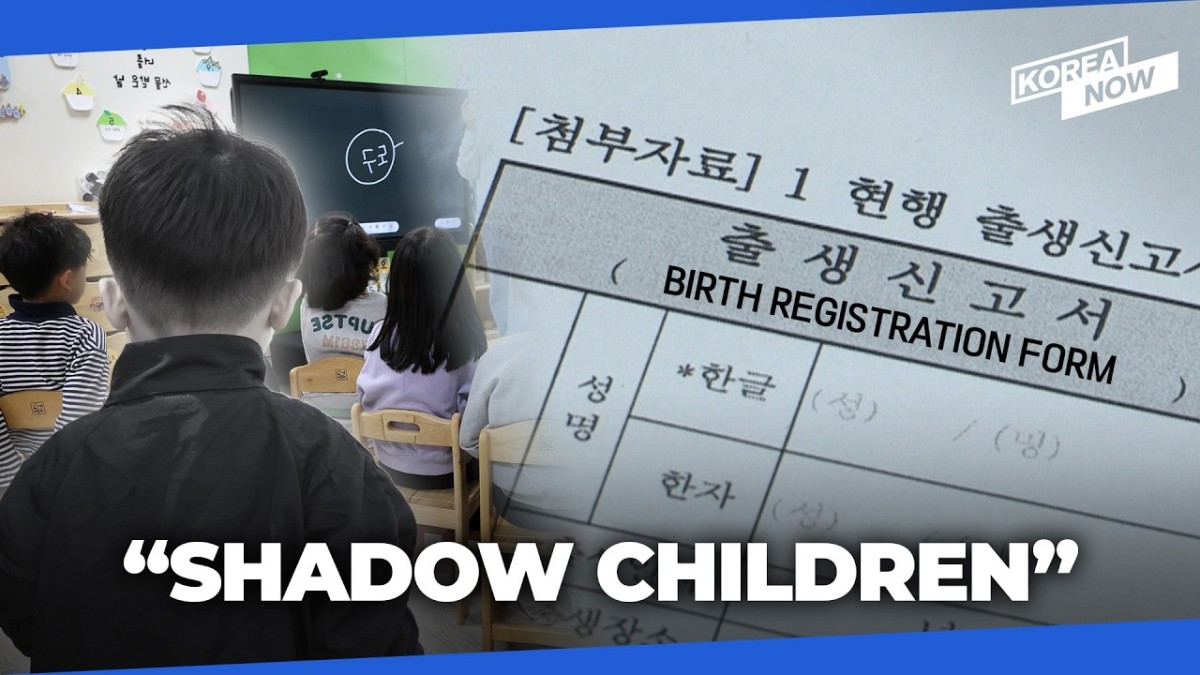
The Plight of "Shadow Children" in a Multicultural Korea
The court's decision shines a stark light on the vulnerabilities faced by children whose births are not officially recorded, often referred to as "shadow children." The ruling explicitly cited the increased risks these children face, including a higher vulnerability to abuse, abandonment, and crime. Their exclusion from essential public services like health care and education is not just an administrative inconvenience; it is a systemic failure that can have lifelong consequences. Furthermore, the lack of an official birth record makes it significantly harder for authorities to detect illegal adoptions and other crimes against children. In a society that prides itself on social cohesion and the protection of its youth, the existence of an invisible population of children is a profound challenge. The court's reasoning acknowledges that while medical or educational support might be provided on an individual, ad-hoc basis, this does not justify the legislative gap. The current system leaves foreign children with "minimal protection and support" during their residence in South Korea, a situation the court found to be untenable. This issue is particularly salient as South Korea navigates its demographic crisis. With the world's lowest birth rate, the nation is increasingly reliant on immigration to sustain its population and economy. The growing number of multicultural families is a direct consequence of this shift. The failure to integrate the children of these families into the formal legal framework is not only a human rights concern but also a strategic misstep for a nation that needs to nurture every member of its future society. The ruling implicitly acknowledges that the legal system must evolve to reflect the new demographic reality of a Korea that is becoming more diverse.
Citizenship vs. Registration: A Critical Distinction
In its ruling, the Constitutional Court was careful to clarify a potentially contentious point: the establishment of a universal birth registration system does not, in any way, imply the granting of South Korean citizenship to foreign children born in the country. This distinction is crucial for understanding the scope and intent of the decision. Birth registration is a matter of documenting a child's existence and establishing their legal identity, not a pathway to nationality. South Korea, like many nations, adheres to a principle of jus sanguinis(right of blood) for citizenship, meaning nationality is typically acquired through descent from a Korean national, not by being born on Korean soil (jus soli). The court's ruling does not challenge this fundamental principle. Instead, it separates the act of registration from the question of citizenship. A child born in Korea to foreign parents would receive a Korean birth record, but their nationality would remain that of their parents, as determined by the laws of their parents' home countries. This clarification is designed to assuage concerns that the ruling could lead to a rise in so-called birth tourism or create a backdoor to citizenship. The court's intent is not to expand the citizenry but to ensure that no child residing in Korea is left without a legal identity. This approach aligns with international human rights standards, particularly the U.N. Convention on the Rights of the Child, which recognizes every child's right to be registered immediately after birth. The ruling positions South Korea as a state that is serious about upholding its international obligations regarding child welfare, even as it maintains its sovereign control over nationality laws.Protecting Undocumented Parents and the Path Forward
A particularly sensitive aspect of the ruling is the court's explicit instruction that the new birth registration procedures must not lead to immigration-law violations. The court stressed that undocumented parents should not be deterred from registering their children out of fear of crackdowns or deportation. This is a critical safeguard designed to ensure that the new system is effective and does not inadvertently push the most vulnerable children further into the shadows. The current practice, where foreign nationals typically register a child's birth through their own country's embassy and then register the child as a foreign national with the immigration office, is deemed insufficient. This process is contingent on the parents' ability and willingness to engage with their home country's bureaucracy, which may not always be possible or safe. For undocumented parents, engaging with any official body carries a risk. The court's ruling effectively requires that the new system separate the act of registering a child's birth from immigration enforcement, ensuring that a parent's primary duty to their child does not expose them to legal peril. The onus now falls on the National Assembly to draft and pass legislation that establishes this new system. This will be a complex legislative task, requiring careful consideration of how to implement a universal registration system that is accessible, secure, and insulated from immigration enforcement. The legislature must define the procedures, determine which authorities will be responsible for registration, and establish protocols for data protection. The court has set a clear constitutional standard, and the National Assembly must now translate that standard into a functional legal framework. The timeline for this legislative process is not specified, but the court's decisive ruling creates a strong imperative for swift action.Implications for Korea's Demographic and Social Future
This ruling is more than a legal correction; it is a statement about the kind of society South Korea aspires to be. By affirming the right of every child to a legal identity, the Constitutional Court has reinforced the principle of human dignity at the core of the nation's legal order. It acknowledges that in a rapidly changing world, the law must adapt to protect all individuals within its jurisdiction, not just its citizens. The decision also has significant implications for South Korea's social fabric. As the nation confronts its demographic decline, the successful integration of multicultural families becomes ever more critical. Ensuring that all children, regardless of their background, have access to education, healthcare, and legal protection is essential for building a cohesive and prosperous society. The "shadow children" of today are the potential workers, innovators, and citizens of tomorrow. By bringing them into the light of legal recognition, the court has taken a significant step toward securing Korea's demographic and social future. The ruling is a clear signal that the era of treating foreign residents as temporary sojourners is over. South Korea is increasingly a country of immigration, and its legal and social institutions must reflect this new reality. The Constitutional Court's decision provides a constitutional foundation for a more inclusive and protective legal order, one that recognizes the inherent dignity and rights of every child born within its borders. The National Assembly's response to this mandate will be a defining test of Korea's commitment to these principles.By Prof. David Park, Staff Writer
This article was produced with AI-assisted research and editorial support. Reporting is based on sources cited in the article.
What's Your Reaction?
 Like
0
Like
0
 Dislike
0
Dislike
0
 Love
0
Love
0
 Funny
0
Funny
0
 Wow
0
Wow
0
 Sad
0
Sad
0
 Angry
0
Angry
0

East Asia/Technology Correspondent at Global1.News. Seoul-based voice covering Korean politics, technology, business, and culture. Analyzes how technology and geopolitics intersect across East Asia.














Comments (0)