
2027: Don’t repeat your previous mistake – Lamido warns Nigerians against APC
Former Jigawa State Governor Sule Lamido, a founding member of the Peoples Democratic Party (PDP), used the inauguration of the party’s state campaign council in Dutse on 17 October 2026 to issue a stark warning to voters ahead of the 2027 general elections.
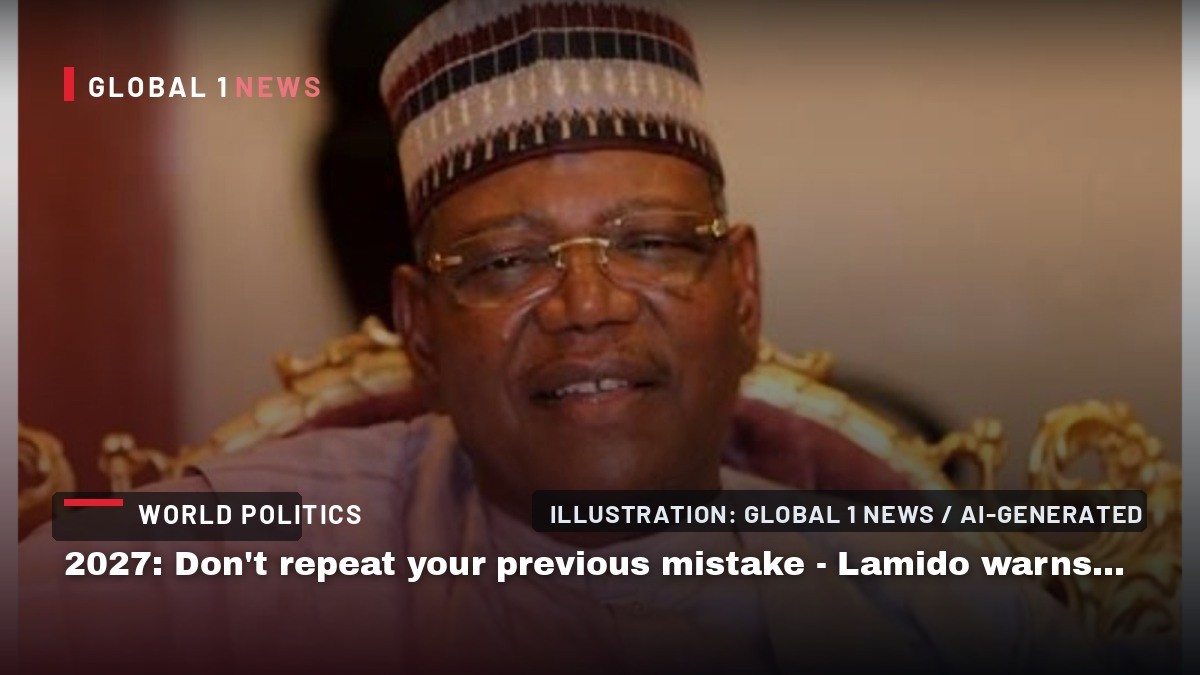
Former Jigawa State Governor Sule Lamido, a founding member of the Peoples Democratic Party (PDP), used the inauguration of the party’s state campaign council in Dutse on 17 October 2026 to issue a stark warning to voters ahead of the 2027 general elections. Speaking to a gathering of party supporters, Lamido urged Nigerians to reflect on past voting choices, particularly the decision to back the All Progressives Congress (APC) in previous polls, and to weigh those experiences against the performance of the PDP in its earlier administrations.
Lamido’s Call for Critical Assessment
Lamido framed his appeal as a matter of national learning. “I believe Nigerians have learnt from their mistakes. Therefore, they must critically examine the achievements of previous administrations under the PDP and compare them with those of the current administration before deciding who should lead them,” he said. The former governor emphasized that the upcoming 2027 elections present a pivotal moment for voters to apply that learning, suggesting that a more discerning electorate could steer the country toward better governance.
His message resonated with a broader PDP narrative that positions the party as a seasoned political force capable of delivering stability. By urging citizens to scrutinise both past and present records, Lamido sought to shift the electoral discourse from partisan loyalty to performance‑based judgment.
Critique of the APC’s Record
Lamido did not shy away from highlighting perceived shortcomings of the APC‑led administration. He alleged that the ruling party has failed to meet Nigerians’ expectations across critical sectors, a shortfall he said is evident both nationally and in Jigawa State. “The country and Jigawa State needed experienced and competent leaders to address their challenges,” he asserted, implying that the APC’s leadership has fallen short of that benchmark.
Specific grievances centred on healthcare and education. Lamido warned that “Jigawa is facing serious challenges in accessing quality healthcare. Hospitals lack adequate medical services and essential drugs, while the education sector continues to deteriorate.” By foregrounding these everyday hardships, he aimed to connect the party’s national performance to tangible impacts on ordinary Nigerians.
Positioning the PDP as a Historical Pillar
In defending the PDP, Lamido highlighted the party’s longevity and its role as a cradle for many of Nigeria’s political leaders. He noted that since the return to civilian rule in 1999, “almost all political parties have collapsed, leaving the PDP as the only surviving party to date.” This claim underscores the PDP’s narrative of resilience amidst a volatile party landscape.
Lamido’s rhetorical flourish, “It has seen yesterday, today and, by the grace of God, it will see tomorrow,” reinforced the notion that the PDP’s legacy is intertwined with Nigeria’s democratic journey. By invoking both history and divine providence, he sought to evoke a sense of continuity and destiny that could galvanise supporters.
Campaign Strategy and Tone
Beyond critique, Lamido outlined the PDP’s tactical preparations for the 2027 electoral cycle. He assured supporters that the party would field candidates at every level—presidency, Senate, House of Representatives, and State House of Assembly—signalling a comprehensive approach to reclaiming political ground.
Importantly, he pledged a campaign characterised by civility. “We will conduct peaceful campaigns without insults, intimidation or personal attacks,” Lamido declared, positioning the PDP as a disciplined alternative to what he implied were the APC’s more confrontational tactics. This emphasis on decorum aligns with the party’s stated objective of restoring public confidence in leadership.
Implications for Jigawa’s Voters
Lamido’s address was delivered in Dutse, the state capital, directly addressing Jigawa’s electorate. By linking national criticisms to local realities—particularly the shortages in healthcare facilities and the decline in educational standards—he aimed to make the PDP’s appeal resonate on the ground.
The former governor’s call for “experienced and competent leaders” taps into a broader sentiment among Jigawa residents who have felt the strain of limited public services. If the PDP can translate these grievances into concrete policy proposals, it may sway undecided voters who are fatigued by repeated service delivery failures.
Broader Political Context Ahead of 2027
Lamido’s remarks must be read against the backdrop of Nigeria’s evolving party system. Since 1999, the political arena has witnessed the rise and fall of numerous parties, yet the PDP has persisted as a central player. By portraying the APC as a party that has “failed to meet expectations,” Lamido is attempting to re‑energise the PDP’s base while courting swing voters disillusioned with the current administration.
The focus on “good governance” and “public confidence” reflects a wider trend among opposition parties seeking to capitalise on service delivery gaps. As the 2027 elections approach, the narrative of competence versus complacency is likely to dominate campaign rhetoric across the country.
Looking Ahead: What Voters Should Watch For
Lamido’s warning serves as a reminder that the 2027 polls will be judged not merely on party loyalty but on tangible outcomes. Voters are encouraged to compare the PDP’s historical record—its governance from 1999 onward—with the current APC administration’s performance, particularly in health and education.
As the PDP mobilises its campaign council and pledges a peaceful, issue‑focused contest, the onus now lies with the electorate to scrutinise promises against lived realities. Whether the party can translate its legacy into a compelling vision for the future will determine if Lamido’s cautionary message resonates beyond Jigawa and influences the national electoral tide.
This article was produced with AI-assisted research and editorial support. Reporting is based on the source material cited below. Sources: Daily Post Nigeria; dailypost.ng; Global1.News (17 October 2026).
By Sarah Okafor, Staff Writer
What's Your Reaction?
 Like
0
Like
0
 Dislike
0
Dislike
0
 Love
0
Love
0
 Funny
0
Funny
0
 Wow
0
Wow
0
 Sad
0
Sad
0
 Angry
0
Angry
0

Africa Correspondent at Global1.News. Based in Lagos, covering politics, business, technology, and culture across the continent. Focused on telling African stories beyond the headlines — the innovation, entrepreneurs, and communities shaping the region's future.













Comments (0)