
Japan's Takaichi Administration Sends Cautious Signals of Dialogue to Beijing
Nearly a year after Prime Minister Sanae Takaichi’s November 2025 Diet remarks on the Taiwan Strait triggered the most severe deterioration in Japan-China relations since diplomatic normalization in 1972, the Takaichi administration is now signaling a careful, if limited, openness to dialogue.
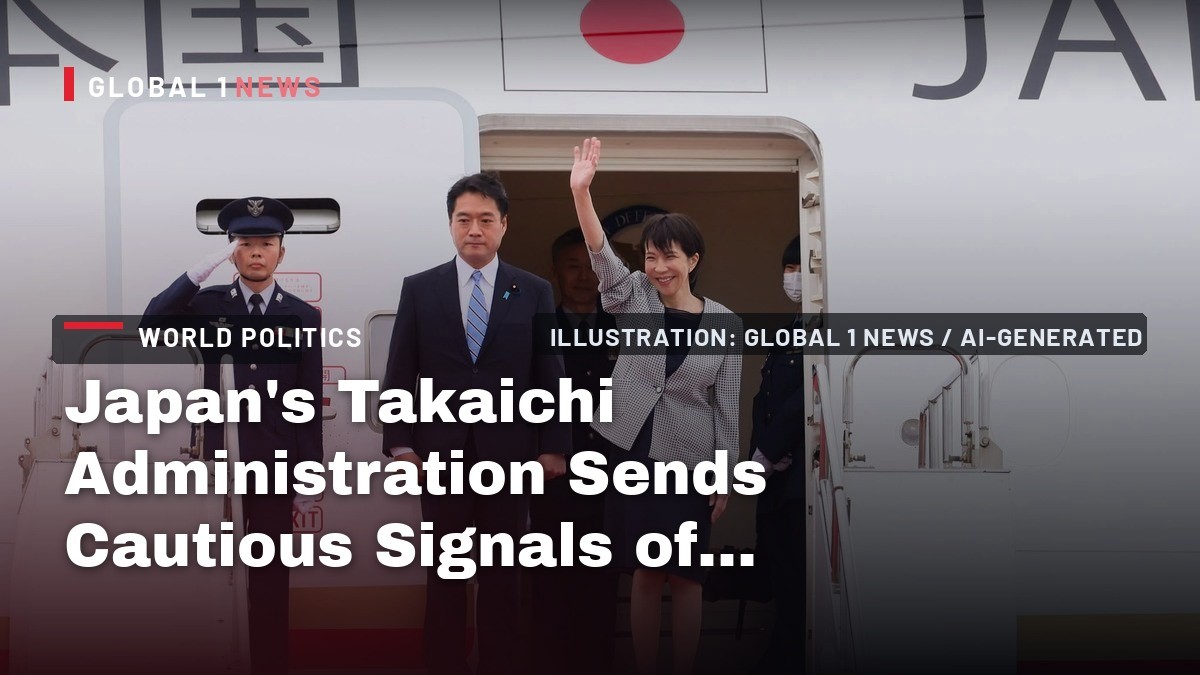
Nearly a year after Prime Minister Sanae Takaichi’s November 2025 Diet remarks on the Taiwan Strait triggered the most severe deterioration in Japan-China relations since diplomatic normalization in 1972, the Takaichi administration is now signaling a careful, if limited, openness to dialogue. The signals are subtle—a brief ministerial greeting in Laos, a terse expression of anticipation for an upcoming summit—yet they mark a notable shift in tone from a government that has otherwise refused to retract its statements or alter its policy posture.
The diplomatic freeze has been costly for both sides, though asymmetrically so. China has imposed economic restrictions on Japanese companies, curtailed rare earth exports, and limited tourism and academic exchanges. Japan, for its part, has maintained its security commitments while repeatedly asserting that its fundamental policy toward Taiwan remains unchanged. As the November 2026 APEC summit in China approaches, the question is whether these tentative signals can evolve into a genuine stabilization of bilateral ties—or whether they represent little more than diplomatic choreography.
The November 7 Trigger and Its Aftermath
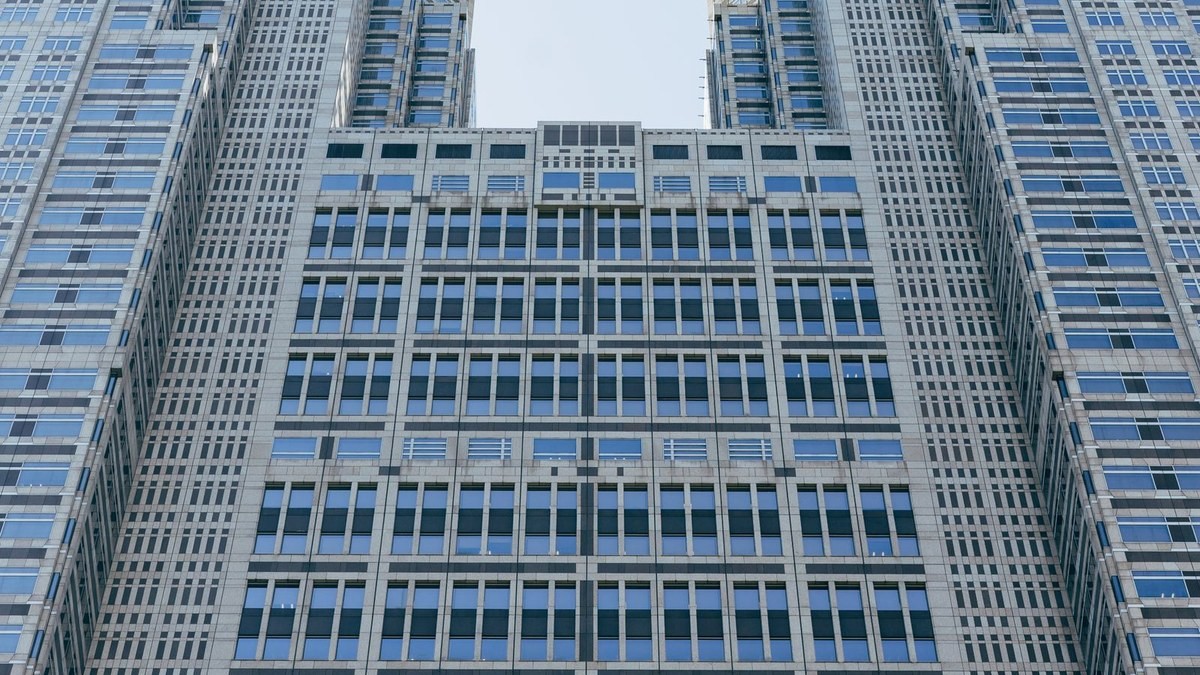
The current crisis traces to a November 7, 2025, session of the Budget Committee of the Lower House of the Diet, where Prime Minister Takaichi was asked to clarify the legal circumstances under which Japan’s right of collective self-defense would apply. During the debate, the Taiwan Strait was cited as a hypothetical example of a “survival-threatening situation.” The response, while framed in legal terms, was immediately interpreted by Beijing as a shift in Japan’s posture toward the island.
China’s reaction was swift and multifaceted. The Chinese government accused Japan of “neo-militarism,” a loaded term that evokes historical grievances and contemporary strategic anxieties. More concretely, Beijing moved to normalize Chinese Navy activities—particularly aircraft carrier operations—in the waters between the First and Second Island Chains, while the Chinese Coast Guard began deploying east of Taiwan’s coast. These operational changes represent a qualitative shift in China’s maritime posture, extending its presence into areas previously considered beyond routine patrol zones.
Economically, China applied security-related provisions to Japanese companies, imposed restrictions on rare earth exports, and took measures to curtail tourism and other exchanges. The scope of these measures affected not only corporate interests but also local-governmental and academic ties, which had been carefully cultivated over decades. The breadth of the response suggested that Beijing was not merely reacting to a single statement but was using the incident to recalibrate the entire bilateral relationship.
Takaichi’s Consistent, If Repetitive, Position
Throughout the ensuing months, Prime Minister Takaichi has maintained a remarkably consistent public position. At a November 11, 2025, Budget Committee session, she stated that “peace and stability in the Taiwan Strait are important not only for Japanese security but also for the stability of the international community as a whole,” adding that Japan has “consistently held the expectation that issues surrounding Taiwan will be resolved peacefully through dialogue.”
On December 3, 2025, in a plenary session of the House of Representatives, she sought to dispel any notion of a policy shift, declaring that “our government’s basic position regarding Taiwan hasn’t changed and is as stated in the 1972 Japan-China Joint Communiqué.” This reference to the foundational document of bilateral normalization was clearly intended to reassure Beijing that Japan’s official position—which acknowledges the People’s Republic of China as the sole legal government of China—remained intact.
At a November 26, 2025, Joint Meeting of the Committees of Both Houses on Fundamental National Policies, Takaichi emphasized that the two sides had “agreed to building constructive and stable Japan-China relations” and that “if there are concerns or challenges between us, they will be resolved through communication, communication between the leaders.” She added that “Japan is always constructive and open to dialogue with China.”
This formula—asserting policy continuity while expressing openness to dialogue—has been repeated across numerous Diet sessions. Speakers have consistently used the phrase to “closely monitor the situation and respond appropriately, including to the effects of the various measures from China.” The repetition itself is notable: it reflects a government that is determined not to escalate the crisis through new statements while also refusing to capitulate to Chinese demands for a retraction.
Diplomatic Signals and Their Limits
Despite the frozen atmosphere, several signals in mid-2026 suggested a possible thaw. On July 23, 2026, Japanese Foreign Minister Toshimitsu Motegi apparently exchanged a brief greeting with his Chinese counterpart, Wang Yi, at the ASEAN-related Foreign Ministers’ Meetings. China denied that the exchange occurred, but it appears certain that Motegi made the approach. The timing is significant: the day before, U.S. Secretary of State Marco Rubio had told Wang Yi that he saw a worrying trend of deteriorating Japan-China relations. Whether Motegi’s approach was a direct response to Rubio’s remarks remains unclear, but Japan is at minimum signaling a proactive stance toward dialogue.
A second signal came on July 27, 2026, when Prime Minister Takaichi was asked at a press conference about the upcoming November APEC summit. Her response was notably brief: “I am looking forward to it.” While the likelihood of a formal Japan-China bilateral meeting remains low, the summit host, Chinese President Xi Jinping, would be expected to greet all attending leaders, making some form of contact difficult to avoid. The precedent of the October 31, 2025, meeting between the Japanese and Chinese leaders on the sidelines of the APEC Leaders’ Meeting in South Korea suggests that even strained relationships can produce moments of diplomatic engagement.
There have also been indications from Beijing that private exchanges might be welcomed. A Chinese Foreign Ministry spokesperson made remarks in late June 2026 that appeared to give a green light for business and parliamentary exchanges between the two countries. A range of business associations and parliamentary groups are now scheduled to visit China this fall. Whether this supposed “green light” actually originated from China’s leadership remains unclear, but the timing suggests a deliberate, if cautious, opening.
Economic Pressures and Policy Adjustments
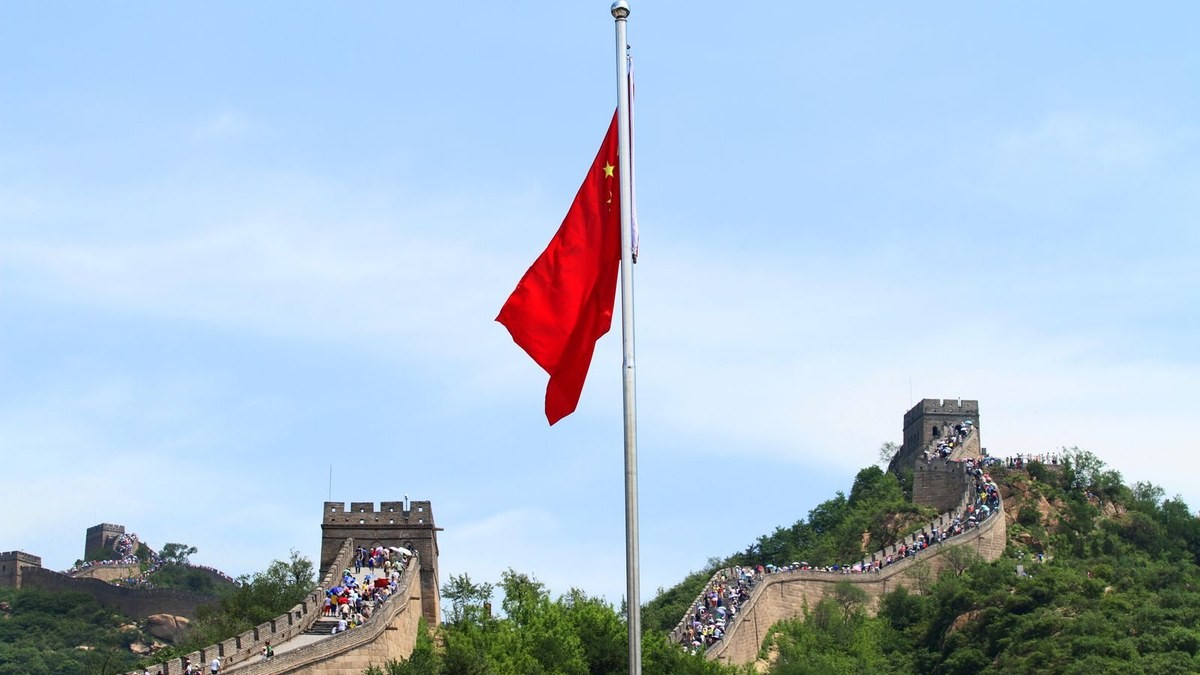
The economic dimension of the dispute has been substantial. China’s January 6, 2026, tighter export controls on dual-use items to Japan, followed by the February 24, 2026, addition of 20 Japanese entities to its export control list, represented a significant escalation. These measures went beyond symbolic protest, directly affecting Japanese firms operating in sensitive technology sectors.
Japan’s response has been measured but not passive. The 2026 Diplomatic Bluebook, released on April 10, 2026, downgraded China’s description from “one of the most important neighbouring countries” to “an important neighbour.” This linguistic shift, while subtle, carries considerable weight in diplomatic circles. It reflects a recalibration of Japan’s strategic priorities, even as the government maintains that its fundamental policy toward China remains unchanged.
The cumulative effect of these measures has been described by analysts as leaving Japan-China relations at their “worst since normalization.” This characterization is not hyperbole. The September 1972 normalization, embodied in the Japan-China Joint Communiqué, established a framework that has weathered numerous crises, including the 2010 Senkaku/Diaoyu collision incident and the 2012 nationalization dispute. The current impasse, however, is distinguished by its breadth—encompassing security, economic, and societal dimensions simultaneously—and by the apparent unwillingness of either side to offer a clear path forward.
Historical Precedents and the Road to APEC
As the November 2026 APEC summit approaches, observers are looking to historical precedents for guidance. The most frequently cited model is the November 2014 meeting between then-Prime Minister Shinzo Abe and President Xi Jinping in Beijing, which followed the establishment of a four-point consensus between the two governments. That meeting, which occurred against the backdrop of the Senkaku/Diaoyu dispute and Abe’s visit to Yasukuni Shrine, demonstrated that even deeply strained relationships could be reset through direct leadership engagement.
The conditions for a similar reset in 2026 are less favorable. The four-point consensus of 2014 was achieved through sustained diplomatic effort and involved mutual concessions. In the current context, China has demanded that Takaichi retract her November 7 statements—a demand she has consistently refused. Without movement on this fundamental point, a formal bilateral meeting at APEC appears unlikely.
Yet the signals from both sides suggest that neither is prepared to allow the relationship to deteriorate indefinitely. Japan’s economic and security interests require a functional, if not warm, relationship with its largest trading partner. China, for its part, faces its own economic challenges and may calculate that sustained pressure on Japan carries diminishing returns. The upcoming APEC summit, hosted by China, provides a natural venue for at least symbolic engagement.
Strategic Implications for the Region
The trajectory of Japan-China relations carries implications that extend far beyond the bilateral dyad. As a key U.S. ally and a major regional power, Japan’s posture toward China shapes the broader strategic environment in the Indo-Pacific. The October 2025 APEC Leaders’ Meeting in South Korea demonstrated that regional diplomacy can proceed even amid bilateral tensions, but the current freeze has complicated multilateral cooperation on issues ranging from supply chain resilience to maritime security.
The Takaichi administration’s approach reflects a careful balancing act. Domestically, the prime minister faces pressure from conservative constituencies that view her November 7 remarks as an appropriate assertion of Japan’s sovereign rights. Internationally, she must manage expectations from Washington, which has encouraged Japan to maintain a firm line on Taiwan while also preserving channels of communication with Beijing. The reference in her February 25, 2026, House of Councillors remarks to cooperation with “our allies, the United States and like-minded countries” suggests that alliance coordination remains central to her strategy.
Whether the current signals can evolve into a genuine normalization of relations remains uncertain. The author of the original analysis, Professor Kawashima Shin of the University of Tokyo, suggests that the mood on the Japanese side is clearly shifting, driven by more than just American expectations. Yet the fundamental obstacles—the November 7 statements, China’s demand for retraction, and the broader strategic competition between the two countries—remain unresolved. The November APEC summit may provide a moment of contact, but true normalization will require more than a handshake. It will require a mutual willingness to address the underlying sources of tension, and that willingness has yet to be demonstrated.
This article was produced with AI-assisted research and editorial support. Sources: The Diplomat (September 5, 2026), Japan Institute of International Affairs, Toda Peace Institute.
By Prof. David Park, Staff Writer
What's Your Reaction?
 Like
0
Like
0
 Dislike
0
Dislike
0
 Love
0
Love
0
 Funny
0
Funny
0
 Wow
0
Wow
0
 Sad
0
Sad
0
 Angry
0
Angry
0

East Asia/Technology Correspondent at Global1.News. Seoul-based voice covering Korean politics, technology, business, and culture. Analyzes how technology and geopolitics intersect across East Asia.














Comments (0)