
Exclusive-Trump move to restart direct US flights with Lebanon hits roadblock
In October 2026, a diplomatic and technical hurdle emerged around President Donald Trump’s effort to restore direct airline service between the United States and Lebanon.
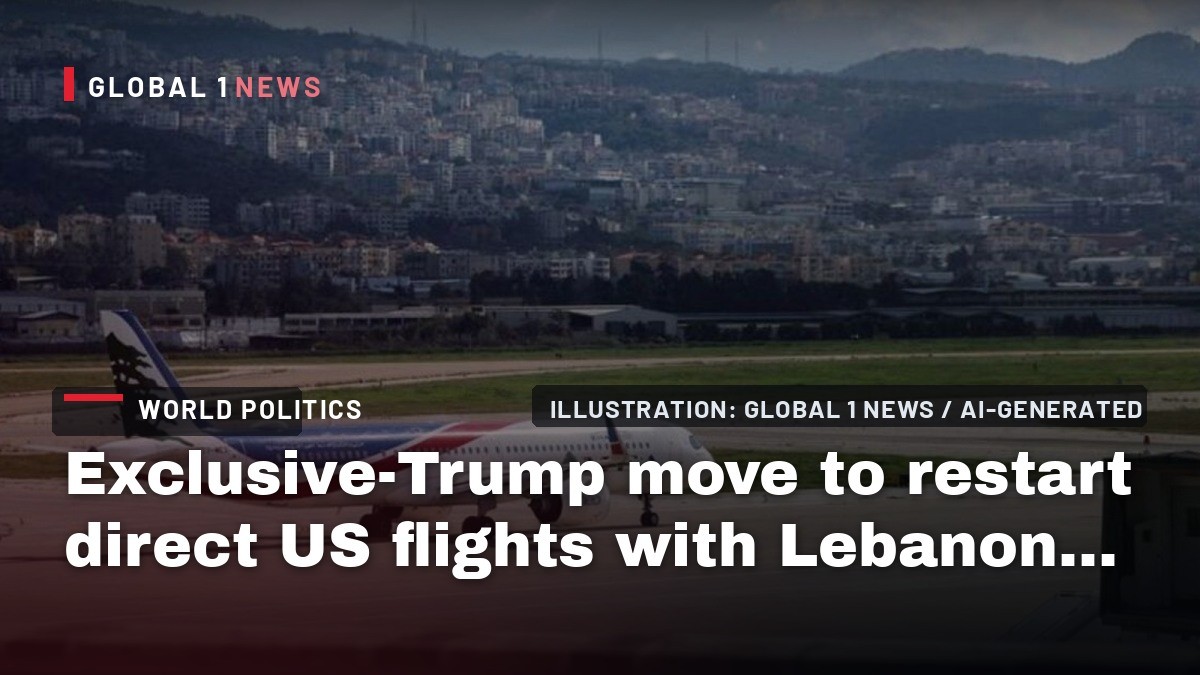
In October 2026, a diplomatic and technical hurdle emerged around President Donald Trump’s effort to restore direct airline service between the United States and Lebanon. While the political gesture was hailed in Washington and Beirut as a step toward normalising ties after a 40‑year suspension, a United Nations aviation review highlighted serious safety and certification gaps at Beirut‑Rafic Hariri International Airport that could delay any flights for months, if not longer.
Political backdrop: From a 1985 hijacking to a 2026 rapprochement
The United States halted direct flights to Beirut after the 1985 hijacking of TWA Flight 847, a traumatic episode that left a lasting imprint on American policy toward Lebanon. President Trump’s July announcement and a signed order in August 2026 sought to reverse that legacy, positioning the move as a confidence‑building measure amid broader U.S. pressure on Lebanese President Joseph Aoun to curb Iran‑backed Hezbollah.
Washington’s backing of Aoun reflects a strategic calculus: by facilitating easier travel for Lebanese diaspora and business travelers, the United States hopes to strengthen economic links that could, in turn, bolster the Lebanese government’s capacity to confront Hezbollah’s armed presence. The Lebanese embassy in Washington described the order as “a significant first step,” underscoring how tightly aviation policy is intertwined with regional security dynamics.
ICAO findings: Safety gaps that could stall the plan
In July, the International Civil Aviation Organization (ICAO) dispatched a technical assistance mission to evaluate Lebanon’s civil aviation system. The agency’s internal report, shared with the Lebanese Civil Aviation Authority (LCAA) in September, identified a series of deficiencies at the capital’s main airport. Fire‑fighting equipment is limited to single‑aisle aircraft, while the twin‑aisle jets typically used for trans‑Atlantic routes lack adequate coverage. Moreover, the airport’s emergency plan is missing, and its conditional certification had already expired.
Beyond the airport itself, the ICAO review flagged institutional weaknesses. The LCAA does not have enough qualified inspectors to oversee air‑traffic‑control licensing, and it lacks a fully operational, independent aircraft accident investigation authority with clearly defined roles. The report described the situation as “a serious and time‑critical matter” that must be remedied immediately to preserve the airport’s operational status.
Lebanese response: Rapid certification efforts amid war‑time constraints
Lebanon’s Minister of Public Works and Transport, Fayez Rasamny, acknowledged the ICAO concerns and announced that certification work would begin on Saturday, with the LCAA expecting to issue a conditional certification “in the coming days.” He stressed that many of the highlighted issues had already been identified by Lebanese authorities and that corrective actions were underway, though progress has been hampered by the ongoing conflict in the south.
The southern border remains volatile. Israeli forces continue to operate in southern Lebanon, conducting strikes despite a U.S.‑brokered framework agreement signed in June 2026 between Israel and Lebanon. Hezbollah, which did not sign the deal, has rejected it, keeping the security environment precarious and complicating any rapid overhaul of aviation safety standards.
U.S. safety reviews: FAA and TSA still have a role
Even if Lebanon secures a conditional certification, the United States will not automatically permit flights. The Federal Aviation Administration (FAA) and the Transportation Security Administration (TSA) must still conduct their own safety reviews before granting clearance for commercial carriers. The FAA declined to comment on the matter, leaving the timeline for any U.S. regulatory sign‑off uncertain.
In addition, the U.S. State Department currently advises American citizens against travel to Lebanon, citing safety concerns tied to heightened military activity in and around Syria. The FAA has warned of risks from errant long‑range surface‑to‑air missiles that could originate from Syrian territory, a reminder that regional missile and drone threats continue to shape airline routing decisions across the Middle East.
Regional airspace challenges: A broader security puzzle
The safety concerns surrounding Beirut are part of a larger pattern of airlines avoiding large swathes of Middle‑Eastern airspace after the February 2026 U.S. and Israeli strikes on Iran triggered a wave of hostilities. Foreign carriers have rerouted flights to steer clear of missile‑ and drone‑prone zones, and even a Saudi Arabian airport recently suffered an attack, illustrating how quickly the security environment can shift.
European Union Aviation Safety Agency officials confirmed they are aware of the ICAO report and emphasized that EU airlines must conduct their own assessments before launching service to Lebanon. This parallel scrutiny by European regulators adds another layer of complexity for any airline seeking to operate long‑haul routes to Beirut.
Economic stakes for Lebanon: Tourism, remittances, and the national carrier
Lebanon’s economy remains heavily dependent on tourism and remittances from its diaspora, many of whom reside in the United States. The national carrier, while praised domestically for maintaining air navigation services, faces an uphill battle to attract foreign airlines without a clear path to certification and security assurances. The ICAO findings threaten to keep the airport’s operational capacity limited to regional, single‑aisle traffic, constraining the volume of tourists and business travelers who can reach the country directly from the United States.
Three U.S. airline officials, speaking anonymously, expressed skepticism that American carriers would resume flights to Beirut in the near term, citing the same security concerns that underpin the State Department’s travel advisory. Until the airport can demonstrate compliance with international safety standards and the broader regional threat environment stabilises, the economic benefits of restored direct flights will remain largely theoretical.
Looking ahead: What must happen for direct US‑Beirut flights to take off?
For President Trump’s initiative to move from announcement to reality, several conditions must be met. First, Beirut‑Rafic Hariri International Airport must obtain a renewed certification that addresses the ICAO‑identified gaps in firefighting capability, emergency planning, and overall operational readiness. Second, the LCAA must strengthen its regulatory framework, staffing qualified inspectors and establishing an independent accident investigation authority.
Third, the FAA and TSA will need to complete their own safety assessments, a process that could be delayed by the ongoing security volatility along Israel’s southern border and the broader missile threat landscape. Finally, the political calculus surrounding Hezbollah’s rejection of the June framework agreement will continue to influence both Israeli and U.S. risk assessments, potentially shaping the timeline for any future air service agreements.
In the meantime, the Lebanese government’s public commitment to address the ICAO concerns signals an awareness of the economic and diplomatic importance of restoring direct flights. Whether that commitment can translate into swift, verifiable improvements remains to be seen, but the episode underscores how aviation policy in the Middle East is inextricably linked to security, politics, and the everyday lives of citizens who rely on the skies for connectivity and commerce.
This article was produced with AI-assisted research and editorial support. Reporting is based on the source material cited below. Sources: Al-Monitor; al-monitor.com; Global1.News (17 October 2026).
By Hannah Berg, Staff Writer
What's Your Reaction?
 Like
0
Like
0
 Dislike
0
Dislike
0
 Love
0
Love
0
 Funny
0
Funny
0
 Wow
0
Wow
0
 Sad
0
Sad
0
 Angry
0
Angry
0

Israel Correspondent at Global1.News. Based in Tel Aviv, covering Israeli politics, security, technology, and society. Provides balanced, deeply-sourced reporting on one of the most closely-watched regions in the world.














Comments (0)