
Erdoğan lists 3 priorities as authorities handle fund turmoil
President Recep Tayyip Erdoğan’s remarks on Friday placed the recent fund turmoil squarely within the broader context of Turkey’s economic strategy, emphasizing a three‑tiered response that intertwines investor protection, judicial accountability and market stability.
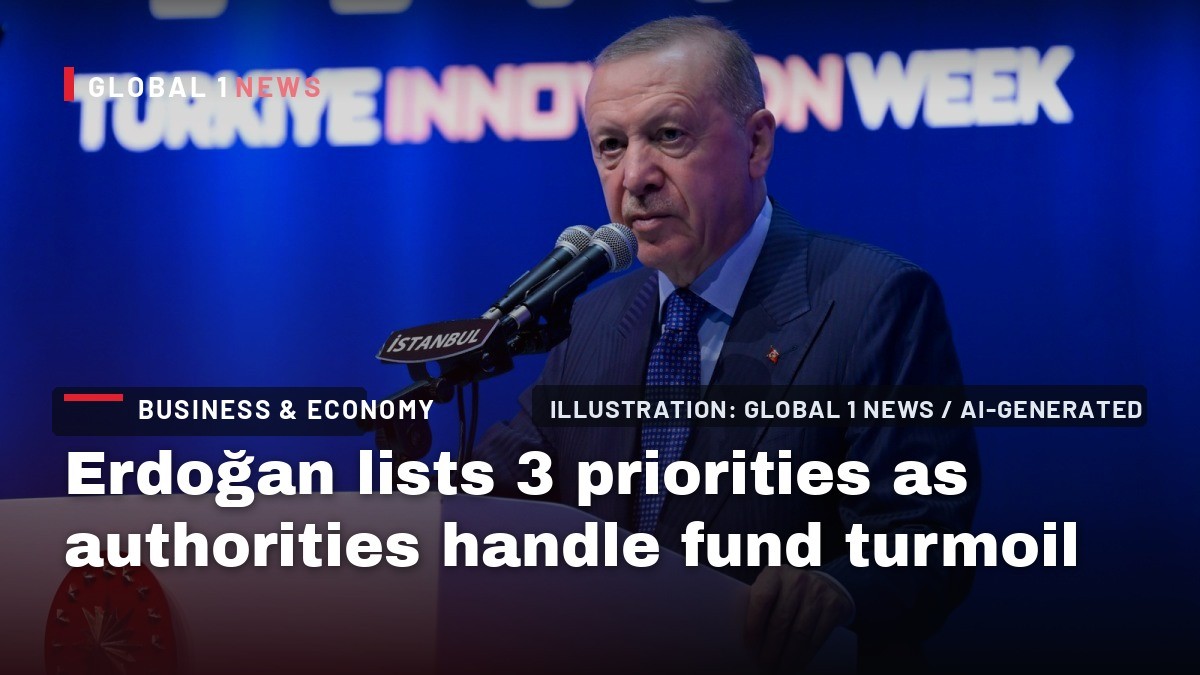
President Recep Tayyip Erdoğan’s remarks on Friday placed the recent fund turmoil squarely within the broader context of Turkey’s economic strategy, emphasizing a three‑tiered response that intertwines investor protection, judicial accountability and market stability. The president framed the episode as a localized disturbance—affecting a small fraction of the country’s fund universe—while warning against political exploitation that could jeopardise confidence in the capital market bridge linking savers to the real sector. This articulation reflects Ankara’s long‑standing balancing act between swift regulatory intervention and the need to preserve a climate conducive to investment, a dynamic that resonates across the region’s broader Sunni‑Shia competition and great‑power rivalry over financial influence.
Scope of the crisis and immediate regulatory action
The fund turmoil resurfaced in a specific segment of Turkey’s fund market, prompting the Capital Markets Board (SPK) to suspend trading in 131 funds managed by seven asset‑management firms. The suspension affected nearly half a million investors, a scale that underscores the potential systemic risk inherent in thinly traded instruments when redemption pressures mount. Erdoğan highlighted that the government had taken “decisive steps since Sept. 17” to bring the situation under control, signalling a rapid policy response that aligns with Turkey’s broader emphasis on decisive governance in times of financial stress.
In the wake of the suspension, the authorities established a Fund Coordination Board to oversee the liquidation process. Erdoğan likened the operation to “the care of a surgeon,” suggesting a meticulous, case‑by‑case approach aimed at minimizing collateral damage. The government set an ambitious timetable, aiming to complete the liquidation of half of the affected funds by the end of the week—a move intended to reassure investors that the state can swiftly resolve pockets of market distress.
Legal crackdown and the pursuit of accountability
Beyond the regulatory freeze, the response has taken a strong legal dimension. Prosecutors have issued asset freezes, travel bans and have arrested more than 80 individuals, including top executives of the implicated asset‑management companies. This broad sweep reflects Ankara’s determination to pursue those it deems responsible for “unjust gains through manipulation.” Erdoğan stressed that the judicial process would be central to the second priority, emphasizing that investigations are deepening in light of new information and confessions.
The president drew a stark contrast between ordinary economic actors—exporters, industrialists, merchants—and those who allegedly “multiplied their sums in just three to five months through market trickery.” By framing the offenders as opportunists exploiting a “ring of fire” around the economy, Erdoğan seeks to legitimize the crackdown as a defence of the broader business community, a narrative that resonates with the Turkish political discourse that often pits the “hardworking citizen” against a corrupt elite.
Prioritising investor restitution
Erdoğan’s first priority centres on returning savings to fund owners as quickly as possible. Ordinary liquidation payments began last week and have proceeded without reported problems, indicating that the state’s operational mechanisms are functioning as intended. For “extraordinary liquidations,” interim payments are slated to start once a bill submitted to Parliament becomes law, signalling a legislative pathway to expedite compensation.
This focus on rapid restitution serves multiple strategic purposes. It mitigates the risk of a broader loss of confidence that could spill over into other asset classes, and it reinforces the narrative that the state protects ordinary investors. By ensuring that the majority of affected savers receive their funds promptly, the government aims to contain the crisis within the narrow slice of the market it describes as comprising only 4.6 % of the total number of funds.
Maintaining market integrity and avoiding over‑reaction
The third priority, according to Erdoğan, is to manage the liquidation without damaging the capital markets. He warned against using the episode as a pretext for political attacks, noting that opposition forces and “hired‑gun” press outlets have not shown the same care. By drawing a “clear line between opportunists and investors,” the administration seeks to isolate the misconduct of a few from the broader market ecosystem.
Erdoğan cautioned that an over‑broad condemnation of the entire capital‑market system would “hurt not only the capital markets but also the real sector,” underscoring the interdependence of financial markets and the productive economy. This framing aligns with Turkey’s long‑standing view of capital markets as a vital conduit for financing industry, trade and infrastructure—an argument that resonates across the region where many economies rely on market‑based financing to offset fiscal constraints.
Political implications and regional resonance
The president’s remarks also carry a geopolitical subtext. By portraying the fund issue as a limited, technical problem rather than a systemic failure, Erdoğan positions Turkey as capable of self‑regulation amidst broader regional turbulence. In a Middle East where financial markets are increasingly weaponised in proxy contests—whether through sanctions, sovereign wealth fund maneuvers or strategic investments—the ability to contain domestic financial shocks bolsters Ankara’s credibility as a stable partner for both Gulf investors and Western capital.
Moreover, the emphasis on “no tolerance for opportunism” dovetails with the broader regional narrative of curbing illicit financial flows that may fund destabilising actors. While the source material does not directly link the fund scandal to external actors, the rhetoric of protecting the “real sector” and preventing “criminalisation of our entire capital markets” resonates with the strategic imperative to shield national economies from external manipulation, a concern that echoes across Sunni‑Shia competition and great‑power rivalry in the region.
Legislative outlook and future safeguards
Erdoğan’s reference to a pending bill that will enable interim payments for extraordinary liquidations hints at forthcoming legislative measures aimed at tightening fund oversight. While the source does not detail the bill’s contents, the government’s swift action suggests that future regulations may focus on enhancing transparency in thinly traded stocks, tightening redemption requirements and imposing stricter licensing standards on asset‑management firms.
Such reforms would align with global trends toward greater market integrity, especially after high‑profile fund collapses in other jurisdictions. By embedding these safeguards within a legislative framework, Turkey can signal to both domestic and foreign investors that it is committed to preventing a recurrence of the current turmoil, thereby reinforcing the credibility of its capital‑market infrastructure.
Outlook for investors and the broader economy
In the immediate term, the priority remains the orderly liquidation of the affected funds and the restitution of investors’ savings. The government’s surgical approach, combined with a robust legal crackdown, aims to restore confidence swiftly. For the half‑million investors caught in the suspension, the promise of “payments under ordinary liquidation” that have already begun offers a tangible relief pathway.
Looking ahead, the episode underscores the fragility of thinly traded market segments and the importance of vigilant oversight. Erdoğan’s insistence on separating “opportunists” from the broader investor base seeks to prevent a contagion effect that could erode trust in Turkey’s capital markets—a trust that underpins the flow of capital to the real sector, from exporters to industrialists. By containing the crisis within the 4.6 % of funds it identifies, and by framing the response as a defence of the national economy, the administration hopes to preserve the financial bridge that links savers to growth, a bridge that remains essential for Turkey’s development trajectory amid a volatile regional landscape.
This article was produced with AI-assisted research and editorial support. Reporting is based on the source material cited below. Sources: Daily Sabah Middle East; dailysabah.com; Global1.News (17 October 2026).
By Malik Hassan, Staff Writer
What's Your Reaction?
 Like
0
Like
0
 Dislike
0
Dislike
0
 Love
0
Love
0
 Funny
0
Funny
0
 Wow
0
Wow
0
 Sad
0
Sad
0
 Angry
0
Angry
0
Middle East Correspondent at Global1.News. Based in Beirut, covering politics, conflict, energy, and society across the Middle East. Brings context and depth to a region often reduced to headlines.













Comments (0)