
South Korea recalls Ukraine envoy over prisoner-of-war row
South Korea’s decision to recall its ambassador to Ukraine marks the latest escalation in a diplomatic dispute that began when Kyiv disclosed the transfer of two captured North Korean soldiers to Seoul.
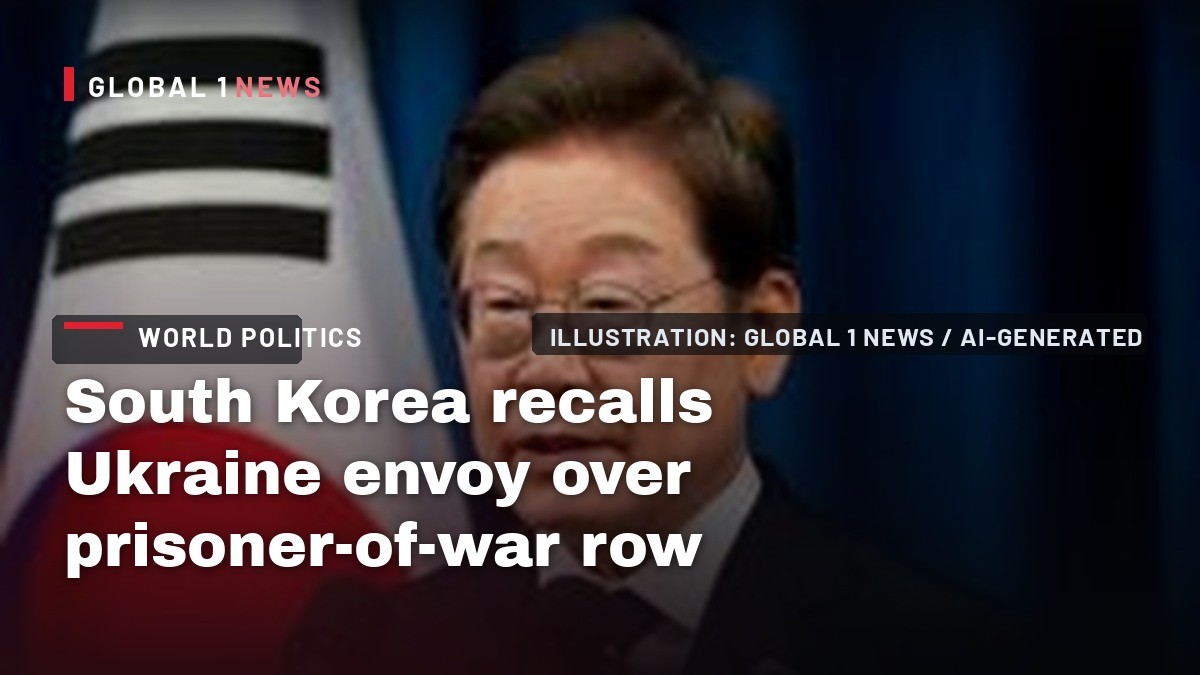
South Korea’s decision to recall its ambassador to Ukraine marks the latest escalation in a diplomatic dispute that began when Kyiv disclosed the transfer of two captured North Korean soldiers to Seoul. The episode has exposed divergent expectations over confidentiality, strained bilateral trust, and highlighted the broader strategic calculations each side faces amid the ongoing war in Ukraine and the complex security environment of the Korean Peninsula.
Background to the prisoner transfer
The controversy originated in September when Ukrainian President Volodymyr Zelensky announced at the United Nations General Assembly that two injured North Korean soldiers, captured while fighting for Russia, had been handed over to South Korea. The soldiers, described by local media as having requested transfer to Seoul, were among the thousands of North Koreans who have fought on the Russian side since 2024.
Seoul immediately questioned the manner in which the transfer was publicised. South Korean officials argued that the arrangement had been made under a confidentiality understanding, whereas Zelensky’s office insisted that no formal non‑disclosure agreement existed. This disagreement over the existence of a secret‑keeping pact has become the focal point of the diplomatic row.
South Korea’s diplomatic response
In September, Vice Foreign Minister Park Yoon‑joo lodged a formal complaint with his Ukrainian counterpart, Andrii Vieshkin, signalling Seoul’s displeasure. The matter escalated further when Foreign Minister Cho Hyun received an apology from his Ukrainian counterpart earlier this week, but deemed it insufficient. The South Korean Foreign Ministry subsequently announced the recall of its ambassador to Ukraine, a step that underscores the seriousness with which Seoul views the breach of trust.
Despite the recall, the ministry affirmed its intention to continue consultations with Kyiv, hoping that “various outstanding issues” can be resolved smoothly. This stance reflects a desire to preserve the broader strategic partnership while demanding accountability for what Seoul perceives as a diplomatic misstep.
Ukrainian perspective on the dispute
Ukrainian Foreign Ministry spokesperson Heorhii Tykhyi stressed that “diplomacy should prevail over emotions,” suggesting that Kyiv remains open to restoring constructive dialogue, even if it takes time. The Ukrainian side maintains that no binding confidentiality agreement constrained the public announcement, and therefore views the criticism as overblown.
From Kyiv’s viewpoint, the transfer served multiple purposes: it protected the families of the captured soldiers, avoided the optics of abandoning a potential prisoner‑exchange opportunity, and highlighted Ukraine’s willingness to cooperate with allies on humanitarian matters. The Ukrainian narrative frames the issue as a misunderstanding rather than a breach of trust.
Domestic political ramifications in South Korea
President Lee Jae Myung publicly condemned the transfer as “greatly disappointing” and labelled it a “highly sensitive issue” with implications for national security. The president’s remarks resonated with a domestic audience that remains wary of any actions that could be interpreted as appeasing Pyongyang.
Opposition parties seized on the incident, accusing the administration of attempting to conceal the transfer to placate North Korea. Lee’s office countered that confidentiality was necessary to protect the soldiers’ families and to prevent criticism that Ukraine had missed an opportunity to exchange the captives for Ukrainian prisoners of war. The political fallout illustrates how external diplomatic incidents can quickly become fodder for internal partisan battles.
Strategic context: arms assistance and regional ties
South Korea’s broader assistance to Ukraine, announced in July as a $100 million package, consists of non‑lethal items such as helmets, personal armour, and medical equipment. This assistance aligns with Seoul’s long‑standing policy of refraining from supplying lethal weapons to nations engaged in active conflict, a stance that balances its security alliance with the United States against its economic and diplomatic interests in neighboring powers.
Russia’s foreign ministry warned of potential retaliation should South Korea provide lethal aid to Kyiv, underscoring the delicate balancing act Seoul performs. Since the collapse of the Soviet Union, South Korea has pursued deeper trade and diplomatic ties with both Moscow and Beijing, viewing them as key partners in influencing Pyongyang. The current dispute with Ukraine therefore occurs against a backdrop of competing strategic priorities.
Implications for the Ukraine‑South Korea partnership
The recall of the ambassador does not signal an immediate termination of cooperation. Both sides have expressed a willingness to continue dialogue, albeit with heightened sensitivity to trust issues. The episode may, however, introduce a more cautious approach in future engagements, particularly concerning information sharing and public disclosures.
For Ukraine, maintaining the support of a technologically advanced and economically significant partner like South Korea remains vital, especially as it seeks advanced anti‑air missile systems to protect its energy infrastructure from Russian drone and missile attacks. Seoul’s reluctance to provide lethal weapons limits Kyiv’s options, but the non‑lethal assistance continues to be a tangible contribution to the war effort.
Broader regional ramifications
The incident highlights the intricate web of relationships that define East Asian geopolitics. South Korea’s effort to sustain cordial ties with Russia and China, while simultaneously supporting Ukraine through non‑lethal aid, reflects a broader strategic calculus aimed at preserving stability on the Korean Peninsula.
Any escalation in the dispute could reverberate beyond Kyiv and Seoul, potentially influencing how other regional actors—such as Japan and ASEAN members—navigate their own diplomatic balances between the United States, Russia, and China. The episode serves as a reminder that even seemingly narrow diplomatic disagreements can have outsized effects in a region where security, trade, and historical ties intersect in complex ways.
This article was produced with AI-assisted research and editorial support. Reporting is based on the source material cited below. Sources: BBC News Asia; bbc.co.uk; Global1.News (09 October 2026).
By Kenji Tanaka, Staff Writer
What's Your Reaction?
 Like
0
Like
0
 Dislike
0
Dislike
0
 Love
0
Love
0
 Funny
0
Funny
0
 Wow
0
Wow
0
 Sad
0
Sad
0
 Angry
0
Angry
0

Japan Correspondent at Global1.News. Tokyo-based voice covering Japanese politics, technology, economy, and culture. Tracks the intersection of tradition and innovation in one of the world's most dynamic societies.












Comments (0)