
Montenegro Expels Founder of Russian Pro-War Blog Rybar for 'Security Reasons'
Montenegro’s security services expelled Mikhail Zvinchuk, the founder of the Russian pro‑war Telegram channel Rybar, along with three other Russian nationals on 9 October 2026.
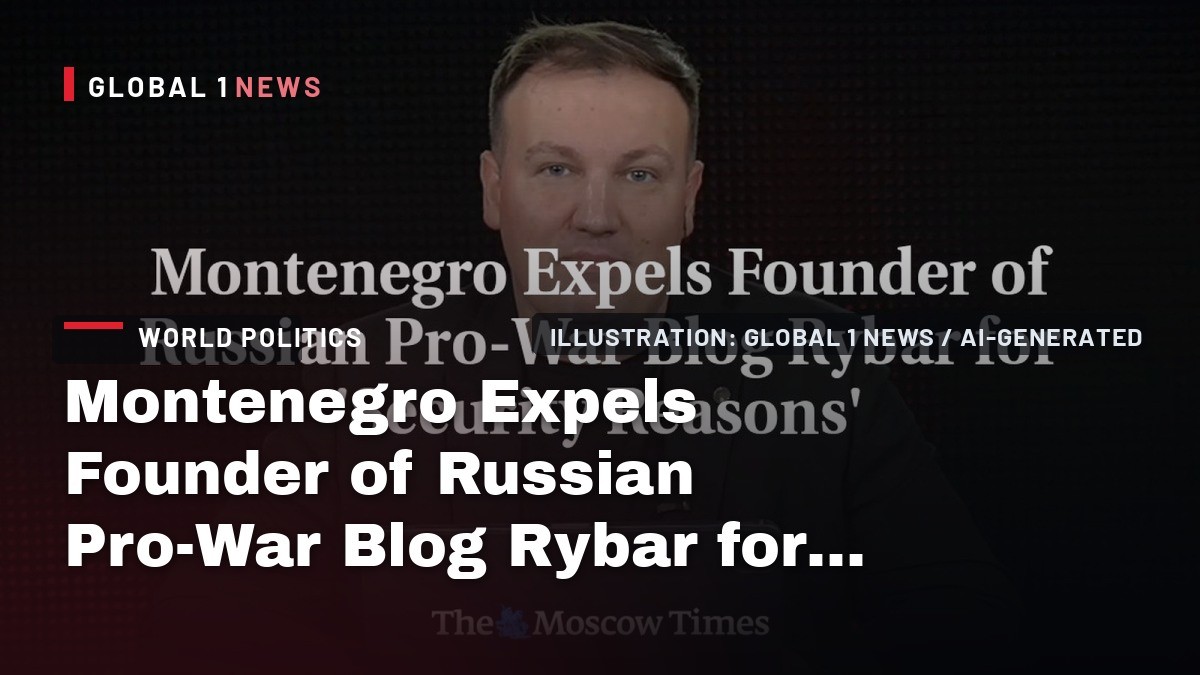
Montenegro’s security services expelled Mikhail Zvinchuk, the founder of the Russian pro‑war Telegram channel Rybar, along with three other Russian nationals on 9 October 2026. The operation, carried out jointly by the police and the National Security Agency (ANB), was presented as a measure against “hybrid activities” by Russian information networks that threaten the Balkan state’s security and its European Union accession ambitions.
Detention and Expulsion Details
The authorities detained Zvinchuk and his companions in the Adriatic resort town of Risan. Among those arrested was his wife, Valeria Zvinchuk, identified by Rybar as its creative director. Police sources confirmed the identities of the four individuals, although the official statement initially referred to them only by initials. Following the arrests, the ANB announced that the four could no longer remain in Montenegro “for reasons of national and internal security of the state.”
Montenegro’s Prime Minister Milojko Spajić publicly linked the expulsions to a broader pattern of Russian attempts to destabilise the country. In a post on X, he wrote that Montenegro is protecting its interests and that “no one will endanger our European future.” The timing coincides with Montenegro’s ongoing negotiations for EU membership, a process that has repeatedly been framed by the government as vulnerable to external interference.
Rybar’s Operational Profile
Rybar, a Telegram channel with roughly 1.5 million subscribers, is known for publishing daily military analysis of Russia’s invasion of Ukraine. Its founder, Zvinchuk, previously served as a press officer for the Russian Defence Ministry and is currently subject to Western sanctions. The channel also maintains a broader network of websites and social‑media outlets that amplify its content.
According to a Russian news outlet, Rybar’s team entered Montenegro legally and announced plans to film at a local monastery. However, Montenegrin intelligence agencies reported that the group had been monitored for several days after arriving, during which time they allegedly filmed material intended to undermine Montenegro’s tourism industry, economy and national interests.
Hybrid Threat Narrative
Montenegrin officials framed the operation as a response to “hybrid activities” – a term that combines disinformation, espionage and covert influence operations. Security sources told the local newspaper Vijesti that the police and ANB acted to counter a Russian information network seeking to destabilise the country. This narrative aligns with the government’s broader security posture, which has repeatedly warned of Russian attempts to interfere in Balkan politics, especially as the nation pursues EU integration.
From a Kremlin perspective, the expulsion fits a pattern of push‑back against Western sanctions and diplomatic pressure. Deputy Chairman of Russia’s Security Council Dmitry Medvedev warned that Russia might need to “top up” its prisoner‑exchange fund with European and American citizens to secure the release of its own detained nationals, hinting at a tit‑for‑tat approach to the growing list of Russian citizens held abroad.
International Context and Sanctions
Rybar’s founder is already under Western sanctions, reflecting the channel’s role in promoting Russian political interests abroad. In October 2024, the U.S. State Department offered a reward of up to $10 million for information leading to the identification of 19 individuals involved in managing Rybar‑led social‑media channels, accusing them of influencing the 2024 U.S. presidential election. This historical context underscores the long‑standing concern among NATO and EU states about Russian information operations targeting Western societies.
The Montenegrin action therefore occurs within a broader geopolitical contest. While the specific reward and the identities of the 19 individuals were not disclosed in the source material, the reference highlights the sustained attention paid by Washington to Rybar’s activities and the perceived threat they pose to democratic processes.
Implications for Montenegro’s EU Path
Montenegro’s decisive move against Rybar’s operatives signals a commitment to safeguarding its EU accession trajectory. By publicly linking the expulsions to “national and internal security,” the government aims to demonstrate its capacity to counter foreign interference, a key criterion in the EU’s accession assessment. Prime Minister Spajić’s statement on X reinforces this narrative, positioning the expulsions as a protective measure for the country’s “European future.”
Analysts interpret the operation as both a security measure and a political signal to EU institutions. By acting against a high‑profile Russian media figure, Montenegro underscores its alignment with Western security standards, potentially strengthening its case for accession while also risking diplomatic friction with Moscow.
Russian Diplomatic Response
The Russian Embassy in Podgorica demanded clarification on the reasons for the arrests, reflecting a typical diplomatic protest against what Moscow perceives as unjust treatment of its citizens. Medvedev’s remarks, delivered in a tone that blended sarcasm with a warning about prisoner‑exchange dynamics, illustrate the Kremlin’s broader strategy of leveraging detained nationals as bargaining chips in international negotiations.
From a Kremlin standpoint, the expulsion of Zvinchuk and his associates is likely to be portrayed domestically as an example of Western hostility toward Russian media and a violation of the rights of Russian citizens abroad. This narrative dovetails with the Russian government’s ongoing campaign to frame sanctions and expulsions as part of an anti‑Russian “information war.”
Broader Significance for Russian Influence Operations
The Rybar episode highlights the evolving tactics of Russian influence networks in the Balkans. By targeting a media outlet with a sizable subscriber base, Montenegrin authorities signal a willingness to confront covert information campaigns that blend journalism, propaganda and commercial activity. The operation also demonstrates the growing coordination between local police forces and national security agencies in counter‑hybrid threats.
Looking forward, the incident may prompt other Balkan states to scrutinise Russian media operatives operating within their borders. The precedent set by Montenegro—detaining and expelling a high‑profile Russian media figure—could encourage similar actions in neighboring countries wary of Russian attempts to shape public opinion, especially in the context of EU enlargement and NATO‑related security concerns.
This article was produced with AI-assisted research and editorial support. Reporting is based on the source material cited below. Sources: The Moscow Times; themoscowtimes.com; Global1.News (10 October 2026).
By Irina Volkov, Staff Writer
What's Your Reaction?
 Like
0
Like
0
 Dislike
0
Dislike
0
 Love
0
Love
0
 Funny
0
Funny
0
 Wow
0
Wow
0
 Sad
0
Sad
0
 Angry
0
Angry
0
Russia/Eastern Europe Correspondent at Global1.News. Covering Russian politics, energy, security, and the shifting dynamics of the post-Soviet space. Provides clear-eyed analysis on one of the world's most opaque regions.










Comments (0)