
South Africa Plans New Rules for Ex-Leaders' Foreign Trips After Zuma's India Visit
South Africa has moved to tighten the rules around foreign travel by its former presidents after an unofficial visit to India by Jacob Zuma ended with the country's high commissioner recalled and the ex-leader photographed beside a businessman at the centre of the state capture scandal. Foreign Affairs Minister Ronald Lamola announced the proposed new framework on Wednesday, saying former heads of state would have to disclose far more about their trips before receiving state
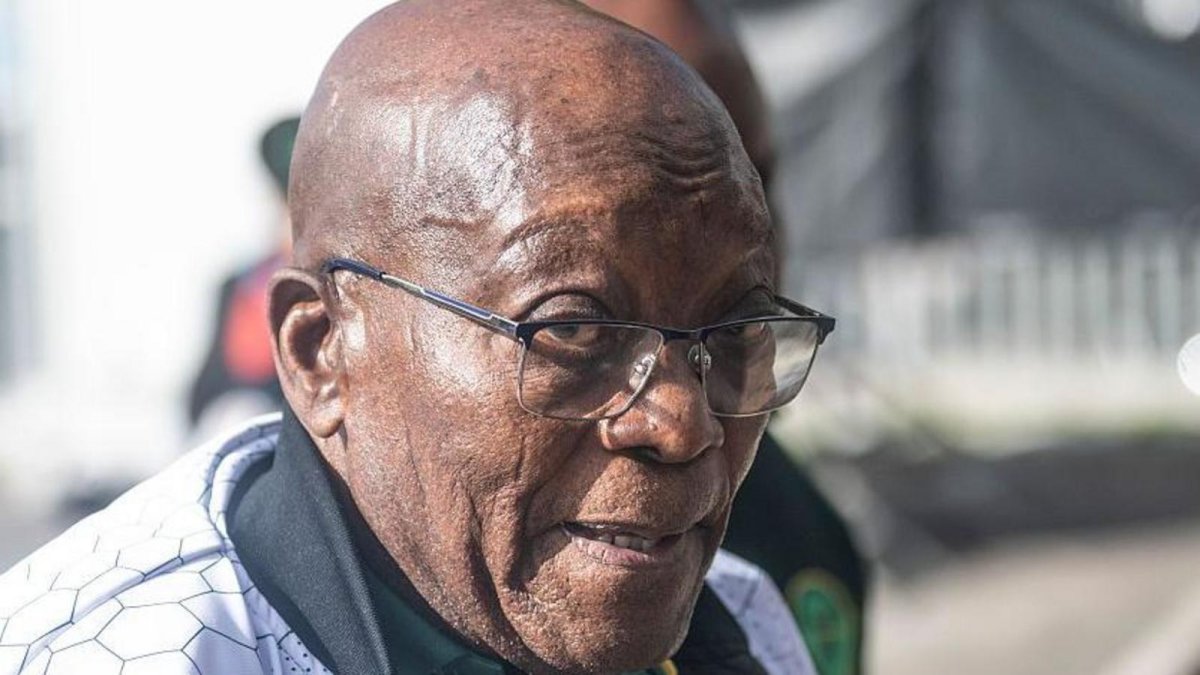
South Africa has moved to tighten the rules around foreign travel by its former presidents after an unofficial visit to India by Jacob Zuma ended with the country's high commissioner recalled and the ex-leader photographed beside a businessman at the centre of the state capture scandal. Foreign Affairs Minister Ronald Lamola announced the proposed new framework on Wednesday, saying former heads of state would have to disclose far more about their trips before receiving state support.
South Africa Weighs New Rules for Ex-Leaders' Foreign Travel
Dakar, Senegal - Article continues...
New Protocols Announced for Former Leaders' Travel
On Wednesday this week, South Africa's Foreign Affairs Minister Ronald Lamola outlined fresh proposals to regulate foreign travel by former presidents and deputy presidents. Speaking at a media briefing in Pretoria, Lamola stressed that the measures aim to prevent any perception of parallel foreign policy conducted without official mandate. The announcement comes after months of public scrutiny over unofficial trips by former heads of state.
The new framework would require former leaders seeking diplomatic support to submit detailed disclosures. These include the purpose of travel, full programme of activities, sources of funding, principal hosts, key engagements and the capacity in which they travel. Lamola explained that such information would allow an informed assessment of reputational, political, diplomatic or security risks before any protocol assistance is granted.
The Controversial Visit That Sparked the Change
Last month, former President Jacob Zuma travelled to India where he was photographed with Ajay Gupta during a religious ceremony at the Siddhpeeth Shri Dakshin Kali temple in Haridwar. The image also showed South Africa's High Commissioner to India, Anil Sooklal, alongside the pair. Zuma, now 84 and leader of the opposition uMkhonto we Sizwe party, had no official mandate for the visit.
Lamola had already criticised the trip, noting that former heads of state cannot represent South Africa abroad without proper authorisation. The photograph reignited long-standing concerns about Zuma's past associations and raised questions about how private visits by ex-leaders are handled by the diplomatic service.
The photograph was taken in June during a religious ceremony in Haridwar, a sacred city on the banks of the Ganges where pilgrims gather for rituals. The setting helped the image spread rapidly across South African social media and news outlets. Viewers saw not only the former president but also the High Commissioner standing with a man long associated with allegations of state capture, turning a private religious moment into a symbol of unresolved national tensions.
High Commissioner Sooklal has denied any wrongdoing in the matter. One minister described the trip as Zuma showing the "middle finger" to South Africa amid the public uproar, highlighting how even routine protocol assistance could be read as official tolerance for a figure central to past controversies.
The image resonated strongly because it placed a former head of state beside Ajay Gupta, whose family remains linked in the public mind to the judicial commission's findings on ministerial appointments. In a country still processing the commission's conclusions years later, the visual suggested that personal ties formed during Zuma's presidency continued to shape his international movements without formal accountability.
Recalling the High Commissioner for Consultations
Lamola confirmed that the high commissioner has been recalled to Pretoria for consultations. Sooklal had cleared Zuma's private visit with Indian authorities and met him on arrival, according to reports. The minister stated plainly: "We confirm that high commissioner Anil Sooklal has been recalled to headquarters for consultations."
DIRCO director-general Zane Dangor added that the department always receives a standard letter requesting protocol for former presidents. He noted that Sooklal would have known about the visit through communications from the presidency. An internal inquiry has been launched to examine whether the facilitation complied with the Foreign Service Act and to determine what increased guidance is now needed to protect national interests.
Opposition Voices Demand Accountability
The Democratic Alliance, part of South Africa's Government of National Unity, welcomed the proposed protocols as a step forward. However, DA spokesperson on International Relations and Cooperation Ryan Smith MP said the measures still fail to clarify how the diplomatic corps appeared to serve Zuma's longstanding relationship with the Guptas. The party says its parliamentary questions about the trip remain unanswered.
Smith emphasised that the DA will not tolerate any attempt by DIRCO to sweep the matter under the rug. He warned that if the department is found complicit in Zuma's international travel with the Guptas, harsh consequences must follow. This stance reflects ongoing efforts within the GNU to enforce transparency across state institutions.
The Democratic Alliance has submitted three specific parliamentary questions that remain unanswered: whether the minister knew about the trip in advance, whether the department was aware of the travel, and what sanction, if any, High Commissioner Sooklal will face. These questions seek to establish the extent of official foreknowledge and any consequences for protocol decisions that appear to have facilitated the India visit.
As a member of the Government of National Unity, the DA occupies a position inside the coalition while still pressing for transparency on the matter. This dual role allows the party to argue that coalition partners must hold one another to account rather than shield former officials from scrutiny over long-standing associations with the Gupta family.
Years after the judicial commission reported, the absence of clear answers continues to feed a broader public sense that questions about state capture remain unresolved. Many citizens view the lack of response as evidence that institutions have not fully addressed how private relationships once influenced state decisions, eroding confidence that similar patterns will be prevented in future.
Echoes of Past Controversies in South Africa
The Gupta family faced accusations around a decade ago of profiting from close links to then-President Zuma and influencing policy decisions. Both sides denied wrongdoing. The family left South Africa in 2018 after a judicial commission began investigating allegations of state capture. In 2022 the commission concluded that Zuma had hired and fired ministers at the behest of the Gupta family. South African authorities later cancelled an arrest warrant for Ajay Gupta, while the two younger brothers reside in the United Arab Emirates after an extradition request was turned down in 2023.
This is not the first time Zuma has drawn criticism abroad. Last year he visited Morocco and voiced support for its claim over Western Sahara, a position South Africa opposes. Although travelling as MK leader, he was pictured in front of the South African flag during a meeting with Morocco's foreign minister, prompting a formal diplomatic protest from Pretoria.
Ajay Gupta continues to be viewed by many South Africans as a fugitive figure tied to the commission's findings, yet he faces no active consequences inside the country following the warrant cancellation. This gap between public perception and legal outcomes keeps the family's name alive in debates about accountability long after the commission closed its work.
Broader Implications for the Continent
The conduct of former leaders continues to test the boundaries of democratic accountability across the continent. Many nations still lack clear rules on how ex-presidents engage internationally once they leave office. South Africa's move to introduce mandatory disclosures could set a precedent for other countries seeking to safeguard their diplomatic reputation while respecting the personal freedoms of retired statesmen.
In Senegal and elsewhere on the continent, citizens increasingly expect former office holders to uphold the same standards of transparency that apply to serving officials. The absence of such frameworks has sometimes allowed private interests to blur lines between personal travel and state representation, eroding public trust in governance institutions.
Former presidents across Africa often travel as respected elders and statesmen, carrying informal influence even after leaving office. In Senegal, for example, former heads of state retain a culturally recognised elder status that grants them social standing and public attention. This tradition creates space for personal diplomacy but also raises questions about where private travel ends and unintended state representation begins.
The tension between personal freedom and national reputation is felt in many capitals where clear rules for former leaders are absent. Without mandatory disclosures or protocol requirements, private interests can blur the line between an individual's movements and the country's foreign policy posture, sometimes producing diplomatic protests or public confusion similar to those seen in South Africa.
Strengthening Democratic Oversight in Africa
The proposed South African framework signals a wider recognition that democratic systems must evolve to address new risks. By requiring former leaders to declare funding sources and hosts in advance, governments can better manage potential conflicts and protect national interests. This approach aligns with growing calls for stronger oversight mechanisms that extend beyond active terms of office.
For African democracies, the lesson is clear: accountability does not end with an election result or a retirement ceremony. Sustained vigilance, clear protocols and independent scrutiny remain essential if the continent is to build institutions that command lasting public confidence. South Africa's experience offers a timely reminder that transparency in high-level travel is not merely administrative detail but a cornerstone of credible governance.
By Amara Diop, Staff Writer
This article was produced with AI-assisted research and editorial support. Reporting is based on sources cited in the article.
What's Your Reaction?
 Like
0
Like
0
 Dislike
0
Dislike
0
 Love
0
Love
0
 Funny
0
Funny
0
 Wow
0
Wow
0
 Sad
0
Sad
0
 Angry
0
Angry
0

West Africa/Sahel Correspondent at Global1.News. Dakar-based journalist covering politics, security, climate, and development across Francophone and Anglophone West Africa. Tells the stories of a region undergoing profound transformation.











Comments (0)