
The Peruvian city that has embraced Pope Leo as one of its own
When Pope Leo XIV arrived in the park outside Pimentel on a sweltering Friday, the crowd that gathered was more than a gathering – it was a living testament to a bond forged over decades between a man of the cloth and a region that embraced him as its own.
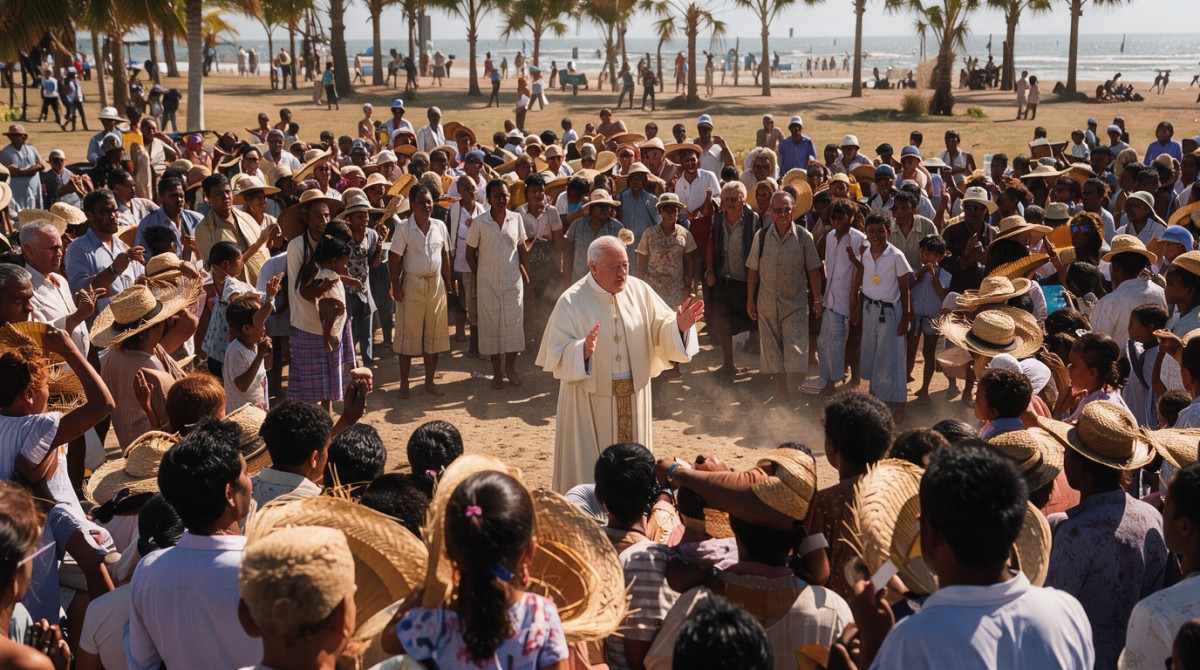
When Pope Leo XIV arrived in the park outside Pimentel on a sweltering Friday, the crowd that gathered was more than a gathering – it was a living testament to a bond forged over decades between a man of the cloth and a region that embraced him as its own. The pontiff, who underwent lung‑cancer surgery only weeks earlier, stood before a sea of faithful who had braved the heat, the night vigil and long bus rides simply to be near the leader who once walked their streets as Bishop Robert Prevost.
From bishop to pontiff: a decade of grassroots ministry
The roots of Pope Leo XIV’s popularity in northern Peru run deep. Between 2015 and 2023 he served as the bishop of Chiclayo, a city of roughly eight hundred thousand souls, and during that time he became more than a religious figure – he became a neighbor. He was often seen sampling local dishes at El Trébol, a modest restaurant beside the cathedral, and he was known to enjoy a game of tennis on the city’s courts. Yet the moments that linger in collective memory are less about leisure and more about compassion.
During the Covid‑19 pandemic, the bishop helped launch soup kitchens that fed thousands of families cut off from work. When floods swamped the region, he rode horseback through waist‑deep water to reach stranded residents, an image that still circulates in the small museum at the entrance to the former bishop’s residence. Those gestures, witnessed by ordinary people, cemented a sense that the Church was not an abstract institution but a partner in daily survival.
The pilgrimage of the Peruvian Pope
The current visit is the longest stop on the pontiff’s inaugural Latin American tour, a journey that began after his election in May 2025 and has already taken him through Argentina and Uruguay. In Peru, the significance is amplified by the fact that he lived in the country for extended periods between 1985 and 2023 and even took Peruvian citizenship in 2015. For many, his return feels like a homecoming rather than a papal tour.
Estimates from the Vatican suggest that more than one and a half million people converged on the park to welcome him, a figure that dwarfs the city’s usual population. Some arrived twelve hours before the Mass began, forming a night‑long vigil that blended prayer with anticipation. Their dedication underscores how the Pope’s earlier ministry left an indelible mark on the collective psyche of the region.
Migrants, refugees and the Pope’s advocacy
Chiclayo sits on a migration corridor that has seen a surge of Venezuelan refugees fleeing economic collapse and political turmoil. Lisbeth Díaz, a teacher who worked alongside the bishop, recalled how the influx of migrants strained the city’s resources. “It was difficult for him to see so many migrants living on the streets,” she said, recalling the bishop’s response: he engaged directly with migration authorities, helped streamline paperwork, and facilitated legal residency and work permits for many newcomers.
This advocacy extended beyond paperwork. By positioning the Church as a sanctuary and a conduit for humanitarian aid, the bishop earned the gratitude of both locals and migrants. The Pope’s recent remarks about “affection, support and prayers” were, for many, an affirmation that the Church still stands with those on the margins.
Confronting scandal: the Sodalitium episode
Not all of the bishop’s tenure was smooth. He inherited the fallout from the dissolution of Sodalitium of Christian Life, a Peruvian Catholic organization plagued by decades of sexual‑abuse allegations. Handling that crisis required delicate balance: protecting victims, preserving the Church’s credibility, and navigating internal politics. Santiago Roncagliolo, a Peruvian writer who has chronicled the Pope’s life, argues that the bishop’s measured response earned him favor with Pope Francis and helped shape his path to the papacy.
Father Samuel David Miranda Atoche, a local parish priest ordained by the bishop, reflected on that period, noting that the bishop’s focus on “unity” guided his decisions. By confronting the scandal head‑on, the bishop demonstrated a willingness to hold the institution accountable, a stance that resonated with many who had grown weary of clerical impunity.
The economic ripple of a papal visit
The influx of pilgrims transformed the city’s economy for the duration of the visit. Hotels raised nightly rates sharply, and local businesses capitalised on the Pope’s popularity to boost sales. While these price hikes could have deterred some, the faithful remained undeterred, filling the square in front of Chiclayo Cathedral for days with celebrations, chants and flags.
For many vendors, the Pope’s presence translated into a rare opportunity to sell food, souvenirs and religious items to a crowd that had doubled the city’s usual population. The surge in activity underscored how religious devotion can intersect with local commerce, creating a temporary but potent economic stimulus that reverberated through the streets of Chiclayo.
Personal testimonies: faith in the heat of 30 °C
Among the sea of faces were individuals whose stories illustrate the personal impact of the bishop‑turned‑pope. Isa Orderique described spending the night praying with family, a ritual of hope that culminated in a shared gasp when the pontiff’s motorcade finally rolled into view. Merli Cruz Guerrero, who travelled from near the Ecuadorian border, endured several hours on a bus and an entire night outdoors, driven by the belief that the Pope’s presence would bless her own struggle.
These testimonies, echoed by dozens of others, reveal a common thread: the Pope’s earlier work left a moral compass that guides daily life. For many, the Mass was not merely a liturgical event but a moment of gratitude, a chance to thank the man who once walked their streets, shared their meals and stood beside them in crisis.
Legacy and the road ahead
As the Pope concluded his Mass, his words resonated with a simple yet profound gratitude: “As I look at your faces, a prayer of thanksgiving rises in my heart.” The sentiment captured a relationship built over decades, a bond that transcends titles and geography. For Chiclayo and the broader northern Peruvian region, the visit reaffirmed a sense of belonging to the global Catholic community while also highlighting the unique role the Pope has played in local life.
Looking forward, the challenge will be to translate the emotional surge of this visit into lasting impact. The Pope’s earlier initiatives—soup kitchens, migrant advocacy, and confronting abuse scandals—set a precedent for a Church that engages directly with social realities. Whether future papal visits or local diocesan actions can sustain that momentum remains to be seen, but the memory of a bishop who rode through floodwaters and a Pope who returned home will linger in the streets of Chiclayo for years to come.
This article was produced with AI-assisted research and editorial support. Reporting is based on the source material cited below. Sources: BBC News Latin America; bbc.co.uk; Global1.News (15 November 2026).
By Elena Vasquez, Staff Writer
What's Your Reaction?
 Like
0
 Dislike
0
 Love
0
 Funny
0
 Wow
0
 Sad
0
 Angry
0
Latin America Correspondent at Global1.News. Based in Mexico City, covering politics, economics, energy, and culture across the region. Brings an on-the-ground perspective to stories spanning from the Rio Grande to Patagonia.









Comments (0)