
Anti-China Caskets Dumped Across Metro Manila Trigger PNP Probe
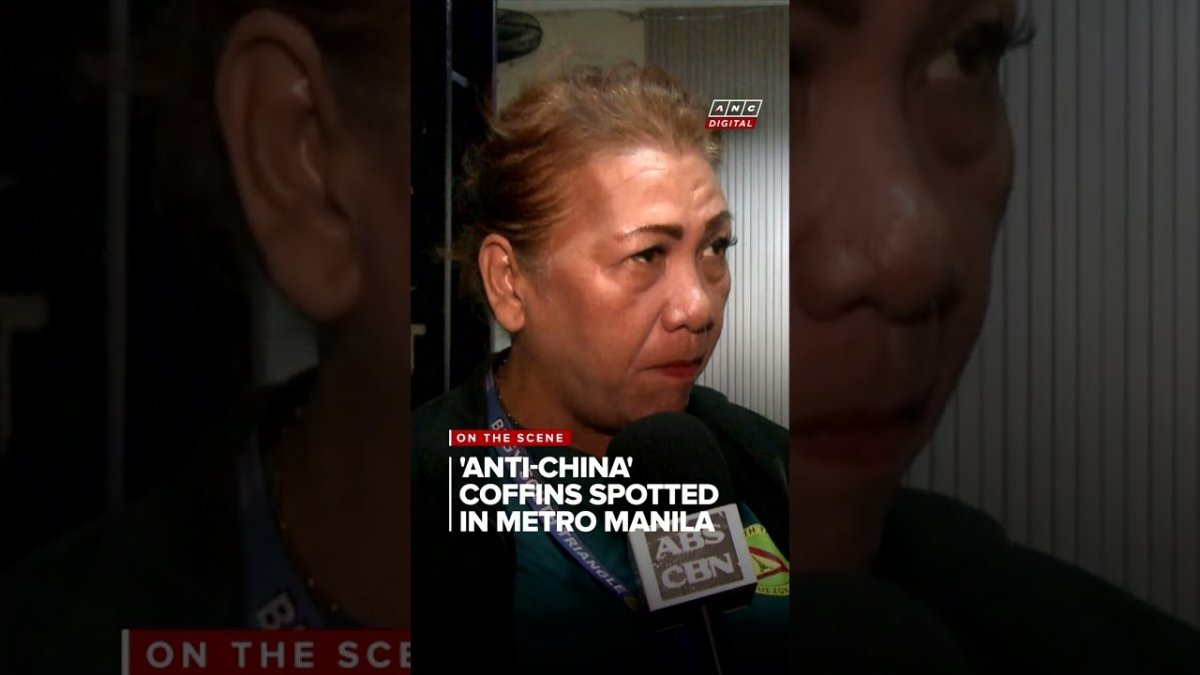
In a recent ANC 24/7 report, several empty coffins bearing anti-China messages appeared across Metro Manila early Friday morning between 2 a.m. and 4 a.m. The discovery has unsettled residents in barangays from Sta. Cruz in Manila to Gil Puyat Avenue in Makati City, where families and sari-sari store owners now question how such acts affect daily safety and the ongoing West Philippine Sea disputes that hit fishermen and their households hardest.
In a recent ANC 24/7 report, several empty coffins bearing anti-China messages appeared across Metro Manila early Friday morning between 2 a.m. and 4 a.m. The discovery has unsettled residents in barangays from Sta. Cruz in Manila to Gil Puyat Avenue in Makati City, where families and sari-sari store owners now question how such acts affect daily safety and the ongoing West Philippine Sea disputes that hit fishermen and their households hardest.
Anti-China Caskets Trigger Police Probe and Diplomatic Warnings Across Metro Manila
Manila, Philippines — Masked individuals in white and gray vans without license plates dropped five empty caskets at five separate sites in the early hours of August 7, 2026. Philippine National Police units secured each casket as evidence while residents in affected barangays reported heightened anxiety over the sudden appearance of the displays.
The Story — Caskets Across Metro Manila
The caskets appeared at Sta. Cruz in Manila, Barangay 54 in Caloocan City, Barangay South Triangle at Boy Scout Circle in Quezon City, Barangay Sta. Teresita near Welcome Rotonda in Quezon City, and along Gil Puyat Avenue in Makati City. Closed-circuit television footage and witness statements from barangay officials confirmed the vans arrived and departed quickly, leaving the items on sidewalks and public spaces.
Barangay South Triangle public safety officers first reported the white van at Boy Scout Circle in the pre-dawn hours. Similar sightings occurred at the other four locations within the same two-hour window. No group has claimed responsibility for the coordinated drop-offs.
Philippine National Police chief Gen. Jose Melencio Nartatez Jr. immediately ordered a full investigation. The National Capital Region Police Office directed all districts to increase patrols and gather additional CCTV recordings from nearby establishments.
In Barangay South Triangle a public safety officer told ANC 24/7 that a white van without license plates stopped briefly before speeding away. The officer noted the vehicle looked ordinary yet its missing plates stood out in the quiet pre-dawn hours. Across the other locations similar accounts described the same coordinated timing, suggesting the act was planned to reach as many people as possible before sunrise routines began.
What the Caskets Carried
Each casket carried a red flag with the name of the Communist Party of China and the words "Greedy!" and "Salot!" One banner displayed "Chinese Communist Party (CCP) Greedy! SALOT" alongside hammer-and-sickle symbols associated with the CPP/NPA. Edited images inside the caskets showed Chinese President Xi Jinping, Foreign Minister Wang Yi, and Ambassador Jing Quan appearing dead and covered with worms.
The red flags and symbolic images were placed to draw immediate attention from passersby and media. Police documented every detail before removing the items to prevent further public alarm in the surrounding communities.
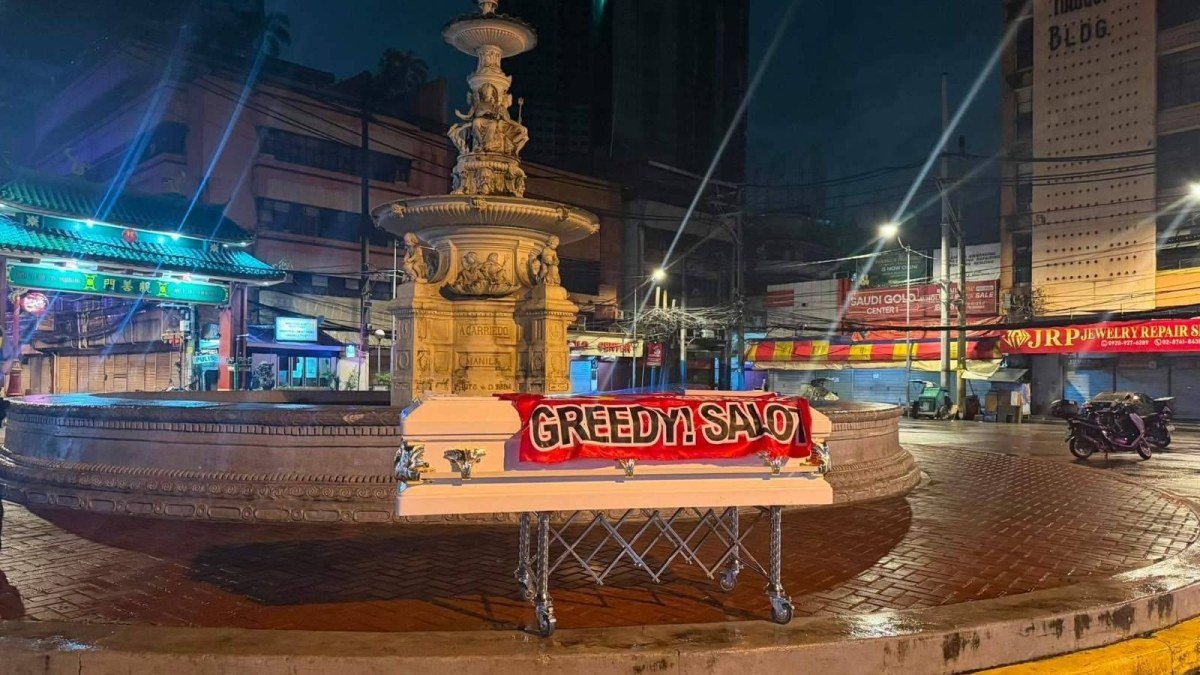
Edited pictures showed Chinese President Xi Jinping, Foreign Minister Wang Yi, and Ambassador Jing Quan appearing dead and eaten by worms inside the caskets. For ordinary Filipinos these images stirred memories of fishermen returning with stories of harassment and of coast guard vessels blocked during lawful patrols. The symbols tapped into long-standing community frustration yet also raised questions about how such displays affect daily conversations in markets and jeepney stops.
Residents in the affected areas later shared that the combination of flags and altered photos felt like a direct attempt to link distant diplomatic tensions with their own streets. While the messages echoed public anger over the 2016 arbitral ruling, neighbors noted the graphic nature made the caskets hard to ignore even for those who usually avoid political talk during family meals.
Official Response — Police and Palace
NCRPO director Maj. Gen. Anthony Aberin stated the acts were deliberate attempts to provoke reaction and would not go unpunished. He directed police units to file criminal cases once the investigation identifies those responsible. Quezon City Police District director Brig. Gen. Randy Glenn G. Silvio formed a Special Investigation Team to trace the vehicles and interview witnesses.
Malacañang press officer Claire Castro emphasized that freedom of expression must not create fear or unrest. She urged citizens to work with government channels rather than stage displays that intimidate communities in Manila and Quezon City.
In the wake of the abandoned caskets, PNP chief Gen. Jose Melencio Nartatez Jr. quickly ordered a comprehensive investigation, with all five caskets secured as evidence to support ongoing probes. NCRPO director Maj. Gen. Anthony Aberin emphasized that this cowardly act will not be left unpunished, stating the NCRPO will ensure the identity of those behind these acts will be uncovered and criminal cases filed upon completion of the investigation. He described the incidents as deliberate acts intended to attract attention, provoke public reaction and possibly create unnecessary alarm, adding that public safety cannot be used as a stage for fear. Police units across Metro Manila have been directed to strengthen vigilance and increase patrols, a move that brings reassurance to families in bustling barangays from Quezon City to Pasig as they go about their daily routines.
QC Police District director Brig. Gen. Randy Glenn G. Silvio formed a Special Investigation Team to identify those responsible, determine the motive and trace the vehicles used. Residents are urged to report any suspicious activity to the nearest police station, E911 or the QC Helpline 122, fostering a sense of shared responsibility in keeping communities safe. Malacañang press officer Claire Castro noted that the Palace respects freedom of expression but placing caskets to hit China does not help advance the country's interests, adding that if you are patriotic, please cooperate with our government to address your issues and do not be a source of fear, intimidation or unrest. These coordinated steps highlight how authorities are balancing security with respect for public voices in a tense time.
Diplomatic Fallout — DFA and China's Embassy
The Department of Foreign Affairs condemned any threats of violence against foreign nationals and cited the Vienna Convention on Diplomatic Relations. It stressed that the right to expression does not cover acts endangering diplomats or missions in Metro Manila.
Chinese embassy spokesman Ji Lingpeng called the incident a blatant provocation and made formal representations to Philippine authorities. The embassy demanded a thorough investigation and warned that such acts risk inflaming tensions between the two peoples.
The Department of Foreign Affairs stated it does not condone acts or threats of violence against any individual, including foreign nationals or officials, describing such irresponsible and disrespectful acts as intolerable. Freedom of expression does not extend to threats of violence or acts endangering the safety of others, with the DFA citing the Vienna Convention on Diplomatic Relations and the Vienna Convention on Consular Relations, which oblige host states to protect diplomatic missions and accredited diplomats. The agency is coordinating closely with law enforcement to address the situation, underscoring the need to maintain stability amid heightened tensions that affect not only diplomats but also ordinary Filipinos who rely on peaceful relations for trade, travel and community ties across the archipelago.
Chinese embassy spokesman Ji Lingpeng called the incidents a blatant act of political provocation, personal attack and intimidation and threat, of a most egregious nature, with the embassy strongly condemning this despicable and shameless act. It has made solemn representations to the Philippine side and urged an immediate thorough investigation and bringing perpetrators to justice, noting there are always people who, out of ulterior motives, spare no effort to stoke hatred and incite confrontation between the Chinese and Philippine peoples. The embassy remains committed to keeping China-Philippines relations stable, a stance that resonates with families in Manila's Chinatown districts and coastal communities who value steady neighborly bonds despite ongoing disputes.
Philippine Context — Anger Over the West Philippine Sea
The casket incident occurs amid ongoing disputes in the West Philippine Sea where Chinese vessels have harassed Filipino fishermen and obstructed Philippine Coast Guard missions. The 2016 Arbitral Award remains the legal foundation for Manila's claims, yet daily encounters at sea continue to affect coastal communities in Palawan and Zambales.
Defense Secretary Gibo Teodoro has noted that refusal to recognize the arbitral ruling opens officials to pro-China labels. This polarization adds pressure on ordinary families who rely on fishing livelihoods and on remittances from relatives working abroad.
Heightened tensions between the Philippines and China over the West Philippine Sea form the backdrop to these incidents, with the country continuing to assert the binding 2016 Arbitral Award that upheld its sovereign rights. Reports of harassment against Filipino fishermen and obstruction of Philippine Coast Guard and Armed Forces of the Philippines personnel in contested waters have fueled public frustration in recent months, leading to protests and demonstrations in urban centers and coastal towns alike. Defense Secretary Gibo Teodoro recently noted that refusal to recognize the Aquino-era order naming the West Philippine Sea opens officials to pro-China tags, reflecting deep divisions that touch everyday conversations in markets and jeepney rides across Metro Manila.
This casket incident coincides with the impeachment trial of Vice President Sara Duterte and multiple congressional probes, adding layers of domestic political polarization that communities must navigate. While the acts appear aimed at drawing attention to maritime grievances, they intersect with broader calls for restraint and diplomacy, reminding residents in fishing villages and city barangays how international disputes ripple into local life. The situation calls for careful handling to prevent further unrest while honoring the patience shown by the nation in upholding international law amid persistent challenges at sea.
Reactions and Civil Society
Four civil society groups — Alyansa ng Bantay sa Kapayapaan at Demokrasya, People's Alliance for Democracy and Reforms, Liga Independencia Pilipinas, and the Filipinos Do Not Yield Movement — issued a joint statement linking the symbolic protest to years of frustration over territorial incursions. Dr. Jose Antonio Goitia said the Filipino people have reached their breaking point after repeated obstructions at sea.
The groups called for continued restraint and diplomacy while acknowledging public anger. They urged media outlets to cover the full context of the West Philippine Sea incidents rather than focus solely on the caskets.
Civil society groups including Alyansa ng Bantay sa Kapayapaan at Demokrasya, People's Alliance for Democracy and Reforms, Liga Independencia Pilipinas and Filipinos Do Not Yield Movement issued a joint statement expressing that for too long, China has pushed the limits of Filipino patience. Their fishermen have been harassed, Coast Guard and Navy obstructed while carrying out lawful missions, and sovereign rights challenged despite a binding arbitral ruling, yet the Philippines has answered with restraint, diplomacy and respect for international law. Dr. Jose Antonio Goitia, chairman emeritus, noted that every nation has its breaking point and the Filipino people have reached theirs, a sentiment that echoes through coastal communities where families depend on safe waters for their livelihood.
The groups also questioned whether some pro-China media outlets had intentionally obscured details of the incident, sparking discussions in urban barangays about balanced reporting and public awareness. These voices from civil society highlight a collective desire for accountability without descending into fear, encouraging residents from Quezon City to nearby provinces to stay informed and engaged. Their stance reflects a community-oriented push for unity, urging Filipinos to channel frustrations constructively amid ongoing regional strains.
What to Watch For
Investigators will continue tracing the vans through CCTV and vehicle records while the Special Investigation Team in Quezon City compiles witness statements. Criminal charges could follow once identities are confirmed.
The episode highlights how domestic political divisions and sea disputes intersect, affecting public discourse in barangays across Metro Manila. Residents and local officials now monitor whether similar displays appear in other cities and how authorities balance free expression with public order.
Investigators are expected to examine CCTV footage, trace vehicles linked to the caskets and pursue leads through the Special Investigation Team formed in Quezon City, building on directives from PNP chief Gen. Jose Melencio Nartatez Jr. Possible criminal charges could arise alongside violations of local ordinances on public disturbances, with police across Metro Manila increasing patrols to deter further incidents. These steps aim to uncover motives and restore calm, offering reassurance to families who value safe streets and open dialogue in their neighborhoods.
Diplomatic consequences may include continued coordination between the DFA and law enforcement to uphold the Vienna Conventions, potentially affecting relations with China and the treatment of Filipinos abroad and at home. The episode raises questions about public discourse, reminding ordinary citizens in bustling communities to report suspicious activity through channels like E911 or local helplines while fostering respectful conversations on national issues. As probes advance, the focus remains on balancing expression with safety to protect the everyday harmony of Philippine life.
By Bella Reyes, Staff Writer
This article was produced with AI-assisted research and editorial support. Reporting is based on sources cited in the article.
What's Your Reaction?
 Like
0
Like
0
 Dislike
0
Dislike
0
 Love
0
Love
0
 Funny
0
Funny
0
 Wow
0
Wow
0
 Sad
0
Sad
0
 Angry
0
Angry
0

Philippines/Southeast Asia Correspondent at Global1.News. Manila-based journalist covering Philippine politics, environment, maritime security, and social issues. Passionate about marine conservation and the communities protecting the Philippines' natural heritage.











Comments (0)