
Java4Shell: A Critical Flaw Inside Java Itself, Patched the Same Day
Calif disclosed Java4Shell, a memory-corruption flaw in OpenJDK's Base64 decoder, on November 17, 2026. Oracle shipped patches the same day and CISA urged immediate action, though no exploitation in the wild has been reported.
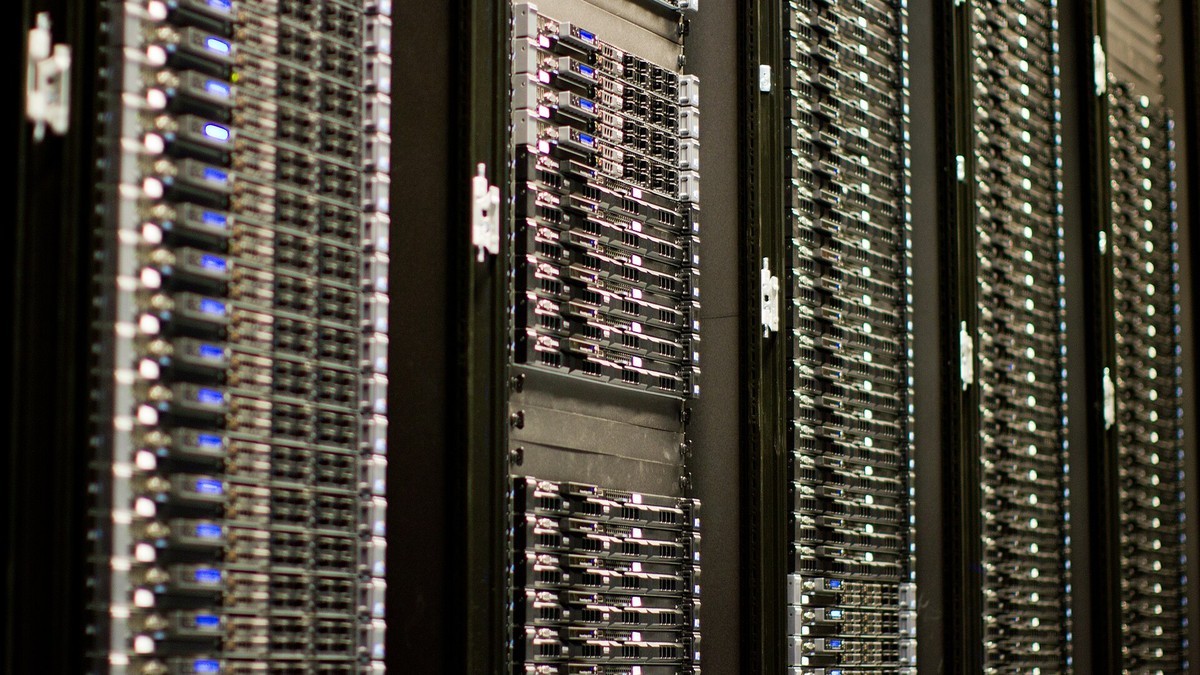
Java runs inside the banks, the airlines and the phone networks, and this week it turned out to be carrying a hole in the middle of itself. The security firm Calif disclosed a memory-corruption flaw in OpenJDK's Base64 decoder, named it Java4Shell, and Oracle had a patch out the same afternoon. The uncomfortable part is where the bug lives: not in a library you can swap, but in Java itself, in hand-written assembly that has been running quietly under everything.
Java4Shell: A Critical Flaw Inside Java Itself, Patched the Same Day
WASHINGTON — Calif disclosed CVE-2026-114938, a memory-corruption vulnerability in OpenJDK's Base64 decoder, on November 17, 2026. Oracle released patches that day in its November Critical Security Patch Update, and the OpenJDK project published an advisory urging users to upgrade as soon as possible. CISA issued its own alert telling organizations to patch immediately.
The Flaw Is in Java Itself, Not in Your Libraries
The defect sits in the HotSpot JVM's AVX-512 Base64 decode intrinsic, in a routine called generate_base64_decodeBlock reached through java.util.Base64.Decoder. It is an integer underflow in the code handling the final padded characters of a Base64 string, and it is written in assembly. That detail decides who has to care.
Sonatype put the operational problem plainly: the flaw is in the runtime, not a third-party library, so project dependency scans will not identify every affected installation. JFrog told customers to inventory runtime versions and not to stop at system-installed Java, because applications and containers routinely bundle their own copies. A scanner reading a package manifest looks straight past it.
Calif frames the stakes with the industry's own numbers. Java is the world's third most popular programming language, and the firm cites IBM's estimate that it powers 90 percent of Fortune 500 companies.
Sixty-Five Bytes Was Enough
The trigger is almost insultingly small. For a 65-character input — 64 "A" characters followed by a single "=" — OpenJDK allocates a 50-byte result array. After the first 64 characters decode, the routine mishandles the stray padding character, computes a negative output length and turns it into a full 64-byte write. Sixty-two of those bytes land past the end of the array.
Calif's account is blunt about the sequence: "Java eventually rejects the input, but by then neighboring objects may already be corrupted." On OpenJDK 17 the trigger input is 128 "A" characters followed by "=" instead of 64.
VulnCheck describes the same fault from the other direction, as input above 128 bytes ending in a short padded tail that drives the decode counter below zero and corrupts the destination pointer and store mask. Calif calls its heap-disclosure primitive JavaBleed; what it pulls from memory includes personally identifying information, private keys and tokens.
Two Scores for One Flaw
Two severity numbers are on the record and they do not agree. Calif scores the flaw 9.2 under CVSS 4.0, squarely critical. Oracle assigned 8.1 under CVSS 3.1, which reads as high, and the OpenJDK risk matrix carries the same 8.1 under hotspot/compiler.
The gap is not academic. A 9.2 drives emergency change windows; an 8.1 in a quarterly cycle can wait for a maintenance slot. Both are defensible, because the two systems weight exploitability and impact differently. What a defender has to settle is which one their own risk appetite treats as true.
The flaw did not arrive quietly. ThreatDefence's timeline records that on November 16, reporting cited an advisory attributed to South Korea's National Cyber Security Center rating the CVE at 9.2. Calif confirmed the discovery the next day and said the flaw had leaked before a fix was available.
What the Researchers Say They Broke Into
Calif states that its initial testing demonstrated remote code execution in widely deployed Java applications, in their default configurations. The pre-authentication list will keep administrators up tonight: Keycloak, Atlassian Jira, Atlassian Confluence, JFrog Artifactory, Jenkins and PingFederate. The post-authentication list runs Apache Kafka Broker, Apache Solr, Elasticsearch, Gerrit and Spinnaker.
The lists are not exhaustive. Calif also got code execution in sample applications built on Apache Struts and Spring Boot, and the blast radius runs wider than those product names, because authentication headers, tokens and file uploads are all ordinary places where an application decodes Base64 that an attacker supplied.
There is a client-side variant too. Calif says the researcher samczsun shared an exploit in which a Java program opening a TLS connection to a malicious server can be compromised even if it exposes no service of its own. The company is holding back its weaponized chains, with the stated intention of publishing them once everyone has had a chance to upgrade.
The Hardware Door Has to Be Open
Exposure depends on the silicon. The vulnerable code only runs on x86-64 processors with AVX-512 VBMI support; ARM64 is not affected. Calif lists Intel's Ice Lake, Sapphire Rapids, Emerald Rapids and Granite Rapids Xeons, plus AMD EPYC and Ryzen parts from Zen 4 onward. VulnCheck found the same boundary, because chips without those features take a decode path that does not contain the defect.
Most modern Intel laptops are therefore clear: Intel fused AVX-512 off on client chips from Alder Lake onward, Core Ultra and Arrow Lake included. The exception is its 2019 to 2021 client generation — Ice Lake, Tiger Lake and Rocket Lake — which does expose the feature.
The version boundary is muddier. Calif puts the line at OpenJDK 17.0.6 and newer, and OpenJDK's matrix flags branches 17, 21, 25 and 27. Oracle separately names its Java 8 Enterprise Performance Pack build, while Cycode says standard Java 8 and 11 are unaffected and IONIX reports that OpenJ9 and GraalVM native images do not carry the code. On Linux, grep /proc/cpuinfo for the avx512f, avx512bw, avx512vbmi and bmi2 flags; all four must be present.
A Burst of Requests Is the Cheap Attack
Nobody has been breached, and that is the honest headline on exploitation. VulnCheck states the flaw is not known to be exploited in the wild, and Sophos confirmed on November 17 that no active exploitation had been reported.
Crashing an affected JVM is trivial, VulnCheck found on Ice Lake hardware, provided you can reach a sink that uses the vulnerable decode path. It needs no heap grooming and no exploit development. A single request usually will not kill a default-configured server, because the JVM's thread-local allocation buffers absorb most overflows, but a burst reliably brought the service down in testing.
Remote code execution is the harder climb, requiring heap grooming plus a memory disclosure path specific to the target to leak addresses and beat ASLR. VulnCheck's verdict on the noise deserves a second reading: thousands of organizations responding to an embargoed vulnerability with "high prevalence, high drama, and comparatively low exploitability."
Calif agrees the payload is bespoke. "The exploit is not a universal point-and-shoot," it wrote, and its published proof of concept only triggers the overflow, so what is public today is a crash, not a compromise.
An AI Found It in About an Hour
Calif attributes the discovery to a man and a model. "It took our own Quang Luong an hour to discover the vulnerability, and two more hours to develop the first working exploit," the company wrote, adding that "the total token cost was less than $200." Its name for that pairing is the centaur hacker: part human, part AI, with the model supplying horsepower and the researcher supplying context.
BleepingComputer reports that Luong used OpenAI's Codex coding assistant to audit OpenJDK's internals. His own account is refreshingly unglamorous: most of what the model returned early was unusable, either unreachable or unrealistic to exploit, so he prompted harder. "Eventually, Codex brought me a finding for a memory corruption in the Base64 decoder itself. I came looking for copper and found gold, through sheer persistence."
It is not a first for the firm. Calif disclosed PHP2Shell, and earlier this year found Squidbleed, an older cousin of Heartbleed that had sat in the Squid proxy since 1997. The pattern is the point: aim an agent at a mature codebase and the economics of finding deep memory bugs change.
Oracle Shipped the Patch the Same Day
Oracle's November Critical Security Patch Update landed on November 17 and covers 655 vulnerabilities across its portfolio. Eleven fixes are in Java SE, and Oracle describes all of them as remotely exploitable without authentication, with a maximum CVSS 3.1 score of 8.1.
The replacement builds are 17.0.21.1, 21.0.13.1, 25.0.5.1, 27.0.1.1, 11.0.33.1 and 8u513. OpenJDK's advisory, last updated at 17:44 UTC on November 17, names CVE-2026-114938 in its risk matrix and lists 17.0.21.0.3, 21.0.13.0.3, 25.0.5.0.3 and 27.0.1.0.3 among the affected builds.
What Oracle's notice does not do is publish CVE identifiers. Sonatype noted that the pre-release notice does not map the Java fixes to this CVE by name, and ThreatDefence treats the claim that one of the eleven is CVE-2026-114938 as unconfirmed for exactly that reason. The OpenJDK advisory closes the gap in writing. For anyone patching on Oracle's word alone, the mapping is an inference.
What to Do Before Your Vendor Catches Up
Patch first, then restart. ThreatDefence's point is the one that gets missed: a running process keeps the old runtime in memory until it restarts, and pulling a new base image does not change containers already running. Rebuild, redeploy, restart the JVMs.
Where no updated runtime exists yet, Calif's mitigation is to start OpenJDK with "-XX:-UseBASE64Intrinsics" to disable the accelerated Base64 path, or "-XX:UseAVX=2" to disable AVX-512 — the second only on x86-64 hosts, because OpenJDK on ARM rejects the flag and will fail to start. VulnCheck verified both stop the overflow on OpenJDK 17, 21 and 25. Neither substitutes for the update.
Calif offers one partial network mitigation and undercuts it in the same breath: some exploit chains need partial request bodies to arrive, and a proxy that buffers whole bodies kills that timing, which nginx does by default. But Elasticsearch runs from one complete request, and after a WebSocket upgrade later frames tunnel past the buffer. CISA's fallback is narrower: validate Base64 at the application boundary, cap input sizes, cut unauthenticated access. IONIX warns against testing crafted input on production, because it can corrupt memory and crash the application.
An Optimization Almost Nobody Needed
The most interesting paragraph in Calif's write-up is not about the bug. It is about why the code existed. The AVX-512 Base64 decoder helps applications decoding enormous volumes of data. Everyone else inherited it anyway, including applications that gain little from it and never asked for the speed.
Calif calls the remedy "vibe-uncoding": use AI to comb a large codebase, flag dead code and needless optimizations, then delete what the system does not need. Its own framing: "With AI, everyone is asking, 'What can we build?' But maybe the right question for security is, 'What can we delete?'"
There is a hard limit on that idea, which Calif names: removing code is harder than it sounds, because an apparently unused feature can have hidden dependencies. That is precisely the work an agent can now make affordable. Tuesday's practical lesson is smaller and more urgent: find every JVM you own, check the silicon under it, and update the runtime — including copies nobody remembers installing.
By Jessica Ali, Staff Writer
This article was produced with AI-assisted research and editorial support. Sources: Calif, OpenJDK, Oracle, CISA, BleepingComputer, VulnCheck, Sophos, Sonatype, Cycode, ThreatDefence, IONIX, JFrog. Photographs: data-centre server racks by Victor Grigas, CC BY-SA 3.0, via Wikimedia Commons; Oracle headquarters by Davidlohr Bueso, CC BY 2.0; St. Elizabeths West campus aerial by the U.S. Coast Guard, public domain.
What's Your Reaction?
 Like
0
 Dislike
0
 Love
0
 Funny
0
 Wow
0
 Sad
0
 Angry
0

Editor-in-Chief at Global1.News. Atlanta-based journalist who cuts through the BS and tells it like it is. Lead anchor, host, and the voice you hear when the spin stops and the truth starts.










Comments (0)