
Russia's Property Grab: 34,000 Homes Seized in Occupied Ukraine
A BBC Verify investigation finds 34,002 Ukrainian homes seized or earmarked since 2024 in four occupied regions, as Moscow redistributes property to Russian citizens under an 'ownerless' property law.
In a recent BBC News report, the Global News Podcast examined a BBC Verify and BBC Russian investigation revealing that Moscow has seized or earmarked for seizure more than 34,000 Ukrainian homes across four illegally annexed regions since 2024. The findings, built from hundreds of official records and 516 publicly available "ownerless property" lists, paint a systematic picture of property redistribution that analysts describe as demographic engineering.
Russia's Property Grab: 34,000 Homes Seized in Occupied Ukraine
London – 8 August 2026 — A BBC Verify and BBC Russian investigation published this week has documented how Moscow-installed authorities are systematically seizing homes from Ukrainian citizens across the occupied territories of Donetsk, Luhansk, Kherson and Zaporizhzhia. The BBC's Olga Robinson explained on the Global News Podcast how the Kremlin has formalised the practice under a law signed by President Vladimir Putin, redistributing seized property to Russian passport holders in what analysts call a strategy of "Russification" and demographic engineering. The investigation found 34,002 properties — apartments, houses and holiday homes — belonging to Ukrainian citizens have been seized or identified for seizure since 2024 so they can be given to Russian citizens.
The Scale of the Seizure: 34,000 Properties and Counting
The investigation's central figure is stark: 34,002 unique addresses belonging to Ukrainian citizens have been seized or identified for seizure since 2024, according to BBC Verify's analysis of 516 publicly available "ownerless property" lists published on official occupied-territory websites. Of those, 14,308 properties are in Mariupol alone, with the remaining 19,694 spread across other parts of the occupied territories. Official maps and documents posted by Russian-installed authorities show the heaviest concentrations in Luhansk (6,975 properties), Donetsk (1,265), Melitopol (3,033) and Nova Maiachka (1,189).
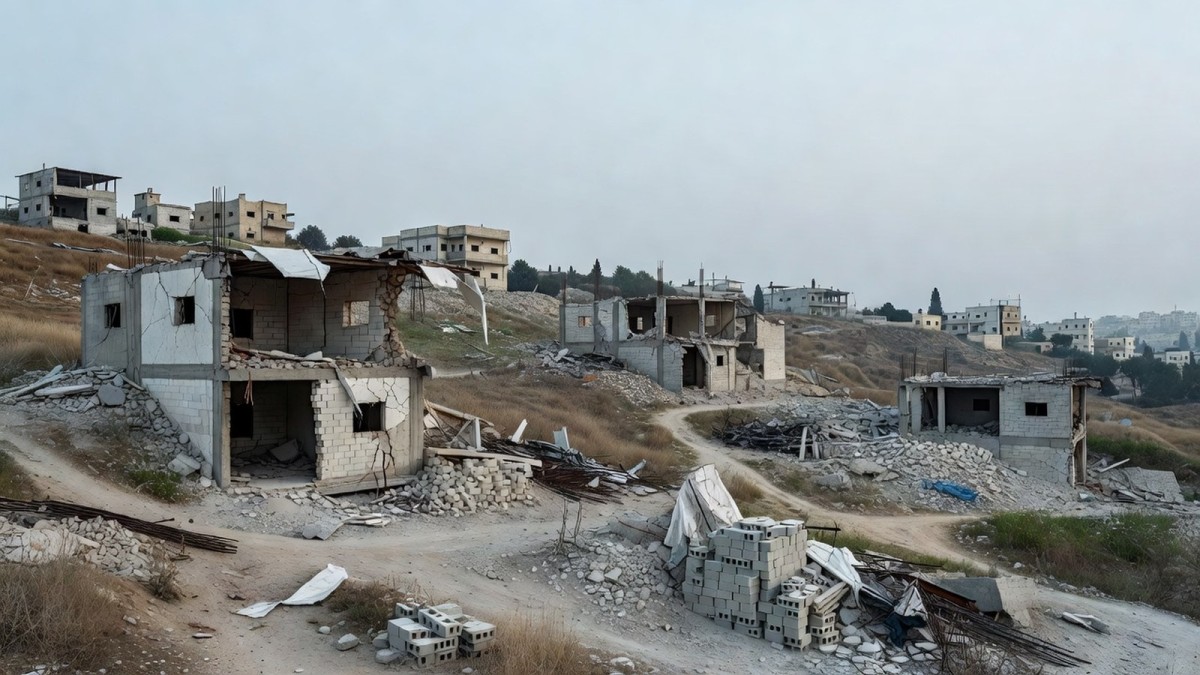
The investigation counted only residential property — apartments, houses and holiday homes. Moscow-installed officials have also targeted thousands of businesses, including offices and hotels, which were excluded from the tally. Homes near the front line have not been spared, with some left devastated by fighting while still appearing on seizure registers. BBC Verify first reported on the scheme in Mariupol last year, when at least 5,700 homes had been identified for seizure; since then, President Vladimir Putin signed a new law that formalised the process across all four illegally annexed regions, converting what had been local practice into codified state policy.
BBC Verify standardised addresses across the 516 lists to eliminate double-counting and removed any homes later excluded after owners proved their rights through documentation. One apartment block contained 61 homes listed for seizure, while one area alone accounted for 393 flats across 17 blocks. These confirmed figures represent a substantial share of Mariupol's pre-war housing stock and demonstrate the scheme's reach into every major occupied city. The data come directly from Russian-installed administrative records and constitute verified Tier A facts about the redistribution process.
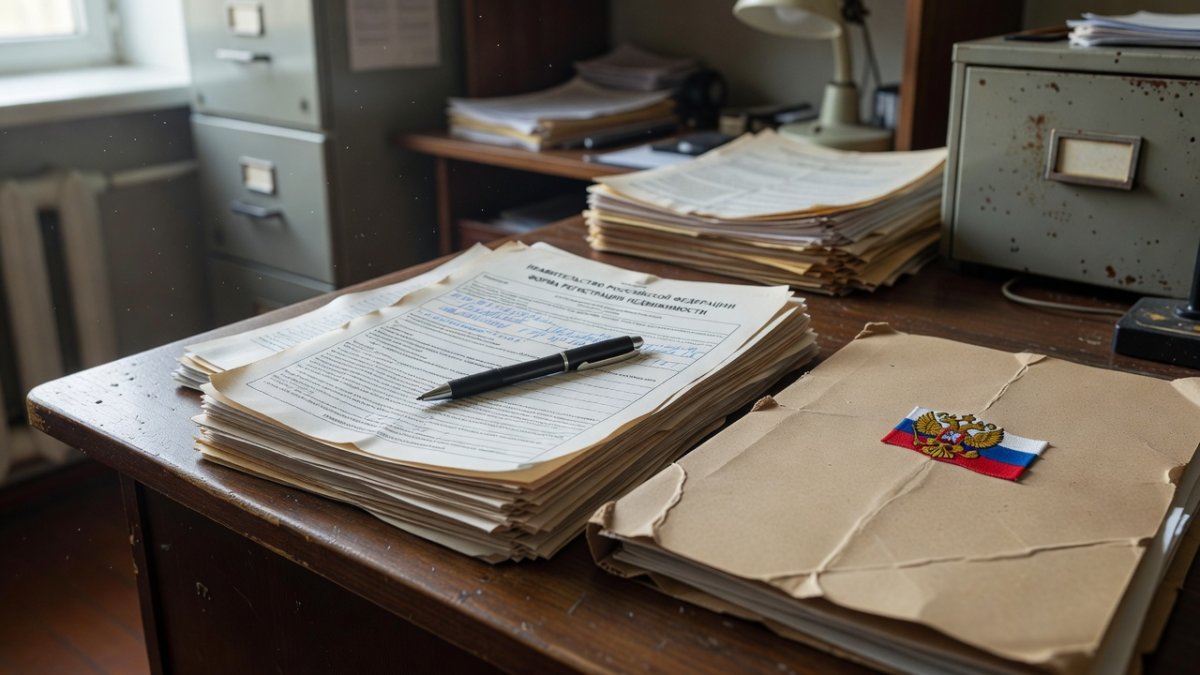
How the Scheme Works: 'Ownerless' Lists and the 30-Day Ultimatum
At the heart of the seizure mechanism is a legal fiction of "ownerlessness." Ukrainian citizens who fled the fighting are rarely notified when their homes are targeted, because the properties are identified for seizure when they are not registered with Russian authorities. Instead, displaced families must trawl through online registers where Russian officials have declared properties "ownerless" or "potentially ownerless" to discover whether their own homes have been listed — a process the BBC described as both humiliating and opaque.
The bureaucratic gauntlet for those trying to save their property is punishing. Ukrainian citizens displaced by the war must obtain Russian passports, return to the occupied regions in person within 30 days, and risk arrest by passing through a gruelling security screening process at Moscow's Sheremetyevo Airport. Once property is confiscated, it can be given into ownership to Russian citizens or temporarily leased to local officials, including judges, soldiers and state workers. Russian constitutional law changes cited by the BBC state that residential houses, flats and rooms "that have signs of being ownerless" are recognised as property of the so-called Donetsk People's Republic and "are given into ownership to citizens of the Russian Federation."
The Russian embassy in London stated that the measures "establish procedures for managing residential property whose owners cannot be identified or contacted, while also providing for compensation should the lawful owners subsequently come forward." This official claim from the embassy frames the process as administrative routine. In practice, the 30-day window and passport requirement create barriers that few displaced Ukrainians can meet without exposing themselves to detention. The Foreign Ministry has not issued further clarification on how compensation would be calculated or delivered.
'We Have Nowhere to Return To': Stories from the Ground
Evangelical pastor Ihor Ivashchuk fled Melitopol in September 2022. He asked a lifelong friend to look after his home during his absence. Months later, a man in military fatigues appeared at the property and demanded to know who owned it. The friend was evicted, and the house Ivashchuk had spent more than twenty years renovating no longer belonged to him. The case illustrates how occupation authorities identify and reassign homes without direct contact with the original owners.
Ivanna, whose name has been anonymised for safety, described how her father spent fifteen years building a family home in Mariupol's suburbs as a refuge for her mother after a cancer diagnosis. Her grandparents still live there. In April, occupation officials appeared and stated that the home had been identified for seizure. Ivanna said, "I just can't imagine someone else living there." Her account shows the personal impact on families who maintained ties to the occupied city through relatives who remained.
Myla, also anonymised and originally from Mariupol, now lives elsewhere in Europe. She submitted evidence of damage to her flat to the Ukrainian government but received no response. She stated, "We are not homeless. We are people who want to live in Ukraine, rebuild it and everything else, but we have nowhere to return to." These individual cases, drawn from BBC interviews, demonstrate the human consequences of the seizure lists across multiple cities.
Demographic Engineering and the Kremlin's Rationale
Dr Jaroslava Barbieri of Chatham House has analysed the seizures as a strategy of demographic engineering designed to transform both the social and political fabric of the occupied regions. She noted that the policy makes future reintegration into Ukraine both politically undesirable and practically hard to reverse. The approach also consolidates the Kremlin's imperial narrative that expansion of the Russian Federation into these new regions is a fait accompli and a force for good. This interpretation remains analysis rather than established fact.
Occupation authorities have renamed historic streets after Soviet-era figures and effectively banned the Ukrainian language in schools. The evangelical Church of Grace in Melitopol was converted into an outpost for Russia's culture ministry, with murals of Russian soldiers added and the cross removed. These measures accompany the property transfers and reinforce the broader Russification effort documented by the BBC investigation.
The Russian embassy in London has denied any intent to alter demographics. It accused the Ukrainian government of systematic marginalisation of the Russian language, the erosion of the rights of Russian-speaking communities and attempts to erase their cultural identity, which it described as the root cause of the war. Putin's law offers alternative accommodation only to people who agree to become Russian citizens, limiting access to those who accept the new administrative framework.
Unease Among Russian Beneficiaries
Some Russian citizens who received property through the scheme have expressed discomfort in public Telegram chats in Mariupol. Residents posted messages seeking to determine whether allocated apartments were truly ownerless, including phrases such as "Redacted Name ###, apt ###, looking for the owner" and "Looking for owners... has been given as compensation." These exchanges indicate that even some beneficiaries question the legitimacy of the transfers they have accepted.
The Ukrainian government maintains its own compensation scheme for displaced people, yet it remains slow-moving. Several Ukrainians who spoke with BBC Verify reported difficulties securing new housing within a system intended to support millions of displaced citizens. The contrast between the rapid Russian allocation process and the slower Ukrainian response highlights differing administrative capacities on each side of the conflict.
Analysis: What the Property Seizures Mean for the War's Endgame
The seizures create facts on the ground that complicate any future peace settlement. If tens of thousands of properties have been transferred to Russian citizens, the practical logistics of restitution become staggering. Questions arise over who compensates whom, how claims would be verified, and how long the process would take. Analysts suggest this outcome is deliberate: the longer properties remain in Russian hands, the harder reintegration becomes. The scheme also serves a domestic Kremlin purpose by rewarding loyalists, soldiers and state workers with property and binding them to the occupied territories' permanence.
For displaced Ukrainians such as Ivashchuk, Ivanna and Myla, the war's end is not an abstract diplomatic question but a direct matter of whether they will ever regain their homes. The scale of the legal challenge Ukraine would face in any restitution effort remains substantial. These transfers, documented through official lists and verified records, have already altered the residential landscape of the four regions in ways that will shape post-conflict negotiations.
By Irina Volkov, Staff Writer
This article was produced with AI-assisted research and editorial support. Reporting is based on sources cited in the article.
What's Your Reaction?
 Like
0
Like
0
 Dislike
0
Dislike
0
 Love
0
Love
0
 Funny
0
Funny
0
 Wow
0
Wow
0
 Sad
0
Sad
0
 Angry
0
Angry
0
Russia/Eastern Europe Correspondent at Global1.News. Covering Russian politics, energy, security, and the shifting dynamics of the post-Soviet space. Provides clear-eyed analysis on one of the world's most opaque regions.










Comments (0)