
Saudi Arabia, Turkey and Pakistan Forge NATO-Style Defense Pact in Mecca Amid Iran Conflict
Saudi Arabia, Turkey and Pakistan signed the Makkah Joint Defence Agreement on August 7, 2026, pledging that an attack on one is an attack on all. Signed by MBS, Erdogan and Sharif, the NATO-style pact unites oil power, NATO membership and nuclear capability amid the Iran conflict.
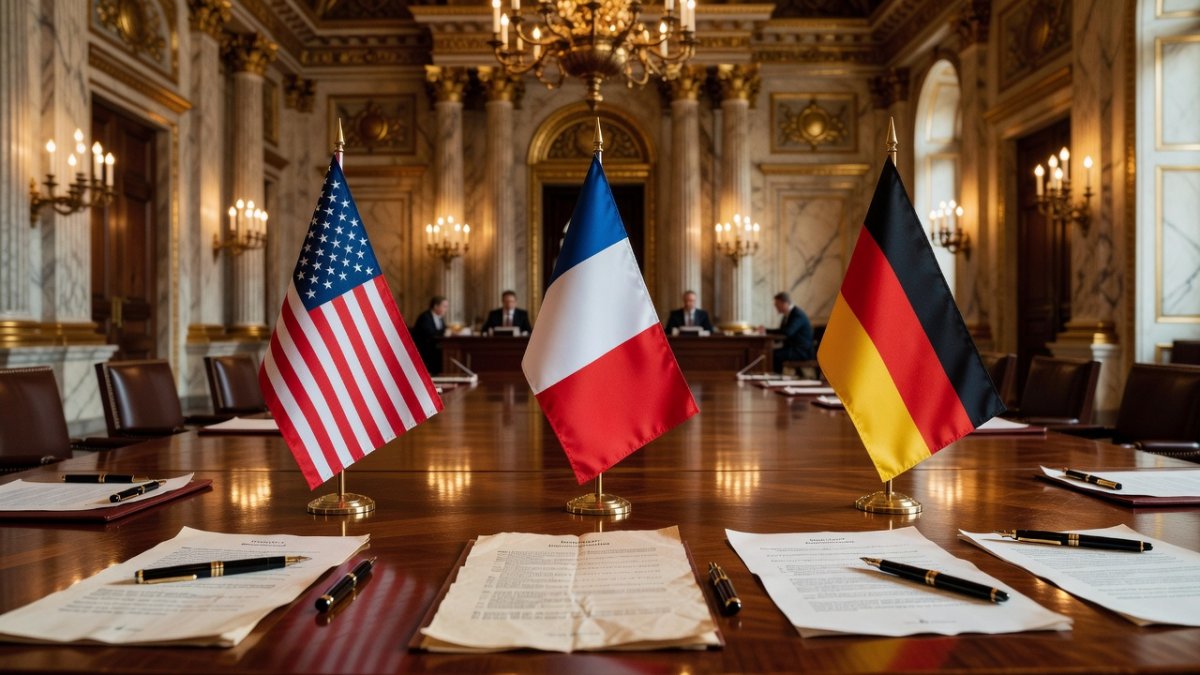
Three Nations Formalize Collective Defense in Mecca
The Makkah Joint Defence Agreement was signed on Friday, August 7, 2026, in Mecca, Saudi Arabia, binding Saudi Arabia, Turkey and Pakistan to treat an armed attack on any one as an attack on all. The pact commits the signatories to collective security measures and deeper regional cooperation against aggression. Saudi Crown Prince Mohammed bin Salman, Turkish President Recep Tayyip Erdogan and Pakistani Prime Minister Shehbaz Sharif affixed their signatures during the ceremony.
This NATO-style arrangement unites a leading oil exporter, a NATO member state and the Muslim world's sole nuclear-armed nation. Negotiations had stretched nearly a year before the final document was completed. The agreement builds on an earlier Saudi-Pakistan defense understanding announced in 2025.
Officials described the pact as a deterrent tool rather than an offensive instrument. It focuses on strengthening joint capabilities without specifying immediate operational deployments. The signing occurred as regional tensions remained elevated following months of strikes and shipping disruptions.
Leaders and Logistics Behind the August 7 Ceremony
Pakistani Prime Minister Shehbaz Sharif and army chief General Asim Munir reached Saudi Arabia on Thursday, August 6, for a three-day visit that concluded on August 8. Turkish President Erdogan arrived on the day of the signing itself. The timing allowed all three leaders to participate directly in the Mecca proceedings.
Decades of prior military cooperation underpin the new framework. Pakistan has long supplied training and technical support to Saudi forces. Turkey and Pakistan have conducted exchanges involving warships and training aircraft, while Riyadh finalized a major drone purchase from Ankara in 2023.
Foreign Policy reporting confirmed the extended negotiation period that preceded the pact. No public details emerged on command structures or joint basing arrangements at the time of signing. The document emphasizes deterrence and coordinated responses to future threats.
Background of Bilateral Military Cooperation
Existing ties between the three countries provided a foundation for the trilateral pact. Saudi Arabia and Pakistan maintained longstanding defense links that included personnel exchanges and equipment support. Turkish defense exports to the region expanded significantly in recent years, highlighted by the 2023 drone contract described by Ankara as its largest defense sale.
These relationships evolved amid shifting regional dynamics. Joint training programs and equipment transfers created operational familiarity among the forces. The new agreement formalizes what had been a series of bilateral arrangements into a single collective commitment.
Analysts note that the pact adds nuclear capability and NATO membership to Saudi Arabia's security posture. Such combinations alter the strategic calculus for any potential aggressor. Implementation details remain under discussion following the signing.
Context of US and Israeli Strikes on Iran
The United States and Israel conducted strikes against Iran on February 28, 2026, triggering a cycle of retaliation. Iranian-aligned forces subsequently targeted sites in Saudi Arabia and other Gulf states while interfering with maritime traffic. The resulting instability affected both the Strait of Hormuz and the Red Sea.
Yemen's Houthi movement, supported by Iran, declared a maritime embargo on Saudi shipping on July 20, 2026. The group claimed responsibility for attacks on the Saudi crude tankers Encelia and Layla on July 22. Additional strikes hit two commercial tankers in the Strait of Hormuz on July 20.
US forces conducted repeated operations against Houthi positions in Yemen, with a 12th consecutive night of strikes reported as of July 23. These actions aimed to restore freedom of navigation but have not fully halted the disruptions. Saudi Arabia has issued no public response to the Houthi claims.
Strait of Hormuz Shipping Disruptions and Data
The Strait of Hormuz previously carried roughly 20 percent of global oil supplies before the conflict intensified. Disruptions have contributed to production shut-ins averaging 8.3 million barrels per day in June 2026, down from a May peak of 11.2 million barrels per day. These figures reflect the direct economic pressure on energy markets.
Brent crude traded around 83.72 dollars per barrel as of August 5, 2026. Futures later fell about 6.8 percent to roughly 83.97 dollars from a prior close near 90.12 dollars amid signs of normalizing tanker flows and OPEC+ production adjustments. Crude prices remained up 18 percent over the previous month and 24 percent year-over-year.
Houthi forces claimed an additional attack on a Saudi oil tanker on August 5 and pledged to close all access routes to Saudi shipments. Industry sources have described proposed transit arrangements as complicated by sanctions and operational constraints. The cumulative effect has kept energy prices elevated despite recent modest declines.
Diplomatic Efforts to Restore Hormuz Transit
Iran announced on August 7 that it had reached an agreement with Oman on a proposed shipping route through the Strait of Hormuz. Iranian deputy foreign minister statements indicated Tehran was finalizing terms for vessel transit. Officials in Tehran cautioned that any such deal would not automatically reopen the waterway.
Reuters reported that shipping industry sources viewed the proposed passage as not feasible under current US sanctions and restrictive conditions. AP reporting noted that both Iran and the United States have described a deal on the strait as near. President Trump stated the waterway could reopen soon while warning of severe consequences if it remained closed.
A June 18, 2026 US-Iran memorandum outlined steps toward ending the conflict and reopening the strait. Iranian Foreign Ministry spokesperson Esmaeil Baghaei said mediators were passing messages between the sides but denied direct talks. Trump indicated he had called off a major planned operation after Iran signaled willingness to negotiate.
Tehran's Initial Response to the Defense Pact
A senior Iranian official described the new agreement as unable to guarantee Saudi security, marking Tehran's first public reaction. Iranian lawmakers voiced criticism of the trilateral arrangement involving Turkey and Pakistan. State-aligned commentary in Iran characterized the pact as a paper agreement lacking practical weight.
These statements reflect Tehran's effort to downplay the alliance's significance. No specific military countermeasures were announced in the immediate aftermath. The response focused on questioning the pact's deterrent value rather than outlining retaliation.
Regional observers will monitor whether Iran adjusts its posture in light of the strengthened Saudi-Turkish-Pakistani coordination. The official warnings underscore ongoing rivalries even as Hormuz diplomacy continues. Further reactions from Tehran are expected in coming days.
Market and Strategic Implications Moving Forward
The combination of collective defense commitments and ongoing Hormuz negotiations creates a fluid strategic environment. Oil market participants are watching for concrete signs of stabilized tanker traffic. Production shut-in data and price movements provide measurable indicators of progress or setbacks.
President Trump's comments on munitions stockpiles and potential strikes add another layer of uncertainty. The 6.8 percent drop in Brent futures shows sensitivity to any perceived easing of tensions. Yet the 24 percent year-over-year price increase illustrates the lasting impact of the conflict.
Stakeholders across energy, shipping and defense sectors will track implementation of both the Makkah pact and any Hormuz transit arrangements. The verified facts show a signed agreement alongside active but unconfirmed diplomatic channels. Outcomes will depend on actions taken in the weeks ahead rather than statements alone.
By Jessica Ali, Staff WriterThis article was produced with AI-assisted research and editorial support. Reporting is based on sources cited in the article.
What's Your Reaction?
 Like
0
Like
0
 Dislike
0
Dislike
0
 Love
0
Love
0
 Funny
0
Funny
0
 Wow
0
Wow
0
 Sad
0
Sad
0
 Angry
0
Angry
0

Editor-in-Chief at Global1.News. Atlanta-based journalist who cuts through the BS and tells it like it is. Lead anchor, host, and the voice you hear when the spin stops and the truth starts.












Comments (0)