
Russia-North Korea Road Bridge Opens Over Tumen River
Russia and North Korea opened their first road bridge across the Tumen River on Monday, a one-kilometer crossing Moscow casts as a trade and tourism link while investigators warn it may serve as a discreet military logistics corridor.
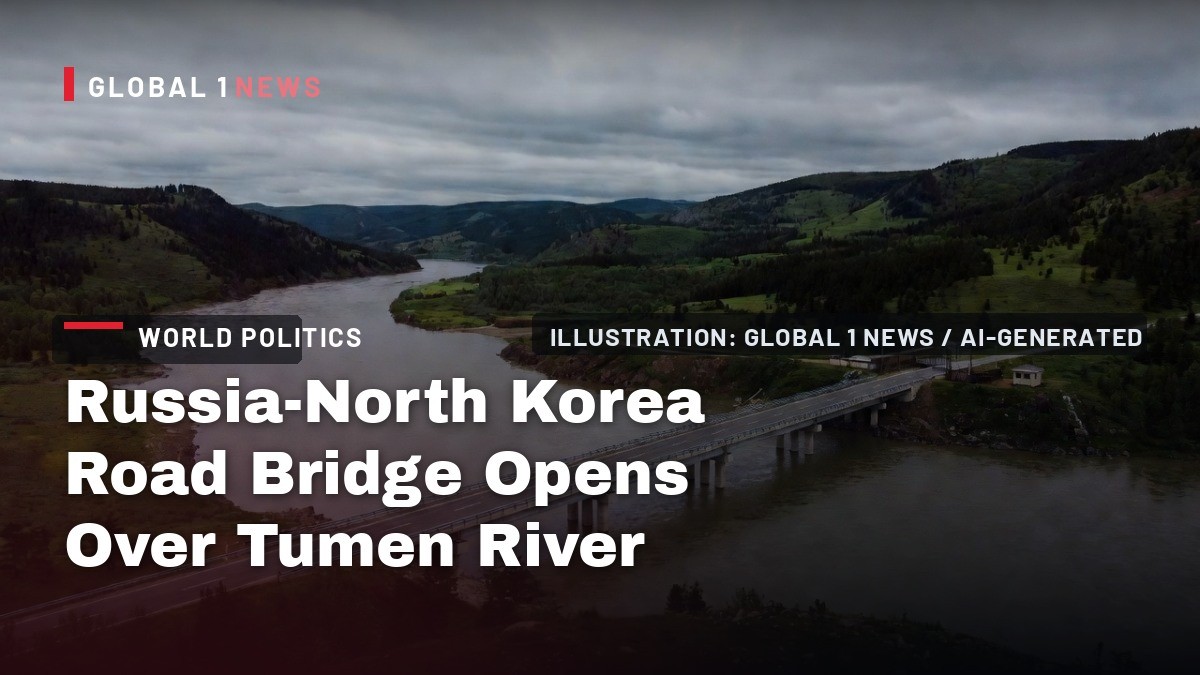
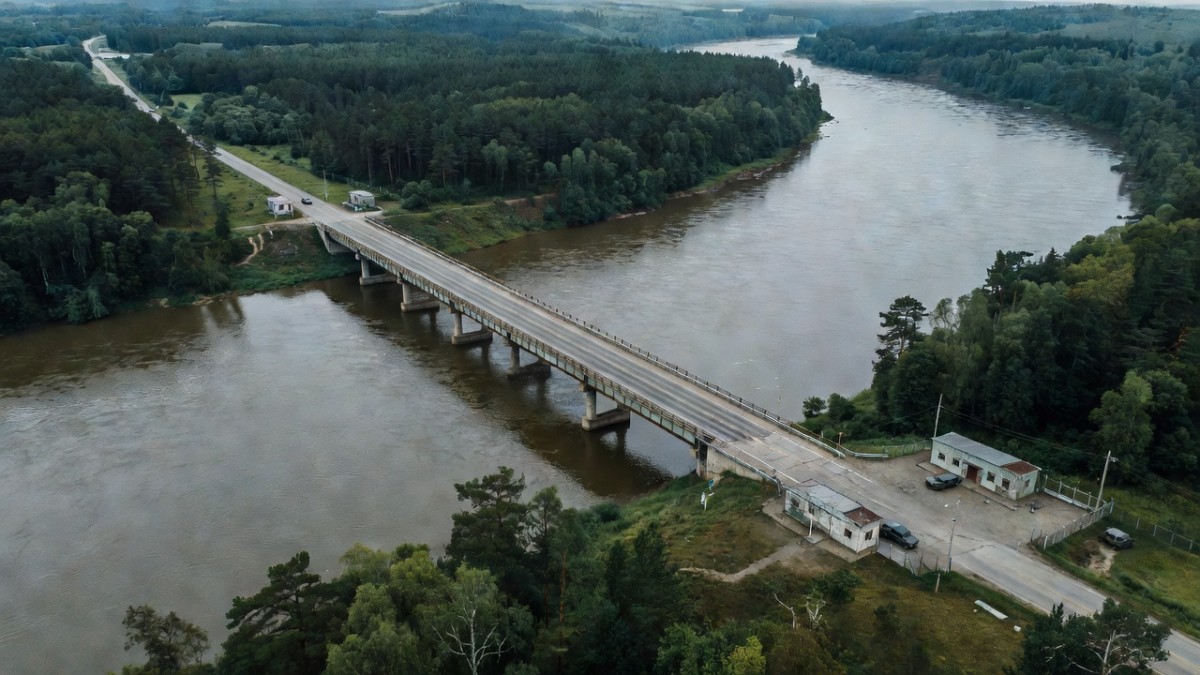
The first road bridge ever to connect Russia and North Korea opened to traffic on Monday, spanning the Tumen River between the Russian border settlement of Khasan and North Korea's Tumangang. The two-lane crossing, stretching one kilometer over the river, was inaugurated via video link by Russian Prime Minister Mikhail Mishustin and North Korean Premier Pak Thae Song, marking a new phase in the increasingly tight alliance between Moscow and Pyongyang.
The bridge's opening comes after months of construction delays on the Russian side and amid mounting Western and Ukrainian concerns that the crossing will serve as a discreet military logistics corridor rather than a genuine trade link. Convoys of vehicles crossed from both directions shortly after the ceremony, connecting to Russia's Ussuri federal highway, part of the West-East transport corridor linking Vladivostok with St. Petersburg.
Russia-North Korea Road Bridge Opens Over Tumen River
Moscow, Russia — Monday — Mishustin hailed bilateral relations as being at an "unprecedentedly high level of comprehensive strategic partnership" during the video-link ceremony, according to remarks carried by Russian state media. The bridge, which cost 9 billion rubles ($104 million), would boost trade and tourism and create new jobs, he said. "I am convinced that the expansion of cross-border transport infrastructure will provide a powerful impetus for the further development of trade, economic, scientific, technological and cultural cooperation," Mishustin added.
The crossing has been named after Yakov Novichenko, a Soviet officer credited with saving North Korean founder Kim Il Sung by shielding him from a grenade explosion in Pyongyang in 1946. The naming choice underscores the historical depth Moscow and Pyongyang claim in their relationship, even as the current partnership is defined by far more contemporary concerns.
A Corridor Decades in the Making
The new road bridge runs alongside the existing "Friendship Bridge," a rail crossing commissioned in 1959 that has long been the only functioning rail link between the two countries. For decades, that single-track bridge handled the modest flow of goods and passengers across a remote and sparsely populated stretch of the shared border, just a few miles from the coast. The idea of a road crossing had been discussed intermittently since the Soviet era, but it took the dramatic realignment of Russian foreign policy after the 2022 invasion of Ukraine to turn that talk into concrete action.
Russian President Vladimir Putin and North Korean leader Kim Jong Un signed the formal construction agreement during a 2024 summit in Pyongyang. That meeting also produced a comprehensive strategic partnership treaty, signed in June 2024 and formally in force since Dec. 4, 2024, which requires mutual defense support if either nation is attacked. Work on the bridge began in April 2025, with North Korea completing its section ahead of a planned June 19, 2026 deadline. Construction delays on the Russian side, however, pushed the opening back by several months.
Capacity and Infrastructure Details
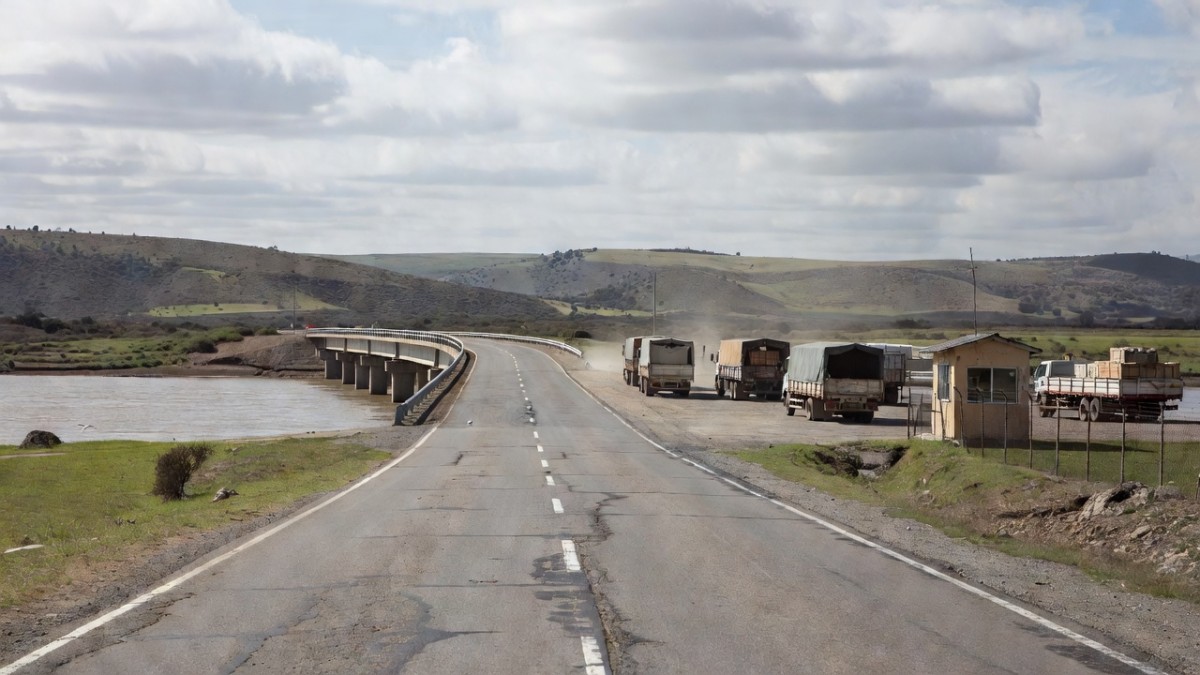
According to the Interfax news agency, the bridge and its newly constructed border checkpoint connecting the Primorye region with North Korea are designed to process up to 300 vehicles and 2,300 people daily. The checkpoint infrastructure includes customs and border control facilities on both sides, built to handle the anticipated flow of traffic. The access road on the Russian side connects with the Ussuri federal highway, part of the broader West-East transport corridor that links Vladivostok with St. Petersburg, integrating the new crossing into Russia's national road network.
The capacity figures are modest by international standards, but they represent a significant expansion of cross-border movement between the two countries. The rail Friendship Bridge, by comparison, has historically handled far smaller volumes, and the new road crossing offers a flexibility that rail transport cannot match.
The Wartime Axis Deepens
Russia and North Korea have dramatically deepened their military ties since the 2022 invasion of Ukraine. North Korea has sent thousands of troops to Russia's Kursk region to help repel a Ukrainian incursion launched there in 2024, according to multiple intelligence assessments. In return, Russia is believed to have provided North Korea with air-defense missiles, electronic warfare equipment, drones and spy-satellite technology, according to South Korean intelligence estimates.
In 2025, North Korea's shipments of rocket artillery, shells and short-range ballistic missiles to Russia were estimated at between $7 billion and $13.8 billion, according to the Institute for National Security Strategy, a government-funded research institute in South Korea. These figures dwarf the official bilateral trade numbers, which remain minuscule — in 2023, total trade between the two countries amounted to just $23 million, according to available data.
Military Logistics or Trade Link?
A July 2026 investigation by the Ukrainian human rights group Truth Hounds, shared with The Guardian, argues that the bridge is intended more as a discreet military logistics corridor than a trade link. Nazar Myhun, who led the open-source research, said a key reason is that it is much easier to evade satellite monitoring — a surveillance method used by the West to understand Russian and North Korean activities — by using roads compared with a rail network. Road transport allows trucks to load and unload almost anywhere, while trains are confined to fixed tracks and designated rail hubs.
The Truth Hounds investigation noted that bilateral trade is small, and even a former Russian diplomat, Georgy Toloraya, doubted the bridge would pay for itself, saying it would lack traffic. The discrepancy between the bridge's stated purpose as a trade and tourism link and the actual volume of legitimate commerce between the two countries raises questions about its true function, the investigators argue.
Ukrainian and Western Concerns
Ukrainian President Volodymyr Zelenskyy has repeatedly warned about the expanding North Korean role in Russia's war effort. He has said that Russia could deploy as many as 30,000 additional North Korean troops in the war, and has argued that Russia is helping North Korea learn how to wage modern war, improve its weapons and gain real combat experience. The new road bridge, from Kyiv's perspective, is another piece of infrastructure that could facilitate this growing military cooperation.
Western analysts have echoed these concerns, noting that the bridge's location in a remote border area makes it difficult to monitor. The ability to move military cargo by truck, rather than by rail, complicates intelligence gathering efforts that have relied heavily on satellite imagery to track Russian and North Korean military logistics.
Regional Reactions and Strategic Calculations
South Korean analysts are watching the bridge's opening with particular concern. Some, including Im Eul-chul, a professor at the Institute for Far Eastern Studies at Kyungnam University in Seoul, see the bridge as part of a continental triangular alignment linking North Korea, China and Russia. The bridge sends a message that North Korea has less reason to make concessions to Washington, Im argued, as Pyongyang's economic and security ties with Moscow and Beijing continue to deepen.
The opening also comes amid growing Russian tourism to North Korea, which resumed in 2024 after the country reopened to Russian visitors. The new road crossing could facilitate an expansion of this tourism, though the remote location and limited capacity suggest any significant growth would require additional infrastructure investment.
Economic Realities vs. Strategic Ambitions
The economic case for the bridge remains questionable. With bilateral trade of just $23 million in 2023, the $104 million investment would take decades to recoup through legitimate commerce alone. Even Toloraya, the former Russian diplomat, has expressed skepticism about the bridge's traffic prospects. The official narrative of boosting trade, tourism and creating new jobs may be more about public justification than actual economic calculation.
Yet the strategic logic is clearer. The bridge provides Russia with an additional, more flexible connection to its only major ally in the region, one that is actively contributing to its war effort in Ukraine. For North Korea, the bridge represents a tangible symbol of its alignment with Moscow and a practical infrastructure link that reduces its isolation from the Russian economy and military supply chains.
Analysis and Implications
The opening of this bridge signals that the Russia-North Korea axis, forged in the crucible of the Ukraine war, is moving toward permanence. The construction of fixed infrastructure — a road bridge with a dedicated border checkpoint — suggests both sides are planning for a long-term relationship that extends beyond the current conflict. This could indicate that Moscow and Pyongyang are building the logistical backbone for sustained military cooperation, regardless of how the war in Ukraine ends.
The satellite-evasion argument raised by Truth Hounds is particularly significant. Western intelligence agencies have relied heavily on satellite surveillance to track the movement of North Korean weapons and troops into Russia. A road network that allows trucks to load and unload anywhere, away from fixed rail hubs, complicates these monitoring efforts. This suggests the bridge's design may have been influenced by operational security considerations as much as by economic ones.
For the region, the bridge represents a further consolidation of the Russia-China-North Korea alignment that has emerged since 2022. South Korea, Japan and the United States are all watching these developments with growing unease, as the triangular relationship among Moscow, Beijing and Pyongyang reshapes the security architecture of Northeast Asia. The bridge is a small piece of infrastructure, but it carries outsized strategic significance.
Looking ahead, the bridge's actual usage patterns will be closely monitored by intelligence agencies and analysts across the region. If traffic volumes remain low, as Toloraya predicted, the economic justification will ring hollow, and the military logistics explanation will gain further credence. If, however, the crossing sees significant civilian traffic, it could signal a genuine opening of North Korea to Russian economic engagement. Either way, the bridge is now a permanent feature of the border landscape, a concrete manifestation of an alliance that has transformed the security dynamics of both Europe and Northeast Asia.
By Irina Volkov, Staff Writer
This article was produced with AI-assisted research and editorial support. Sources: The Moscow Times, Reuters, The Guardian, DW, Radio Free Asia.
What's Your Reaction?
 Like
0
Like
0
 Dislike
0
Dislike
0
 Love
0
Love
0
 Funny
0
Funny
0
 Wow
0
Wow
0
 Sad
0
Sad
0
 Angry
0
Angry
0
Russia/Eastern Europe Correspondent at Global1.News. Covering Russian politics, energy, security, and the shifting dynamics of the post-Soviet space. Provides clear-eyed analysis on one of the world's most opaque regions.













Comments (0)