
Second Counterfeit Abhayrab Scare in Two Years: What the Potency Failure Means for India's Rabies Defence
India's drug regulator has ordered state authorities to maintain strict vigilance over the movement of a specific batch of Abhayrab rabies vaccine after laboratory tests confirmed that seized vials were counterfeit and failed a critical potency test.

India's drug regulator has ordered state authorities to maintain strict vigilance over the movement of a specific batch of Abhayrab rabies vaccine after laboratory tests confirmed that seized vials were counterfeit and failed a critical potency test. The Central Drugs Standard Control Organisation (CDSCO) issued a public notice, and Drugs Controller General of India (DCGI) Rajeev Singh Raghuvanshi sent a letter dated August 27, 2026, to all state drug controllers, directing inspectorate staff to act under the Drugs and Cosmetics Act, 1940. This marks the second counterfeit Abhayrab episode in under two years, raising serious questions about supply-chain integrity for a vaccine that protects against an almost invariably fatal disease.
Second Counterfeit Abhayrab Scare in Two Years: What the Potency Failure Means for India's Rabies Defence
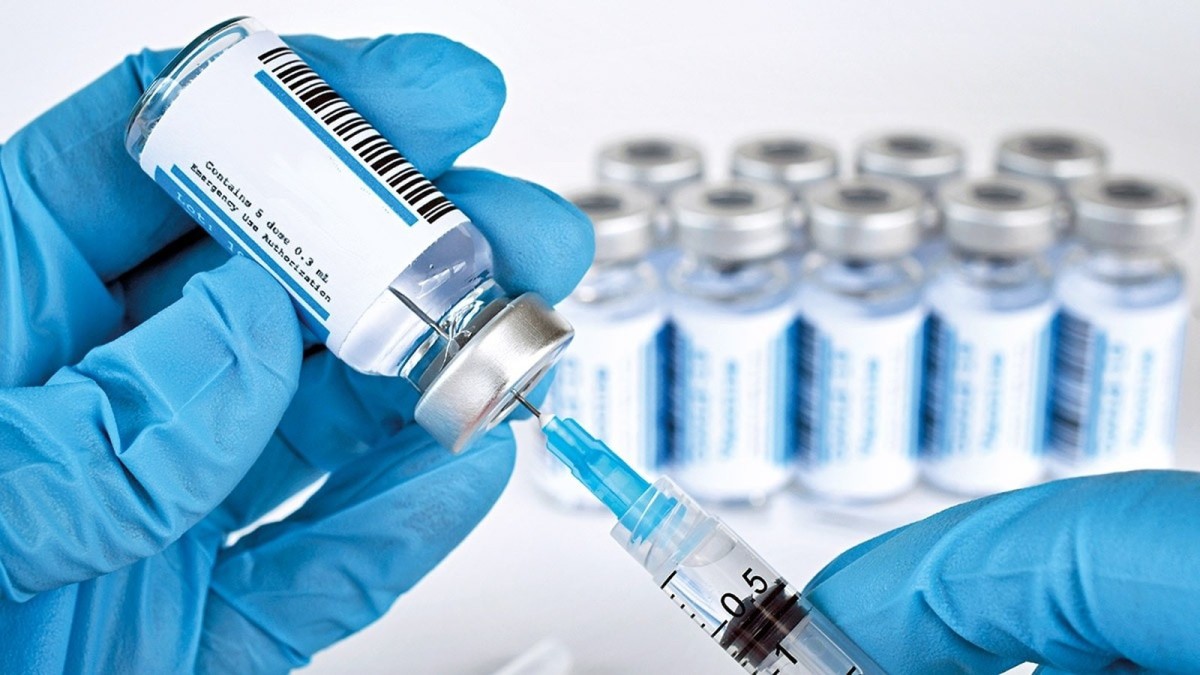
New Delhi, September 7: The counterfeit vials, labelled as Abhayrab batch KE25012, were seized on April 22, 2026, during a raid by the Delhi Police Crime Branch and drugs inspectors of the Delhi government's Drugs Control Department at an unlicensed residential premises in Mukherjee Nagar, north Delhi. Four people were arrested at the scene. Subsequent testing at the Central Drugs Laboratory (CDL) in Kasauli, Himachal Pradesh, reported the samples as "Not of Standard Quality" (NSQ) and "misbranded," with the field sample failing the potency test — the measure of whether the vaccine contains enough antigen to trigger protective immunity. The vials passed sterility, moisture, and identity tests but showed 17 differences in labelling, artwork, QR-code verification, cap colour, licence details, and packaging when compared against genuine retention samples of the same batch held at the laboratory.
Regulatory Response and Nationwide Vigilance
The DCGI's letter to state drug controllers is a formal escalation, requiring inspectorate staff to monitor the distribution and availability of batch KE25012 across the country. The directive invokes the Drugs and Cosmetics Act, 1940, giving state authorities the legal backing to seize suspected counterfeit stock and investigate any diversion. CDSCO's public notice confirmed that "no part of the batch concerned was exported to any other country," a statement aimed at reassuring international partners while focusing domestic attention on the authorised supply chain. Regulators maintain that vaccines reaching patients through hospitals, clinics, government facilities, and licensed pharmacies travel via the authorised, regulated distribution network, and that the seized vials originated from an unlicensed premises, not from legitimate stockists.
The timing of the alert is significant. Rabies remains a pressing public-health emergency in India, with the country recording approximately 90 lakh animal bites annually — roughly two-thirds from dogs — and more than 5,700 rabies deaths each year. Some estimates place the figure closer to 6,000, representing about 36 percent of the global burden. India has the highest number of rabies deaths of any country worldwide. Rabies is almost invariably fatal once clinical symptoms appear, which makes timely, quality-assured post-exposure prophylaxis (PEP) vaccination the only effective intervention. A counterfeit vaccine that fails the potency test offers no such protection, leaving bite victims vulnerable to a disease with a near-100 percent case fatality rate.
Manufacturer's Rebuttal and Documentary Evidence
Indian Immunologicals Ltd (IIL), the Hyderabad-based manufacturer of Abhayrab, has categorically denied producing the seized vials. The company, a wholly owned subsidiary of the National Dairy Development Board (NDDB) under the Government of India, produces Abhayrab through its Human Biologicals Institute (HBI) division in Telangana. In a statement issued on September 4, IIL said the genuine KE25012 batch was tested and released by CDL under Batch Release Certificate CDL/2025/8392 dated November 7, 2025, with a released quantity of 83,370 vials. The company maintains that this batch was supplied exclusively through its authorised distribution channel and that no market complaints have been received regarding the genuine product.
IIL's vice president, Sunil Tiwari, told Reuters that the CDSCO drew samples from an unlicensed residential premises in Mukherjee Nagar, reinforcing the company's position that the counterfeit operation existed outside the legitimate supply chain. The company submitted batch manufacturing, quality-control, reconciliation, and distribution records to CDSCO on August 14, 2026, and made a formal representation to the DCGI on September 4, asking authorities to trace the source of the counterfeit vials. The CDL's identification of 17 differences between the seized vials and genuine retention samples provides technical support for IIL's denial, though it does not explain how counterfeit product bearing a legitimate batch number entered circulation.
Previous Counterfeit Episode and International Fallout
This is not the first time counterfeit Abhayrab has surfaced. In January 2025, IIL alerted the drug regulator that counterfeit doses bearing batch KA24014 — manufactured in March 2024 with an expiry of February 2027 — had entered the market. That episode triggered international concern. Australia's Technical Advisory Group on Immunisation (ATAGI) issued a precautionary advisory in December 2025 for travellers and healthcare providers. The US Centers for Disease Control and Prevention reported a rabies case in a traveller from India on November 25, 2025, explicitly citing counterfeit Abhayrab circulation. A UK travel-health authority issued its own alert on October 29, 2025.
IIL's managing director, Anand Kumar, responded to the Australian advisory in December 2025, calling it "over-cautious" and "misplaced," and stating that the matter had been handled through regulatory channels. However, an India Today review at the time found no public alerts on either the CDSCO or IIL websites, a silence that drew criticism from public-health experts and legal scholars. Prashant Reddy, co-author of "The Truth Pill: The Myth of Drug Regulation in India," was blunt: "We should not have to hear it from a foreign government." The current episode, with its formal CDSCO notice and DCGI letter, suggests the regulator has learned from that criticism, though questions remain about the speed and transparency of the initial response.
What Potency Failure Means for Patients
The potency test failure is the most clinically significant finding from the CDL analysis. A rabies vaccine must contain sufficient inactivated virus antigen to stimulate the immune system to produce protective neutralising antibodies. When a vaccine fails the potency test, it means the product, even if sterile and properly identified, will not confer protection. For a patient who has been bitten by a potentially rabid animal, receiving a counterfeit, non-potent vaccine creates a false sense of security. The patient believes they are protected when they are not, and the window for effective PEP — typically 72 hours to several days post-exposure — may close before the error is detected.
A rabies researcher at University College of Medical Sciences, Delhi University, quoted by India Today, emphasised why vaccine integrity matters so acutely after animal bites. The context is straightforward: rabies prophylaxis is time-critical, and there is no room for a second attempt if the first dose is ineffective. The researcher's concern reflects a broader anxiety among public-health professionals that counterfeit vaccines targeting a disease with such a high fatality rate represent a uniquely dangerous form of pharmaceutical crime. Unlike counterfeit antibiotics or painkillers, where a sub-potent product may simply prolong illness, a counterfeit rabies vaccine can be a death sentence.
Abhayrab's Market Role and Supply-Chain Exposure
Abhayrab occupies a dominant position in India's rabies vaccine market. IIL supplies approximately 40 percent of all rabies vaccine used in India annually under the Abhayrab brand, at a cost of roughly Rs 300-390 per dose. The company has supplied more than 210 million doses of Abhayrab domestically and internationally over more than two decades, exporting to over 40 countries including South Africa, Turkey, Vietnam, Cambodia, Zimbabwe, Thailand, and the UAE. It also supplies government immunisation programmes for both pre- and post-exposure protection. This scale makes the brand an attractive target for counterfeiters, who can piggyback on its market recognition and distribution reach.
The concentration of market share in a single brand creates a systemic vulnerability. When a vaccine supplies 40 percent of national demand, any disruption — whether from counterfeiting, quality concerns, or supply-chain interference — has outsized consequences for public-health programmes. The current episode does not suggest any shortage of genuine Abhayrab, but it does expose the ease with which counterfeit product can be introduced into the market, even if outside the authorised channel. The fact that the seized vials were found at an unlicensed residential premises in Mukherjee Nagar, a dense north Delhi neighbourhood, indicates a distribution network that operates parallel to, and independent of, the legitimate supply chain.
Systemic Response: Track-and-Trace and Regulatory Gaps
The Union Health Ministry has been moving toward stronger track-and-trace mechanisms, expanding QR-code-based systems to cover vaccines, antimicrobials, anti-cancer medicines, and narcotic and psychotropic drugs. These amendments to the Drugs Rules, 1945, under Schedule H2, require barcodes or QR codes on primary and secondary packaging carrying product code, batch number, manufacturing and expiry dates, and licence number. Phased compliance begins July 1, 2027, for vaccines. The current counterfeit episode, occurring before that deadline, highlights the gap between policy intent and field reality.
The CDL's finding that the seized vials failed QR-code verification is telling. It suggests that the counterfeiters either did not replicate the QR codes or produced codes that did not match the genuine batch data. In a fully implemented track-and-trace system, a pharmacist or clinician scanning a vial before administration would immediately detect the discrepancy. Until such systems are universally deployed, the primary defence remains physical inspection and regulatory vigilance — the very tools the DCGI's August 27 letter seeks to strengthen. The letter's directive to state drug controllers to maintain "strict vigilance" over movement, distribution, and availability of batch KE25012 is a stopgap measure, not a systemic solution.
Lessons for India's Drug-Alert Architecture
The two counterfeit Abhayrab episodes, separated by less than two years, reveal persistent weaknesses in India's drug-alert architecture. The January 2025 episode demonstrated that foreign regulators and international health authorities often learn of problems before Indian patients and clinicians do. The current episode shows improvement — CDSCO issued a public notice and the DCGI wrote to state controllers — but the sequence of events raises questions about the delay between the April 22 seizure and the August 27 letter. Four months elapsed between the raid and the formal nationwide alert, a period during which counterfeit vials could have been in circulation.
For Indian patients, the practical takeaway is to remain vigilant about vaccine provenance. Rabies PEP should be obtained only from licensed healthcare facilities and pharmacies that source through authorised distribution channels. Clinicians should verify packaging details, QR codes, and batch information before administration. For the regulatory system, the episode underscores the need for faster public alerts, stronger coordination between central and state authorities, and accelerated implementation of track-and-trace technology. The CDL's role in identifying the 17 differences between seized and genuine vials demonstrates the value of robust laboratory analysis, but laboratory findings are only useful if they translate quickly into public-protection measures.
The counterfeit Abhayrab episode is a reminder that vaccine security is a continuous process, not a one-time achievement. India's rabies burden — the highest in the world — demands a supply chain that patients can trust without reservation. Every counterfeit vial undermines that trust, and every delayed alert prolongs the risk. The regulatory response to batch KE25012 is a step in the right direction, but the underlying vulnerabilities that allowed counterfeit product to reach the market remain. Until track-and-trace systems are fully operational and public alerts are issued without delay, the threat of counterfeit vaccines will persist.
This article was produced with AI-assisted research and editorial support. Sources: India Today, Reuters, The Hindu, Hindustan Times, The Economic Times, Business Today, ThePrint, CDSCO and Indian Immunologicals statements.
- By Dr. Raj Patel, Staff Writer
What's Your Reaction?
 Like
0
Like
0
 Dislike
0
Dislike
0
 Love
0
Love
0
 Funny
0
Funny
0
 Wow
0
Wow
0
 Sad
0
Sad
0
 Angry
0
Angry
0

India/South Asia Correspondent at Global1.News. Analytical voice with a background in science and health journalism. Based in New Delhi, covering Indian politics, education, healthcare, technology, and policy. Breaks down complex data into clear, actionable reporting.














Comments (0)