
Zelensky Braces for Winter as US Envoy Push Fails to Deliver Breakthrough
In a BBC News report published this week, Ukrainian President Volodymyr Zelensky delivered a stark assessment of the months ahead, stating plainly that he expects the war with Russia to continue into the winter months. The warning came just hours after high-stakes talks in Kyiv with US envoys Steve Witkoff and Jared Kushner concluded without the major breakthrough many had hoped for, leaving the diplomatic track alive but the battlefield reality unchanged.
In a BBC News report published this week, Ukrainian President Volodymyr Zelensky delivered a stark assessment of the months ahead, stating plainly that he expects the war with Russia to continue into the winter months. The warning came just hours after high-stakes talks in Kyiv with US envoys Steve Witkoff and Jared Kushner concluded without the major breakthrough many had hoped for, leaving the diplomatic track alive but the battlefield reality unchanged.
Zelensky Braces for Winter as US Envoy Push Fails to Deliver Breakthrough
Kyiv, Ukraine – 7 September 2026 — The carefully choreographed visit, which saw the American envoys arrive aboard a train carriage branded the "Peace Express," produced warm words and a commitment to further meetings, but no public agreement on the core issues that divide Moscow and Kyiv. As the diplomatic dust settles, Zelensky's focus has shifted squarely to the practicalities of survival: air defence interceptors, energy grid resilience, and the Western support needed to endure another punishing winter of war.
Kyiv Talks End Without a Breakthrough
Steve Witkoff and Jared Kushner made their first visit to Ukraine's capital since Russia's February 2022 full-scale invasion, holding talks with Zelensky on Sunday that lasted several hours behind closed doors in multiple rounds. Emerging from the discussions, Witkoff struck an optimistic tone, telling reporters, "We're confident there'll be a good resolution here," and adding that negotiators "made a lot of progress in Moscow" during their Saturday discussions with Vladimir Putin that ran more than three hours at his official residence. Despite the positive framing, no major breakthrough was announced, and the substantive gaps between the two sides remained publicly unchanged.
The envoys arrived by train aboard a carriage branded the "Peace Express" after flying to Poland, with Zelensky noting it was not possible for their plane to land in Ukraine despite preparations having been made. They were welcomed at the station by a delegation of top Ukrainian officials — military intelligence chief Kyrylo Budanov, lawmaker Davyd Arakhamia, diplomat Dmytro Kyslytsia and Defence Minister Rustem Umerov — before Zelensky accompanied them to St Sophia Cathedral, a site of profound historical significance located near where a Russian drone struck the headquarters of Ukraine's security services on Friday. The juxtaposition of ancient faith and modern warfare was not lost on observers.
Kushner offered a reflective account of the discussions, explaining that the US team "went through a lot of the ideas that hadn't worked to date" and sought to think creatively about what a "durable peace" actually requires. "It was a very good dialogue, he asked a lot of questions, we asked a lot of questions," Kushner said of the Moscow meeting with Putin, while a US official described the overall atmosphere as "positive." Yet the gap between diplomatic atmospherics and tangible progress remained wide, with neither side signalling movement on the fundamental territorial and security questions that have defied resolution for years.
A Winter Warning From the Ukrainian President
Zelensky's core warning was unambiguous and delivered with the gravity of a leader who has seen his country endure three consecutive winters of Russian attacks on critical infrastructure. "If the war continues — and we expect the war will continue — we are counting heavily on the winter aid package... on support for both air defense and the energy sector," he said, calling the three rounds of talks "very substantive." The discussions covered security and economic guarantees for Ukraine, air-defence missile supplies, American LNG volumes, and the contours of a dedicated winter support package designed to keep the lights on and the skies protected.
Expanding on the diplomatic path forward, Zelensky stated, "We've agreed that Ukraine, Europe, and the U.S. will meet in the near future," while also calling for the resumption of a trilateral format that would include Russia and the United States. "Our proposals are ready," he insisted, acknowledging that territorial issues remain on the table and that decisions of such complexity must ultimately be resolved at the level of national leaders. He framed economic recovery and the maintenance of a strong Ukrainian army as among the primary security guarantees Kyiv seeks, signalling that any lasting settlement must address not just the front lines but the long-term viability of the Ukrainian state.
The context for Zelensky's winter warning is grim. Ukraine is bracing for a renewed Russian campaign against its energy grid, as Moscow has historically intensified strikes on power infrastructure during the winter months when heating and electricity demand peaks. Last winter's campaign destroyed roughly 9 GW of Ukraine's generation capacity, according to Ukrainian officials, and Kyiv has struggled to repel Russian ballistic missiles due to a persistent shortage of interceptor missiles. The combination of degraded energy infrastructure and limited air defence creates a vulnerability that Russian planners have repeatedly exploited.
Moscow's Calculus: Root Causes and Territorial Demands
From the Kremlin's perspective, the Moscow talks were a constructive exercise in great-power diplomacy. Putin adviser Yuri Ushakov described the discussions as "constructive, extremely frank," noting that they were not limited to the Ukraine crisis alone. Economic issues and potential "mutually beneficial Russian-American projects" were discussed in considerable detail, suggesting Moscow sees value in the broader relationship beyond the immediate conflict. Ushakov also made a point of noting "the Russian army's tangible advances in the combat zone," a reminder that Russia continues to hold the initiative on the ground even as it engages in diplomatic dialogue.
The deadlock on core issues remains entrenched. Negotiations have been effectively stalled since earlier this year, with Moscow rejecting a ceasefire along current front lines and demanding that Kyiv cede the Donbas and drop its NATO membership aspirations. Russia still controls roughly one-fifth of Ukrainian territory seized in 2022, even as its ground forces have made only slow advances at enormous cost in manpower and equipment. Putin reaffirmed Russia's readiness for continued joint work with the United States toward political-diplomatic solutions, but the maximalist nature of Moscow's demands suggests any genuine settlement remains distant.
Analysts suggest the Kremlin's repeated invocation of "root causes" is a signal that Moscow will continue pressing its maximalist demands regardless of the cordial tone of the talks. The phrase, which Russian officials have used consistently throughout the conflict, encompasses Moscow's grievances over NATO expansion, Ukraine's sovereignty, and what Russia terms the "genocide" of Russian speakers in the Donbas — framing that Western officials reject as pretextual. For Zelensky, the winter warning doubles as a diplomatic message, a reminder to Washington that Ukraine's survival depends on interceptor missiles and energy support that only Western partners can supply.
Europe Drawn Into the Negotiating Room
After the bilateral US-Ukraine round concluded, the talks widened to include national security advisers from the United Kingdom, France and Germany, reflecting Kyiv's insistence that European security guarantees matter as much as American ones. The expanded format also speaks to European anxiety that Washington could strike a bilateral deal with Moscow over their heads, a fear that has persisted since the earliest days of the Trump administration's engagement with Russia. European leaders have repeatedly stressed that any settlement must have their buy-in, given the continent's direct exposure to the conflict's consequences.
In a gesture that captured the strange texture of wartime diplomacy, Zelensky gifted the envoys T-shirts reading "Kyiv Regime" — a tongue-in-cheek reference to Ushakov's description of the Ukrainian government a day earlier. The shirts, which quickly became a talking point among journalists covering the visit, wrapped public sarcasm around very serious negotiation, a hallmark of Zelensky's communication style throughout the war. The gesture also served to remind both the envoys and the international press corps that Ukraine retains its sense of humour even as it faces an existential threat.
What was actually agreed remains somewhat opaque. Officials from Ukraine, Europe and the United States will meet again in the near future, though dates and locations have not yet been set. Washington indicated that "substantive plans for next steps" were discussed in Moscow and would be announced in the coming weeks, but the vagueness of that formulation left many questions unanswered. The absence of a concrete framework for moving forward suggests that the diplomatic process, while active, has not yet reached the point of producing actionable proposals.
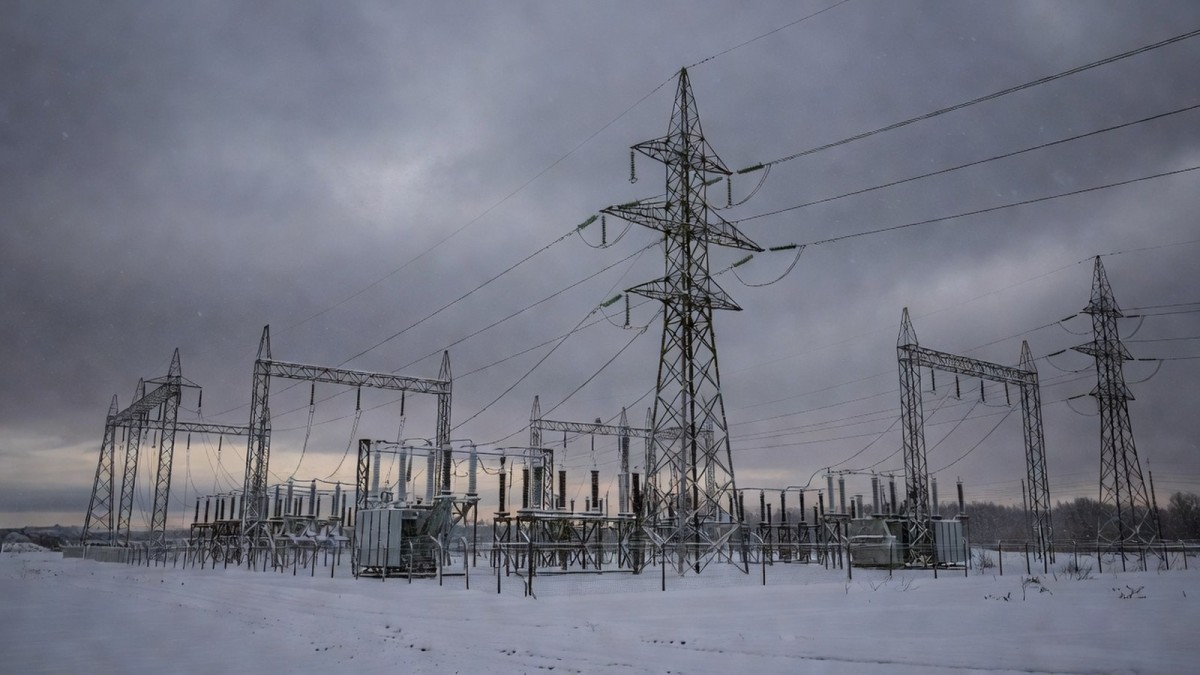
The Air-Defence Crunch and the Energy Grid
The interceptor problem has become the single most critical vulnerability for Ukraine's air defence network. Kyiv has relied on American-made Patriot interceptors to counter Russian ballistic missiles, but the United States has drawn down many of its own stockpiles during its conflict with Iran, creating a global shortage that directly affects Ukraine's ability to protect its cities and infrastructure. That depletion is one reason Kyiv is pressing so hard for a formal winter package rather than ad-hoc resupply, which leaves Ukrainian planners unable to allocate scarce resources with confidence.
Even during the envoy visit, with a three-day halt on strikes against the capitals in force, fighting continued elsewhere across the front lines. Ukraine confirmed it struck an oil refinery, an airfield and two air defence systems, with its defence ministry saying it targeted the Ryazan oil refinery and an airfield in the Rostov region. Ukraine's Air Force reported that Russia attacked with 108 long-range drones and cruise missiles overnight, with air defences successfully downing 82 drones and six missiles — a partial success rate that underscores both the effectiveness of Ukrainian air defence and the sheer volume of munitions Russia is willing to expend.
The energy sector context adds urgency to Zelensky's winter appeal. Russia's pattern of winter targeting of the grid has made energy resilience a national-security issue for Ukraine, transforming what would normally be a civilian infrastructure concern into a matter of strategic survival. Zelensky framed the coming months bluntly: if the war grinds on — "which is what it looks like for now" — Ukraine needs air defence and energy support at scale. The question is whether Ukraine's partners can deliver the volume of support required before the first snow falls.
Analysis — What the Coming Weeks Will Decide
President Trump was expected to speak with Vladimir Putin, then Zelensky, after being briefed by his envoys, with those calls anticipated this week. The immediate question is whether the White House converts the envoys' "next steps" into a concrete format: trilateral talks, a summit track, or a phased ceasefire proposal. Each option carries different risks and opportunities, and the choice will signal how seriously Washington views the prospect of a negotiated settlement versus a prolonged conflict of attrition.
The timeline context matters considerably. Ukraine's military intelligence chief Kyrylo Budanov has said US-mediated talks could resume in late September — shortly after Russia's State Duma elections and weeks before the US midterm elections. Each milestone shapes the incentives of the other side: Putin may feel emboldened by domestic political considerations, while Trump's team will be mindful of the domestic political calendar. These overlapping political cycles create a narrow window for meaningful progress before attention shifts to electoral considerations.
For now, the most consequential statement out of Kyiv was the least diplomatic: the war will continue, winter is coming, and Ukraine is counting on Western air defence and energy support. The envoys left with warm words and no deal, their "Peace Express" train carrying them back toward Poland and onward to Washington with little to show for their journey beyond a commitment to keep talking. What happens next depends on whether Moscow and Washington can agree what "root causes" means — and whether Kyiv's allies can keep the lights on and the missiles flowing through the hardest months ahead.
By Irina Volkov, Staff Writer
This article was produced with AI-assisted research and editorial support. Reporting is based on sources cited in the article.
What's Your Reaction?
 Like
0
Like
0
 Dislike
0
Dislike
0
 Love
0
Love
0
 Funny
0
Funny
0
 Wow
0
Wow
0
 Sad
0
Sad
0
 Angry
0
Angry
0
Russia/Eastern Europe Correspondent at Global1.News. Covering Russian politics, energy, security, and the shifting dynamics of the post-Soviet space. Provides clear-eyed analysis on one of the world's most opaque regions.











Comments (0)