
Security beefed up outside Parliament Street police station ahead of CJP leaders visit for fresh Jantar Mantar protest date
Security personnel were visibly bolstered outside the Parliament Street police station in New Delhi on Monday, 12 October 2026, as senior figures from the Cockroach Janta Party (CJP) prepared to meet Delhi Police officials.
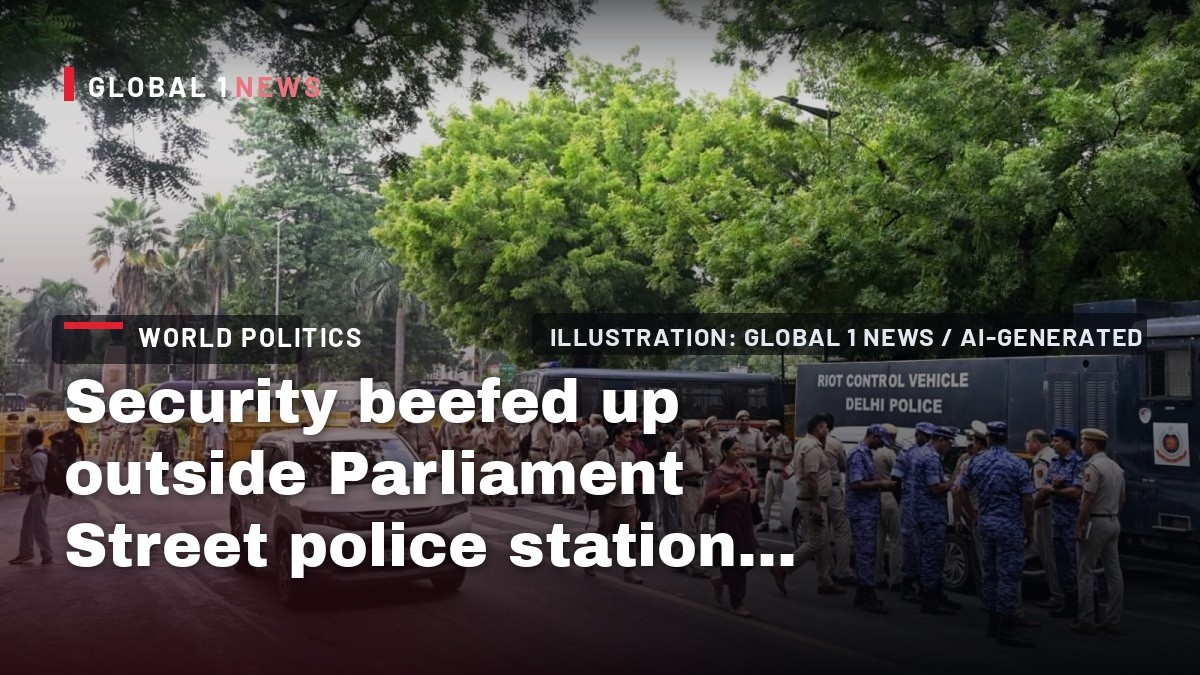
Security personnel were visibly bolstered outside the Parliament Street police station in New Delhi on Monday, 12 October 2026, as senior figures from the Cockroach Janta Party (CJP) prepared to meet Delhi Police officials. The meeting was intended to secure a fresh date for a peaceful demonstration at the iconic Jantar Mantar, following the police’s denial of permission for a protest slated for 10 October. The heightened police presence, coupled with public notices warning against unauthorised gatherings, underscores a broader tightening of civic space in the capital.
Background to the CJP’s protest request
The CJP, a relatively new political formation, has been actively mobilising support through street‑level campaigns and social media outreach. Co‑convenor Ashutosh Ranka announced that he, along with party colleagues Saurav Das, Ratna Singh and other leaders, would approach the police station to request a new date for a demonstration at Jantar Mantar. The party’s demand for a “peaceful protest at the designated protest site” reflects its strategy of framing dissent within the bounds of law‑ful assembly, a narrative that seeks legitimacy in a highly regulated protest environment.
Ranka’s statement that the Delhi Police could provide a date within 24 hours, or the party would “give another protest call ourselves,” signals a calibrated pressure tactic. By setting a tight deadline, the CJP aims to compel the authorities to respond promptly, while also keeping the public narrative focused on the party’s willingness to cooperate with law‑enforcement agencies.
Legal and procedural framework governing protests
Delhi Police’s refusal to grant permission for the 10 October demonstration was anchored in several procedural requirements. The police cited non‑compliance with an earlier undertaking, insufficient notice, and the statutory mandate that applications for public gatherings be submitted at least ten days in advance. These conditions are derived from the Delhi Police Act and the Model Code of Conduct, which together stipulate that authorities must assess potential impacts on law and order, traffic management, and public safety before approving any assembly.
The requirement for a ten‑day notice period is a standard procedural safeguard intended to allow police to coordinate logistics, divert traffic, and deploy adequate manpower. In this instance, the CJP’s “intimation letter” submitted by Saurav Das on 7 October fell short of the stipulated timeline, providing the police with a procedural basis to deny the request without overtly politicising the decision.
Security clampdown in the capital
The visible reinforcement of security around the Parliament Street police station is part of a broader pattern of restrictions across central Delhi. Over the past two days, police have erected barricades and deployed personnel to prevent demonstrators from reaching Jantar Mantar, a historic site for civic protest. This escalation aligns with a city‑wide effort to pre‑empt large‑scale gatherings that could disrupt traffic or trigger law‑and‑order challenges.
Public announcements posted outside the police station warned citizens about “security restrictions and prohibitory orders,” urging them to maintain peace and avoid unauthorised gatherings. Such notices are a routine component of the police’s risk‑mitigation toolkit, designed to inform the public while simultaneously signalling a zero‑tolerance stance toward spontaneous assemblies that lack official clearance.
Implications for democratic expression
The CJP’s experience highlights the delicate balance between the right to peaceful assembly and the state’s prerogative to maintain public order. While the party’s approach—seeking permission before staging a protest—demonstrates a commitment to lawful dissent, the procedural hurdles and rapid security response raise questions about the accessibility of democratic spaces for emerging political movements.
In India’s federal structure, state and union territories retain considerable discretion in regulating public gatherings. The Delhi Police’s reliance on procedural technicalities, such as the ten‑day notice rule, can be interpreted as a legitimate safeguard. However, when applied in a manner that consistently sidelines opposition voices, it risks eroding public confidence in the fairness of the regulatory framework.
Comparative perspective: protest management in Indian states
Other Indian states have adopted varied approaches to protest management, ranging from liberal permitting processes to more stringent controls. For instance, some states have introduced “single‑window” systems that streamline approval for peaceful rallies, while others impose stricter curfews and require detailed logistical plans. Delhi’s approach, as illustrated by the recent CJP episode, leans toward a cautious stance, reflecting the capital’s unique security sensitivities.
Understanding these inter‑state differences is crucial for political parties that operate nationally. The CJP’s reliance on a uniform procedural template may need adaptation to local administrative cultures, especially in regions where police discretion is exercised more flexibly. This adaptability could determine the party’s ability to sustain momentum across diverse political landscapes.
Potential pathways forward for the CJP
Given the current impasse, the CJP faces several strategic options. One route involves complying fully with the ten‑day notice requirement and resubmitting a detailed application that addresses traffic management and law‑and‑order concerns. By presenting a comprehensive plan, the party could pre‑empt police objections and demonstrate a constructive partnership approach.
Alternatively, the CJP could explore alternative venues for its protest, such as public parks or community halls, where procedural barriers may be less stringent. While Jantar Mantar holds symbolic resonance, the party’s broader objective of mobilising public support could be achieved through a series of smaller, legally sanctioned gatherings that cumulatively build pressure on authorities.
Broader policy implications and the way ahead
The episode underscores the need for clearer, more transparent guidelines governing public assemblies in Delhi. Policymakers could consider revisiting the ten‑day notice rule to incorporate flexibility for urgent civic issues, while still preserving the police’s capacity to manage security risks. Introducing an online portal for real‑time application tracking could also reduce ambiguities and foster trust between protest organizers and law‑enforcement agencies.
For democratic health, it is essential that the regulatory framework balances security imperatives with the constitutional right to peaceful assembly. As the CJP navigates its next steps, the broader political ecosystem will be watching how Delhi’s authorities reconcile these competing priorities. The outcome will not only shape the immediate protest calendar but also set a precedent for how emerging political actors engage with the state in India’s evolving democratic landscape.
This article was produced with AI-assisted research and editorial support. Reporting is based on the source material cited below. Sources: The Hindu; thehindu.com; Global1.News (12 October 2026).
By Dr. Raj Patel, Staff Writer
What's Your Reaction?
 Like
0
Like
0
 Dislike
0
Dislike
0
 Love
0
Love
0
 Funny
0
Funny
0
 Wow
0
Wow
0
 Sad
0
Sad
0
 Angry
0
Angry
0

India/South Asia Correspondent at Global1.News. Analytical voice with a background in science and health journalism. Based in New Delhi, covering Indian politics, education, healthcare, technology, and policy. Breaks down complex data into clear, actionable reporting.













Comments (0)