
INDIA Bloc Leaders Converge in Delhi Amid Tightened Protest Rules
The footage captures a densely packed crowd of party workers outside Himachal Bhavan, police barricades, and flash protests that spilled across several parts of the national capital.
The India Today video released on 12 October 2026 shows a dramatic escalation in Delhi’s protest landscape as senior opposition figures from the INDIA bloc, including Trinamool Congress chief Mamata Banerjee and Congress MP Mahua Moitra, gathered at the Constitution Club to protest new restrictions on demonstrations at Jantar Mantar. The footage captures a densely packed crowd of party workers outside Himachal Bhavan, police barricades, and flash protests that spilled across several parts of the national capital. The episode underscores a widening rift between the central government’s election administration and opposition parties, a rift that has direct implications for India’s democratic institutions, the Ministry of Home Affairs’ law‑and‑order strategy, and the broader political climate that shapes policy making in health, education and technology.
Background to the Delhi Protest Crackdown
The video begins by noting that the Ministry of Home Affairs, through the Delhi Police, issued fresh notifications tightening the rules for protests at Jantar Mantar, a historic site for civic dissent. The new guidelines limit the size of gatherings, require prior permission, and impose stricter penalties for violations. This regulatory shift follows a series of high‑profile demonstrations earlier in the year that targeted the Chief Election Commissioner and the central government’s handling of the electoral roll. The tightening of protest norms reflects the government’s broader security posture, which has been articulated by the Ministry of Home Affairs as necessary to maintain public order ahead of upcoming electoral cycles.
Opposition leaders have framed the notifications as an attempt to curb democratic expression, especially ahead of the next general election. In the video, Mamata Banerjee is seen arriving at the Constitution Club with a delegation that includes Mahua Moitra and Abhishek Banerjee, signalling a coordinated response from the INDIA bloc. The gathering at the Constitution Club, a historic venue for political discourse, carries symbolic weight, echoing past moments when opposition coalitions have used the space to articulate dissent.
From a policy perspective, the crackdown raises questions about the balance between security and civil liberties, a debate that has been echoed in parliamentary committees chaired by members of the Ministry of Law and Justice. The Ministry of Home Affairs’ approach to protest management also intersects with the Ministry of Information and Broadcasting’s narrative framing, influencing how the media reports on dissent and how the public perceives the legitimacy of the restrictions.
For Indian citizens, especially students and activists who frequently use Jantar Mantar as a platform for advocacy, the new rules could limit the ability to stage large‑scale demonstrations on issues ranging from university fee hikes to public health policy. The video’s emphasis on the heavy police presence underscores the state’s readiness to enforce the restrictions, a factor that will shape future protest strategies across the country.
Opposition Leaders’ Strategic Convergence
The footage shows Mamata Banerjee, Mahua Moitra and Abhishek Banerjee entering the Constitution Club together, a clear signal of unity among the INDIA bloc’s diverse parties. Banerjee, as chief minister of West Bengal and head of the Trinamool Congress, brings considerable political capital, while Moitra, a prominent Congress parliamentarian, adds a national legislative perspective. Their joint appearance suggests an attempt to consolidate opposition voices against what they describe as an authoritarian tilt in protest regulation.
In the video, the leaders are seen addressing a small gathering of supporters inside the club, though the audio is not captured. Their presence at the Constitution Club, a venue historically associated with deliberative politics, underscores a tactical choice to frame their protest within the bounds of constitutional discourse, thereby countering the government’s narrative that protests are a threat to public order.
This convergence also has implications for the internal dynamics of the opposition. By aligning leaders from different regional and national parties, the INDIA bloc signals a coordinated front that could influence future parliamentary debates, especially those concerning the Election Commission’s autonomy. The Ministry of Parliamentary Affairs will likely monitor these developments closely, as they could affect legislative negotiations on bills related to public order, civil liberties, and electoral reforms.
For the electorate, particularly in states where the Trinamool Congress and Congress have strong grassroots networks, the joint appearance of Banerjee and Moitra may reinforce perceptions of a united opposition capable of challenging the central government’s policy agenda. This perception could shape voter behavior in upcoming state and national elections, influencing the political calculus of parties across the spectrum.
Police Deployment and Crowd Dynamics Outside Himachal Bhavan
The video captures a massive crowd of party workers gathering outside Himachal Bhavan, a government building that houses the Himachal Pradesh state representation in Delhi. Thousands of demonstrators are shown climbing barricades and attempting to march towards the Supreme Court, raising slogans against the central government and the Chief Election Commissioner. The footage highlights the intensity of the protest, with participants scaling police barriers in a bid to breach the security cordon.
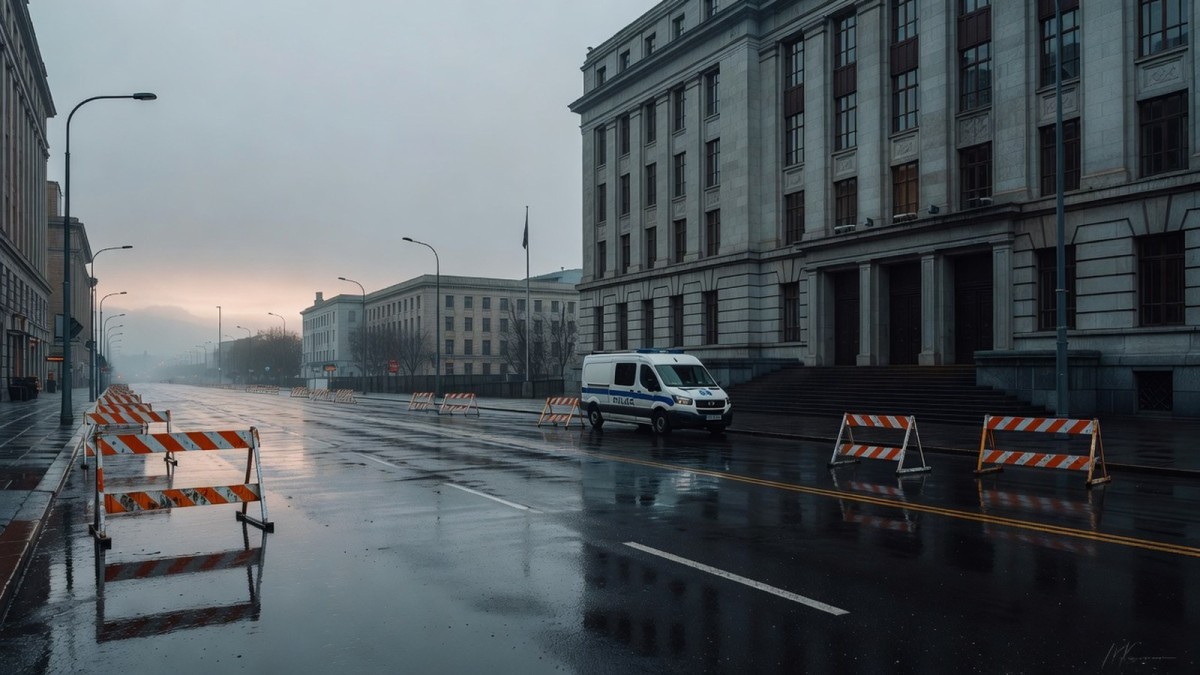
Police deployment around Himachal Bhavan was described as “heavy” in the video’s narration, indicating a significant allocation of personnel and equipment. The Delhi Police, under the Ministry of Home Affairs, employed crowd‑control measures such as barricades, water cannons, and mounted units to manage the surge. The presence of such resources reflects the government’s determination to enforce the new protest restrictions and prevent any breach of security perimeters.
The attempt by demonstrators to reach the Supreme Court underscores the symbolic importance of the judiciary in India’s democratic framework. By targeting the apex court, the protestors aimed to draw attention to perceived violations of constitutional rights, a tactic that aligns with past opposition strategies that have invoked judicial review to challenge executive actions.
From a public health perspective, large gatherings in confined urban spaces raise concerns about crowd‑related injuries and the potential spread of communicable diseases, especially in the post‑COVID environment where the Ministry of Health and Family Welfare continues to advise on crowd management. The police’s crowd‑control tactics, while aimed at maintaining order, also need to be evaluated against guidelines issued by the Ministry of Health regarding mass events, to ensure that medical preparedness and emergency response are adequately coordinated.
Flash Protests and the Spread of Dissent Across Delhi
The video notes that “flash protests” erupted across parts of New Delhi, indicating a decentralized pattern of dissent. Flash protests, by design, involve small, spontaneous gatherings that disperse quickly to avoid police confrontation. This tactic reflects an adaptive response by opposition activists to the tightened protest regulations, allowing them to maintain visibility while minimizing the risk of mass arrests.
These flash protests were observed in multiple locations, though the video does not specify each site. The spread of such protests suggests a coordinated network of activists capable of rapid mobilization, likely facilitated by digital communication platforms. The Ministry of Electronics and Information Technology (MeitY) has previously issued advisories on the use of encrypted messaging apps for organizing public gatherings, a regulatory context that adds another layer of complexity to the opposition’s mobilization strategies.
For the law‑enforcement agencies, the emergence of flash protests presents a challenge in terms of real‑time intelligence and response. The Delhi Police’s reliance on surveillance and rapid deployment units indicates an evolving operational approach to manage these fluid protest dynamics. The effectiveness of such tactics will likely influence future policy decisions by the Ministry of Home Affairs regarding protest management protocols.
From an academic standpoint, the shift towards flash protests may be studied by scholars at institutions such as the Indian Institute of Technology (IIT) Delhi and the National Law School of India University, who examine the intersection of technology, civic engagement, and state response. The evolving protest landscape could inform curricula in political science and public policy programs, preparing a new generation of analysts to understand the nuances of digital-era dissent.
Implications for the Election Commission and Democratic Processes
The video’s coverage of slogans directed at the Chief Election Commissioner (CEC) highlights the opposition’s focus on electoral integrity. By protesting the CEC, the INDIA bloc is questioning the neutrality of the body that oversees India’s electoral machinery, a concern that resonates with ongoing debates in the Ministry of Law and Justice about the statutory independence of constitutional bodies.
Recent years have seen the Election Commission’s role under scrutiny, especially regarding the implementation of the Model Code of Conduct and the management of electronic voting machines. The opposition’s criticism, as captured in the video, may prompt the Ministry of Law and Justice to revisit legislative safeguards that protect the CEC’s autonomy, potentially leading to parliamentary discussions or committee reviews.
For Indian voters, the perception of a compromised Election Commission could affect trust in the electoral process, influencing voter turnout and the legitimacy of election outcomes. The Ministry of Parliamentary Affairs may need to address these concerns through public outreach and transparent reporting on the Commission’s functioning.
Furthermore, the protest’s timing—amidst the rollout of new protest restrictions—suggests a strategic alignment by the opposition to link civil liberty concerns with electoral fairness. This confluence could shape the narrative in upcoming electoral campaigns, with parties leveraging the issue to mobilize support among constituencies sensitive to democratic norms.
Broader Socio‑Political Impact and Future Outlook
The convergence of senior opposition leaders, the massive crowd outside Himachal Bhavan, and the spread of flash protests collectively signal a heightened phase of political contestation in the capital. The Ministry of Home Affairs’ robust police deployment underscores the state’s resolve to enforce the new protest regulations, while the opposition’s coordinated response indicates an unwillingness to acquiesce quietly.
In the longer term, the episode may influence policy formulation across several ministries. The Ministry of Health and Family Welfare could be prompted to integrate crowd‑management protocols into its public health guidelines, ensuring that medical response teams are prepared for mass gatherings. The Ministry of Electronics and Information Technology may consider revisiting its stance on encrypted communications used for protest organization, balancing security concerns with the right to privacy.
For the Indian public, especially students and civil society groups, the events captured in the video serve as a litmus test of democratic resilience. The ability of opposition parties to mobilize large numbers despite restrictive notifications reflects a vibrant, if contested, democratic space. Conversely, the state’s heavy police presence may raise concerns about the proportionality of force used in managing dissent.
As the political calendar advances towards the next general election, the dynamics observed in this protest will likely inform campaign strategies, legislative priorities, and public discourse. The Ministry of Parliamentary Affairs, together with the Ministry of Home Affairs, will need to navigate the delicate balance between maintaining public order and safeguarding democratic freedoms—a balance that remains central to India’s constitutional ethos.
By Dr. Raj Patel, Staff Writer
This article was produced with AI-assisted research and editorial support. Reporting is based on the source material cited below. Sources: India Today video report (12 October 2026); India Today; Global1.News
What's Your Reaction?
 Like
0
Like
0
 Dislike
0
Dislike
0
 Love
0
Love
0
 Funny
0
Funny
0
 Wow
0
Wow
0
 Sad
0
Sad
0
 Angry
0
Angry
0

India/South Asia Correspondent at Global1.News. Analytical voice with a background in science and health journalism. Based in New Delhi, covering Indian politics, education, healthcare, technology, and policy. Breaks down complex data into clear, actionable reporting.









Comments (0)