
EPL: He’ll be disappointed – Ray Parlour knocks Arsenal star
In the aftermath of Arsenal’s 2-1 comeback win over Leeds United at the Emirates Stadium, former midfield stalwart Ray Parlour took to the Premier League Productions studio to voice a concern that goes beyond a single match incident.
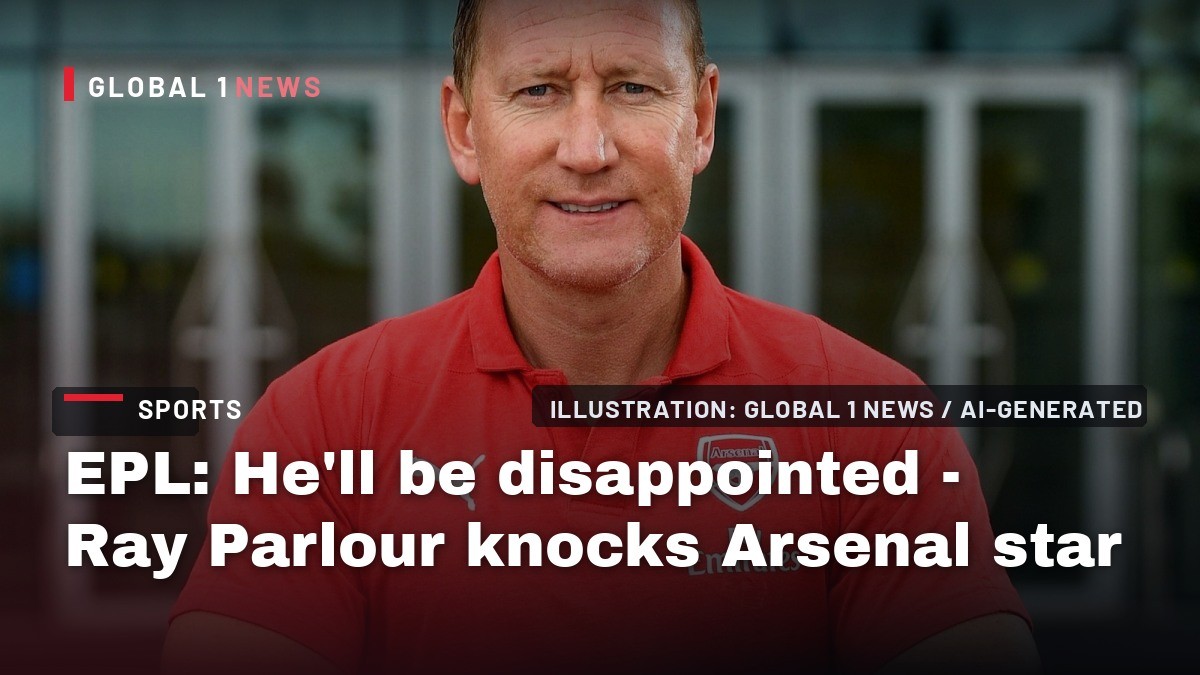
In the aftermath of Arsenal’s 2-1 comeback win over Leeds United at the Emirates Stadium, former midfield stalwart Ray Parlour took to the Premier League Productions studio to voice a concern that goes beyond a single match incident. Parlour, a player who once patrolled the wide areas for the Gunners, singled out young winger Noni Madueke for failing to track back when Leeds struck, warning that the teenager would feel the sting of his own oversight when he reviews the replay of James Justin’s decisive goal. The criticism, while directed at one moment, taps into a broader conversation about the responsibilities of modern wide players and the development pathways for African‑born talents in English football.
Parlour’s critique in context
Ray Parlour, who enjoyed a decade‑long spell at Arsenal and earned a reputation for his work ethic, framed his comments around the practical demands of the wide‑area role. “I played in the wide areas at times, and you have to track your runners as well,” he said, underscoring the dual responsibility of advancing the attack while maintaining defensive vigilance. By referencing his own experience, Parlour positioned his feedback not as a rebuke but as a mentorship moment, reminding Madueke that the modern winger must balance flair with discipline.
The former midfielder’s observation that “as much as you like going forward, you have got to do a good job for your team” reflects a long‑standing expectation within English clubs: that attacking players contribute defensively. This expectation has become especially pronounced in the Premier League, where tactical fluidity demands that every outfield player can transition quickly between phases of play. Parlour’s remarks therefore serve as a reminder that talent alone does not guarantee success without the accompanying tactical awareness.
The incident that sparked the comment
During the Leeds United goal, James Justin surged forward and unleashed a strike that found the back of the net, putting the visitors ahead. According to Parlour’s account, Madueke was caught out of position, failing to track back and cover the space that would later be exploited by the Leeds forward. The lapse was highlighted in the replay, prompting Parlour to predict that Madueke “will be disappointed with what he sees there when he looks back at it.” While the exact timing of the defensive error is not detailed in the source, the implication is clear: a momentary positional mistake can have a decisive impact on the match outcome.
Arsenal’s eventual recovery to win 2-1 demonstrates the team’s resilience, yet the episode serves as a cautionary tale for young players. It illustrates how a single defensive oversight can swing momentum, especially against a side like Leeds United that capitalises on quick transitions. Parlour’s focus on this specific incident underscores the importance of situational awareness for emerging talents navigating the high‑stakes environment of top‑flight football.
Madueke’s profile and the expectations placed upon him
Noni Madueke, a product of Arsenal’s academy and a player of Nigerian descent, has been earmarked as one of the club’s promising wide‑area prospects. His ascent through the youth ranks mirrors the pathway of many African‑born or African‑heritage players who have found opportunities within English academies. As a young winger, Madueke is expected to bring pace, dribbling ability, and an attacking edge, attributes that align with Arsenal’s tradition of nurturing dynamic wide players.
The scrutiny he faces, particularly from a former club legend, reflects the high standards set for home‑grown talents at a club with a storied history of success. While the source does not provide statistical data on Madueke’s performances, the qualitative assessment by Parlour suggests that the club’s coaching staff and senior figures are closely monitoring his development, especially his defensive contributions. This level of attention is typical for players transitioning from academy promise to first‑team responsibilities.
Broader implications for African‑heritage players in the Premier League
Parlour’s comments, though centred on a tactical lapse, resonate within a larger narrative about the integration of African‑heritage players into the Premier League’s tactical frameworks. Over recent years, the league has seen a surge of talent with African roots, from established stars to emerging academy graduates. Their success often hinges on adapting to the physical and tactical demands of English football, which can differ markedly from the playing styles prevalent in many African leagues.
The expectation that players like Madueka must “track your runners” underscores the necessity for comprehensive development that balances technical flair with defensive discipline. As clubs invest more in youth development, the onus is on academies to instil these dual responsibilities early, ensuring that the next generation of African‑heritage players are equipped to meet the holistic demands of the modern game.
Arsenal’s tactical evolution and the role of wide players
Arsenal’s recent tactical approach, as evidenced in the match against Leeds United, involves fluid attacking movements complemented by disciplined defensive structures. The team’s ability to overturn a deficit and secure a 2-1 victory reflects a collective resilience, yet the episode involving Madueke highlights a specific area for refinement. Wide players are increasingly required to operate as both creators and auxiliary defenders, a dual role that demands high levels of stamina and tactical intelligence.
Parlour’s insight, drawn from his own experience of playing in the wide areas, reinforces the club’s strategic emphasis on versatility. By urging Madueke to improve his tracking back, Parlour indirectly points to a broader coaching directive: that the modern winger must be as comfortable defending as they are in beating a defender one‑on‑one. This philosophy aligns with Arsenal’s recent recruitment of versatile midfielders and full‑backs capable of contributing across the pitch.
Potential pathways for Madueke’s improvement
While the source material does not outline specific remedial steps, the nature of Parlour’s feedback suggests a focus on positional awareness and defensive drills in training. Madueke could benefit from targeted sessions that simulate transition scenarios, helping him recognise when to retreat and cover space. Mentorship from senior players who have mastered the balance between attack and defense could also accelerate his learning curve.
Moreover, reviewing match footage, particularly the replay of James Justin’s goal, offers a concrete learning tool. By analysing his own positioning and the timing of his movements, Madueke can identify patterns that lead to defensive lapses. Such reflective practice, combined with on‑field coaching, can transform the criticism into a catalyst for growth, aligning his development with the club’s broader tactical objectives.
Looking ahead: what this means for Arsenal and the Premier League
The episode at the Emirates Stadium serves as a micro‑cosm of the challenges facing young talent in the Premier League. For Arsenal, it underscores the importance of nurturing not just technical skill but also tactical maturity among its academy graduates. The club’s ability to convert promising prospects like Madueke into reliable first‑team contributors will hinge on addressing the gaps highlighted by seasoned veterans such as Parlour.
On a league‑wide level, the incident reflects the ever‑increasing tactical sophistication of the Premier League, where every positional error can be magnified. As clubs continue to scout and develop players of African descent, the emphasis on comprehensive training—encompassing both attacking flair and defensive responsibility—will remain paramount. Parlour’s admonition, while directed at a single player, thus echoes a broader call for holistic player development across English football.
This article was produced with AI-assisted research and editorial support. Reporting is based on the source material cited below. Sources: Daily Post Nigeria; dailypost.ng; Global1.News (12 October 2026).
By Sarah Okafor, Staff Writer
What's Your Reaction?
 Like
0
Like
0
 Dislike
0
Dislike
0
 Love
0
Love
0
 Funny
0
Funny
0
 Wow
0
Wow
0
 Sad
0
Sad
0
 Angry
0
Angry
0

Africa Correspondent at Global1.News. Based in Lagos, covering politics, business, technology, and culture across the continent. Focused on telling African stories beyond the headlines — the innovation, entrepreneurs, and communities shaping the region's future.











Comments (0)