
What ‘Beyond Advocacy’ Means for India’s Role in the Russia-Ukraine Conflict
India’s diplomatic posture on the Russia‑Ukraine war has shifted from a purely rhetorical endorsement of “dialogue and diplomacy” to a more hands‑on, issue‑focused engagement.
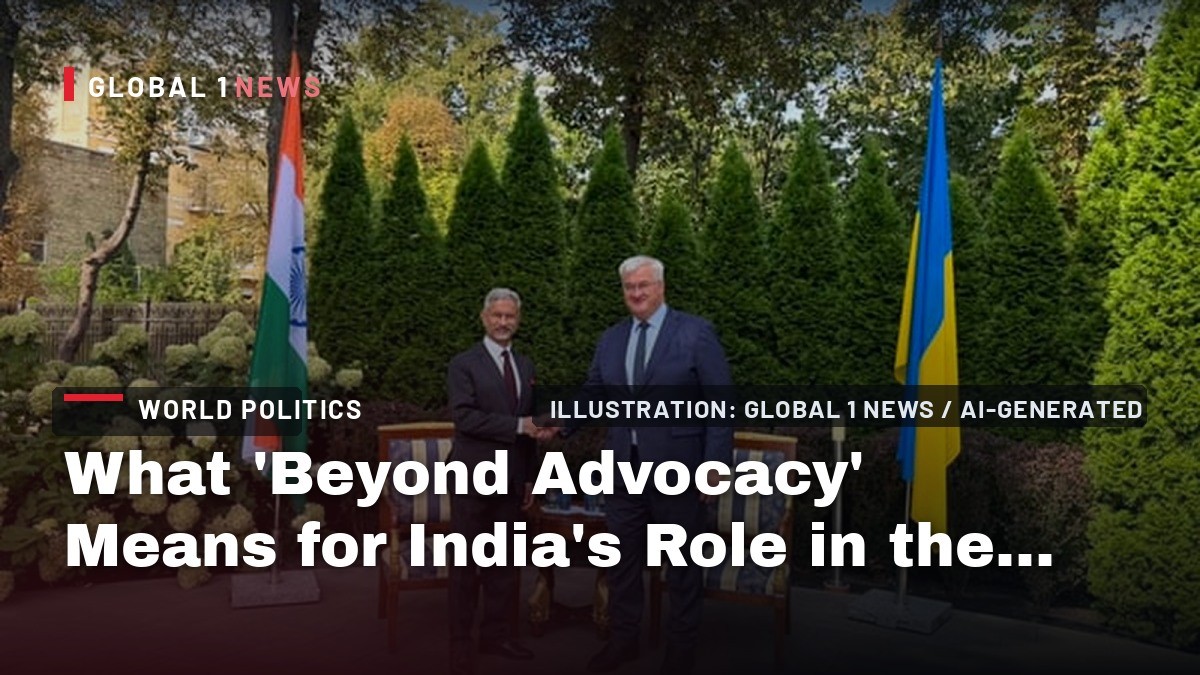
India’s diplomatic posture on the Russia‑Ukraine war has shifted from a purely rhetorical endorsement of “dialogue and diplomacy” to a more hands‑on, issue‑focused engagement. As Minister for External Affairs S. Jaishankar told the Munich Leaders Meeting that New Delhi has been “a little more involved beyond advocacy,” the country is now discussing concrete arrangements on Black Sea shipping, grain and energy exports, and limited “non‑attack” understandings with both Moscow and Kyiv. This evolution reflects a blend of economic imperatives, humanitarian concerns, and a desire to preserve strategic autonomy without assuming the mantle of a formal mediator.
From Advocacy to Facilitation: Jaishankar’s Recent Statements
At the Munich Leaders Meeting earlier this week, Jaishankar reiterated India’s long‑standing position that the conflict should be resolved through dialogue between the parties. He then added that New Delhi has, in recent months, moved “beyond advocacy” to engage directly in negotiations. While he did not disclose specifics, the foreign minister indicated that talks are underway on arrangements concerning Black Sea shipping routes, grain and energy exports, and limited “non‑attack” understandings. The Ministry of External Affairs later confirmed that “ongoing conversations with both Russia and Ukraine” are taking place on these matters.
Jaishankar’s remarks echo his earlier address to the United Nations General Assembly, where he pledged that India was “prepared to do everything possible” to ease the war’s impact, especially regarding food and energy security. The consistency of this messaging underscores a strategic calculus: India wishes to be seen as a constructive actor while avoiding the political costs of overtly siding with either belligerent.
Concrete Diplomatic Initiatives: The Kyiv Visit and Ceasefire Proposal
The most visible sign of India’s deeper involvement was Jaishankar’s solo visit to Kyiv on 3 September, the first standalone bilateral trip by an Indian foreign minister to Ukraine. In meetings with Ukrainian Foreign Minister Andrii Sybiha, the agenda covered Black Sea navigation, global food security, Russian nuclear threats, and the broader development of India‑Ukraine relations. Ukrainian officials reported that the discussions also touched on a truce plan, confirming that a ceasefire proposal had been tabled during the visit.
India, together with the United States, Egypt and Turkiye, submitted a ceasefire proposal that Ukrainian officials described as the “most extensive” to date. While the proposal’s details remain undisclosed, its joint nature signals India’s willingness to cooperate with Western and regional partners on diplomatic initiatives, even as it maintains a cautious distance from formal mediation.
Strategic Restraint: Why India Shuns the Mediator Label
Despite its active diplomacy, New Delhi has stopped short of calling itself a mediator. Jaishankar explicitly rejected the notion of India becoming a “dalal (broker)” like Pakistan, citing India’s own sensitivities over Kashmir and its aversion to external mediation in that dispute. This reluctance is also rooted in the desire to preserve a stable partnership with Russia, a long‑time strategic ally.
India’s voting record at the United Nations further illustrates this balance. It has abstained from or voted against most Ukraine‑related resolutions, avoiding public censure of Moscow. Russian President Vladimir Putin has publicly praised Prime Minister Narendra Modi’s “ideas and persistent efforts” for peace, reinforcing the diplomatic goodwill that New Delhi seeks to protect while quietly advancing its own interests.
Economic Drivers: Commodity Dependence and Supply‑Chain Shock
India’s engagement is heavily informed by the war’s impact on essential imports. Both Russia and Ukraine supply key agricultural commodities, and disruptions in the Black Sea have directly affected Indian markets. The most striking illustration is the surge in sunflower oil prices, which rose by 18.7 percent between October 2025 and October 2026 after imports fell to their lowest level in more than four years in September.
Beyond food, the conflict has jeopardised energy security and broader trade flows. By negotiating arrangements for grain and energy exports, India hopes to mitigate price volatility and secure reliable supplies, thereby cushioning its economy from the shockwaves of the war.
Humanitarian and Security Concerns: Indian Seafarers and Corporate Losses
India’s maritime workforce, the second‑largest share of the global seafaring community, has suffered casualties from targeted attacks on commercial shipping in the Black Sea. The loss of Indian lives at sea adds a humanitarian dimension to New Delhi’s diplomatic push, reinforcing the urgency of stabilising shipping routes.
Corporate interests have also been directly hit. In August, a Russian airstrike damaged the ArcelorMittal Kryvyi Rih plant, owned by Indian‑born Lakshmi Mittal, forcing a partial shutdown. More recently, on 4 October, Russian attacks severely damaged the Indian‑owned Kusum Healthcare pharmaceutical plant, with estimated losses of $50 million. These incidents underscore the tangible financial stakes Indian businesses face, further motivating the government to seek a de‑escalation of hostilities.
European Reactions: From Friction to Strategic Alignment
India’s historically cautious stance on the Ukraine conflict has sometimes strained relations with the European Union. However, as New Delhi’s partnership with Washington encounters friction, European partners have begun to view India’s more proactive diplomatic steps favorably. The joint ceasefire proposal with the United States, Egypt and Turkiye illustrates a willingness to cooperate on security and humanitarian issues, potentially easing earlier EU‑India tensions.
European appreciation for India’s nuanced approach may translate into broader strategic cooperation, especially as both sides seek to diversify their diplomatic and economic engagements amid shifting global power dynamics.
Looking Ahead: India’s Likely Role as a Facilitator
Given the complexity of the Russia‑Ukraine war and the historical baggage that accompanies any mediation attempt, India is unlikely to assume the role of a direct broker. Instead, it is poised to act as a facilitator of dialogue, concentrating on issue‑based negotiations that align with its economic and security interests. This approach allows New Delhi to influence the conflict’s trajectory without overextending its diplomatic resources or jeopardising its relationship with Russia.
The “beyond advocacy” stance signals a pragmatic evolution in Indian foreign policy: a calibrated engagement that balances economic imperatives, humanitarian concerns, and strategic autonomy. As the war continues to reshape global supply chains and geopolitical alignments, India’s facilitator role may become an increasingly valuable, if understated, component of the broader diplomatic effort to bring the conflict to a negotiated end.
This article was produced with AI-assisted research and editorial support. Reporting is based on the source material cited below. Sources: The Diplomat; thediplomat.com; Global1.News (12 October 2026).
By Kenji Tanaka, Staff Writer
What's Your Reaction?
 Like
0
Like
0
 Dislike
0
Dislike
0
 Love
0
Love
0
 Funny
0
Funny
0
 Wow
0
Wow
0
 Sad
0
Sad
0
 Angry
0
Angry
0

Japan Correspondent at Global1.News. Tokyo-based voice covering Japanese politics, technology, economy, and culture. Tracks the intersection of tradition and innovation in one of the world's most dynamic societies.









Comments (0)