
Royal Barge Formation Revised in Fifth Rehearsal Ahead of Kathin Procession
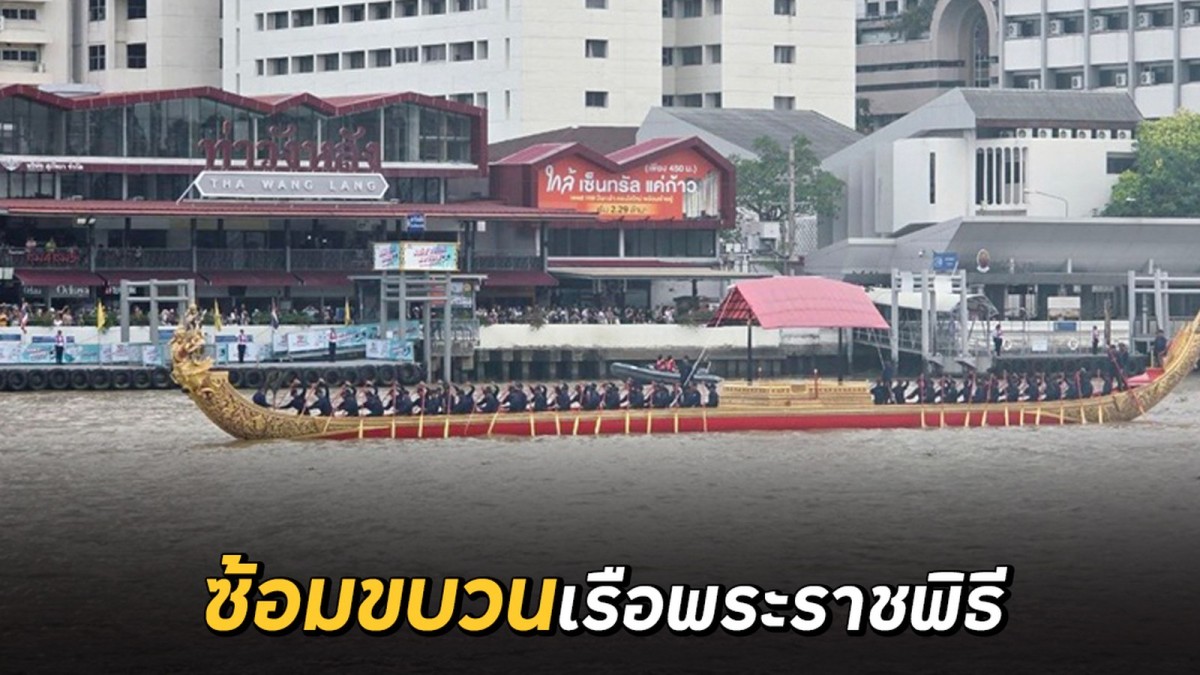
The Royal Thai Navy refined the royal barge formation during the fifth sub-rehearsal on Tuesday, September 8, 2026, on the Chao Phraya River in Bangkok, adjusting the line-up, spacing and timing of the 52-vessel procession as crews continue their preparations for the main ceremony on November 6.
The Royal Thai Navy refined the royal barge formation during the fifth sub-rehearsal on Tuesday, September 8, 2026, on the Chao Phraya River in Bangkok, adjusting the line-up, spacing and timing of the 52-vessel procession as crews continue their preparations for the main ceremony on November 6. The revised formation, captured in video coverage published by the Bangkok Post, marks another step toward the Royal Kathin procession that will carry His Majesty the King to Wat Arun Ratchawararam for the presentation of kathin robes to Buddhist monks.
Royal Barge Formation Revised in Fifth Rehearsal Ahead of Kathin Procession
Bangkok, Thailand — The rhythmic stroke of more than two thousand oars echoed across the Chao Phraya River on Tuesday afternoon as the Royal Thai Navy conducted its fifth sub-rehearsal of the 2026 Royal Barge Procession, this time with a revised formation designed to perfect the ceremonial line-up ahead of the November 6 royal kathin ceremony at Wat Arun Ratchawararam.
A Spectacle of Rare Occasion
The Royal Barge Procession is not an annual event. It is staged only on rare, high-occasion ceremonies, which makes the coming November 6 procession a national spectacle drawing Thai and foreign visitors alike to the banks of the Chao Phraya. This year's ceremony carries particular significance, marking the auspicious occasion of Her Majesty Queen Suthida Bajrasudhabimalalakshana's fourth-cycle (48th) birthday anniversary, which fell on June 3, 2026.
The procession will depart from Wasukri Pier in Dusit district and travel the Chao Phraya past Rama VIII Bridge, Phra Sumen Fort, Somdet Phra Pinklao Bridge, Siriraj Hospital, the Grand Palace and the Royal Thai Navy Auditorium, before arriving at Wat Arun Ratchawararam, the Temple of Dawn. There, His Majesty the King will present kathin robes to Buddhist monks at the close of the rains retreat, in the highest tier of the annual Buddhist robe-offering season.
Refining the Ancient Line-Up
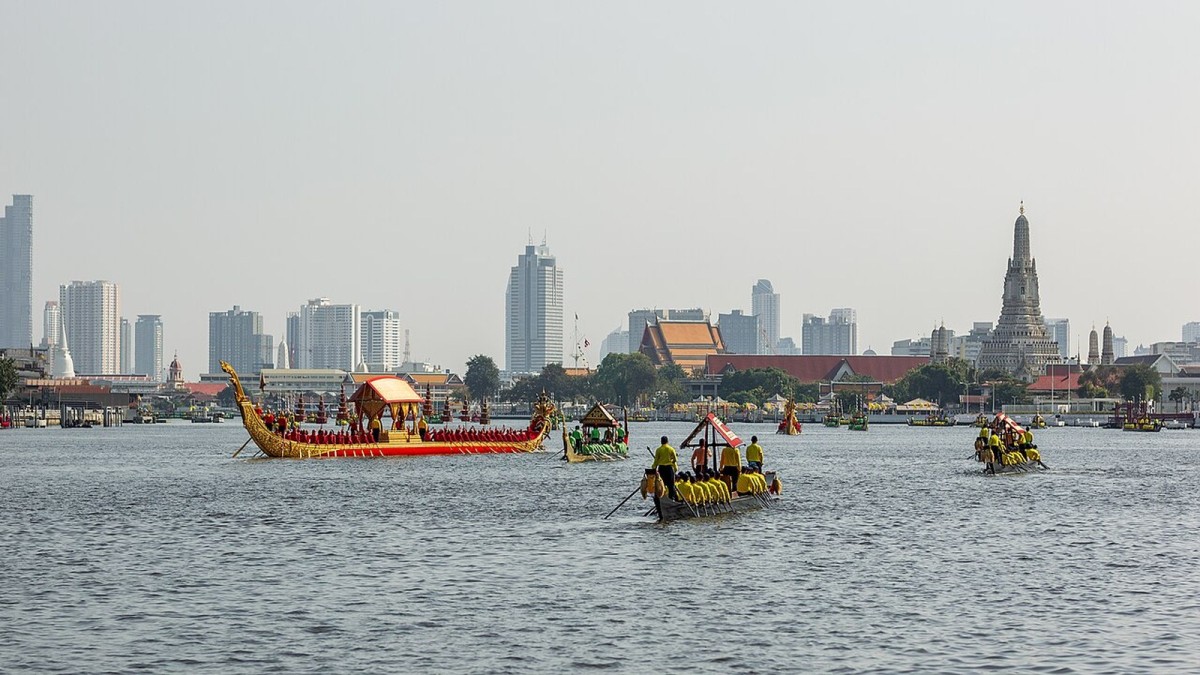
The fifth sub-rehearsal on Tuesday saw crews adjust the spacing and alignment of the 52 royal barges, which stretch approximately 1,280 metres in length and 90 metres in width when arranged in their full formation of five columns and three lines. More than 2,200 Royal Thai Navy personnel participate in the procession, including about 2,000 oarsmen who must move in perfect synchrony to the rhythm of traditional boat songs.
For this ceremony, the Royal Thai Navy was authorized to compose an entirely new set of boat-song poetry to accompany the oarsmen, adding a fresh layer of cultural expression to a tradition that reaches back centuries. The major "Petch Phuang" battle formation dates to the era of King Narai, and the procession has been preserved through generations as one of the most visually stunning displays of Thai royal tradition.
The Four Principal Royal Barges
At the heart of the procession are four principal royal barges, each with its own distinct character and ceremonial role. The Suphannahong, or Golden Swan, serves as the royal seat and is regarded as the most important royal vessel, reserved for the monarch himself. Carved from a single trunk of teak and launched in 1911, the Suphannahong received the World Ship Trust Maritime Heritage Award in 1992, recognition of its extraordinary craftsmanship and historical value.
Alongside the Golden Swan travels the Narai Song Suban King Rama IX, which carries the royal kathin robes to Wat Arun. The Anantanakkharat, adorned with the multi-headed naga serpent, and the Anekkachatphutchong, featuring innumerable naga figures, complete the principal quartet. Each barge is a floating work of art, its gilded carvings and intricate details reflecting centuries of Thai artistic achievement.
Leadership and Confidence in Preparations
Prime Minister and Interior Minister Anutin Charnvirakul inspected the preparations at Wasukri Pier on Thursday, September 3, during the fourth rehearsal. He boarded a naval vessel to check river currents and alignment along the route, and later paid respects at Wat Arun, where the deputy abbot presented him with an auspicious Garuda-and-Naga artifact. The Prime Minister expressed confidence that the procession would run smoothly, reflecting the careful planning and dedication of the Royal Thai Navy and all involved.
The rehearsal schedule has been intensive, with sub-rehearsals held on August 17, 20 and 27, followed by the fourth on September 3 and the fifth on September 8. Further sub-rehearsals are planned for September 17 and 23, then October 2, 8 and 15, culminating in two full-dress rehearsals on October 21 and 28. Each session begins in the mid-afternoon, around 2.30 to 3pm, and all rehearsals are free and open to the public along both riverbanks.
Public Viewing and River Traffic Adjustments
For Thai families and visitors who wish to witness the rehearsals or the main procession, prime viewing spots include Santichaiprakan Park by Phra Sumen Fort, Tha Maharaj, Tha Chang and the riverside park beside Siriraj Hospital. Many spectators also gather at Wat Rakhang, the Thammasat Tha Prachan campus and piers on the Thonburi bank, where the full sweep of the formation can be appreciated.
The Marine Department restricts river traffic in a controlled navigation zone on rehearsal and procession days, roughly between noon and late afternoon around 5pm. Chao Phraya express boat services adjust their routes on those days, so regular commuters should plan alternative travel arrangements. For those unable to attend in person, the navy livestreams rehearsals through the official Facebook page of its Naval Civil Affairs Department, bringing the spectacle to screens across Thailand and beyond.
For Bangkok residents and visitors, the rehearsals offer a rare chance to witness the procession without the crowds of the main event. Scheduled mid-afternoon, around 2:30 to 3:00 PM, these free viewings along both riverbanks draw spectators to prime spots like Santichaiprakan Park near Phra Sumen Fort, Tha Maharaj, Tha Chang, and the riverside park at Siriraj Hospital. The Marine Department restricts river traffic from roughly noon to 5 PM on rehearsal and procession days, prompting express boat services to reroute—a familiar adjustment for commuters who plan around the spectacle. The Royal Thai Navy livestreams each rehearsal via its Naval Civil Affairs Department Facebook page, allowing those unable to secure a riverside perch to follow the barges from Wasukri Pier past the Rama VIII Bridge and Grand Palace to Wat Arun. Remaining rehearsals on September 17 and 23, followed by October dates and full-dress runs on October 21 and 28, provide multiple opportunities to absorb this aquatic pageantry.
A Living Tradition for Thai and ASEAN Audiences
For Thai readers, the Royal Barge Procession is more than a ceremonial display; it is a living connection to the deep Buddhist and royal traditions that shape national identity. The kathin season follows the end of the rains retreat, known as Ok Phansa, and a Royal Kathin, when the King himself presents robes by water, represents the highest tier of this annual rite. The procession embodies the relationship between the monarchy, the Buddhist sangha and the people who line the riverbanks to pay homage.
For travellers from across ASEAN and beyond, the November 6 event offers a rare opportunity to witness a tradition that has survived for centuries and continues to be performed with the same precision and reverence as in the era of King Narai. The sight of 52 gilded barges moving in formation along the Chao Phraya, their oars rising and falling in unison to the rhythm of newly composed boat songs, is an experience that lingers long after the last barge has passed.
The fifth rehearsal on Tuesday demonstrated that the Royal Thai Navy remains committed to perfecting every detail of this grand procession. As the revised formation takes shape and the oarsmen refine their timing, the anticipation builds for what promises to be one of the most memorable royal ceremonies in recent years. The people of Thailand will gather along the river on November 6 to witness history, tradition and faith moving together on the waters of the Chao Phraya.
By Ann Srisawat, Staff Writer
This article was produced with AI-assisted research and editorial support. Sources: Bangkok Post; Royal Thai Navy; The Nation Thailand.
What's Your Reaction?
 Like
0
Like
0
 Dislike
0
Dislike
0
 Love
0
Love
0
 Funny
0
Funny
0
 Wow
0
Wow
0
 Sad
0
Sad
0
 Angry
0
Angry
0

Southeast Asia Correspondent at Global1.News. Based in Bangkok, covering Thai and Southeast Asian politics, economy, technology, and culture. Deep regional perspective on one of the world's most dynamic regions.













Comments (0)