
Carney Hires Bridgewater's Co-CIO to Run a Fund Canada Has Not Launched Yet
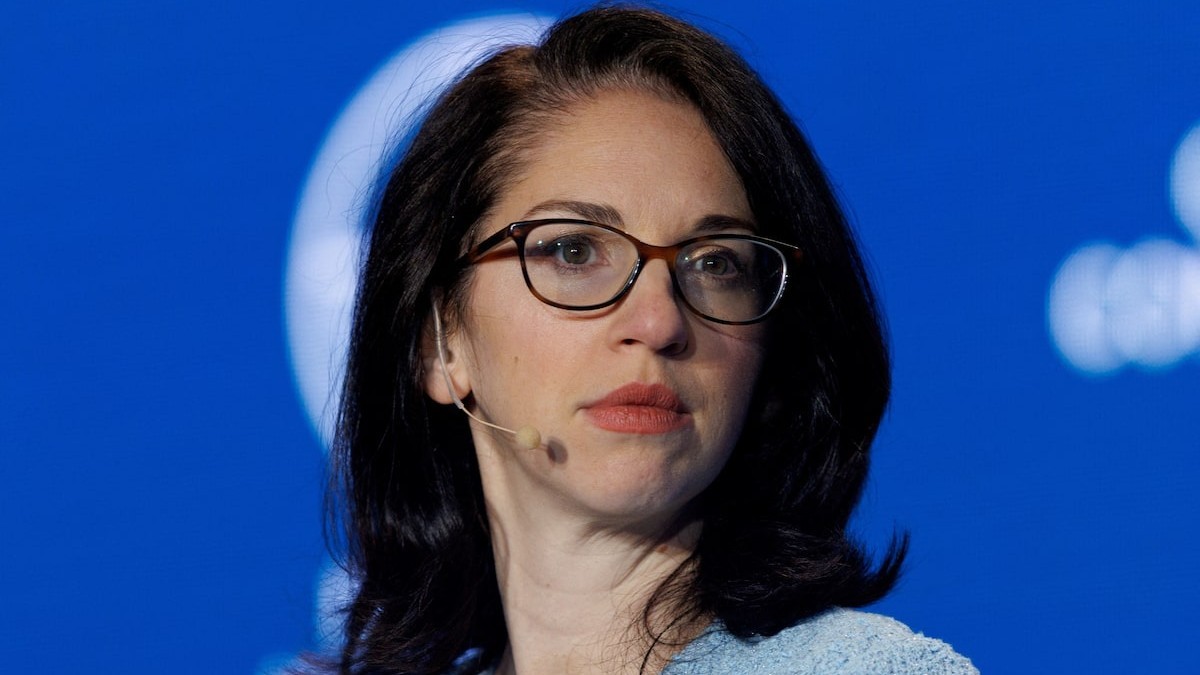
Mark Carney named Bridgewater co-chief investment officer Karen Karniol-Tambour as the first CEO of the Canada Strong Fund, a C$25 billion fund Ottawa calls a sovereign wealth fund but that has not launched, has no board named and has made no investments.
Canada has a sovereign wealth fund on paper: no board named, no money deployed, no deals signed. On Monday it got the hardest thing to buy on a schedule: somebody the market actually takes seriously.
Carney Hires Bridgewater's Co-CIO to Run a Fund Canada Has Not Launched Yet
Ottawa, Canada — Prime Minister Mark Carney named Karen Karniol-Tambour, co-chief investment officer of Bridgewater Associates, as the first chief executive of the Canada Strong Fund, the vehicle Ottawa calls Canada's first national sovereign wealth fund.
The Announcement, in One Paragraph
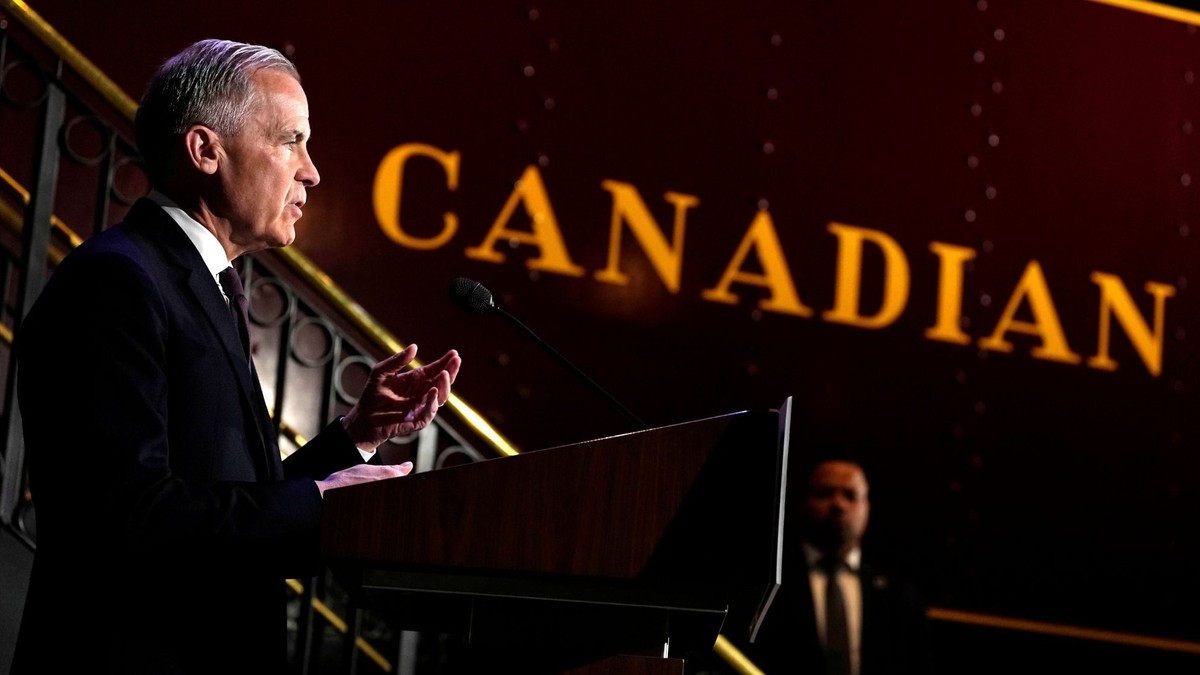
The Prime Minister's Office put out the appointment on Monday in a release and a biographical note. Karniol-Tambour leaves Bridgewater Associates, the hedge fund Ray Dalio founded in 1975, after two decades. She will run a fund with an initial capital commitment of 25 billion Canadian dollars that, by the government's own description, has not yet launched. Carney's statement was built around a single idea: that Canadian savings should sit inside the projects Canada needs. "The Canada Strong Fund will put Canadian capital to work in the projects and companies building our country's future," he said, adding that Karniol-Tambour "brings the experience and ambition to lead this mission." The release named no start date, no board members and no salary. What it did name was a structure, a mandate and a retail product that ordinary Canadians will be able to buy.
Why the Hire Carries the Story
A sovereign fund lives or dies on one question: who decides where the money goes. Bloomberg reported that the appointment lends "Wall Street credibility and expertise" to one of Carney's signature economic initiatives, and reported that Bridgewater planned to tell its staff on Monday morning. That is the transaction in plain terms. The fund has a 25-billion-dollar commitment of federal capital and a polling problem. An MEI-Ipsos survey published in July found 58 per cent of Canadians opposed borrowing that money for the fund, with 20 per cent in support. Bridgewater's chief executive, Nir Bar Dea, framed the move as public service. "As a proud Canadian, this is an opportunity for Karen to serve her country and take on the important work of public service," he said in a statement to Reuters. A recognisable, credentialled investor at the top does not answer the borrowing question. It answers the competence question, which is the one a government can actually fix with a hire.
The Résumé Carney Is Buying
She joined Bridgewater in 2006 as an investment associate, according to the government's own biography. By 2013 she was head of investment research, running more than 150 analysts on global markets and systematic trading strategies. In 2021 she became co-chief investment officer for sustainability; in 2023 she was made co-chief investment officer and joined the firm's executive committee. Outside the firm she sits on the board of the Atlantic Council, on the Robin Hood Foundation's investment committee and on the Federal Reserve Bank of Dallas's Financial Sector Advisory Council. She is a life member of the Council on Foreign Relations and a World Economic Forum Young Global Leader. Fortune put her on its 40 Under 40 list in 2019. Barron's has named her among the 100 Most Influential Women in U.S. Finance for seven consecutive years. She is a Canadian citizen, a Princeton graduate in public and international affairs, and she studied under the Nobel laureate Daniel Kahneman.
What the Fund Actually Does
The Canada Strong Fund was announced on 27 April with a federal contribution of 25 billion dollars. The money is meant to go into clean and conventional energy, critical minerals, agriculture and infrastructure, alongside private capital, on commercial terms. The government describes two streams: co-investment alongside federal support for nation-building projects, and independent strategic investments in other high-potential Canadian companies. On governance, the release is careful. The fund operates at arm's length with its own board, and is being incorporated in the interim as a wholly owned subsidiary of the Canada Development Investment Corporation, the government's own financial and commercial adviser. Budget 2026 said Ottawa intends to legislate it into a standalone Crown corporation. Reports go to the fund's website quarterly and annually, with an annual report tabled in Parliament, and the fund is to be measured against private-sector comparators.
The Part That Is Genuinely New
The Department of Finance's technical backgrounder says the Canada Strong Fund "will be unique among sovereign wealth funds in providing Canadians the opportunity to benefit directly from its activities through a retail investment product." That product now has a name, Canada Strong Notes. Ottawa promised a retail instrument in April and said it would consult on the design over the coming months. They will be sold through participating financial institutions and, per the release, carry principal protection, so a buyer's original stake is safeguarded while the return tracks the fund's performance. The pitch is access. The details that decide whether it is a good deal are not in the release: no minimum, no fee, no cap, no lock-up, no explanation of how the principal guarantee is funded. Until those terms are published, "principal protection" is a promise from the same government that is borrowing the capital.
The Fight Over the Word Sovereign
Here is where the argument gets sharp. A sovereign wealth fund, in the ordinary sense, invests a surplus a country has already accumulated. Norway's is the standard. Canada does not have a surplus. It runs a persistent current account deficit and imports capital to fund its own consumption and investment, as the Institute for Research on Public Policy put it in May, when it concluded flatly that the Canada Strong Fund "isn't a sovereign wealth fund." The Canadian Centre for Policy Alternatives went further, calling it an engine of privatisation and pointing out that the spring update ties the fund to projects eligible for a "major project" designation under the Building Canada Act, a route its critics say can bypass environmental assessment and consultation with Indigenous groups. The label is not decoration. It sets the expectation the fund will be judged against.
Borrowed Money and the Norway Comparison
Pierre Poilievre has made the arithmetic his line of attack. "Norway, Singapore and Saudi Arabia run big budget surpluses, which they accumulate and put into their sovereign wealth funds," he said. "Canada has no surplus, and therefore no wealth to put in such a fund." He calls the thing a sovereign debt fund, and that phrase has stuck hard enough that his shadow minister uses it in writing. The Montreal Economic Institute supplies the number behind it: Ottawa still projects a 65.4 billion dollar deficit for the current fiscal year, so every dollar the fund deploys is a borrowed dollar, added to the federal debt before it earns anything. Norway's fund, by contrast, was established in 1990 and passed two trillion US dollars in value this year, built on oil revenue the state banked rather than spent.
The Record Critics Keep Pointing At
Carney has run this play before, and the critics have the receipts. Britain's National Wealth Fund, which he helped design, was described by the House of Commons Treasury Committee in October 2025 as "not a conventional wealth fund," financed by government debt rather than banked revenue, with a name the committee warned could mislead the public. The National Audit Office had already found in 2022 that the institution was created so fast that important planning steps were skipped. After four years it had committed 5.4 billion pounds of 27.8 billion in capital. Canada's own Canada Infrastructure Bank was launched in 2017 with 35 billion dollars; the Conservatives say it has lost 288 million dollars on its loans since inception, and paid its chief executive 600,000 dollars plus more than eight million in bonuses in 2024-25. An economic note from the Montreal Economic Institute summarised the pattern as "a state lending bank wearing the branding of a wealth fund."
A Pattern: Carney Keeps Hiring From the Street
The Canadian Press noted that Carney has "recruited another global investment executive to his government." The last one was Mark Wiseman, a former BlackRock executive, who became Canada's ambassador to Washington and took the post in February. The case for the pattern is simple: a country that cannot persuade private capital to build here needs people who have spent their lives pricing risk and closing deals, not people who have spent their lives writing memos about them. The case against is just as simple. Markets pay for being right. Governments pay for being seen to be prudent, and the two incentives are not the same. A hedge fund can walk away from a bad project. A Crown corporation with a political mandate usually cannot.
What to Watch, and What to Ask
Four things will tell you whether this is a fund or a logo. First, the board: who sits on it, and whether they are independent of the PMO or merely described as independent. Second, the legislation: whether the Crown corporation arrives with a hard investment mandate and real reporting duties, or a wide one and press releases. Third, the notes: the fee, the minimum, the lock-up and who actually stands behind the principal guarantee. Fourth, the first deal: whether private money shows up beside public money at the ratio the government keeps promising, or whether Ottawa ends up holding most of the risk. Karniol-Tambour's record suggests she can pick assets. Whether she is allowed to say no to a project a minister wants is a different question, and it will be answered in public, deal by deal.
So read the technical backgrounder, not the press release. Ask your member of Parliament where the 25 billion is being borrowed from and at what rate. And watch the first co-investment closely, because that is the moment this stops being a headline and starts being a balance sheet.
By Jessica Ali, Staff Writer
This article was produced with AI-assisted research and editorial support. Sources: Office of the Prime Minister of Canada; Department of Finance Canada; The Globe and Mail; Reuters; Bloomberg; The Canadian Press; Conservative Party of Canada; Montreal Economic Institute; Canadian Centre for Policy Alternatives; Institute for Research on Public Policy; Maclean's. Cover: Global 1 News editorial image. Photographs: Mike Blake/Reuters (Karniol-Tambour); The Canadian Press/Justin Tang via Policy Options (Carney); Ken Lund, CC BY-SA 2.0 (Langevin Block).
What's Your Reaction?
 Like
0
 Dislike
0
 Love
0
 Funny
0
 Wow
0
 Sad
0
 Angry
0

Editor-in-Chief at Global1.News. Atlanta-based journalist who cuts through the BS and tells it like it is. Lead anchor, host, and the voice you hear when the spin stops and the truth starts.














Comments (0)