
Kongsberg Offers Britain a 56-Metre Robot Submarine Hunter as the Royal Navy Runs Short
Kongsberg Maritime has unveiled the Arctic Hunter, a 56-metre uncrewed surface vessel it is offering to the Royal Navy for its Type 92 anti-submarine requirement, days after the navy commissioned its first autonomous squadron.
Kongsberg Maritime has brought a crewless submarine hunter to Oslo and is hoping the Royal Navy will take it. The offer arrives in the same week that allied military and political leaders gather in the Norwegian capital, and it lands against a public record that does not quite agree on what Britain's Type 92 programme actually is.
Kongsberg Offers Britain a 56-Metre Robot Submarine Hunter as the Royal Navy Runs Short
Oslo, Norway - Kongsberg Maritime on 9 November 2026 unveiled the Arctic Hunter, an uncrewed surface vessel it is proposing for the Royal Navy's Type 92 anti-submarine requirement, and the Royal Navy has not ordered it.
A Fifty-Six Metre Boat With Nobody On Board
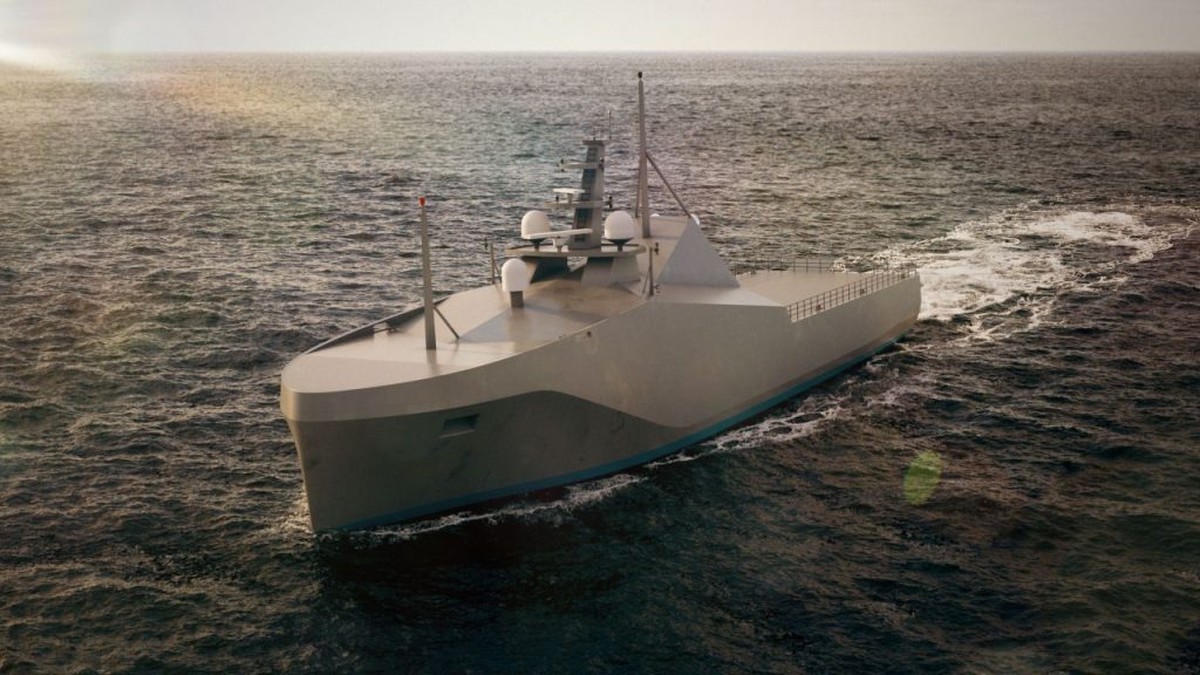
Kongsberg Maritime unveiled the Arctic Hunter in Oslo on 9 November 2026, ahead of this week's Atlantic Future Forum conference in the Norwegian capital. The Arctic Hunter is an uncrewed surface vessel - a 56-metre boat with no sailors aboard - which the company describes as a new class designed for rapid integration and deployment into "Hybrid Fleets." Kongsberg says the design answers the Royal Navy's development of a hybrid fleet of crewed and uncrewed assets. The vessel is intended for "resilient and persistent anti-submarine warfare (ASW) capability in the High North", and Navy Lookout reports it is designed for missions lasting up to 60 days, operating from a forward support base inside the Arctic Circle. It is an offer, not an order: the Royal Navy has not selected it, signed for it or funded it, and no price has been published. The hull, the company says, began as an Arctic commercial design.
What Kongsberg Actually Put On The Table
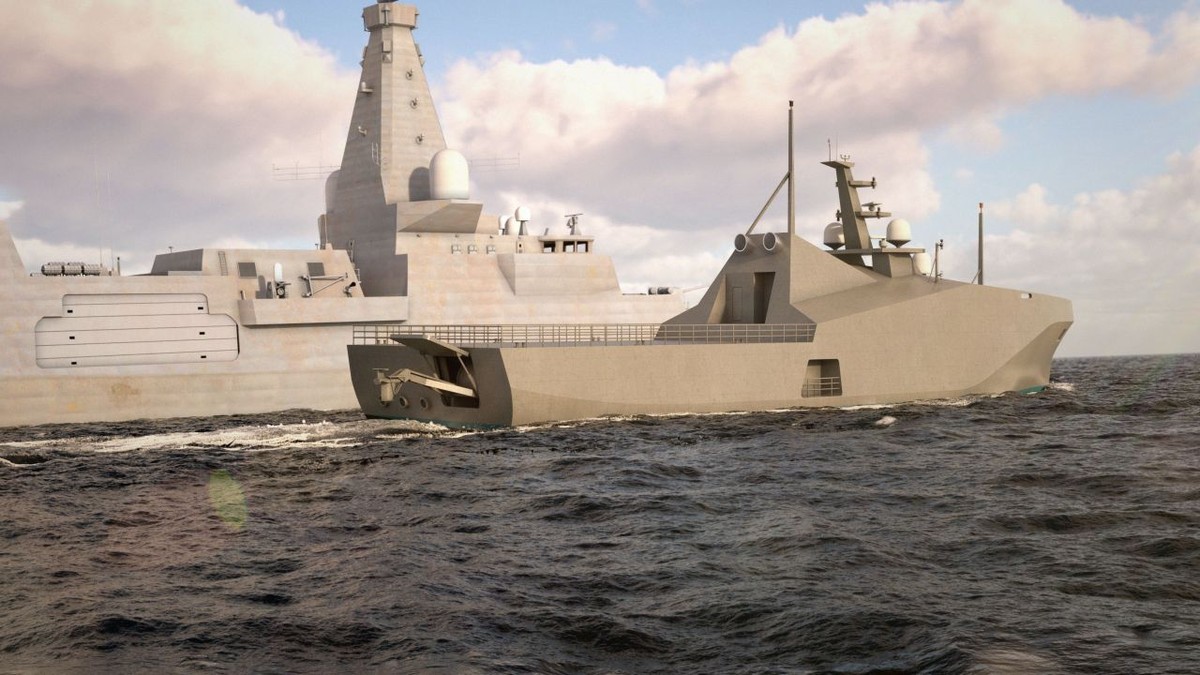
Kongsberg selected one of its proven Arctic commercial vessel designs to adapt and optimise for the Type 92 ASW requirement, and Navy Lookout reports the hull was chosen for "known seakeeping characteristics in North Atlantic conditions, endurance and payload capacity." Significant payload capacity and deck space would allow alternative or additional mission systems to be fitted through the vessel's operational life. Kongsberg describes the Arctic Hunter as a remotely operated vessel with autonomous functions: trained personnel in a shore-based Remote Operations Centre would supervise and control key maritime functions, while military effects would remain under human control. That does not remove people from the problem. Navy Lookout notes: "Removing the crew from the vessel still leaves a requirement for operators ashore and maintenance support between deployments." Lisa Edvardsen Haugan, chief executive of Kongsberg Maritime, said: "Atlantic security is an absolute priority, and we believe that the Arctic Hunter USV offers a robust and practical response to the growing need for additional submarine detection capability."
The Approvals Do Not Cover The Warship
A classification society and a maritime regulator have already looked at part of this. Kongsberg Maritime's uncrewed vessel technology has received flag-state approval from the classification society DNV and from the Norwegian Maritime Authority, and the company points to commercial remote operations, including work with Reach Subsea and the Yara Birkeland programme, as evidence it can run vessels without crews. The scope of those approvals matters. Navy Lookout reports: "These underpin the commercial technology being offered, rather than approval of a completed Arctic Hunter military configuration, which would still require development and integration." In plain terms, nobody has certified a warship. What has been approved is the machinery of a remotely operated commercial vessel, a foundation on which a military configuration would still have to be built, tested and cleared. The distinction is not a technicality: it separates a working commercial concept from a deliverable anti-submarine platform, and it sits between the Oslo launch and any future Royal Navy decision on the Type 92 requirement.
Type 92: The One Line In The Record That Does Not Meet
Here the public record does not meet. Type 92 forms part of Atlantic Bastion, the Royal Navy's plan to combine crewed platforms with uncrewed sensors to detect and track hostile submarines, and Kongsberg states plainly: "Kongsberg Maritime has selected one of its proven Arctic commercial vessel designs to adapt and optimise for the Royal Navy's Type 92 ASW requirement." Navy Lookout likewise places a surface vessel against that requirement. But the House of Commons Library research briefing CBP-10408 describes Type 92 as an underwater sensor platform, and Naval News, reporting the Defence Investment Plan, calls it an uncrewed underwater vehicle. Neither Kongsberg nor the Royal Navy has published a definition of Type 92. Global 1 News could not establish which reading is current, and asserts neither. This is not a small ambiguity: a surface boat and an uncrewed submersible mean different purchases and different tactics. Until a definition is published, the Arctic Hunter is best read as a proposal aimed at a requirement whose shape is not publicly settled.
Why Britain Is Buying Robots To Watch The Seabed
Behind the offer is a threat the Royal Navy has already met in person. In April 2026 the then defence secretary, John Healey, exposed a covert Russian submarine operation in and around UK waters: one Akula-class nuclear-powered attack submarine and two deep-sea boats from the Main Directorate of Deep Sea Research, known as GUGI. The Akula was assessed as a diversion. The Royal Navy deployed the Type 23 frigate HMS St Albans, RFA Tidespring and Merlin helicopters, while RAF P-8 aircraft tracked the submarine around the clock. The operation lasted more than a month and involved 500 British personnel. Healey said: "We see you. We see your activity over our cables and our pipelines, and you should know that any attempt to damage them will not be tolerated and will have serious consequences." The Ministry of Defence notes that over 99% of international data traffic runs through subsea cables, and that the UK has seen a 30% increase in Russian vessels threatening UK waters over the last two years.
The Admirals' Own Arithmetic
Britain's own numbers are the argument the shipbuilder does not have to make. On 22 October 2026 the Commons Defence Committee reported that the UK "risks failing to deter future Russian aggression in the high north beyond the UK because of shortfalls in the number and availability of Royal Navy submarines and warships." Its chair, Tan Dhesi MP, said: "The UK needs to be willing to address a hard truth: it does not currently have all the capabilities to operate successfully in the high north." The committee found the navy has five frigates with sonar dedicated to detecting Russian submarines at distance, against a target of eight, and that it could take until 2037 to reach the stated requirement. None of Britain's five Astute submarines were at sea from June and into the summer, all in dock for a mixture of short-term and long-term refits, and they lack the capability to operate under ice, unlike their Russian equivalents. The Ministry of Defence said in response: "We are clear-eyed about the threat Russia poses."
Birkenhead, Not Bergen
The boat would not be built in Norway. If the design is selected, construction is planned at Birkenhead, at Balaena Maritime's yard, formerly Cammell Laird, with Thales UK supplying what the partners describe as sovereign submarine-hunting sonar and secure military communications systems. Neither the sonar model nor any performance figure has been disclosed. The proposed model separates commercial shipbuilding from the integration of military equipment: the Arctic Hunter is designed to be built at pace by commercial yards, with military capability integrated by the defence industry. Kongsberg says it is working with Thales UK and Balaena Maritime, with technology collaboration agreements due to be signed during this week's conference. The partners are targeting readiness for militarisation and operational deployment by the end of the decade, subject to Royal Navy requirements. Kongsberg also points to potential application across NATO and Joint Expeditionary Force nations, which is where a British build might find a wider customer base beyond the Royal Navy itself.
A Squadron Of Robots Joins The Fleet
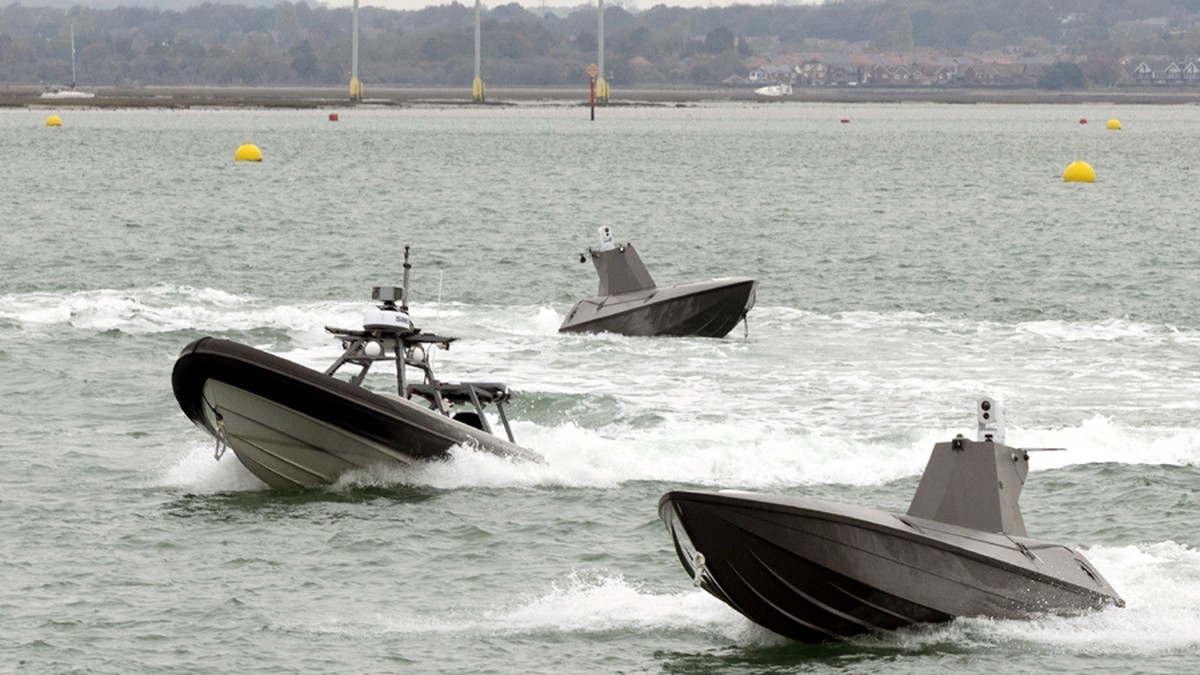
Four days before the Oslo unveiling, the Royal Navy commissioned its first autonomous squadron. The 1st Autonomous Squadron was formally commissioned at His Majesty's Naval Base Portsmouth on 5 November 2026, before more than 200 navy personnel, dignitaries, media, families and friends. The ceremony included a demonstration of the uncrewed surface vessels the squadron will operate, including the Kraken and Rattler craft, manoeuvred around Portsmouth Harbour from a control hub. Vice-Admiral Steve Moorhouse, the Fleet Commander, said: "The Royal Navy is doing something it has never done before. We are commissioning the first autonomous squadron in our history. That makes this a genuinely historic occasion." Defence Secretary Wes Streeting said: "The threat environment we are facing is fundamentally different from that of recent decades. A major determinant of military power now is who can innovate fastest." The squadron gives the surface-vessel case an institutional home inside a fleet long built around ships, submarines and aircraft.
The Money Behind The Hybrid Navy
The hybrid navy is backed by £1.5 billion of investment over four years, according to a Royal Navy statement. The House of Commons Library sets that against £18 billion for maritime capabilities to 2029/30 and a further £32 billion of investment between 2030 and 2035. A separate £330 million over four years is allocated to protecting critical underwater infrastructure. Atlantic Bastion also draws on Project Proteus, a £60 million programme that produced a full-size autonomous helicopter, designed and built by Leonardo in Yeovil. Earlier work shows the shape of the spending. At the December 2025 Sea Power Conference, the MoD's then minister for defence readiness and industry, Luke Pollard, confirmed contracts with 20 companies under an overall investment worth £4 million for the first stages of work, FW-Mag reported. None of that money attaches to the Arctic Hunter, which has no contract and no announced price.
What Is Not Established, And What To Watch
Five things are not established. The Royal Navy has not selected the Arctic Hunter, ordered it or funded it. No price, unit cost or vessel count has been published. The Thales UK sonar model and all detection performance figures are undisclosed. The DNV and Norwegian Maritime Authority approvals cover commercial technology, not a completed military configuration. And the record still does not agree on whether Type 92 is a surface or an underwater platform. The partners' target of readiness by the end of the decade is conditional on requirements that have not been fixed; the Ministry of Defence said in July that platform numbers and construction schedules had not been determined. What would move the story is a published Type 92 definition, a settled requirement or a contract. The Oslo forum this week is where the industrial case will be argued, but conferences do not commission warships.
By Jessica Ali, Staff Writer
This article was produced with AI-assisted research and editorial support. Sources: Naval News; Navy Lookout; Royal Navy via Joint Forces News; UK Ministry of Defence; House of Commons Library research briefing CBP-10408; The Guardian; FW-Mag Future Warfare Magazine. Photographs: Kongsberg Maritime (Arctic Hunter, artist's impressions); Crown Copyright, LPhot Alika Mundy (1st Autonomous Squadron, 5 November 2026. Cover: Global 1 News editorial image.
What's Your Reaction?
 Like
0
 Dislike
0
 Love
0
 Funny
0
 Wow
0
 Sad
0
 Angry
0

Editor-in-Chief at Global1.News. Atlanta-based journalist who cuts through the BS and tells it like it is. Lead anchor, host, and the voice you hear when the spin stops and the truth starts.















Comments (0)