
Ukrainian Drone Strike on Ust-Luga Oil Terminal as Baltic Tensions Rise
Ukrainian drones sparked a fire at Russia's Ust-Luga oil export terminal on the Baltic Sea on Friday, with Moscow reporting 553 intercepts in one of the war's largest overnight barrages as Baltic airspace tensions rise.
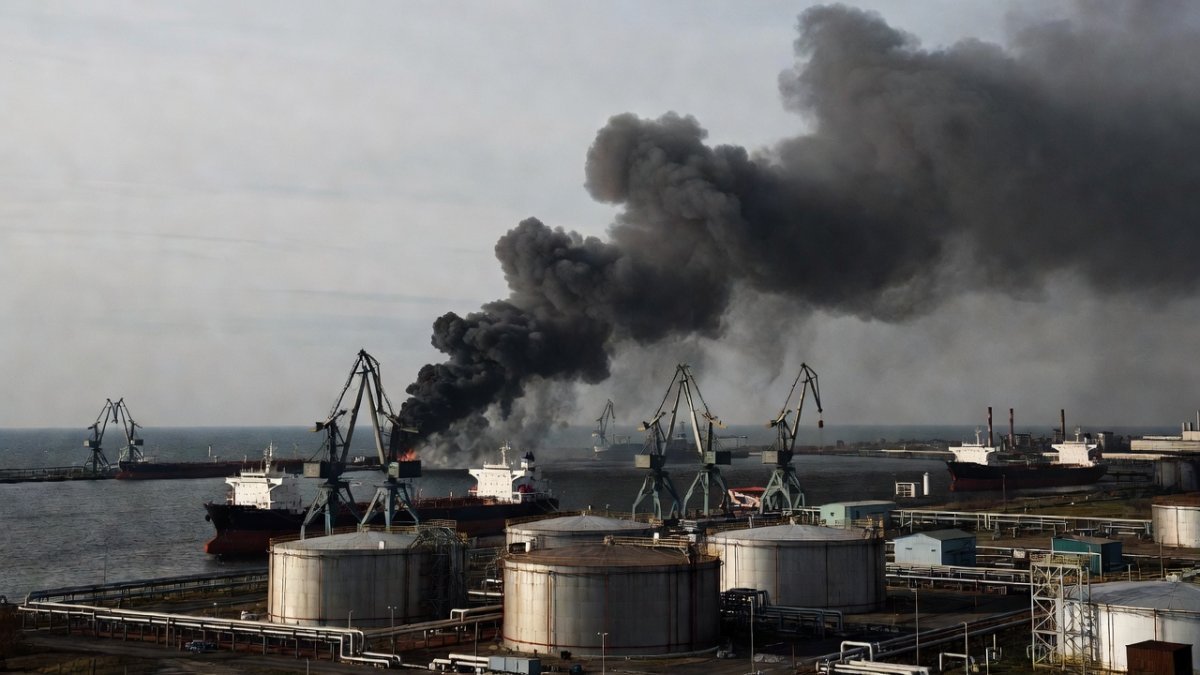
Ukraine expanded its long-range drone campaign against Russia's energy export infrastructure on Friday, with a strike on the Baltic Sea port of Ust-Luga sparking a fire at a major oil terminal that regional authorities said was later extinguished. The attack came as Russia's Defense Ministry reported intercepting 553 Ukrainian drones across the country and annexed Crimea overnight, in one of the largest barrages of the war.
Ukrainian Drone Strike Ignites Fire at Ust-Luga Oil Terminal as Baltic Airspace Tensions Surge
Ust-Luga, Russia – Friday — A Ukrainian drone attack on Friday morning triggered a fire at the Ust-Luga oil export terminal on Russia's Baltic coast, marking the latest in a series of strikes on a facility that has become a recurring target in Kyiv's campaign against Russian energy revenues. Leningrad region Governor Alexander Drozdenko said firefighters managed to extinguish the blaze later in the morning and that no one was hurt in the attack, though he offered no details on the extent of the damage at the facility.
Overnight Barrage Over the Leningrad Region
Drozdenko said air defenses shot down more than 50 drones overnight across the Leningrad region surrounding St. Petersburg, Russia's second-largest city. The scale of the overnight assault underscores the growing reach of Ukrainian drone operations, which have repeatedly targeted infrastructure deep inside Russian territory throughout 2026.
Russia's Defense Ministry said it intercepted 553 Ukrainian drones across Russia and annexed Crimea between Thursday night and Friday morning. The ministry did not specify how many drones evaded interception or what damage they caused, but the sheer volume of the barrage suggests a coordinated, multi-region operation designed to stretch Russian air defense resources.
Ust-Luga: A Strategic Energy Hub Under Repeated Attack
The Ust-Luga terminal, located on the Gulf of Finland about 110 kilometers west of St. Petersburg, is one of Russia's largest Baltic export hubs for crude oil and oil products. The facility has been struck several times before, according to regional authorities, making it a persistent vulnerability in Russia's energy export chain.
Analysts suggest the repeated targeting of Ust-Luga reflects a deliberate Ukrainian strategy to disrupt Russian oil revenues that fund the war effort. The terminal handles significant volumes of Urals crude and diesel exports destined for global markets, and any prolonged disruption could ripple through international energy prices.
Wildberries Warehouse Damaged in Tver Region
In a separate overnight incident, the governor of the neighboring Tver region said drone debris damaged an outer wall at a warehouse belonging to major online retailer Wildberries. No injuries were reported at the site, which marks the latest in a series of strikes on commercial logistics hubs.
The Wildberries facility, one of Russia's largest e-commerce distribution centers, had previously been targeted in drone attacks, according to local reports. The company, founded by Tatyana Bakalchuk and now a dominant player in Russian online retail, has become an unlikely symbol of how the war has reached civilian commercial infrastructure.
Civilian Casualty in Belgorod Region
Authorities in the Belgorod region, which borders Ukraine, said later on Friday morning that a person riding a bike was struck and killed by a drone. The incident highlights the human cost of the cross-border strikes that have become a near-daily occurrence in Russia's southern border regions.
Belgorod Governor Vyacheslav Gladkov has repeatedly reported civilian casualties from Ukrainian drone and artillery attacks since the war began, with schools, hospitals, and residential buildings frequently damaged. The region's proximity to the front lines has made it a constant target, and Friday's fatality adds to a grim toll that Moscow and Kyiv each blame on the other.
NATO Intercepts Drone Over Latvia
Also on Friday, military officials in Latvia said NATO fighter jets intercepted and shot down a drone that violated the Baltic country's airspace. The incident, which occurred near the Latvian border with Russia, marks an escalation in Baltic airspace tensions and raises questions about the trajectory of drones launched from Russian territory.
Latvian Defense Minister Andris Sprūds said in a statement that the drone was detected by NATO air policing assets and was shot down after it entered Latvian airspace. He did not specify the drone's origin or type, but the incident is likely to fuel concerns among Baltic states about the spillover effects of Russia's war in Ukraine.
Finland Restricts Baltic Sea Movement
Nearby Finland temporarily restricted movement in parts of the Baltic Sea to guard against potential air threats, according to Finnish maritime authorities. The restrictions, which affect shipping lanes near the Gulf of Finland, reflect growing unease among Nordic and Baltic nations about the security environment in the region.
Finland, which joined NATO in 2023, has become increasingly vigilant about airspace violations and drone activity since the war began. The restrictions on Baltic Sea movement are a practical response to the heightened risk, and they signal that the conflict's reach now extends to the doorstep of the alliance's newest members.
Energy War and Russia's War Economy
The repeated strikes on Ust-Luga and other energy export facilities represent a direct challenge to Russia's war economy, which relies heavily on oil and gas revenues to finance military operations. The Kremlin has sought to redirect exports toward China, India, and other non-Western buyers, but the physical infrastructure for those exports remains vulnerable to drone attacks.
Russian energy analysts note that while the Ust-Luga terminal has resumed operations after previous strikes, each attack forces costly repairs and creates uncertainty for buyers. Insurance rates for Russian oil shipments have climbed, and some international traders have become more cautious about handling Russian cargoes, according to industry sources.
Baltic Security in the Crosshairs
The NATO interception over Latvia and Finland's maritime restrictions underscore a broader shift in Baltic security dynamics. The Baltic Sea, once a relatively calm waterway for trade and energy transit, has become a contested space where Russian military activity and NATO responses increasingly intersect.
Latvia, Lithuania, and Estonia have all reported airspace violations since the war began, and NATO has bolstered its air policing mission in the region. The shooting down of a drone over Latvia on Friday is a rare but significant act, and it signals that the alliance is prepared to respond forcefully to incursions.
Analysis and Implications
The scale of Friday's drone barrage — more than 550 intercepts reported by Moscow — suggests Ukraine has developed the capacity to launch coordinated, multi-wave attacks across vast distances. This could indicate a shift in Ukrainian strategy toward sustained pressure on Russian infrastructure rather than episodic strikes, though the full extent of the damage remains unclear.
Analysts suggest the targeting of Ust-Luga, Wildberries warehouses, and civilian areas in Belgorod reflects a campaign designed to impose costs on both the Russian state and ordinary Russians. By striking energy export terminals, Kyiv aims to reduce the revenue that funds the war; by hitting commercial logistics hubs, it seeks to disrupt daily life in ways that resonate with the Russian public.
The NATO interception over Latvia and Finland's maritime restrictions add a new dimension to the conflict, raising the risk of direct confrontation between Russia and the alliance. While neither side appears to seek escalation, the frequency of drone activity near NATO borders increases the chance of miscalculation.
For Russia, the repeated strikes on Ust-Luga and other export hubs present a strategic dilemma. The Kremlin must allocate scarce air defense assets to protect critical infrastructure across a vast territory, while also maintaining military operations in Ukraine. The war economy, already strained by sanctions and mobilization, faces mounting pressure from attacks that target its financial lifeline.
For the Baltic states and Finland, Friday's events are a reminder that the war in Ukraine is not contained to the front lines. The drone that crossed into Latvian airspace and the restrictions imposed by Finland signal that the conflict's periphery is increasingly active, and that the region must prepare for a prolonged period of heightened tension.
The coming weeks will reveal whether Friday's barrage marks a new phase in Ukraine's drone campaign or a one-off escalation. What is clear is that the war has entered a stage where Russia's energy infrastructure, its commercial logistics, and even the airspace of neighboring NATO members are all part of the battlefield.
This article was produced with AI-assisted research and editorial support. Sources: The Moscow Times, Reuters, regional statements from Leningrad, Tver and Belgorod authorities, NATO air policing reports, Finnish maritime authorities.
By Irina Volkov, Staff Writer
What's Your Reaction?
 Like
0
Like
0
 Dislike
0
Dislike
0
 Love
0
Love
0
 Funny
0
Funny
0
 Wow
0
Wow
0
 Sad
0
Sad
0
 Angry
0
Angry
0

Russia/Eastern Europe Correspondent at Global1.News. Covering Russian politics, energy, security, and the shifting dynamics of the post-Soviet space. Provides clear-eyed analysis on one of the world's most opaque regions.














Comments (0)