
Seoul's Nuclear Submarine Clears the IAEA. China Wants the Board to Agree First.
The IAEA has issued its first report on South Korea's nuclear-powered submarine program, finding Seoul met its safeguards reporting duties. China objected at the Board of Governors and wants consensus among member states before any arrangement is agreed.
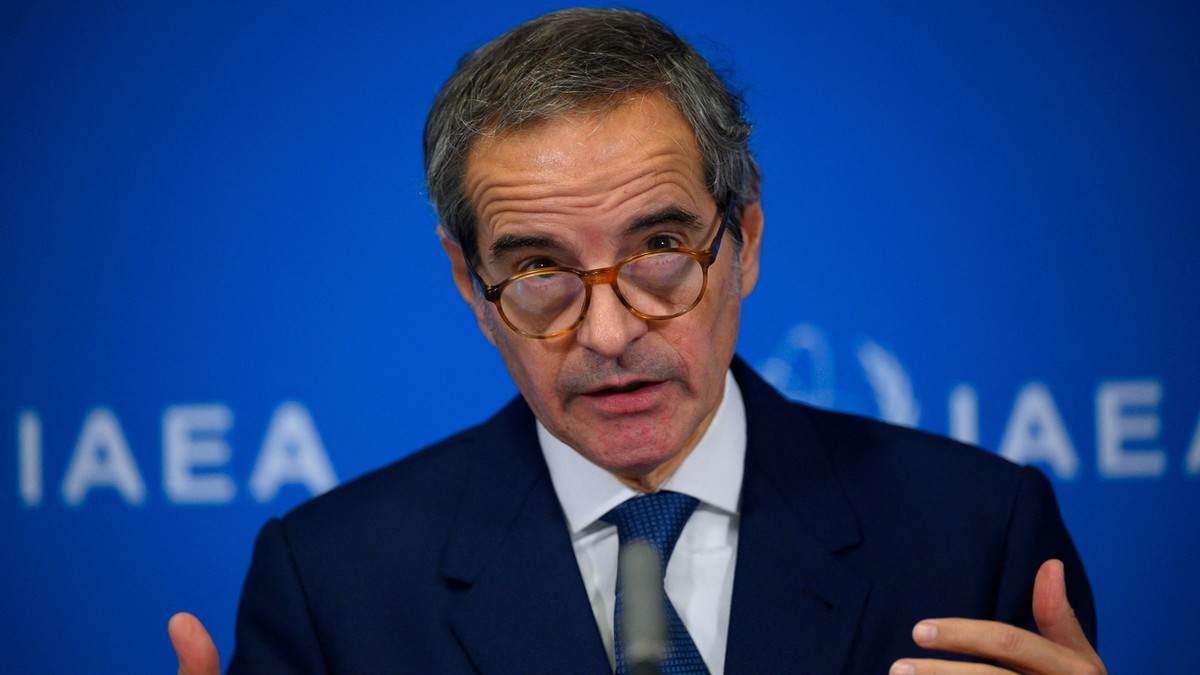
Folks, the United Nations' nuclear watchdog just handed Seoul the first piece of international cover it has ever had for a nuclear-powered submarine. Within a day, Beijing used its right of reply at the very same board meeting to argue the whole thing should never have been titled the way it was. Both things are on the record, in writing, from the same week in Vienna. The gap between them is the story.
Seoul's Nuclear Submarine Clears the IAEA. China Wants the Board to Agree First.
Seoul, South Korea — South Korea's nuclear-powered submarine program passed its first international safeguards review this month. The fight over what happens next has already started.
The Report Seoul Has Been Waiting On
On November 9, IAEA Director General Rafael Grossi signed a short document titled Naval Nuclear Propulsion: Republic of Korea. It carried the reference GOV/INF/2026/17 and was marked for official use only. It was derestricted at the Board of Governors meeting in Vienna on November 18, discussed during the board's November session, and released publicly by Seoul's foreign ministry on November 19.
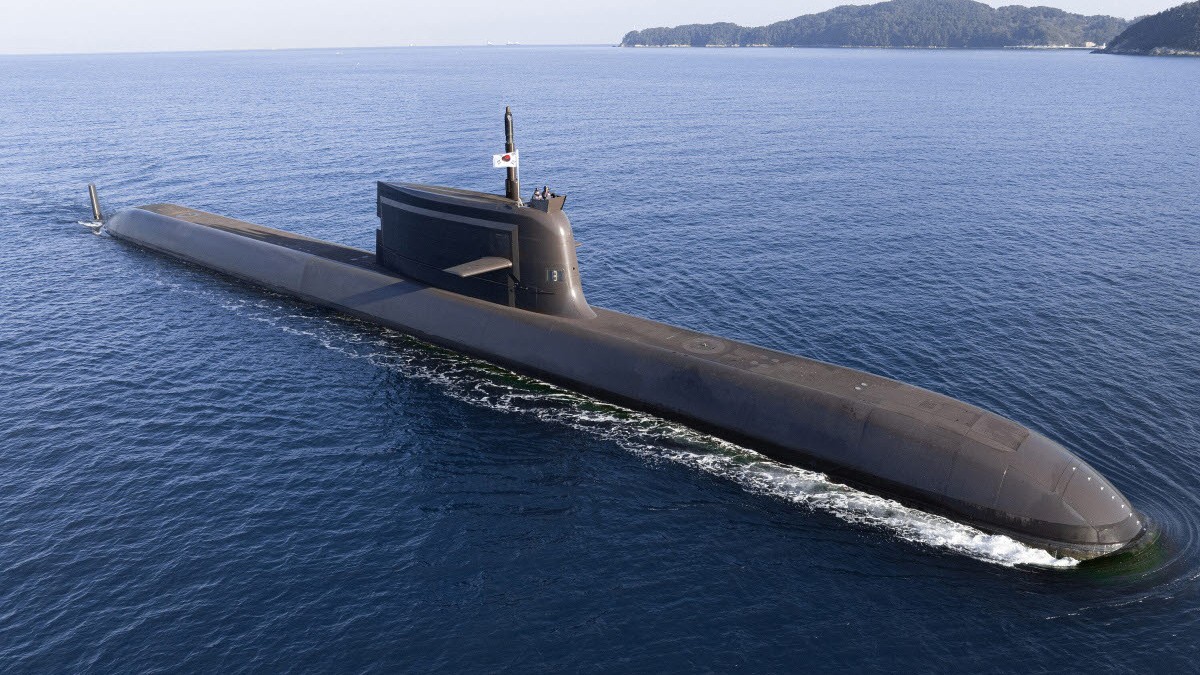
It is the first report the agency has ever issued on a South Korean submarine program — the boats Seoul wants are nuclear-powered but conventionally armed, a distinction the document leans on throughout. Australia and Brazil have received annual updates since 2022 and 2023 respectively while their own naval propulsion talks with the agency have run. Seoul now sits in that same queue, under the same annual scrutiny, with a document that will be refreshed for as long as the boats are being built.
What the Director General Actually Certified
The substance is narrower than the headlines suggest, and stronger than the sceptics expected. The report records that South Korea "has implemented its reporting obligations under the CSA and AP, including those required under modified Code 3.1 of the Subsidiary Arrangements to its CSA." It notes that since 2007 the agency has drawn its "broader conclusion" for South Korea every year — the finding that all nuclear material in the country remained in peaceful activities.
Then comes the line Seoul will quote for a decade. On the basis of the technical consultations and exchanges held so far, the agency says it "is satisfied with the level of engagement." Consultations opened in June. The first technical discussions took place on October 8, where the agency suggested possible transparency measures and both sides agreed to keep talking throughout 2027.
The Paragraph China Is Aiming At
Paragraph 15 is where the leverage lives. The report confirms that the agency will keep working with Seoul, through 2027, to develop the arrangement Article 14 requires. Then it states plainly: "Once the arrangement is finalized, the Director General will transmit it to the Board of Governors for appropriate action."
Nothing has been finalized. Article 14 of South Korea's Comprehensive Safeguards Agreement allows a state to use safeguarded nuclear material in a military activity the Nuclear Non-Proliferation Treaty does not proscribe — naval propulsion being the classic case — but only under a separate arrangement with the agency. That arrangement fixes the period of use, how the material is managed and how far verification reaches, and it lands on the board's desk for approval.
So the positive report does not close the file. It opens the door to the vote that does.
Beijing's Objection, in Its Own Words
China's ambassador to the UN organizations in Vienna, Li Song, raised the matter in a right of reply under agenda item 3(c), the Australia item. His remarks were published by his mission on November 20. He was blunt about the title itself: "'Naval Nuclear Propulsion: Republic of Korea' cannot capture the complex nature of this issue."
He called the ROK program "the second nuclear submarine project conducted through cooperation between a nuclear-weapon state and a non-nuclear-weapon state since AUKUS," and said it "also involves the transfer of nuclear material for non-peaceful purposes." He warned that several such projects appearing in a short period "will pose major challenges to international geopolitical security, the marine environment, and the safety of international waterways." Then he demanded agreement first: "Sufficient communication should first take place at the level of the Board and Member States, so that a consensus can be reached."
Why the Complaint Is Not Paranoia
Beijing's reading of the program has an evidentiary basis, and it is American. On November 14 last year, Admiral Daryl Caudle, then chief of US naval operations, told reporters in Seoul that the United States expected the boat Seoul was about to be allowed to build to help take on its biggest rival. "Utilization of that submarine to counter China, I think is a natural expectation" — that was the admiral's answer.
He went further. The United States would expect that partnership, working as an alliance, "to meet our combined goals on what United States considers to be our pacing threat, which is China." He added that Seoul would carry a responsibility "to deploy those submarines globally and move away from just being a regional navy to a global navy."
President Lee Jae-myung had already said something similar at the October 2025 summit, explaining that the limited underwater endurance of diesel boats restricts Seoul's ability to track submarines "on the North Korean or Chinese side."
What Washington and Brussels Said
The other statements in Vienna cut the opposite way. The US representative welcomed Seoul's decision to begin consultations on the arrangement, calling it consistent with Korea's stated will to meet its obligations under agency rules and the treaty. The European Union's statement, delivered on behalf of the European Union with ten further countries signing on, welcomed that South Korea "has implemented its reporting obligations under the CSA and AP, including those required under modified Code 3.1 of the Subsidiary Arrangements to its CSA."
The EU noted Seoul's commitments on managing low-enriched uranium and on building a safeguards approach with the agency, and closed with a sentence that reads like a scheduling notice: "We look forward to the IAEA Board taking appropriate action once the arrangement is finalised."
That is precisely the board vote China wants to pre-empt with a consensus requirement. Brussels and Washington are describing a decision point. Beijing is trying to make it a negotiation.
The Law Is Still Stuck in Committee
Seoul's domestic track has not kept pace. The enabling statute — formally the special act on the acquisition, operation and safety management of nuclear-powered submarines — was put out for public comment on July 29. The Cabinet passed it on September 29 under President Lee, and it reached the National Assembly the next day as bill 2221677. It was referred to the National Defense Committee on October 1, along with five other committees.
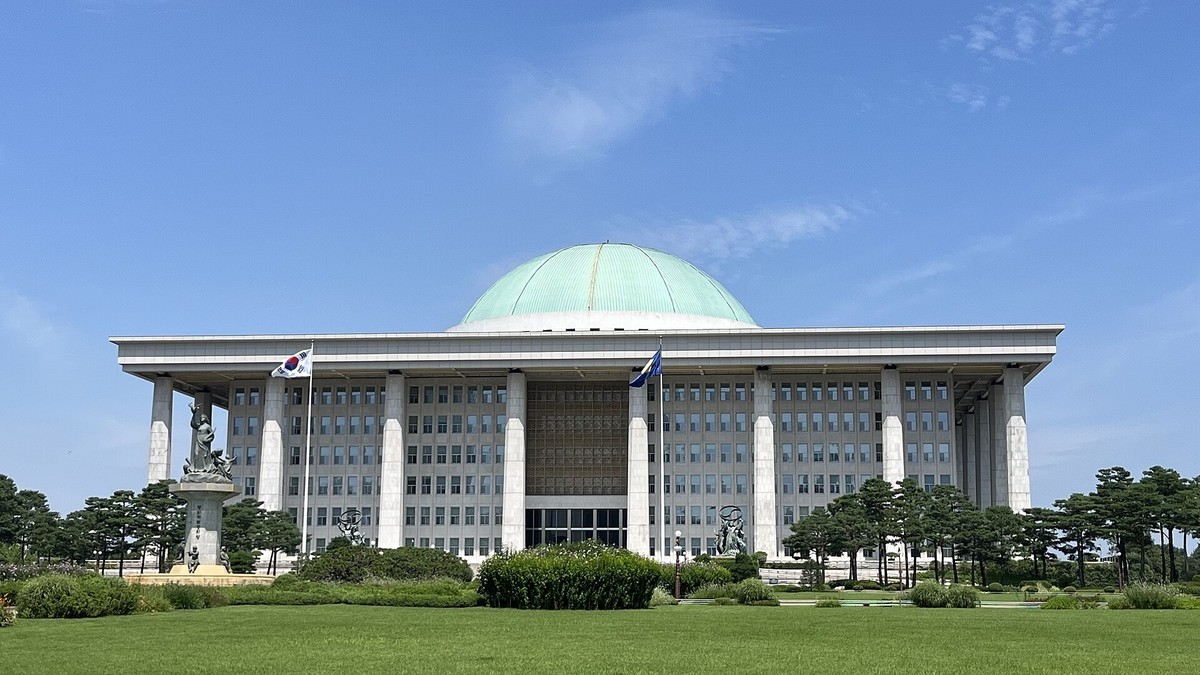
The committee placed it on the agenda on November 16, alongside a rival bill filed by opposition lawmaker Yoo Yong-won and 31 co-sponsors in August. Both went to a subcommittee without an alternative debate. A five-witness hearing followed on November 18. The act has not passed, and the government's stated aim of enacting it this year now has just over five weeks left to run.
Three Fights Inside One Bill
The hearing exposed three disputes that have nothing to do with China. The first is who runs the program: the government bill puts a strategy committee under the Prime Minister with a five-year sunset; the opposition bill puts it under the President, chaired by him, reviewed every decade.
The second is who regulates the reactor. The government gives approval and safety authority to the Minister of National Defense. The committee's own review report warned that this makes the minister both the duty-bearer and the regulated subject, amounting to self-regulation, and said regulatory independence needed examination. Former nuclear safety commission chairman Yoo Kook-hee pointed to the US Naval Reactors, Britain's DNSR and France's ASND.
The third is money, which the next section deals with. Both bills waive the feasibility study that normally takes one to two years.
The Numbers Nobody Will Settle
An estimate of 28.9 trillion won — roughly $21 billion — has circulated for months and was cited at the hearing by opposition lawmaker Han Ki-ho. The 2027 budget proposal carries 96.6 billion won, about $71 million, mostly for initial design work beginning next year. The Defense Acquisition Program Administration approved the acquisition strategy on November 6, at the 179th meeting of the Defense Project Promotion Committee, after exempting the program from that feasibility study on security grounds.
Separately, Yonhap reported a total cost of about 537 billion won, or $395 million, for a 2028 to 2035 window. That figure is more than fifty times smaller than the 28.9 trillion won estimate, and no source reconciles the two. DAPA has not disclosed a total, and the bill reached parliament with no cost estimate attached at all, on military secrecy grounds. A cost analysis running since January is due at the end of this month.
The Fuel Is Still Nobody's to Promise
Here is the part that decides whether any of this is real. Seoul told the agency in June that its submarine reactors will be designed and manufactured in South Korea and fueled with domestically produced fuel elements using low-enriched uranium imported from a supplier state. The report describes that fuel as enriched up to 20 percent U-235; Seoul's own formulation is below 20 percent.
No supply arrangement with Washington exists. The first bilateral negotiating round was in June, and a second had not been scheduled when DAPA signed off. A defense ministry official has floated a separate agreement under Section 91 of the US Atomic Energy Act, following the AUKUS precedent, rather than amending the civil nuclear pact. Asked whether a contract could be signed before the fuel talks conclude, DAPA said that would take political judgment.
So watch four things: the text of the Article 14 arrangement, the subcommittee's merged bill, the cost analysis due at month's end, and whether Beijing converts a right of reply into a formal fight over the board's agenda. Seoul's submarine is real. The permission slip is not signed yet — and folks, that is exactly where the pressure will land.
By Jessica Ali, Staff Writer
This article was produced with AI-assisted research and editorial support. Sources: International Atomic Energy Agency (GOV/INF/2026/17, Naval Nuclear Propulsion: Republic of Korea); Permanent Mission of the People's Republic of China to the UN and other international organizations in Vienna; European External Action Service; Republic of Korea Ministry of Foreign Affairs via Yonhap News Agency, Korea.net and The Korea Herald; Maeil Business Newspaper; Chosun Ilbo; Yonhap News Agency; Baird Maritime; Naval News; The Korea Times; National Assembly of the Republic of Korea bill information system; National Assembly Television; Edaily; NewsQuest; Daily Hankooki; Newsroad; Newstomato; Asia Today; Incheon News; Donga Ilbo; Citizens' Coalition for Economic Justice; Bloomberg; The Straits Times; Hankyoreh; KBS World; NPR. Photographs: Rafael Grossi at the IAEA Board of Governors press conference in Vienna on November 18, 2026, Elisabeth Mandl/Reuters via The Korea Herald; ROKS Seo Hui on sea trials, Hanwha Ocean via Edaily; the National Assembly of South Korea, Cjb8293, CC BY-SA 4.0, via Wikimedia Commons. Social card: Global 1 News editorial image.
What's Your Reaction?
 Like
0
 Dislike
0
 Love
0
 Funny
0
 Wow
0
 Sad
0
 Angry
0

Editor-in-Chief at Global1.News. Atlanta-based journalist who cuts through the BS and tells it like it is. Lead anchor, host, and the voice you hear when the spin stops and the truth starts.











Comments (0)