
Legal victory for scholar denied university post after calling Gaza a 'textbook case of genocide'
In a significant development for academic freedom, Professor Raz Segal has reached a $250,000 settlement with the University of Minnesota after the institution withdrew his job offer due to his early characterization of Israel's actions in Gaza as genocide. This case underscores the influence of external donors on university decisions and highlights the growing scholarly consensus on events in Gaza.

In a significant development for academic freedom, Professor Raz Segal has reached a $250,000 settlement with the University of Minnesota after the institution withdrew his job offer due to his early characterization of Israel's actions in Gaza as genocide. This case underscores the influence of external donors on university decisions and highlights the growing scholarly consensus on events in Gaza. It raises critical questions about the space for discussing Palestinian rights in higher education.
The Settlement Reached with the University of Minnesota
Professor Raz Segal has secured a $250,000 settlement from the University of Minnesota more than two years after the institution withdrew an offer for him to direct its Center for Holocaust and Genocide Studies. The agreement resolves claims that the university retaliated against Segal for his scholarly assessment of events in Gaza. Internal records obtained through public requests revealed donor pressure and threats to withhold funding tied directly to Segal's analysis of Israeli policy.
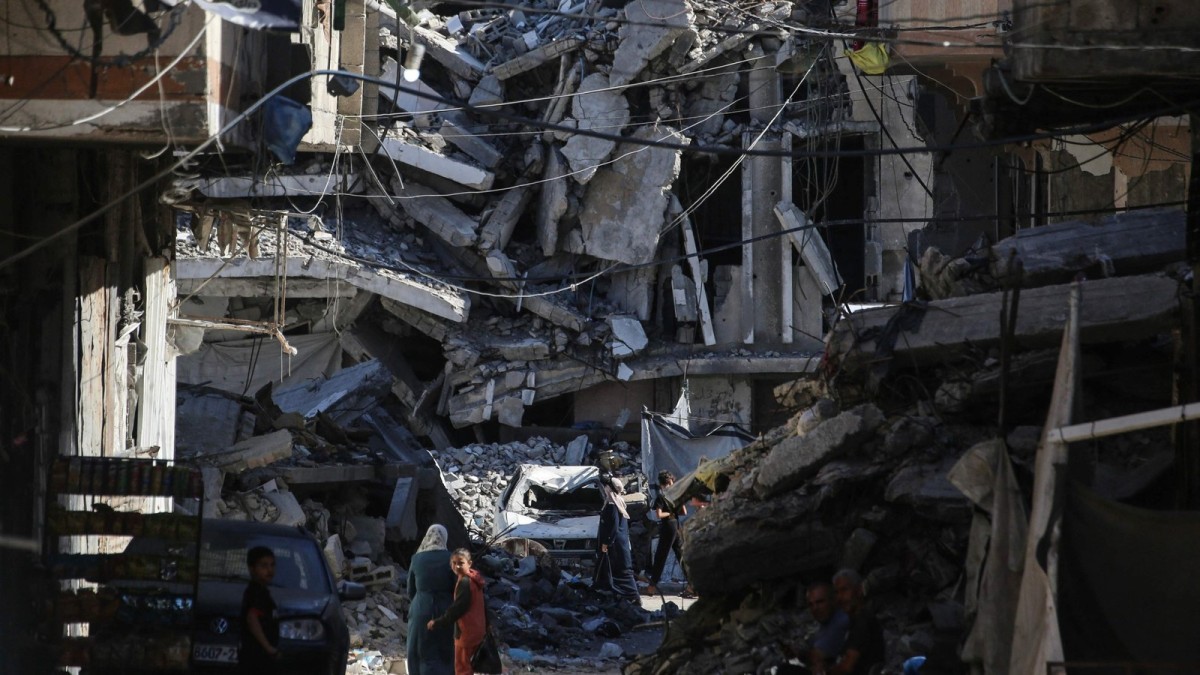
This outcome arrives amid ongoing displacement and destruction in Gaza, where Palestinian families continue to face the consequences of policies Segal identified early. The settlement provides financial resolution without restoring the position, leaving the Center without a permanent director and underscoring how external campaigns can shape academic appointments.
The $250,000 settlement between Professor Raz Segal and the University of Minnesota resolves allegations of retaliation tied to his scholarly analysis of events in Gaza without any admission of institutional wrongdoing. Public records obtained through requests documented how donor threats to withhold funding directly influenced the withdrawal of the appointment, illustrating patterns of external financial leverage on public university decisions that have recurred in U.S. higher education over issues involving Israel and Palestine. This financial resolution leaves the Stephen C. Feinstein Chair position unfilled more than two years later, highlighting persistent institutional caution in hosting sustained examination of policies affecting Gaza.
Historical context reveals that such donor interventions have shaped academic centers focused on Holocaust and genocide studies since their establishment, often prioritizing certain narratives over others when contemporary conflicts arise. Data from the episode shows the offer was extended on 5 June 2024 after a rigorous search process and withdrawn within five days, underscoring the speed with which campaigns can alter hiring outcomes. Regional reactions from Palestinian communities emphasize how these pressures restrict spaces for documenting displacement and destruction, while international observers note the settlement as one marker of accountability amid broader debates on academic independence.
Forward-looking analysis suggests the outcome may encourage scholars to pursue legal avenues when facing similar pressures, though the unfilled role signals ongoing structural challenges. Segal's subsequent tenured position at Stockton University directing its master's program in Holocaust and genocide studies provides an alternative platform, yet the University of Minnesota case leaves unresolved questions about how external campaigns affect the ability of institutions to engage with Palestinian rights and Israeli policy without interference.
Segal's 2023 Genocide Warning
Just six days after Israeli forces began their assault on Gaza in October 2023, Segal published an analysis in Jewish Currents describing the unfolding events as a textbook case of genocide. He pointed to the siege, mass killings, forced displacement, and statements from senior Israeli officials as evidence of intent. As an Israeli-American scholar whose grandparents survived the Holocaust, Segal grounded his assessment in established genocide frameworks.
Palestinians in Gaza have endured these conditions for years under blockade, with the latest escalation amplifying long-standing restrictions on movement, access to resources, and basic security. Segal's early intervention highlighted patterns that human rights monitors have since documented across multiple sectors of Palestinian life.
Segal's assessment, published six days after the October 2023 assault on Gaza began, framed Israel's actions as a textbook case of genocide based on the siege, mass killings, forced displacement, and statements by senior officials. As an Israeli-American scholar and grandson of four Holocaust survivors, his analysis drew on established genocide frameworks applied to patterns of intent and conduct. This early intervention occurred against a backdrop of long-standing blockade conditions in Gaza that had already restricted movement, resources, and security for Palestinian families over multiple years.
Data from subsequent developments shows his warning aligned with findings by a widening group of experts, including a UN Commission of Inquiry that later determined Israeli authorities committed genocide. Regional reactions within Palestinian territories connected these documented elements to daily realities of restricted medical access and forced movement, while international human rights organizations such as B'Tselem and Physicians for Human Rights Israel reached parallel conclusions after examining policy statements and infrastructure destruction. Historical context places Segal's October 2023 analysis among the earliest unequivocal scholarly declarations, preceding broader consensus that emerged by 2025.
Forward-looking analysis indicates that such early warnings can contribute to accumulating international assessments, potentially influencing legal and policy responses over time. The validation of Segal's framework by additional scholars and bodies underscores the value of applying consistent genocide criteria across contexts, though it also highlights delays in institutional recognition that affect the timeliness of protections for affected populations in Gaza and the West Bank.
The Withdrawn Job Offer and the Campaign Against Him
The University of Minnesota extended the offer for the Stephen C. Feinstein Chair on 5 June 2024 following a search committee process that included strong endorsements of Segal's presentation. Five days later, the offer was withdrawn after donors, politicians, and pro-Israel organizations launched opposition focused on Segal's views regarding Israel and Gaza.
University documents showed officials understood the controversy centered on Segal's scholarly conclusions about Gaza. This sequence illustrates how external actors can influence hiring decisions at public institutions, particularly when the topic involves Palestinian rights and Israeli actions. For communities in the occupied territories, such interventions limit spaces where their experiences receive rigorous academic examination.
The University of Minnesota's withdrawal of the directorship offer five days after extending it on 5 June 2024 followed a coordinated campaign by donors, politicians, and pro-Israel organizations focused on Segal's views regarding Israel and Gaza. Internal documents revealed that university officials recognized the controversy centered on his scholarly conclusions, with threats to withhold funding accelerating the reversal. This sequence reflects historical patterns in U.S. academia where external actors have influenced appointments at public institutions when topics involve Palestinian rights and Israeli actions.
Data from the search process indicates strong endorsements from the committee, including descriptions of Segal's presentation as exceptional, yet these were overridden by the rapid opposition. Regional reactions from communities in occupied territories note how such interventions limit rigorous academic examination of settlement expansion, military operations, and displacement. International responses from human rights monitors have framed the episode as evidence of donor influence narrowing permissible inquiry into policies affecting Gaza.
Forward-looking analysis points to the need for stronger safeguards against external pressure on hiring decisions to preserve institutional autonomy. The unfilled position at the Center for Holocaust and Genocide Studies demonstrates ongoing caution, potentially affecting the center's capacity to address contemporary cases alongside historical ones and limiting opportunities for scholars to connect established frameworks to current events in Palestine.
The Academic Freedom Dispute and No-Confidence Vote
The Center for Constitutional Rights represented Segal, arguing that the withdrawal violated principles of academic freedom and punished constitutionally protected speech. Forty leading Holocaust and genocide scholars issued statements of support, while University of Minnesota faculty passed a no-confidence vote against the interim president and provost. The American Association of University Professors also urged restoration of the appointment.
These responses reflect broader tensions in higher education when scholars address Palestinian realities under occupation. Faculty and students in Palestine and the diaspora have long noted how similar pressures restrict open discussion of displacement, settlement expansion, and military operations, narrowing the range of permissible inquiry.
The Center for Constitutional Rights argued that the University of Minnesota's actions violated academic freedom by retaliating against constitutionally protected speech, prompting support from forty leading Holocaust and genocide scholars along with a faculty no-confidence vote against the interim president and provost. The American Association of University Professors called for restoration of the appointment, reflecting broader tensions in higher education when scholars address Palestinian realities under occupation. Historical context shows similar disputes have arisen when criticism of Israeli policy intersects with institutional priorities.
Data from the episode includes the public records confirming that Segal's analysis of Gaza formed the core of the controversy, with forty scholars issuing statements and faculty passing the no-confidence measure. Regional reactions from Palestinian scholars and students highlight how such pressures restrict open discussion of blockade conditions and military assaults, narrowing spaces for documenting lived experiences in places like Gaza City and Rafah. International observers have noted the case as part of wider patterns affecting academic environments in the United States and elsewhere.
Forward-looking analysis suggests the dispute may prompt institutions to strengthen protections for scholars examining sensitive topics, though the settlement without position restoration indicates persistent challenges. Segal's move to Stockton University offers continued work in the field, yet the episode underscores the need for mechanisms that shield academic appointments from campaigns tied to regional conflicts.
The Growing Consensus of Genocide Scholars
Segal's assessment has been joined by additional experts and organizations. Israeli-American scholar Omer Bartov at Brown University concluded in a July 2025 essay that evidence in Gaza had crossed the threshold into genocide. Israeli groups B'Tselem and Physicians for Human Rights Israel reached parallel findings after examining policy statements and the destruction of healthcare infrastructure.
A UN Commission of Inquiry has likewise determined that Israeli authorities committed genocide in Gaza. These assessments connect to the daily conditions faced by Palestinians, including restricted access to medical care, forced movement, and statements from officials that frame the population as a collective target. The expanding body of analysis validates early warnings while documenting impacts on families across generations.
What the Settlement Does and Does Not Mean
The $250,000 agreement does not include an admission of wrongdoing by the University of Minnesota. Segal had sought restoration of the original position, but that option was removed from consideration. The role remains unfilled, and Segal has since taken a tenured position at Stockton University directing its master's program in Holocaust and genocide studies.
For Palestinian communities, the outcome highlights institutional reluctance to host sustained examination of policies affecting Gaza and the West Bank. While the financial settlement offers some acknowledgment of harm, it leaves structural questions about donor influence and academic independence unresolved in practice.
What This Signals for Academics Who Speak Out on Palestine
Segal expressed hope that the resolution will encourage other scholars facing professional repercussions for criticizing Israeli policy to contest such actions. The episode demonstrates how campaigns can target individuals whose research addresses Palestinian experiences of occupation, blockade, and military assault.
Academic environments in the United States and elsewhere have seen repeated efforts to limit discussion of these topics, often through donor pressure or political intervention. This pattern affects the ability of researchers to document realities on the ground in places like Gaza City, Rafah, and Khan Younis, where Palestinian voices describe systematic restrictions on life and movement. The settlement provides one instance of pushback, yet the unfilled position signals ongoing caution within institutions.
Palestinian scholars and students continue to navigate these constraints while advocating for recognition of their lived conditions under prolonged conflict and displacement.
SUMMARY: Professor Raz Segal secured a $250,000 settlement after the University of Minnesota withdrew his job offer due to his early description of Israel's Gaza assault as genocide. The case highlights donor influence on academic appointments and growing expert consensus on events in Gaza, with implications for scholars addressing Palestinian rights. By Fatima Al-Rashid, Staff WriterThis article was produced with AI-assisted research and editorial support. Reporting is based on sources cited in the article.
What's Your Reaction?
 Like
0
Like
0
 Dislike
0
Dislike
0
 Love
0
Love
0
 Funny
0
Funny
0
 Wow
0
Wow
0
 Sad
0
Sad
0
 Angry
0
Angry
0

Gulf/MENA Correspondent at Global1.News. Based in Doha, covering Gulf politics, energy markets, diplomacy, and development across the Middle East and North Africa. Tracks the economic transformation of the Gulf states.












Comments (0)