
Why Is Beijing So Determined to Pursue Reunification With Taiwan?
In the wake of the Russian invasion of Ukraine in February 2022, the Taiwan question has risen to the forefront of security deliberations across the United States, its regional allies, and the broader Asia‑Pacific community.
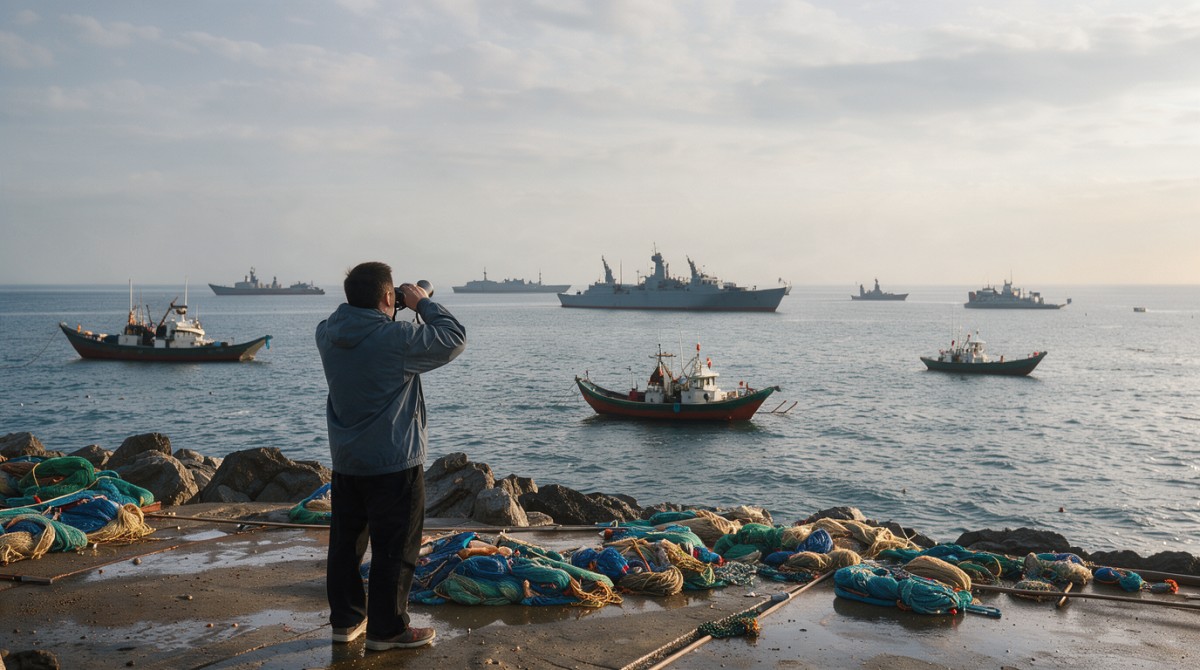
In the wake of the Russian invasion of Ukraine in February 2022, the Taiwan question has risen to the forefront of security deliberations across the United States, its regional allies, and the broader Asia‑Pacific community. While conventional analyses have foregrounded the strategic calculus of breaking the First Island Chain or seizing Taiwan’s semiconductor capacity, a closer reading of Chinese political discourse reveals a more fundamental driver: the nationalist imperative that undergirds the Chinese Communist Party’s (CCP) foreign‑policy architecture. This article examines the evolution of Beijing’s reunification narrative, situates it within the broader constellation of CCP core interests, and assesses the implications for Korean diplomatic and security calculations.
Historical Roots of the Nationalist Narrative
Beijing’s insistence that Taiwan be returned to the mainland is anchored in a collective memory of the “century of humiliation,” a period spanning the late nineteenth century to the mid‑twentieth century when foreign powers and Japan imposed unequal treaties on a weakened Qing and Republican China. Within this historiography, the division of the Chinese nation is portrayed as a lingering wound that contradicts the national will of the Chinese people. Deng Xiaoping’s 1986 interview with CBS journalist Mike Wallace illustrates this sentiment: when asked what Taiwan would gain from reunification, Deng replied that the issue was fundamentally “a national question, a question of national sentiments,” emphasizing that “all members of the Chinese nation want to see China reunified.”
Jiang Zemin’s 2001 remarks further nuance the nationalist logic. He suggested that, after reunification, Taiwan could retain its own political and economic systems, armed forces, and domestic administration without the deployment of People’s Liberation Army (PLA) troops or mainland officials. This articulation indicates that the CCP’s primary objective was not the direct exercise of military control but the symbolic closure of a historical rupture, thereby affirming the primacy of national sentiment over material gain.
Material Interests as Secondary Motives
Outside China, analysts frequently cite two material benefits that reunification would confer: an expanded maritime defense perimeter that would ease U.S. and allied constraints on Beijing, and unfettered access to Taiwan’s leading‑edge semiconductor industry. The former would enable the PLA to project power beyond the First Island Chain, while the latter would bolster China’s position in the ongoing technology competition with the United States. However, the source material cautions that these advantages, while “undoubtedly…potentially…beneficial,” do not constitute the core rationale for Beijing’s determination. The argument is that the CCP’s strategic calculus would prioritize the preservation of its political system above any incremental security or economic gains.
John Lee and Jan‑Peter Kleinhans, cited in the source, argue that invasion remains “at the bottom of the list” for Chinese leaders when evaluating solutions to the “Taiwan problem.” This assessment underscores the view that material incentives are subordinate to the overarching nationalist mission, and that the prospect of a costly military operation—especially one that might jeopardize Taiwan’s industrial base—does not align with the CCP’s preferred pathways.
The CCP’s Hierarchy of Core Interests
The source material delineates a hierarchy of CCP core interests: state sovereignty, territorial integrity, national security, economic development and modernization, and, paramount, the preservation of the CCP’s monopoly on political power. Within this framework, Taiwan is classified as a “core interest” that cannot be compromised. Yet this designation is not isolated; it is interwoven with the party’s broader objective of safeguarding its political system. In effect, the pursuit of reunification serves to reinforce the legitimacy of the CCP by demonstrating its capacity to fulfill a deeply emotive national promise.
Consequently, while strategic and economic considerations are acknowledged, they are framed as instruments that ultimately support the paramount interest of regime preservation. This ordering explains why the CCP may tolerate the maintenance of Taiwan’s existing political and economic structures after reunification, as Jiang Zemin suggested, provided that the symbolic achievement of national unity is secured.
Implications for Korean Foreign Policy
For the Republic of Korea, understanding the nationalist dimension of Beijing’s Taiwan policy is essential for calibrating diplomatic responses. The Ministry of Foreign Affairs (MOFA) has historically balanced economic ties with China against security commitments to the United States and regional allies. Recognizing that Beijing’s resolve on Taiwan is rooted in a non‑negotiable national sentiment suggests that diplomatic pressure based solely on economic levers may have limited efficacy.
Moreover, Korean think tanks such as the Asan Institute for Policy Studies and the Korea Development Institute (KDI) have highlighted the risk of being drawn into a security dilemma if Seoul is perceived as supporting Taiwan’s de‑facto independence. A nuanced approach that acknowledges China’s historical trauma while reaffirming Korea’s own sovereignty and alliance commitments may help mitigate escalation.
Potential Scenarios and Korean Strategic Choices
Three broad scenarios emerge from the source analysis. First, Beijing could pursue a peaceful reunification pathway, seeking a voluntary political agreement from Taiwan. Given the “strong sense of Taiwanese identity” and “deep‑seated resentment” toward the CCP, this outcome appears unlikely. Second, Beijing might opt for a limited coercive strategy—economic sanctions, diplomatic isolation, or cyber pressure—to compel Taiwan toward a political settlement without full military invasion. Third, a full‑scale invasion remains a low‑probability but high‑impact option, contingent on the PLA’s ability to preserve Taiwan’s industrial capacity, particularly its semiconductor fabs.
For Korea, each scenario entails distinct policy adjustments. In a peaceful settlement, Seoul could act as a mediator, leveraging its historical experience of division and reunification on the peninsula. Under coercive pressure, Korea might need to reinforce its own cyber defenses and diversify supply chains away from Taiwan‑centric semiconductor dependencies. In the event of invasion, the ramifications for regional stability would be profound, compelling a reassessment of the U.S.–ROK security alliance and potentially prompting Seoul to contribute to collective defense measures under the auspices of the United Nations or regional security frameworks.
Regional Dynamics and the Role of International Institutions
The source material underscores that the Taiwan issue cannot be isolated from the broader context of China’s “great rejuvenation” narrative, which envisions a fully sovereign, territorially integrated nation by the mid‑21st century. This vision aligns with China’s active participation in multilateral institutions such as the Shanghai Cooperation Organization (SCO) and its pursuit of a “community of shared future.” However, the nationalist drive over Taiwan may clash with the norms of the United Nations Charter, which emphasizes the self‑determination of peoples.
For Korean diplomatic strategy, engaging with international institutions—particularly the United Nations and the ASEAN Regional Forum—offers a platform to articulate concerns about the use of force while reinforcing the principle of peaceful dispute resolution. Coordination with think tanks like the Korea Institute for International Economic Policy (KIEP) can provide evidence‑based policy recommendations that balance normative commitments with pragmatic security considerations.
Forward‑Looking Assessment
In sum, Beijing’s determination to reunify Taiwan is best understood as a nationalist imperative that supersedes, though is not divorced from, strategic and economic calculations. The CCP frames reunification as a moral and historical obligation, a core interest that validates its political legitimacy and fulfills a collective memory of humiliation. While material benefits—expanded maritime reach and semiconductor access—are acknowledged, they function as secondary incentives that support the paramount goal of preserving the party’s monopoly on power.
For the Republic of Korea, this analysis mandates a calibrated diplomatic posture that respects China’s historical sensitivities while steadfastly upholding the principles of sovereignty and self‑determination. Korean policymakers should continue to diversify critical supply chains, strengthen cyber resilience, and deepen coordination with allied partners, all while maintaining open channels for dialogue with Beijing. As the mid‑21st‑century “great rejuvenation” narrative unfolds, the Korean Peninsula’s own experience of division and reunification offers a unique lens through which to engage constructively with China’s nationalist aspirations, thereby contributing to regional stability in an era of heightened great‑power competition.
This article was produced with AI-assisted research and editorial support. Reporting is based on the source material cited below. Sources: The Diplomat; thediplomat.com; Global1.News (16 November 2026).
By Prof. David Park, Staff Writer
What's Your Reaction?
 Like
0
 Dislike
0
 Love
0
 Funny
0
 Wow
0
 Sad
0
 Angry
0

East Asia/Technology Correspondent at Global1.News. Seoul-based voice covering Korean politics, technology, business, and culture. Analyzes how technology and geopolitics intersect across East Asia.














Comments (0)