
Israel's New Election Rules for 2026 Knesset Vote
Israel heads to the polls on October 27, 2026 under new election rules passed by the Knesset and the Central Elections Committee: dedicated polling stations for evacuees, mandatory AI and deepfake disclosure on campaign materials, soldier voting in Gaza, Lebanon and Syria, and a new privacy ruling protecting voter identities. The vote is the first on the legally scheduled date in 38 years.
In a recent i24NEWS English "Election Breakdown" segment titled "New Israeli election rules," the report detailed preparations for Israel's October 27, 2026 general election for the 26th Knesset, including measures for soldiers in combat zones and restrictions on AI-generated campaign content. The segment highlighted how these rules respond to the security situation that began after the October 7, 2023 Hamas attack, with Israeli forces still operating in Gaza, Lebanon and Syria. Central Elections Committee decisions now shape voting access for evacuees and deployed troops while addressing disinformation risks ahead of the vote.
Israel Sets New Election Rules for October 27, 2026 Knesset Vote
Jerusalem, Israel – This Week — The Knesset passed the Elections Law for the 26th Knesset on July 16 in second and third readings, establishing dedicated polling stations for evacuees and requiring disclosure on digitally altered campaign materials. The Central Elections Committee, chaired by Deputy President of the Supreme Court Justice Noam Sohlberg, published detailed deepfake rules on July 26 under the amended Elections (Propaganda Methods) Law. These steps come as the outgoing 25th Knesset completed its full term without early dissolution, the first such occurrence since 1988.

Full Term Completion Marks Rare Stability
The 25th Knesset dissolved on July 17 after serving its entire four-year mandate, the first Israeli legislature to do so since 1988. This marks the first government in 53 years to finish its term without collapse, allowing Prime Minister Benjamin Netanyahu's coalition to remain in office until a new government forms. The stability occurs against the backdrop of the multi-front conflict that followed the October 7, 2023 attacks, with IDF operations continuing in Gaza, Lebanon and Syria.
Deepfake Disclosure Rules Target AI Content
Justice Noam Sohlberg issued the rules on July 26 requiring any campaign material created or substantially edited by digital means to carry a clear disclosure.
The Central Elections Committee issued the July 26 rules under Section 2A2(b) of the Elections (Propaganda Methods) Law, 5719-1959, creating two distinct symbols for predominantly AI-created content versus material digital alterations. A disclosure notice may appear as either a textual statement or one of the standardized appendix symbols, placed on a plain background in high-contrast text that meets the minimum font size of 5 percent of screen height or width, whichever is greater, and must remain visible for the full duration of any video. For audio-only material the statement must be read aloud at the start and conclusion at the same volume and pace as the surrounding content.
Any party or candidate attaching a compliant disclosure is presumed to have met the requirement, a provision that supplements rather than replaces existing legal obligations. The framework stands out among democracies because it combines mandatory visual or auditory markers with a clear safe-harbor mechanism at a moment when the Committee has tracked AI-generated and foreign-sourced interference risks since late 2025, offering a concrete model for balancing free expression with voter protection.
Evacuees Gain Designated Polling Access
The new law mandates dedicated or accessible polling stations for citizens displaced since the October 7, 2023 Hamas attack who have not returned home.
Communities along the Gaza border and in northern Israel have remained displaced since the October 7, 2023 attacks, with thousands of residents still living in temporary housing far from their original polling districts. Dedicated stations address the practical barrier of distance that could otherwise suppress participation among families whose lives were upended more than two years ago. By establishing accessible locations for these voters the Central Elections Committee seeks to preserve turnout levels that directly affect the perceived legitimacy of the October 27 outcome.
Station assignments will be published on the Committee website in the weeks immediately preceding election day, allowing evacuees to confirm sites without navigating standard municipal lists. This targeted arrangement reflects the scale of ongoing displacement while maintaining the 3.25 percent threshold and proportional representation system that allocates all 120 Knesset seats.
IDF Prepares Polling Stations in Combat Zones
IDF Chief of Staff Eyal Zamir directed officials to enable voting for troops stationed beyond Israel's internationally recognized borders, and the Central Elections Committee approved regulations allowing soldiers to cast ballots from military positions in these areas.
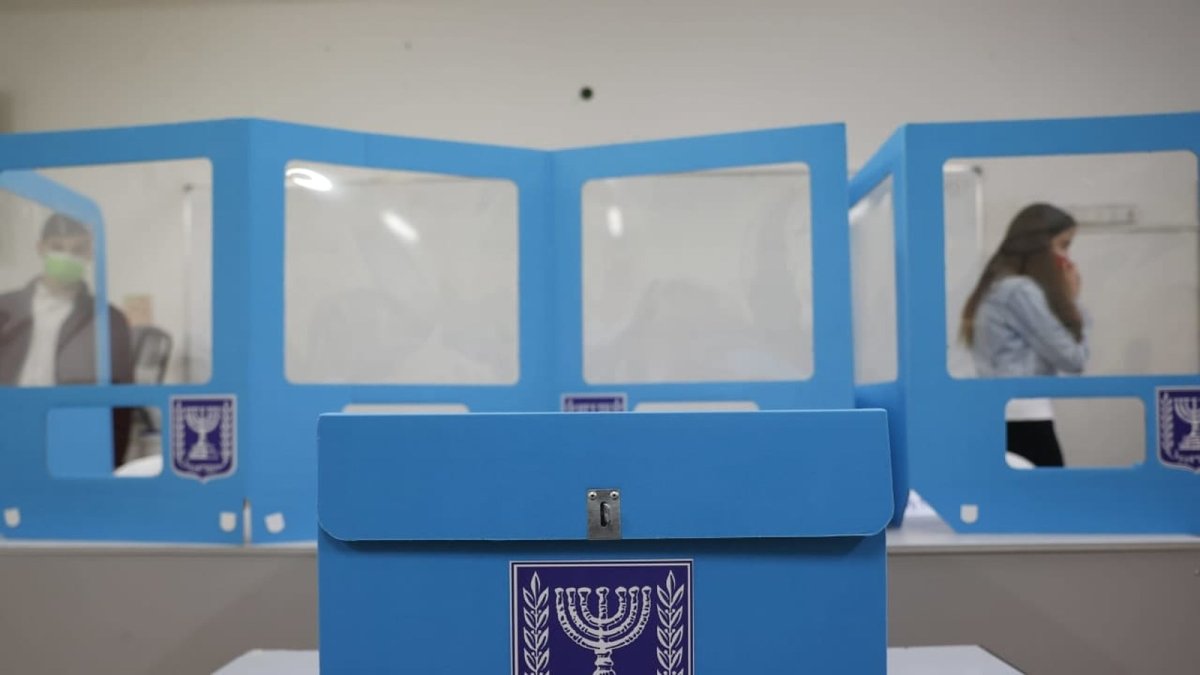
Army Radio reported on August 5 that polling stations will operate deep inside Lebanon, Syria and Gaza to serve combat troops positioned beyond Israel’s borders, a deployment not undertaken in decades. Until now soldiers have voted only at established bases in the West Bank; extending the franchise into active theaters requires secure transport of ballots, protected facilities and coordination between the IDF and the Central Elections Committee under regulations approved for this cycle.
The measure carries both logistical weight and symbolic weight for troops engaged in the multi-front conflict that began after October 7. By enabling voting at forward positions the military underscores that service members retain full civic rights even while operations continue, reinforcing the principle that democratic participation persists amid sustained hostilities.
Privacy Ruling Protects Voter Identities
Justice Noam Sohlberg ruled this month to prohibit party observers from announcing the identities of voters who have cast ballots, restoring privacy protections. Former deputy attorney-general Mike Blass stated the decision prevents disclosure of sensitive political views under Israel's Privacy Protection Law and the Basic Law: Human Dignity and Liberty. The ruling specifically addresses risks at sensitive sites such as hospitals, shelters for abused women and facilities for people with disabilities.
Campaign Timeline Advances Toward October 27
Party primaries concluded in recent weeks, including Likud on August 4 and the Religious Zionist Party on July 26. Parties must submit final lists to the Central Elections Committee by September 9. Campaign broadcasts on television and radio begin October 13 for the 21-day period allowed under law, with additional airtime allocated based on current Knesset seats. Overseas diplomatic missions start voting on October 20.
Political Field Faces War and Disinformation Risks
Regional Context: Voting Amid a Multi-Front War
Israel's decision to establish polling stations inside Gaza, Lebanon and Syria for active-duty troops places the October 27 vote inside active combat zones that have remained open since the October 7, 2023 Hamas attack. These forward locations sit against the backdrop of continued Houthi strikes on Saudi Red Sea energy routes and commercial shipping, as well as the sustained U.S.-Iran confrontation over the Strait of Hormuz and Iranian oil exports that persisted through the summer of 2026. By conducting an election under these conditions, Israel demonstrates to both regional adversaries and Western allies that its democratic institutions continue to function even while military operations span multiple fronts.
The Central Elections Committee's deployment of dedicated stations for soldiers and evacuees displaced since October 7, 2023, further signals continuity of governance amid instability that includes Iranian proxy activity from Yemen to the northern borders. Observers in Washington and European capitals are likely to interpret the orderly process as evidence that Israel can maintain internal political competition without pausing its security posture, a message reinforced by the fact that the outgoing government completed its full term despite the ongoing multi-front campaign.
Analysis and What This Means
The combination of soldier voting provisions, evacuee access measures and the one-year mandatory AI disclosure rule on campaign materials illustrates a deliberate effort to balance wartime logistics with safeguards against disinformation. Justice Noam Sohlberg's committee directives on deepfake labeling, paired with the bar on party observers announcing voter participation, address both the practical needs of troops positioned in Gaza, Lebanon and Syria and the growing risk of synthetic media distorting the campaign. These steps come as Israel records the second-highest frequency of elections among OECD parliamentary democracies, underscoring the institutional pressure to preserve trust when the vote occurs only weeks before results are certified on November 4.
Between now and October 27, attention will center on whether the new disclosure requirements limit the spread of manipulated content involving figures such as Netanyahu, who is running for a twelfth term while his corruption trial continues, and Gadi Eisenkot's Yashar party, which has risen in recent surveys. If the rules prove effective, they could serve as a reference for other democracies confronting AI-driven interference during periods of conflict, though their success will depend on consistent enforcement by the Central Elections Committee and rapid adjudication of any violations in the final weeks of the race.
The new rules will test Israel's ability to conduct an orderly vote while troops remain deployed in Gaza, Lebanon and Syria and while evacuees await return. Observers will watch how the deepfake requirements and expanded polling access affect turnout and campaign conduct in the weeks ahead.
Benjamin Netanyahu, Israel’s longest-serving prime minister, enters his twelfth campaign while his corruption trial continues, creating a high-stakes backdrop for the October 27 vote. Former IDF chief of staff Gadi Eisenkot’s new Yashar party has registered early polling gains, illustrating how security credentials translate into electoral momentum during wartime. These dynamics unfold against the reality that Israel holds the second-most frequent elections among OECD parliamentary democracies, according to the Israel Democracy Institute.
The new disclosure rules and privacy protections therefore function as immediate safeguards against AI-driven interference that could distort an already compressed campaign period. Observers note that the combination of technical mandates and institutional adjustments tested in this election may supply a practical reference for other democracies confronting similar pressures of frequent voting cycles and sophisticated disinformation threats.
By Hannah Berg, Staff Writer
This article was produced with AI-assisted research and editorial support. Reporting is based on sources cited in the article.
What's Your Reaction?
 Like
0
Like
0
 Dislike
0
Dislike
0
 Love
0
Love
0
 Funny
0
Funny
0
 Wow
0
Wow
0
 Sad
0
Sad
0
 Angry
0
Angry
0
Israel Correspondent at Global1.News. Based in Tel Aviv, covering Israeli politics, security, technology, and society. Provides balanced, deeply-sourced reporting on one of the most closely-watched regions in the world.










Comments (0)