
Is Bangladesh Sending Human Rights Violators Abroad as Peacekeepers?
Bangladesh’s peacekeeping program has long been a source of national pride and a lucrative revenue stream, yet the same troops that have been lauded abroad are also the ones most implicated in serious human‑rights violations at home.
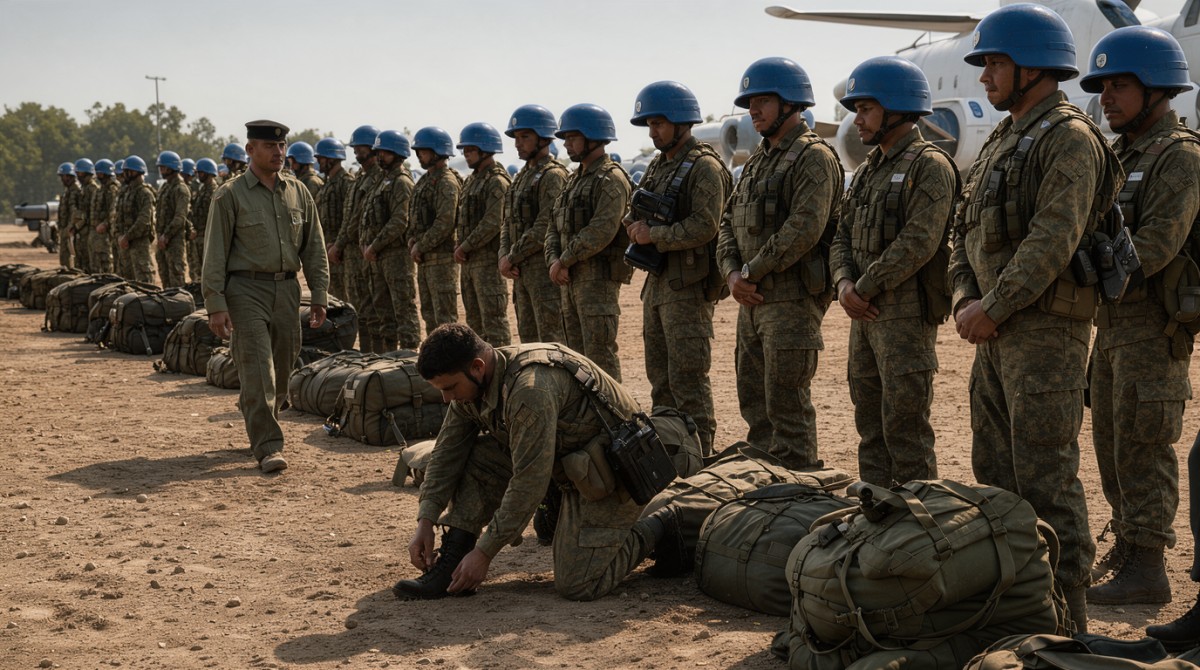
Bangladesh’s peacekeeping program has long been a source of national pride and a lucrative revenue stream, yet the same troops that have been lauded abroad are also the ones most implicated in serious human‑rights violations at home. The recent dissolution of the Rapid Action Battalion (RAB) and its replacement by the Special Response Battalion (SRB) has not altered the underlying problem: officers with documented records of killings, enforced disappearances and torture continue to be deployed to United Nations (U.N.) missions, where they risk repeating the same abuses against civilians they are meant to protect.
From RAB to SRB: A superficial rebranding
The Bangladeshi government announced on 15 September that the RAB, a unit formed in 2004 under a Bangladesh Nationalist Party (BNP) administration, would be dissolved and succeeded by the SRB. The change was presented as a reform, but the SRB Act transferred all of RAB’s manpower, powers, funds and records to the new force. As Transparency International Bangladesh warned, without independent oversight the SRB could simply inherit RAB’s culture of impunity. The act also allowed military officers to continue being posted to the renamed unit, meaning that the same individuals who served in RAB are now serving in SRB.
Human‑rights groups note that the core issue is not the unit’s name but the personnel. RAB officers were on loan from the army, navy, air force and police; when their tours ended they returned to those services, which remain the primary suppliers of Bangladesh’s peacekeepers. The rebranding therefore does little to break the pipeline that channels abusive officers from domestic security duties to overseas missions.
The scale of Bangladesh’s peacekeeping contribution
Bangladesh has been a major contributor to U.N. peacekeeping since 1988 and was the top troop‑contributing country from 2021 to 2023. In fiscal year 2023‑24 alone, the Ministry of Foreign Affairs reported earnings of about 8.62 billion taka (approximately US$73 million) from peacekeeping activities. Over 23 fiscal years through 2022‑23, the armed forces accumulated roughly 279.41 billion taka from allowances, equipment rentals and other mission‑related revenues. These figures illustrate how deeply intertwined peacekeeping is with Bangladesh’s defence budget and why the government is reluctant to curtail the flow of troops abroad.
The financial incentive is reinforced by the fact that peacekeeping missions are often well‑paid assignments for officers after their service in units such as RAB. The United Nations pays allowances directly to the peacekeepers, while equipment rentals and other logistical costs flow back to the Bangladeshi treasury, creating a self‑sustaining loop that rewards the deployment of large numbers of troops.
Documented abuses by RAB personnel
RAB’s record of human‑rights violations is extensive. In 2014, a court case in Narayanganj resulted in death sentences for 16 RAB members after the abduction and murder of seven people. United States sanctions in 2021 cited more than 600 enforced disappearances linked to the battalion since 2009. A Commission of Inquiry on Enforced Disappearances, established after the ouster of Prime Minister Sheikh Hasina in August 2024, examined 1,569 complaints and found RAB implicated in roughly a quarter of them. The commission identified prima facie evidence against 82 officers, including 40 from RAB and 11 from the Directorate General of Forces Intelligence (DGFI).
Physical evidence of the unit’s brutality was uncovered at a RAB site where inspectors found a bricked‑over entrance to cells too small for a prisoner to lie down. In October 2025, prosecutors charged 28 individuals—23 of them serving or retired army officers—for disappearances and torture in two interrogation cells, one operated by RAB and the other by DGFI. These cases demonstrate that the abuses were not isolated incidents but part of a broader pattern of state‑sanctioned violence.
Continuity of abuse under successive governments
The pattern of extrajudicial killings persisted through multiple administrations. Rights organization Odhikar recorded at least 40 extrajudicial killings in the first 14 months of the interim government led by Nobel laureate Muhammad Yunus. In January 2025, BNP youth leader Towhidul Islam died hours after detention by a joint force, with visible signs of torture. Under the newly elected BNP government, Ain o Salish Kendra documented 11 extrajudicial killings in the first half of 2026. These figures indicate that the change of government in 2024 did not translate into a substantive reduction in state‑perpetrated violence.
The persistence of abuse is further underscored by the fact that many of the officers involved in these violations continued to serve in the security forces, and by extension, remained eligible for deployment to U.N. missions. The continuity of personnel across regimes makes it difficult for any single political shift to break the cycle.
Peacekeeping missions as a conduit for impunity
International scrutiny of Bangladeshi peacekeepers has revealed troubling incidents abroad. United Nations records confirm four substantiated cases of sexual exploitation and abuse involving Bangladeshi personnel, including an incident in the Central African Republic where two soldiers raped a minor. In 2019, the U.N. Committee Against Torture warned that former RAB officers were frequently sent on peacekeeping duties, a concern echoed by a 2024 Deutsche Welle report that more than 100 RAB officers had participated in missions, including 40 after the U.N. issued its warning.
Despite these warnings, the Bangladeshi army’s press office dismissed the allegations as “false and fallacious,” claiming a spotless record abroad. However, the U.N.’s own data contradicts this narrative, highlighting a gap between official statements and on‑the‑ground realities. The lack of robust vetting mechanisms means that officers with histories of torture, enforced disappearances or sexual abuse can be redeployed internationally, potentially exporting the same patterns of abuse to fragile host societies.
Weak oversight and the failure of screening mechanisms
Human Rights Watch has identified three structural factors that keep the route from domestic abuse to international deployment open. First, the personnel themselves remain on loan from the armed services, and the SRB Act simply transferred them to a new name without vetting. Second, oversight of Bangladesh’s security forces is weak. Although the interim government in 2025 brought the National Human Rights Commission into compliance with the Paris Principles—granting it authority to investigate public officials without prior government approval—the subsequent BNP administration repealed this ordinance, reverting to a 2009 law that bars the commission from probing security forces.
Third, the U.N. system itself lacks stringent pre‑deployment screening. The first stage relies on the officer’s self‑certification of a clean record, followed by a government endorsement. The U.N. human‑rights office then conducts a limited check. Human Rights Watch argues that governments that conceal or deny abuses cannot meet the required standard, yet the current process allows Bangladesh to submit personnel with questionable histories. In 2025 the U.N. human‑rights office proposed that Bangladesh establish an independent screening mechanism, but no concrete steps have been taken to implement it.
Implications for international peacekeeping and policy recommendations
The continued deployment of officers implicated in serious human‑rights violations raises fundamental questions about the credibility of U.N. peacekeeping. If troops sent to protect civilians abroad are themselves perpetrators of abuse, the mission’s legitimacy is undermined, and host‑nation populations may develop mistrust toward the international community. Moreover, the financial incentives for Bangladesh to maintain a large peacekeeping contingent risk outweighing the ethical imperative to ensure that only vetted, accountable personnel are deployed.
To address these challenges, a multi‑pronged approach is needed. First, Bangladesh must enact a comprehensive vetting process that includes independent verification of each candidate’s record, as recommended by Transparency International Bangladesh. Second, the National Human Rights Commission should be restored to its Paris‑Principles‑compliant status, allowing it to investigate security‑force personnel without political interference. Third, the U.N. should tighten its screening criteria, moving beyond self‑certification to require third‑party verification for all contributing countries. Finally, civil‑society monitoring and transparent reporting of peacekeeping deployments should be institutionalised, ensuring that any allegations of misconduct are promptly investigated and, if necessary, result in the removal of offending personnel from missions.
Only through such systemic reforms can Bangladesh’s peacekeeping contributions be reconciled with international human‑rights standards, and the dangerous cycle of sending domestic violators abroad be broken.
This article was produced with AI-assisted research and editorial support. Reporting is based on the source material cited below. Sources: The Diplomat; thediplomat.com; Global1.News (16 November 2026).
By Kenji Tanaka, Staff Writer
What's Your Reaction?
 Like
0
 Dislike
0
 Love
0
 Funny
0
 Wow
0
 Sad
0
 Angry
0

Japan Correspondent at Global1.News. Tokyo-based voice covering Japanese politics, technology, economy, and culture. Tracks the intersection of tradition and innovation in one of the world's most dynamic societies.













Comments (0)