
America Loses Its Measles-Free Status After 26 Years
PAHO withdrew the United States' measles elimination status on Tuesday after 26 years, finding the virus has circulated continuously for more than a year. The CDC has confirmed 5,412 cases in 2026; state health departments report ten deaths, the CDC six.
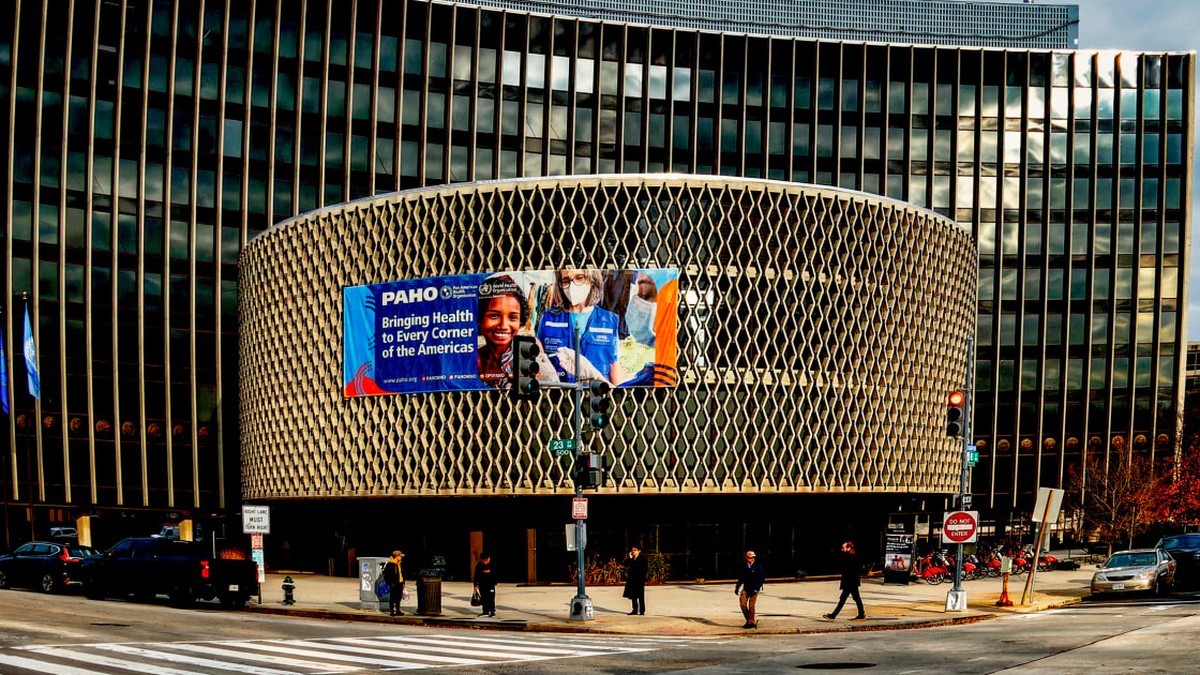
The Pan American Health Organization announced Tuesday that the United States has lost its measles elimination status, ending a run that began in 2000. PAHO's director accepted the recommendation of an independent commission that found endemic transmission has been re-established here. The designation is gone — what replaces it is a country where the virus now circulates continuously.
America Loses Its Measles-Free Status After 26 Years
WASHINGTON, D.C. — The decision, delivered by PAHO director Dr. Jarbas Barbosa da Silva Jr., follows four days of deliberation in Washington by an eight-member panel of public health experts.
The Designation Is Gone
Measles transmission is considered re-established in a country when sustained spread from a single genotype and lineage persists for more than 12 months. That is the criterion PAHO applied, and it is the criterion the United States has now failed.
The independent Measles and Rubella Elimination Regional Monitoring and Re-Verification Commission did not reach its conclusion casually. It evaluated genetic data from "homegrown" cases — those not linked to international travel — to determine whether outbreaks across state lines were connected. It weighed vaccination coverage, the quality of measles surveillance, and whether countries have sufficient strategies and resources to respond to outbreaks.
Only then did the commission recommend that the measles elimination status of the United States be withdrawn. PAHO's director accepted that recommendation on Tuesday.
"Losing a measles elimination status has broader implications than losing a public health designation," Barbosa said. "It means the virus has circulated for a prolonged period of time, putting families and communities at risk of a preventable illness, hospitalization and death."
Twenty-Six Years, Ended on a Tuesday
The United States was declared to have eliminated measles in 2000. In that year, the CDC reported just 85 cases nationwide.
The country held the status through close calls. In 2019, the U.S. nearly lost elimination with almost 1,300 measles cases from a large outbreak in New York and cases in 30 additional states.
The regional picture shifted first. The Americas became the first and only WHO Region to eliminate measles, in 2016. The region lost that status in November 2025 after endemic transmission was re-established in Canada. Canada has since interrupted transmission associated with the outbreak that resulted in the loss of its elimination status, PAHO said.
There is precedent for recovery. After endemic transmission was re-established in Venezuela and Brazil in 2018 and 2019 respectively, countries worked together to interrupt transmission and the region regained its measles elimination status in 2024. The United States now faces the same climb.
The Numbers That Brought It Here
As of 12 November 2026, the CDC had confirmed 5,412 measles cases in the United States this year. That is more than double last year's count and the highest since 1991, NBC News reported.
Johns Hopkins University's tracker puts the 2026 U.S. total higher still, at 5,739 cases.
The regional toll is starker. The Region of the Americas has reported 58,213 confirmed measles cases and 82 deaths as of 13 November 2026, compared with 12,596 cases during the same period last year, according to PAHO.
The baseline for comparison is almost unrecognizable. The U.S. used to average about 180 cases a year, mainly driven by imported cases from abroad, ABC News reported.
Home-grown outbreaks have occurred in Texas, Utah, South Carolina and Pennsylvania. The most recent CDC weekly figures by rash onset date show 224 cases in the week beginning 1 November 2026, and 31 in the week beginning 8 November 2026.
Six Deaths or Ten
The official federal count and the count from state health departments do not match, and the gap has fuelled tensions between federal and state health authorities over how measles fatalities are classified and counted.
The CDC has confirmed six measles-related deaths in 2026. State health officials in Pennsylvania, Wisconsin and New York have reported 10 deaths combined: seven in Pennsylvania, one in New York and two in Wisconsin, according to CNBC.
The gulf is not a rounding difference. It is what happens when two systems apply different rules to the same question of whether a death should be recorded as measles-associated — and on this question the states, not the federal agency that just lost its elimination status, are carrying the higher number. Pennsylvania's Department of Health confirmed its seventh measles-associated death.
Wisconsin: 649 Cases and Two Children
As of 13 November 2026, the Wisconsin Department of Health Services had reported 649 measles cases across 20 counties since August 2026 — the highest number of cases in the state in more than 35 years.
Wisconsin reported a second pediatric measles-associated death on 13 November 2026, in Grant County. The state reported its first measles death, an infant, at the beginning of November 2026 — the state's first death from the disease since 1990.
"Preventing the spread of measles takes action from all of us," said Paula Tran, Wisconsin state health officer and administrator of the Division of Public Health.
Almost all Wisconsin cases are in unvaccinated people, and public health officials believe the true count is likely well over 1,000, PBS Wisconsin reported. Johns Hopkins' tracker shows Wisconsin with 613 cases in 2026 and 232 in the most recent two weeks.
What Elimination Actually Meant
Elimination is an international designation reflecting an absence of local measles transmission for at least 12 months. It is not eradication. The virus remains endemic in much of the world, and the designation never meant the United States was sealed off from it.
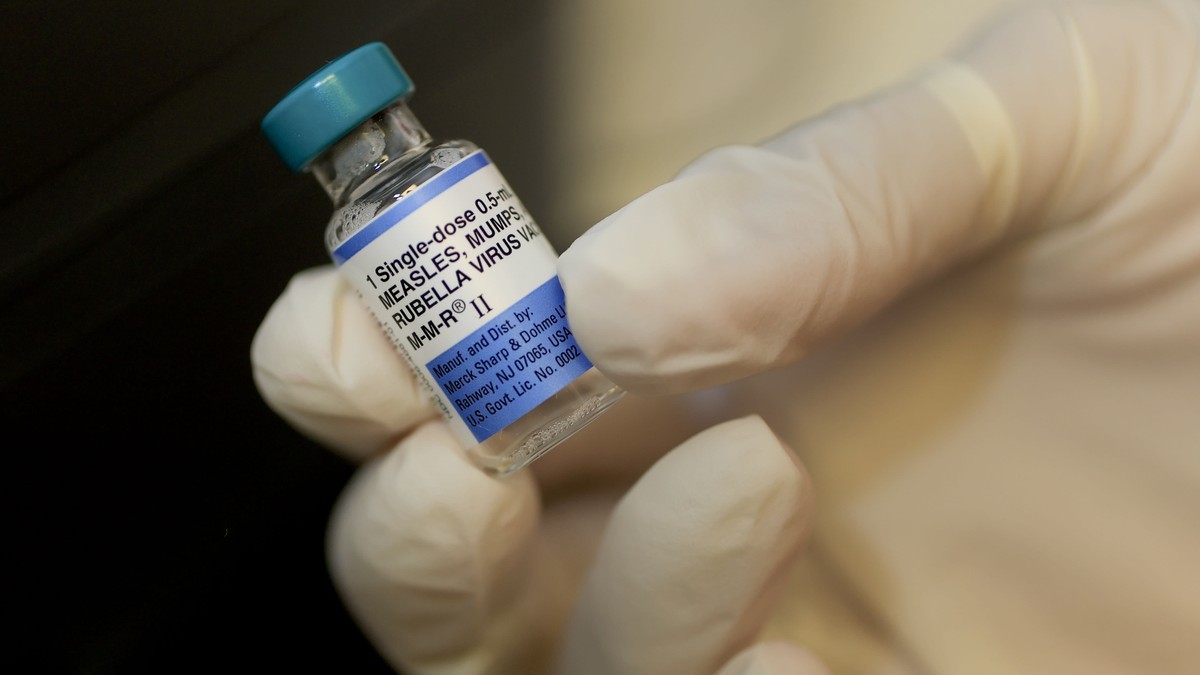
What protected Americans was vaccination. Two doses of the MMR vaccine are about 97 percent effective at preventing measles.
The path back to elimination requires achieving and sustaining at least 95 percent coverage with both doses of the measles vaccine in every community, backed by strong surveillance and effective outbreak response, PAHO said.
Barbosa put the stakes plainly. "The Elimination of measles is not a trophy that a country wins once and places on a shelf," he said. "It is an achievement that must be protected every day by closing immunity gaps and ensuring that every community is reached."
The CDC's Answer: One Hundred Million Dollars
The CDC's director rejected the idea that the designation is what stands between Americans and the virus.
"The measles elimination designation is not what protects Americans. Vaccination does," said CDC Director Dr. Erica Schwartz. "We know where transmission is occurring and we've invested $100 million in state and local health departments to reach those communities. Losing a designation doesn't mean we abandon an evidence-based approach. It means we remain focused on stopping outbreaks."
Since August, the CDC has provided approximately $100 million in additional funding nationwide to strengthen prevention and response to measles and other vaccine-preventable diseases through most of 2027. That includes $50.2 million through the Strengthening Vaccine-Preventable Disease Prevention and Response cooperative agreement and $49.8 million through the Epidemiology and Laboratory Capacity cooperative agreement.
Barbosa credited the effort. "We commend the significant efforts undertaken by the United States to manage the measles outbreak through strengthened surveillance, timely case detection and response, targeted vaccination activities, and coordination across the public health system," he said.
The Department of Health and Human Services said it "will continue working to stop transmission, close vaccination gaps, strengthen outbreak response, and protect Americans from measles." Secretary Kennedy and Schwartz continue to recommend MMR vaccination as the most effective way to prevent measles, the CDC said.
What the Doctors Say
"Losing measles elimination status is an historic public health setback," said Dr. John Brownstein, epidemiologist and ABC News medical contributor. "We spent decades building the vaccination coverage and public health infrastructure needed to stop this virus from spreading continuously in the United States. To see that progress reversed is a stark reminder that these achievements are not permanent and cannot be taken for granted."
Dr. Deb Palazzi, president of the Pediatric Infectious Diseases Society, said the warning signs were visible long before Tuesday. "The United States achieved and maintained measles elimination status for a quarter century," she said. "Though the announcement may have just occurred, alarms that it was in jeopardy have been sounding for years. Each recent school year that began with lower measles-mumps-rubella coverage nudged us further down this slope. The pandemic then accelerated the decline of confidence in vaccines and public health policy."
PIDS called for returning and maintaining the MMR immunization rate at 95 percent.
Dr. Michael Ybarra, PhRMA's chief medical officer, called the loss "a sobering and entirely preventable public health failure that has already cost lives and now puts more at risk."
Two Countries Beside It
The United States is not alone in Tuesday's decision. The commission concluded that endemic measles transmission has now been re-established in Bolivia, Mexico and the United States, and recommended that the elimination status of all three be withdrawn.
PAHO is providing direct technical support for outbreak response in Brazil, Bolivia, Colombia, Guatemala, Honduras and Peru. The agency says it is also backing vaccination campaigns aimed at low-coverage communities, strengthening epidemiological and laboratory surveillance, and supporting rapid-response teams.
Barbosa framed the danger as regional rather than national. Gaps in vaccination coverage persist worldwide, and the same trend is now working its way through the Americas.
Canada, which triggered the region's loss of status in November 2025, has interrupted transmission associated with the outbreak that resulted in the loss of its elimination status, PAHO said. That is the template the United States is now being asked to follow.
The Road Back
Regaining measles elimination status will require sustained national and state leadership and coordinated action across public health agencies, health care providers, laboratories and communities, the CDC said.
PAHO's route is a number: at least 95 percent coverage with both doses of the measles vaccine in every community, backed by surveillance that finds cases fast and a response that contains them.
The country has done it before. After Venezuela and Brazil lost status, the region clawed its way back by 2024. What is required now is what worked then: coverage high enough, and surveillance fast enough, that a single case cannot become a chain.
What ended on Tuesday was a certificate. What continues is a virus with a head start, a vaccination rate that has to climb in every community, and a federal government and a set of state health departments that still cannot agree on how many people it has killed.
If you do not know your own vaccination record, ask your doctor. Two doses. That is the whole defense, and it has always been the whole defense.
By Jessica Ali, Staff Writer
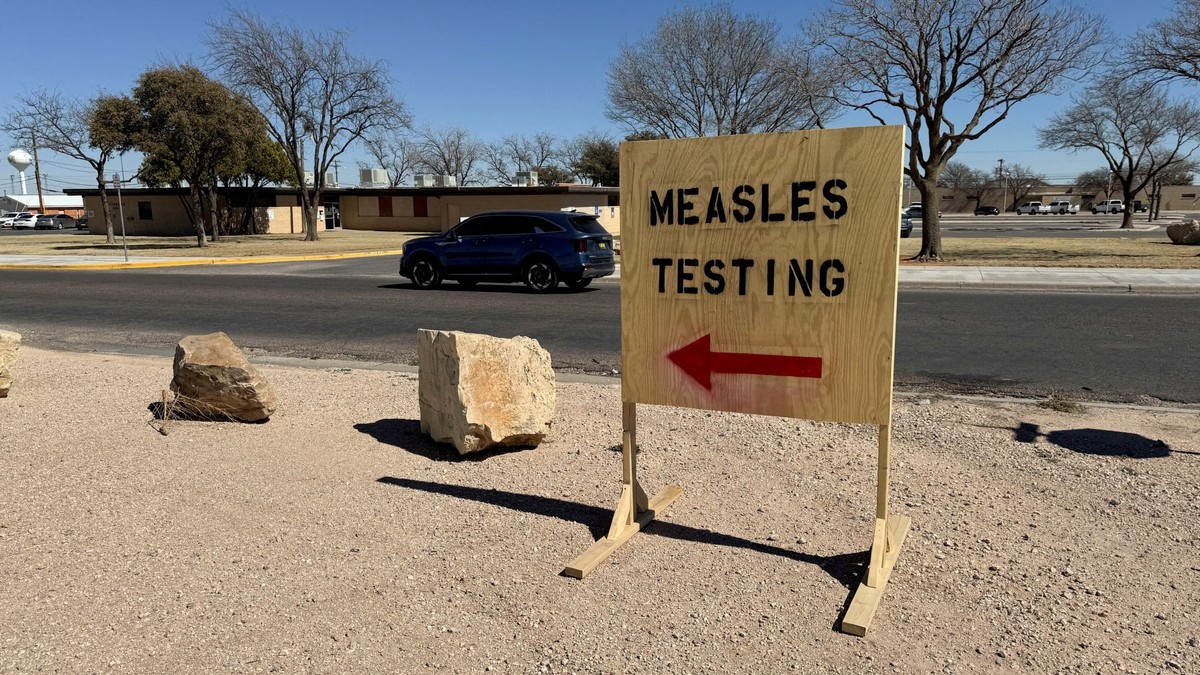
This article was produced with AI-assisted research and editorial support. Photographs: the Pan American Health Organization headquarters in Washington, D.C. (Tony Quinn/Sipa USA via AP); a vial of the M-M-R II measles, mumps and rubella vaccine (Joe Raedle/Getty Images); a measles testing sign in Seminole, Texas, on February 25, 2025 (Sebastian Rocandio/Reuters, file). Cover: Global 1 News editorial image. Sources: PAHO; CDC; Wisconsin Department of Health Services; NBC News; ABC News; CNBC; Al Jazeera; Reuters; Johns Hopkins University International Vaccine Access Center; Pediatric Infectious Diseases Society; PhRMA; CIDRAP.
What's Your Reaction?
 Like
0
 Dislike
0
 Love
0
 Funny
0
 Wow
0
 Sad
0
 Angry
0

Editor-in-Chief at Global1.News. Atlanta-based journalist who cuts through the BS and tells it like it is. Lead anchor, host, and the voice you hear when the spin stops and the truth starts.












Comments (0)