
Besieged in Qusra: Settlers Trap Palestinian Families as IDF Fails to Intervene
Illegal Jewish settlers besieged two Palestinian families in Qusra, near Nablus, this week, setting up an outpost outside their homes as Israeli security forces failed to evict them despite sharp IDF condemnation. The standoff underscores surging West Bank settler violence.
In a recent i24NEWS English report, Israeli security forces failed to evict illegal Jewish settlers from an outpost they established directly in front of Palestinian homes in the village of Qusra, south of Nablus, in the occupied West Bank. The standoff, now in its fourth day, has left two Palestinian families trapped in their homes by around a dozen settlers and exposed a deepening crisis in the IDF's willingness to enforce its own laws in the territory it controls.
Besieged in Qusra: Settlers Trap Palestinian Families as IDF Fails to Intervene
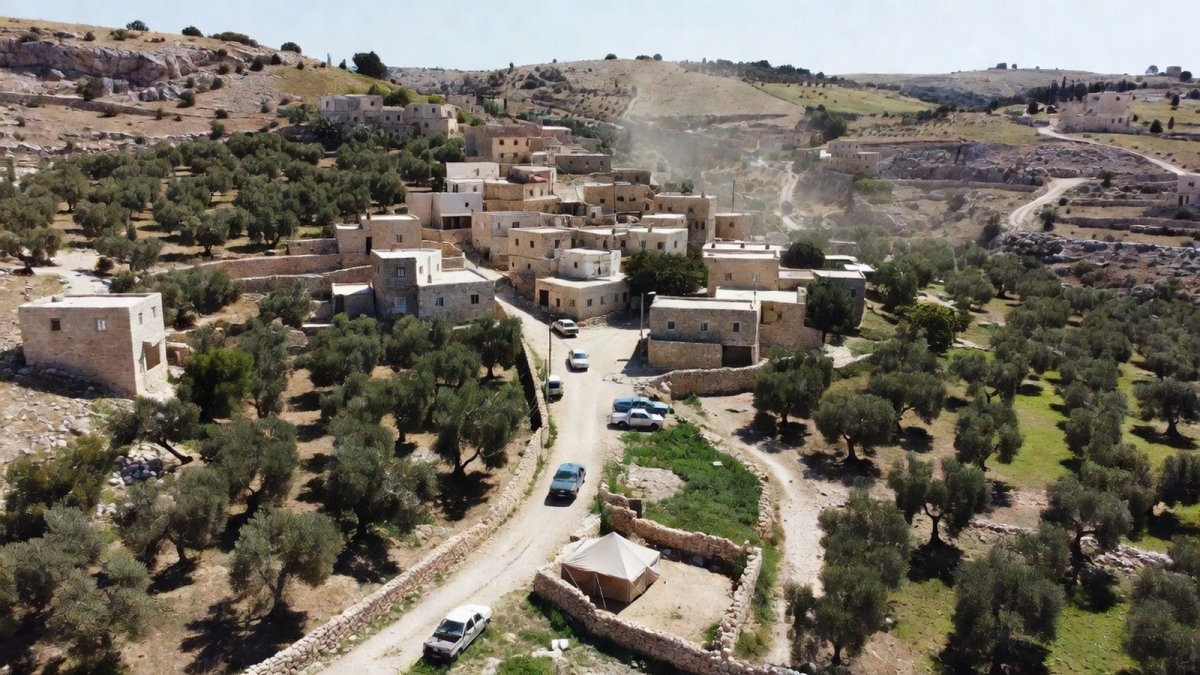
Jerusalem, Israel — The village of Qusra, a Palestinian community of roughly 4,000 residents in the hills south of Nablus, has become the flashpoint of a confrontation testing the limits of Israeli authority. Since Sunday, settlers have laid siege to the homes of the Abu Ridi and Hassan families, setting up an illegal outpost just meters from their front doors, cutting off their water and power, and blocking all access to the outside world. The IDF, which holds security responsibility in this Area B zone, has so far failed to remove the settlers despite condemning their actions in unusually sharp language.
On the Ground: A Family Trapped in Qusra
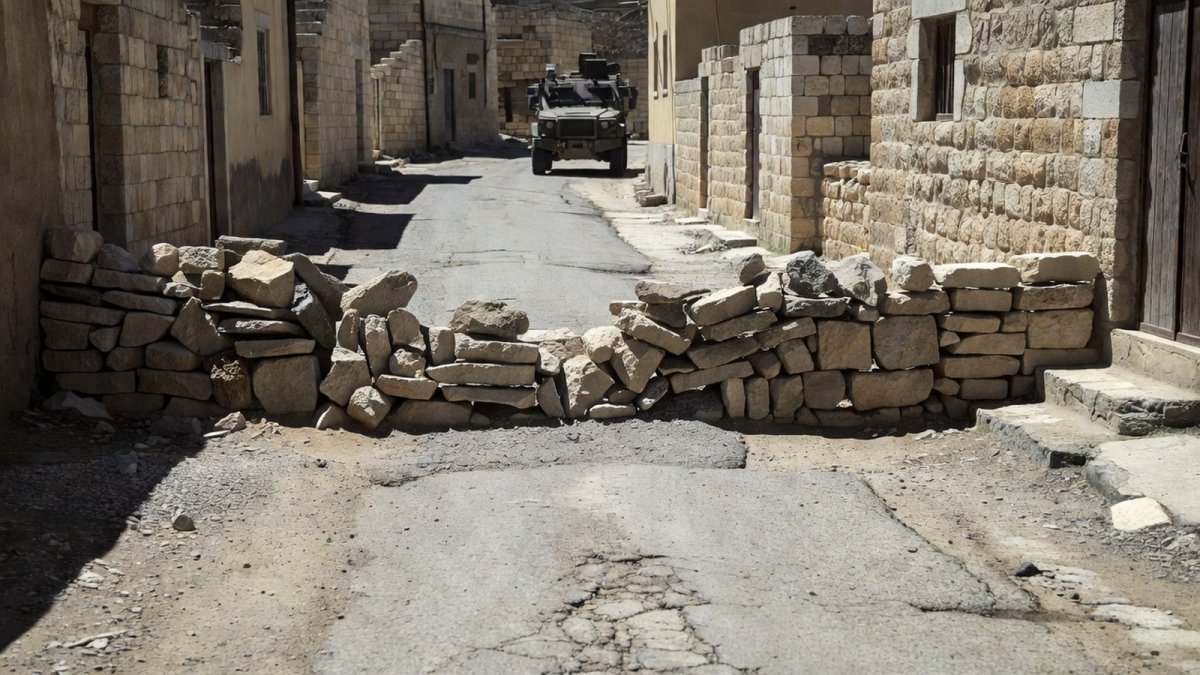
For the Abu Ridi and Hassan families, the crisis is a daily, terrifying reality. Settlers tore down a wall outside the Abu Ridi home on Sunday evening, using the stones to block the road. Seven people, including two young girls, have been unable to leave their homes, while other Palestinians have been physically prevented from reaching them with supplies. Water and power were cut off, food stocks ran dangerously low, and the families appealed for help on social media.
Aysha Hassan told Reuters: "They tried to break the gate to the house and started throwing stones at us, cursing and insulting us. We (are) dying of fear, extremely terrified." Qusay Abu Ridi wrote on Facebook: "We are living in our own home, on our own land, and we are asking for nothing more than the right to live safely and with dignity." The village's location in Area B is critical: under the Oslo Accords, the Palestinian Authority has administrative control, but Israel retains full security responsibility. The IDF is not just permitted to intervene—it is legally and operationally obligated to do so.
On Tuesday, the Israeli human rights group Yesh Din appealed to the head of the IDF's Central Command, Maj. Gen. Avi Bluth, demanding he protect the residents, evacuate the outpost, and hold the settlers accountable. That evening an ambulance was finally allowed through to deliver food and evacuate a child for medical treatment. For Qusra's residents, the siege is not an anomaly but a pattern: Mayor Abdel Azim Wadi cites "a clear and sustained pattern of targeting Qusra," noting that last month a newly completed mosque was set on fire, with Hebrew graffiti sprayed nearby.
Security Forces Fail to Clear the Outpost
The IDF's response has been a study in contradiction. Late Tuesday, the military condemned the new outpost as "illegal, reprehensible, and unacceptable activity that harms the residents of the areas and disrupts their daily lives"—one of its sharpest public criticisms of settler land seizures to date. Early Wednesday, Maj. Gen. Avi Bluth arrived with senior officers, met residents, and voiced his "grave concern." Yet when push came to shove, the security forces faltered.
On Wednesday, confrontations broke out between soldiers and border police and a large crowd of settlers. Security forces used tear gas and stun grenades and confiscated the canopy under which the settlers sheltered. But witnesses reported that the troops then withdrew after failing to clear the outpost, leaving about a dozen settlers in place. The IDF insisted that "Border Police forces evacuated the tent and are working to evacuate the civilians who were staying there. The incident is still ongoing." It later told The National it was still "operating in the area to enforce the closed military zone order," contradicting reports of a full pullout.
Perhaps most damning is the revelation that the first Israeli soldiers who arrived at the scene were filmed praying with the settlers. The IDF has confirmed that disciplinary action will be taken against those security personnel "who were documented at the site several days ago." The image encapsulates the profound tension inside the Israeli security establishment. On Monday, settlers also blocked Israeli journalists from the left-leaning Haaretz newspaper from reaching the properties. Haaretz journalist Matan Golan said soldiers "stood by" as she was attacked by settlers while trying to visit the besieged family. Reporters were told the area was a closed military zone, but the order was not enforced on the settlers themselves.
A Wave of Violence Across the Northern West Bank
The Qusra siege is the latest eruption in a wave of settler and military violence that has swept the northern West Bank since the end of July. The trigger was a deadly clash between settlers and villagers in Tell (Tal), near Nablus, on July 24, in which two Israeli reservists and four Palestinians were killed. Israeli ministers then pledged a severe response, including the demolition of an unnamed Palestinian refugee camp.
On Tuesday, Israeli forces arrested at least 23 Palestinians across the West Bank, including two children, one of whom has a disability, and demolished several homes, including the family home of Farouq Ramadan in Tal—one of the four Palestinians killed in the July 24 confrontation. Another home was demolished near Yatta in the Hebron governorate and a water well filled in, displacing nine Palestinians. Settlers attacked Palestinians ploughing their lands in Al-Mughayyir, wounding six people including three children and two women, and burned part of the valley. In Khirbet ar-Ras al-Ahmar, settlers destroyed part of a water pipeline.
The pattern is clear. In July, settlers surrounded a Palestinian home in the village of Jalud, near Qusra, for more than two weeks; the owners fled, and settlers took over the property, where they remain. The Qusra siege follows the same playbook: establish a presence, create a climate of fear, and wait for the families to leave. The IDF's failure to break the cycle sends a chilling message across the northern West Bank: the state will not protect you.
Regional Context: Area B, Settlements and the Oslo Framework
The West Bank, territory Israel captured in the 1967 Middle East war, is home to some three million Palestinians and about 500,000 settlers. According to the watchdog Peace Now, there are some 146 settlements and about 390 smaller outposts. All settlements are illegal under international law; outposts are set up without official Israeli authorisation. Most settlement activity and settler violence have historically taken place in Area C, where Israel has full military and civil control. The Qusra siege is notable because it unfolded in Area B, where the Palestinian Authority has administrative control but Israel holds security responsibility.
In Area B, the IDF cannot claim ignorance or lack of jurisdiction: it is the sovereign security actor, and its failure to act is a conscious choice. This is not a case of a rogue outpost in a remote Area C hilltop; this is a direct challenge to the IDF's authority in an area where it is the sole enforcer of law and order. The fact that the settlers remain, and that the IDF has withdrawn, suggests a deeper problem: the politicisation of the security establishment and the growing influence of settler activists within the ranks.
Successive Israeli governments have expanded settlements, but Prime Minister Benjamin Netanyahu's coalition, in power since December 2022, has accelerated the process. The government contains radical settler figures, many of whom want to annex the territory outright. That reality has created a permissive environment for settler violence. When ministers invoke "biblical, historic and legal rights" to the land, and the coalition depends on settler parties' support, the IDF finds itself caught between legal obligations and political masters. The result is a paralysis that leaves families like the Abu Ridis and Hassans trapped and erodes the rule of law.
Diplomatic and International Reactions
On Tuesday, UN Deputy Special Coordinator for the Middle East Peace Process Ramiz Alakbarov told the Security Council that "settler violence has reached unprecedented levels," describing "the sobering human toll" and noting that the Nablus Governorate had been hit hard. UN figures show more than 1,430 incidents involving Israeli settlers this year, with casualties or property damage affecting approximately 260 Palestinian communities. Seventy-six Palestinians, including 18 children, have been killed in the West Bank this year by Israeli forces or settlers; three Israelis, including one civilian, were killed in confrontations and an alleged ramming attack.
Since January 2023, 127 Palestinian communities have experienced full or partial displacement, 47 of them entirely, affecting more than 6,390 Palestinians. In 2026 alone, about 3,800 Palestinians, nearly half of them children, have been displaced by settler violence, demolitions and evictions. The UN says Israel has demolished an average of 122 Palestinian buildings every month this year.
Israel's Ambassador to the UN, Danny Danon, dismissed the idea that settlements were an obstacle to peace, saying they would remain and grow as Israel had "biblical, historic and legal rights" to the land: "The Security Council must understand a simple truth: we are not going anywhere." B'Tselem's executive director Yuli Novak countered: "What is happening in Qusra is not an isolated incident. Settler militias, backed by the Israeli military, are expanding their attacks into Palestinian villages and towns, seizing land, attacking homes and forcing families out. Israel's ethnic cleansing of the West Bank is accelerating and expanding in plain sight."
Analysis and What This Means
The Qusra standoff is a watershed moment for Israel's security establishment. The IDF has long prided itself on professionalism and adherence to the rule of law, even in the morally fraught environment of the West Bank. But images of soldiers praying with settlers, of border police withdrawing without clearing the outpost, and of a closed military zone enforced against journalists but not settlers, suggest a breakdown in that ethos. The promised disciplinary action against those soldiers is a small step that does little to address the systemic failure.
For the Netanyahu government, the crisis is a political tightrope. The coalition depends on the support of settler parties, and any move to forcibly evacuate the Qusra outpost would risk a political firestorm. Yet failing to act undermines the state's authority and its claim to be a law-abiding democracy. The government's West Bank policy, which has accelerated settlement expansion and given tacit support to settler ambitions, asks the IDF to enforce laws the political echelon has no intention of upholding.
For Palestinian communities in the northern West Bank, the message is clear: they are on their own. The Palestinian Authority, which has administrative control in Area B, has no security forces to protect them, and the IDF, which has the responsibility, has shown it will not act. The result is a vacuum filled by armed settlers operating with impunity. The Oslo framework, meant to provide a path to peace, has become a mechanism for creeping annexation.
Looking forward, the situation in Qusra is likely to deteriorate. The settlers who remain have no intention of leaving, and the families they besieged are running out of time. The IDF's claim that it is still "operating in the area" rings hollow to those who watched the troops withdraw. The coming days will test whether the security establishment can muster the will to enforce its own laws or will keep ceding ground to the most radical elements of the settler movement.
The siege of Qusra is a microcosm of the larger tragedy unfolding across the West Bank. It is a story of families trapped in their homes, of soldiers caught between their duty and their politics, and of a government that has chosen to look the other way. The world is watching, but so far, no one has acted. The question is not whether this crisis will end, but how—and at what cost.
By Hannah Berg, Staff Writer
This article was produced with AI-assisted research and editorial support. Reporting is based on sources cited in the article.
What's Your Reaction?
 Like
0
Like
0
 Dislike
0
Dislike
0
 Love
0
Love
0
 Funny
0
Funny
0
 Wow
0
Wow
0
 Sad
0
Sad
0
 Angry
0
Angry
0

Israel Correspondent at Global1.News. Based in Tel Aviv, covering Israeli politics, security, technology, and society. Provides balanced, deeply-sourced reporting on one of the most closely-watched regions in the world.













Comments (0)