
Israeli Opposition Seizes Knesset as Iran Threat Looms Over Security Decisions
In a video report aired by JNS TV on 23 November 2026, correspondents Josh Hasten and JNS CEO Alex Traiman outlined a convergence of political upheaval in Israel and escalating security concerns surrounding Iran’s possible development of chemical and biological weapons.
In a video report aired by JNS TV on 23 November 2026, correspondents Josh Hasten and JNS CEO Alex Traiman outlined a convergence of political upheaval in Israel and escalating security concerns surrounding Iran’s possible development of chemical and biological weapons. The segment linked the new parliamentary majority, backed by Arab parties, to a broader strategic dilemma: Israel’s ability to respond to Tehran’s emerging threats while Washington hesitates to authorize further strikes. The analysis also touched on related diplomatic developments, including new British sanctions on Israeli firms operating in Judea and Samaria, a controversial freeze on construction in the E1 area, and a series of policy moves in the United States that could shape Israel’s security calculus in the months ahead.
Opposition Bloc Takes Control of the Knesset
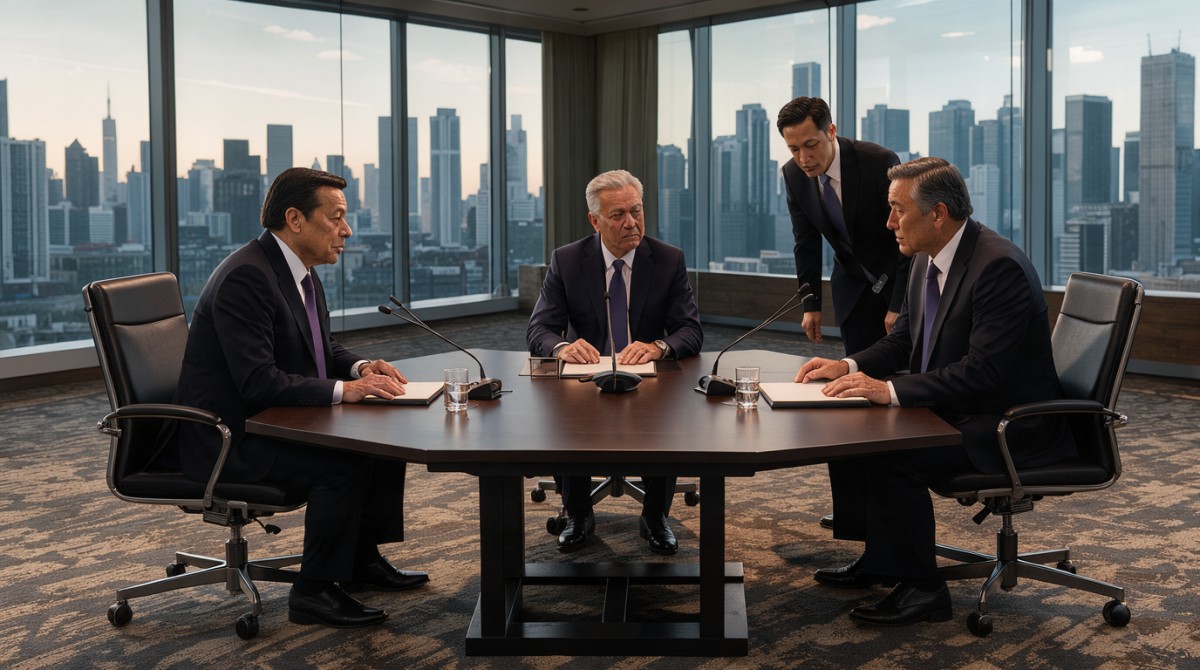
The video opened with a description of the latest parliamentary shift. Gadi Eisenkot’s bloc, which secured a majority with the backing of several Arab parties, has taken over the Knesset without forming a governing coalition. This arrangement means that while a formal government has not been established, the opposition now controls the legislative agenda.
According to the report, the bloc’s leader, Eisenkot, has been appointed speaker of the Knesset, a position that allows him to set the parliamentary timetable and influence which bills reach a vote. The hosts emphasized that this development effectively sidelines Prime Minister Benjamin Netanyahu’s agenda, at least in the short term, as the opposition can now block or amend legislation that the government wishes to advance.
The analysis highlighted that the opposition’s majority is built on Arab party support, which has historically aligned with Palestinian interests. This alignment raises questions about how the bloc will address issues such as the status of Gaza, the West Bank, and Israel’s security posture against external threats.
Political Deadlock and Its Security Implications
Hasten and Traiman warned that the political deadlock could leave Israel “dangerously exposed” to external threats, particularly from Iran. With no clear governing coalition, the ability of the Israeli security establishment to coordinate a rapid response to emerging threats may be hampered.
The report noted that former Prime Minister Yair Lapid’s previous concessions, such as the gas deal mentioned at the 15‑minute mark, are now being used by the opposition as a benchmark for what they consider to be “giving away” national assets. This rhetoric underscores a broader narrative that the opposition is positioning itself as a guardian of Israeli sovereignty against perceived concessions to both Palestinians and external actors.
In this context, the hosts argued that a caretaker prime minister, should one be appointed, would face a dilemma: whether to act unilaterally against Iran’s alleged chemical‑biological program without the full backing of a stable government, or to wait for a clearer political mandate that may never materialise under the current stalemate.
Iran’s Emerging Chemical and Biological Threat
The most alarming security concern raised in the video was the warning from IDF Chief of Staff Eyal Zamir about Iran’s potential development of chemical or biological weapons. Zamir’s remarks, captured at the 37‑minute mark, suggested that Tehran may be preparing an “entirely new threat” that could alter the strategic balance in the region.
While the report did not provide specific technical details, it stressed that the IDF is monitoring the situation closely and that the possibility of such weapons could compel Israel to consider pre‑emptive or retaliatory actions. The hosts highlighted that the development of chemical or biological capabilities would complicate Israel’s conventional defense posture, which has traditionally focused on missile defense and air superiority.
Given the heightened alert, the video suggested that the IDF may need to adjust its operational planning, potentially allocating resources to counter‑biological threats, enhancing detection and decontamination capabilities, and coordinating with intelligence partners to monitor Iran’s research facilities.
Washington’s Delayed Response and Trump’s Timeline
The report also examined the United States’ stance, noting that former President Donald Trump appears increasingly reluctant to resume direct military action against Iran. At the 39‑minute mark, the hosts cited Trump’s indication that any new strike would be postponed until January 2027.
This delay creates a strategic vacuum. With Washington pulling back, Israel may feel pressured to act alone, especially if Tehran’s chemical‑biological program advances. The hosts argued that such a unilateral move would carry significant diplomatic risks, potentially isolating Israel from key allies and inviting broader regional escalation.
Furthermore, the video referenced a conversation between Netanyahu and US President Joe Biden, where Netanyahu reportedly told Biden, “We’re going in,” underscoring Israel’s willingness to act decisively even as Washington hesitates. This tension between Israeli resolve and US caution frames the broader strategic dilemma facing Jerusalem.
Diplomatic and Economic Repercussions
Beyond the immediate security concerns, the JNS report covered several diplomatic developments that could affect Israel’s strategic environment. At the 21‑minute mark, the video noted new British sanctions targeting Israeli companies operating in Judea and Samaria, linking these measures to the broader context of the conflict and the UK’s stance on settlement activity.
In addition, the report highlighted a freeze on construction in the E1 area, a contentious zone that connects West Jerusalem to the settlement of Ma’ale Adumim. The freeze, reported at the 27‑minute mark, reflects mounting international pressure on settlement expansion and could influence Israel’s domestic political calculations, especially for parties that champion settlement growth.
These diplomatic pressures intersect with the internal political dynamics described earlier. The opposition bloc, backed by Arab parties, may leverage these international actions to argue that the current government’s policies are leading to increased isolation and economic strain, thereby strengthening their parliamentary leverage.
Regional Operations and Domestic Politics
The JNS segment concluded by linking the broader strategic picture to ongoing operational activities. At the 47‑minute mark, the video showed IDF tanks crossing the “yellow line” as part of an operation against Hamas tunnels in Gaza, indicating that despite the political paralysis, the military continues its campaign to neutralise underground infrastructure used by Hamas.
Domestically, the report referenced commentary from US political figures, such as former Republican presidential candidate Mike Huckabee, who dismissed claims that Israel’s policies caused Republican losses in the 2022 midterms. This denial, noted at the 30‑minute mark, reflects a broader narrative in US politics that seeks to separate American electoral outcomes from Israel’s actions, even as other commentators, like Vance and El‑Sayed, continue to scapegoat Israel for regional instability.
Finally, the video touched on New York Mayor Zohran Mamdani’s policing policies, specifically the disbanding of the NYPD’s Special Response Group, which was mentioned at the 54‑minute mark. While not directly related to Israeli security, this domestic US development underscores the complex interplay of security, policing, and political narratives that shape public perception of conflict‑related issues both in the United States and abroad.
By Hannah Berg, Staff Writer
This article was produced with AI-assisted research and editorial support. Reporting is based on the source material cited below. Sources: JNS TV video report (23 November 2026); JNS TV; Global1.News
What's Your Reaction?
 Like
0
 Dislike
0
 Love
0
 Funny
0
 Wow
0
 Sad
0
 Angry
0
Israel Correspondent at Global1.News. Based in Tel Aviv, covering Israeli politics, security, technology, and society. Provides balanced, deeply-sourced reporting on one of the most closely-watched regions in the world.













Comments (0)