
Is the Baloch Insurgency’s Landscape Fracturing Again?
The Baloch insurgency, once praised for its disciplined guerrilla tactics, now appears to be slipping back into the factionalism that plagued it before 2018.
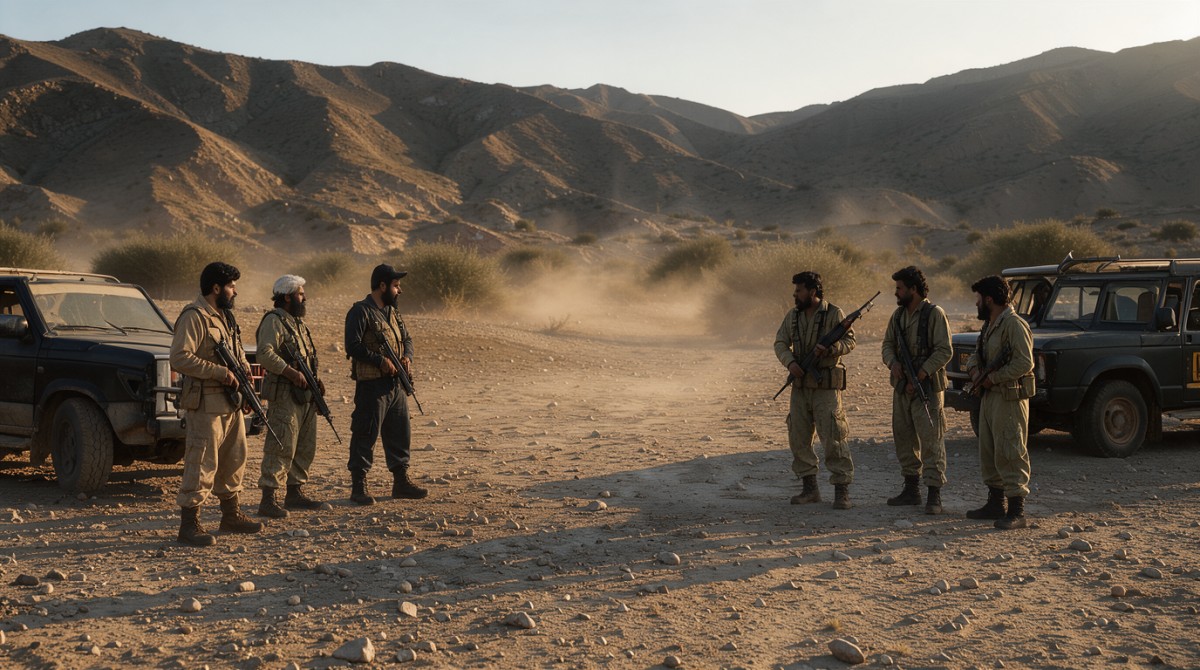
The Baloch insurgency, once praised for its disciplined guerrilla tactics, now appears to be slipping back into the factionalism that plagued it before 2018. Recent leadership changes, operational setbacks and public disputes among insurgent factions suggest a fracturing landscape that could reshape the conflict’s trajectory. As the Pakistani state regains battlefield momentum, analysts are watching closely to see whether internal discord will accelerate the insurgency’s decline or spark a new wave of violence.
From Consolidation to Crisis: A Brief Historical Context
Between 2018 and 2025, the Baloch insurgency experienced a period of relative cohesion. Former rival groups set aside tribal rivalries and leadership disputes, allowing for the formation of coalitions, the institutionalisation of specialised units and a more consistent strategic direction. This consolidation helped insurgent groups, particularly the Baloch Liberation Army (BLA)‑Jeeyand faction, achieve a reputation as South Asia’s most potent and disciplined insurgency.
However, the article notes that the “old wounds” have reopened after eight years of relative unity. The resurgence of factionalism is linked to recent decisions by senior insurgent leaders to avoid political dialogue, a move that has pushed the movement back toward the internal disputes that characterised the pre‑2018 era.
The Leadership Transition in BLA‑Jeeyand
In November, the Senior Command Council of BLA‑Jeeyand removed its long‑time chief Bashir Zaib, appointing Rahman Gul—also head of the Majeed Brigade—as his successor. Official statements framed the change as a “consensus decision” aimed at preventing personality cults, yet the silence surrounding Zaib’s legacy is striking. Unlike the founder Aslam, who continues to receive public praise, Zaib receives no acknowledgment, hinting at deeper fissures within the group.
Two unverified rumours circulate about Zaib’s ouster. One attributes it to serious health problems that may have limited his ability to lead. The other points to strategic disagreements with Gul following the failed Operation Herof 2.0, which deviated from the insurgency’s traditional hit‑and‑run tactics and resulted in heavy casualties.
Operation Herof 2.0 and the Fallout from Rad‑ul‑Fitna 2.0
Operation Herof 2.0 marked a tactical departure for BLA‑Jeeyand. Instead of dispersed, mobile attacks, the insurgents concentrated forces in several locations, making them vulnerable to Pakistani security forces. The subsequent counter‑operation, Rad‑ul‑Fitna 2.0, inflicted significant losses: the Pakistan Army claimed to have killed 216 fighters, while the insurgents acknowledged 93 casualties. The disparity in figures underscores the propaganda element of the conflict, but the loss of life undeniably weakened BLA‑Jeeyand’s operational capacity.
The defeat raised questions about Zaib’s strategic judgment, leading to his alleged sidelining in February. Gul, with the backing of the Senior Command Council, assumed control of administrative, military and institutional matters. Zaib’s silence since the operation—no video messages and no public statements—further fuels speculation about his standing within the movement.
Emerging Discontent in BLA‑Azad
Parallel to the turmoil in BLA‑Jeeyand, BLA‑Azad faces its own internal challenges. Since April 2026, several commanders have demanded greater accountability and the establishment of a formal organisational constitution from leader Hyrbyair Marri. Marri’s perceived delays prompted the creation of a Reformed Command Council, which temporarily deposed top leaders pending reforms.
The council has also accused Marri and his loyalists of financial misappropriation, echoing earlier grievances that once divided Baloch insurgent groups. Whether these accusations will lead to a permanent split or result in negotiated reforms remains uncertain, but the episode illustrates a broader pattern of leadership disputes resurfacing across the insurgency.
Public Rifts Between BLA‑Azad and the Baloch Liberation Front
Another flashpoint emerged in October 2026 when BLA‑Azad attacked the house of tribal elder Qambar Khan Mengal. The operation, lasting ten hours, was reportedly conducted under the flag of the Baloch Liberation Front (BLF), prompting BLF spokesperson Major Gwahram Baloch to publicly distance his group from the assault. He accused BLA‑Azad of misusing BLF symbols and questioned its organisational discipline.
This public dispute over flags and operational authority underscores the fragile nature of alliances among Baloch insurgent factions. The incident also revives the tribal dimension that had receded since 2018, suggesting that local power structures may still exert influence over insurgent actions.
Implications for the Battlefield Balance
The cumulative effect of leadership turnover, operational setbacks and inter‑group disputes is a shifting battlefield pendulum. Historically, insurgencies rely on a “deadlock” that forces a superior adversary into political negotiation. However, when insurgent groups avoid dialogue and fracture internally, the asymmetric advantage erodes, allowing state forces to regain the initiative.
In the case of Balochistan, the Pakistani army’s ability to inflict heavy casualties during Rad‑ul‑Fitna 2.0 demonstrates that the state can exploit insurgent disunity. As the insurgent factions grapple with internal power struggles, the likelihood of coordinated, large‑scale attacks diminishes, potentially accelerating the state’s militarised push.
Looking Ahead: Scenarios for the Baloch Insurgency
Analysts identify three plausible trajectories. First, the insurgent groups could resolve their disputes through internal reforms—such as the constitution demanded by BLA‑Azad’s commanders—thereby restoring a unified front capable of sustaining guerrilla pressure. Second, persistent factionalism could lead to splinter groups that operate independently, increasing the overall level of violence but reducing strategic coherence. Third, a prolonged stalemate might push the insurgency toward a negotiated settlement if the state offers political concessions, though current leadership appears reluctant to engage in dialogue.
Given the recent pattern of leadership changes and operational missteps, the second scenario appears most immediate. The removal of Bashir Zaib, the emergence of a Reformed Command Council in BLA‑Azad and the public spat with the BLF all point to a fragmentation that could weaken the insurgency’s capacity to challenge the Pakistani state effectively. Nonetheless, the underlying grievances—political marginalisation, economic neglect and ethnic identity—remain potent drivers. How these grievances are channelled—through unified insurgent action or through fractured, competing factions—will determine the conflict’s direction in the coming years.
This article was produced with AI-assisted research and editorial support. Reporting is based on the source material cited below. Sources: The Diplomat; thediplomat.com; Global1.News (23 November 2026).
By Kenji Tanaka, Staff Writer
What's Your Reaction?
 Like
0
 Dislike
0
 Love
0
 Funny
0
 Wow
0
 Sad
0
 Angry
0
Japan Correspondent at Global1.News. Tokyo-based voice covering Japanese politics, technology, economy, and culture. Tracks the intersection of tradition and innovation in one of the world's most dynamic societies.












Comments (0)