
Putin Threatens Retaliation if Europe Seizes Russian Ships
President Vladimir Putin warned Russia would retaliate against European vessels if the EU proceeds with seizing Russian ships, calling the bloc's shadow fleet confiscation plans "piracy and robbery." Moscow has ordered the Defense Ministry to prepare a response as maritime tensions escalate.
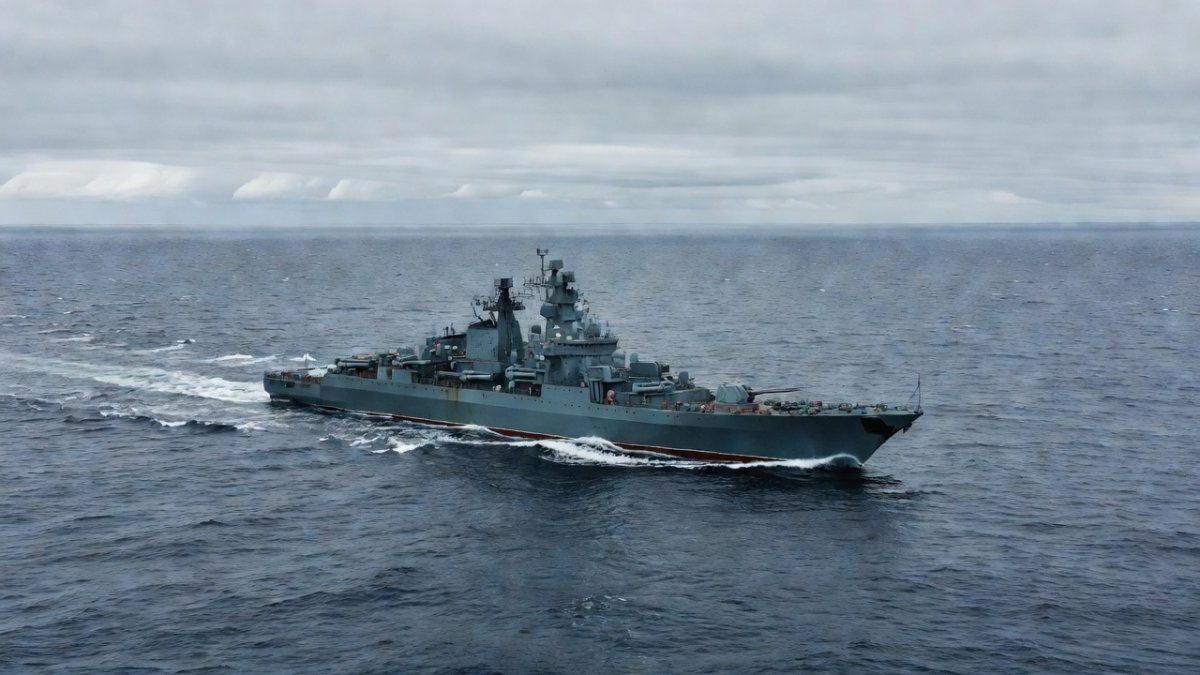
President Vladimir Putin has escalated his confrontation with Europe over maritime sanctions, threatening direct retaliation against European commercial vessels if the EU follows through on plans to seize Russian ships. Speaking from the deck of the missile cruiser Varyag in the Pacific, Putin branded the European measures "piracy and robbery" and signaled that Moscow's response could extend far beyond European waters.
Putin Threatens Retaliation if Europe Seizes Russian Ships, Vows Response in Pacific and Beyond
Moscow, Russia - The Kremlin's war of words with Brussels took a sharp naval turn this week as President Vladimir Putin warned that Russia would seize European commercial vessels in retaliation if EU member states proceed with plans to confiscate Russian cargo ships. The threat, delivered during a meeting with Pacific Fleet personnel aboard the guided-missile cruiser Varyag on Wednesday, marks one of the most direct maritime confrontations between Moscow and the West since the start of the full-scale invasion of Ukraine.
Putin's "Piracy and Robbery" Accusation
"We see the authorities of certain countries attempting, in violation of international maritime law, to restrict the movement of vessels operated by our businesses," Putin said, according to the Kremlin's official transcript of the meeting. "And recently, they went so far as to consider seizing our vessels and selling the property they have plundered from us. This is, of course, nothing other than piracy and robbery."
The Russian president's language was notably more aggressive than previous statements on sanctions, framing the EU's actions not as legitimate enforcement but as state-sponsored theft. His choice of venue - the Varyag, a Slava-class cruiser that serves as the flagship of Russia's Pacific Fleet - underscored the military dimension of the threat, placing naval power at the center of Moscow's response strategy.
The EU's 21st Sanctions Package
The trigger for Putin's ire is the European Union's adoption in July of a mechanism allowing member states to confiscate and sell Russian oil carried aboard so-called shadow fleet vessels attempting to evade the bloc's sanctions. The measure, introduced as part of the EU's 21st sanctions package, also covers grain cargoes, extending the bloc's reach into agricultural exports that Moscow has sought to protect.
EU officials have described the mechanism as a targeted tool against the shadow fleet - aging tankers and cargo ships with opaque ownership structures that Russia has used to circumvent price caps and embargoes. Brussels estimates that hundreds of vessels are involved in the trade, many operating without Western insurance and frequently transferring cargoes at sea to obscure their origins.
Putin's Vague but Ominous Warning
Putin said Russia would take similar action if European countries put the measures into practice, adding that Moscow's response would not necessarily be confined to the same waters where Russian ships were seized. "We will not necessarily act in the waters where raids on our ships and vessels are being planned, but wherever we ourselves consider it necessary and appropriate. Anywhere, including in the Pacific Fleet's area of responsibility," he said.
The deliberate ambiguity of this statement appears calculated to maximize uncertainty among European shipping companies. By refusing to specify which waters or which vessels might be targeted, the Kremlin is effectively putting all European commercial traffic on notice, from the Baltic to the South China Sea.
Putin said the Defense Ministry had already received instructions to prepare a response, though he provided no timeline or operational details. The lack of specificity is itself a signal, analysts suggest, indicating that Moscow is keeping its options open while the EU's enforcement mechanisms are still being tested.
Pacific Fleet Commander's Intelligence Briefing
Pacific Fleet Commander Viktor Liina then told Putin that the Russian military had conducted a "detailed analysis" of maritime traffic in the Asia-Pacific region. "We know the routes, what they are carrying and whose ships they are," Liina said, according to the Kremlin transcript.
Liina provided specific figures that appeared designed to demonstrate Russia's surveillance capabilities. He said 1,001 vessels had passed through Russia's exclusive economic zone along the Kuril Islands between April 24 and Aug. 6, including 379 sailing under the flags of countries that Moscow officially classifies as "unfriendly." Those vessels included 273 dry bulk carriers and 71 tankers, Liina said. Twenty-six were British and nine were French.
The Kuril Islands, a chain of disputed islands that Russia controls but Japan claims, have become a focal point of Russian military activity in recent years. The Pacific Fleet has expanded its presence there, and the data presented by Liina suggests Moscow is closely monitoring commercial traffic through these strategic waters, which sit along major shipping routes between Russia's Far East and North America.
Recent Detentions of Russian Oil Tankers
The EU's new mechanism is not merely theoretical. EU countries and Britain have detained five tankers carrying Russian oil since the start of the year, according to The Moscow Times and industry reports. The MV South Star was stopped on July 20 in an operation involving EU countries. France intercepted the tankers Grinch, Deyna and Tagor before later releasing them, while Britain has held the Smyrtos, carrying 100,000 metric tons of oil, since June 14.
The detentions represent a significant escalation in Western enforcement efforts against the shadow fleet. Previously, sanctions enforcement focused on financial measures and port bans, but the physical seizure of vessels marks a new phase, one that directly challenges Russia's ability to move its oil to international markets.
Sweden in March detained the dry cargo ship Caffa, which Kyiv said had been transporting grain from Russian-occupied Ukrainian territory. Sweden's Supreme Court ruled in August that the ship should be handed over to Ukraine, a decision that Moscow has condemned as illegal. The Caffa case is particularly sensitive because it involves grain, a commodity that Russia has used as a lever in its diplomatic relations with developing countries.
European Perspective and Legal Concerns
European officials have defended the seizure mechanism as a lawful response to sanctions evasion, arguing that the shadow fleet operates outside international norms by concealing ownership and avoiding insurance requirements. The EU has emphasized that the mechanism includes judicial oversight and due process, with seizures subject to review by national courts.
However, legal experts have raised concerns about the precedent set by confiscating commercial vessels. International maritime law has traditionally protected freedom of navigation, and the EU's actions could be challenged in international tribunals. Russia has already signaled that it will pursue legal avenues, though the practical impact of such challenges remains unclear given the political nature of the dispute.
Analysts suggest that the EU's willingness to seize vessels reflects a broader shift in Western strategy toward more aggressive enforcement of sanctions. The shadow fleet has proven resilient, adapting quickly to new restrictions, and Brussels appears to have concluded that financial measures alone are insufficient to stop the trade.
Implications for Global Shipping and Ordinary Russians
The escalating maritime confrontation carries significant risks for global shipping. If Russia follows through on its threat to seize European vessels, the resulting disruption could affect trade routes far beyond the immediate parties. The Pacific Fleet's area of responsibility includes some of the world's busiest shipping lanes, and any Russian action there would have immediate consequences for global supply chains.
For ordinary Russians, the confrontation is likely to mean continued economic isolation and rising costs. The shadow fleet has been a lifeline for Russian oil exports, allowing Moscow to maintain revenue despite Western sanctions. If European seizures disrupt this trade, the resulting budget shortfalls could translate into reduced government spending on social programs or increased pressure on the ruble.
At the same time, Putin's threat of retaliation plays well with domestic audiences, reinforcing the narrative of Russia standing up to Western aggression. The image of the president aboard a missile cruiser, surrounded by naval officers, is carefully crafted to project strength and resolve, even as the economic costs of the conflict mount.
Strategic Calculations and the Road Ahead
The standoff over maritime seizures is likely to intensify in the coming months. The EU's mechanism is still being implemented, and member states are expected to identify additional vessels for confiscation. Russia, for its part, has shown no willingness to back down, and Putin's instructions to the Defense Ministry suggest that military options are being actively considered.
Analysts caution that the situation could escalate unpredictably. A Russian seizure of a European vessel would represent a direct act of retaliation, potentially triggering further sanctions or even military responses. The fact that Putin specifically mentioned the Pacific Fleet's area of responsibility suggests that Moscow is considering actions far from the European theater, where the risk of direct NATO involvement might be lower.
The coming weeks will test whether the EU's enforcement mechanism can withstand Russian pressure. If European countries proceed with additional seizures, Putin's threat of retaliation will be put to the test. If they hesitate, the mechanism's credibility will be undermined, and the shadow fleet will continue to operate with impunity.
This article was produced with AI-assisted research and editorial support. Sources: The Moscow Times, Kremlin transcript, Reuters.
By Irina Volkov, Staff Writer
What's Your Reaction?
 Like
0
Like
0
 Dislike
0
Dislike
0
 Love
0
Love
0
 Funny
0
Funny
0
 Wow
0
Wow
0
 Sad
0
Sad
0
 Angry
0
Angry
0
Russia/Eastern Europe Correspondent at Global1.News. Covering Russian politics, energy, security, and the shifting dynamics of the post-Soviet space. Provides clear-eyed analysis on one of the world's most opaque regions.











Comments (0)