
Iran Says It Can Outlast Trump as Hormuz Standoff Tightens
Iran says it can outlast the Trump administration as the Strait of Hormuz standoff tightens, with a top IRGC adviser warning Tehran could prolong the war until 2029. Brent crude tops $88 a barrel as the blockade resumes and an Iran-Oman shipping deal stalls.
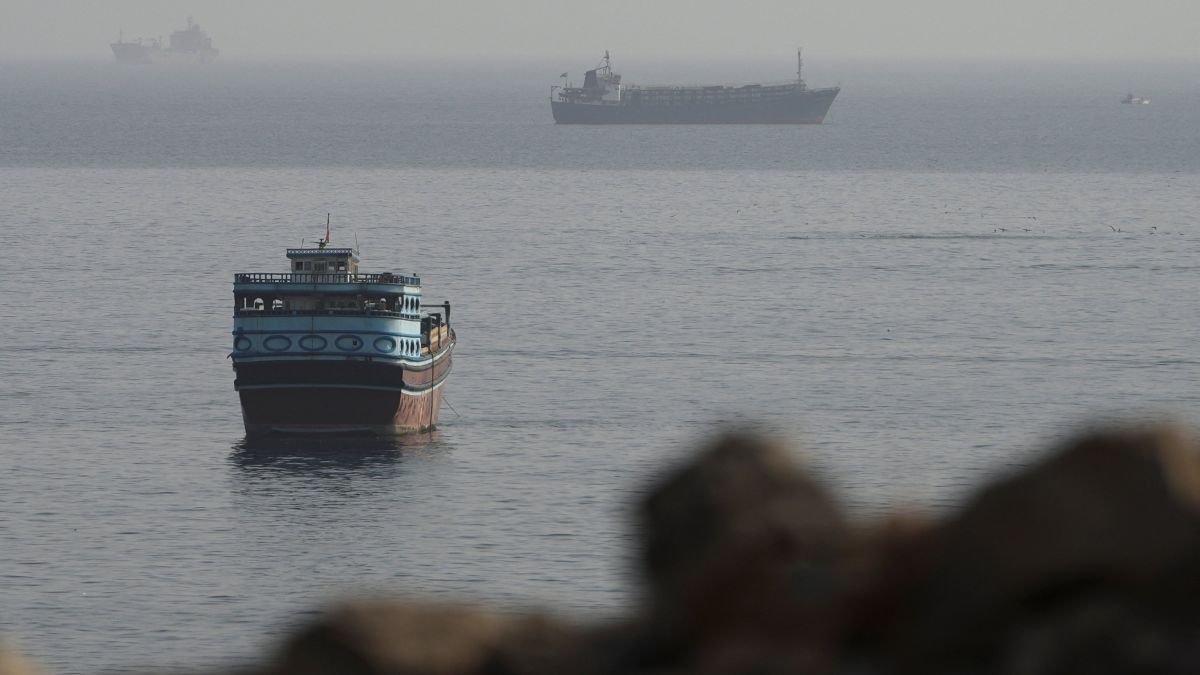
Tehran Shifts Strategy From Victory Claims to a War of Attrition
The Islamic Republic of Iran has publicly declared victory in its conflict with the United States, but behind that rhetoric, a far more calculated strategy is emerging: outlasting the Trump administration. As the standoff over the Strait of Hormuz tightens and oil prices climb, Tehran is signaling it has no intention of capitulating to Washington's "maximum pressure" campaign, even if it means enduring years of economic pain.
Gen. Mohammad Reza Naqdi, a senior adviser to the commander of Iran's Islamic Revolutionary Guard Corps (IRGC), said Tehran could deliberately prolong its war with the US until President Donald Trump leaves office, according to multiple outlets including Breitbart, Outlook India, and India Today. Trump's term ends January 20, 2029. The message is unambiguous: Iran believes it can absorb the blows and wait out the clock.
This marks a significant shift in the conflict's trajectory. Rather than seeking a swift diplomatic resolution, Tehran is now openly framing the war as a test of endurance. Iranian officials and analysts cited by Drop Site News and ZeroHedge on August 12 describe a pivot to a "survival economy" designed to withstand US sanctions and the naval blockade that has crippled its oil exports.
The Blockade Is Back and the Ceasefire Is Dead
To understand where this standoff stands, we have to revisit the timeline. The conflict escalated in spring 2026 over the Strait of Hormuz, and on June 17, Washington and Tehran signed a memorandum of understanding (MoU) aimed at ending the war. Pakistan, the primary mediator, announced the MoU implies Tehran will promptly reopen the Hormuz Strait and the American blockade of Iranian ports will cease.
That agreement collapsed. On July 13, US Central Command announced the US would resume its blockade of Iranian ports, coasts and ships, signaling the end of the 60-day ceasefire. In the weeks following the June 17 ceasefire, at least five commercial vessels were attacked in and around the Strait of Hormuz, according to Al Jazeera reporting from July 9.
As of this week, talks have not resumed. On August 2-3, Trump called Iranian leadership "unbelievably duplicitous" after Tehran denied that negotiations had restarted, per the CNN live blog. The diplomatic track is frozen, and the military track is active. On August 12, US and Houthi forces reported separate attacks on shipping in the Strait of Hormuz and the Bab el-Mandeb Strait, according to Asharq Al-Awsat.
Trump's Message: We Control the Strait, and We're Keeping It
President Trump doubled down on the administration's posture on August 12, stating that the United States controls the Strait of Hormuz and adding, "I think we will keep it." The comment, reported by multiple outlets, confirms a strategy of continued economic pressure on Iran rather than a de-escalatory path.
The President's framing is consistent with his broader approach to the conflict. On August 10, Trump said he would require compensation from Iran as a condition for talks, according to the CNN live blog. That same day, the US Treasury announced its eighth round of sanctions in 2026, targeting Iran's alleged shadow-banking system under Washington's "maximum pressure" campaign.
For Americans watching this unfold, the stakes are clear: this is not a conflict that is winding down. The administration is signaling it will maintain the blockade and the sanctions regime indefinitely, betting that economic pain will eventually force Tehran to the table on US terms. Iran is betting the opposite.
The Oman Deal: A Narrow Corridor, Not a Reopening
Amid the stalemate, there is one thread of diplomatic movement: Oman. On August 6, Iran and Oman reached an understanding on the geographic coordinates for a proposed shipping route through the Strait of Hormuz, with a joint announcement being finalized, per India Strategic, the Washington Times, and Fortune.
The emerging framework, as described by two regional officials to The Associated Press on August 4, would see ships enter the Persian Gulf through an Iranian-controlled route and exit through an Omani-controlled route. Iran's deputy foreign minister confirmed Tehran is finalizing a deal with Oman for the transit of vessels, but warned that would not necessarily mean a reopening of the critical waterway.
This is a crucial distinction. A narrow, controlled corridor is not the same as the free flow of commerce that the global economy desperately needs. CNN analysis from August 5 noted that an Iran-Oman agreement would not by itself reopen the waterway. It is a managed de-escalation, not a resolution.
What the Shipping Data Actually Shows
The numbers tell the real story of how far the strait is from normal operations. On August 9, only seven commodity vessels transited the Strait of Hormuz, with some going dark to avoid detection, according to The National. On August 11, 14 vessels crossed, 11 of them using the so-called Iranian corridor, per TASS citing media reports.
Before the war, the Strait of Hormuz carried roughly 20% of the world's oil. Today, shipping volumes remain a fraction of normal. The vessels that are moving are doing so under the watch of the Iranian corridor, a far cry from the open waterway that global markets rely on.
A US official told Reuters on August 7 that "there is progress between Oman and Iran on the strait, and we expect a deal soon. Once the deal is announced to restore commercial shipping without impediments, the United States will lift the blockade of Iranian ports." But that conditional promise has not yet materialized into action.
Oil Prices Climb as Hopes Fade
The market is voting with its dollars, and the verdict is not optimistic. On August 12, oil prices rose as attacks dented hopes for a Strait of Hormuz reopening, according to Al Jazeera. Brent crude had climbed nearly 5% to about $88 a barrel by August 9, roughly 16% higher than before the war began, per The New York Times.
The National reported oil surged to $85 a barrel on Friday, August 7, as negotiations stalled. Every day the strait remains constrained, the risk premium on crude grows. For American consumers, this translates directly to higher prices at the pump and increased costs for goods transported by sea.
The economic pressure cuts both ways. Iran is suffering under sanctions and blockade, but the global economy is absorbing real costs. Tehran's bet is that the pain it can inflict on world markets will eventually outweigh Washington's resolve to maintain the pressure campaign.
The Houthi Factor and the Regional Escalation Risk
Iran is not fighting alone. On August 5, Yemen's Iran-aligned Houthis claimed to have attacked a Saudi oil tanker, according to the CNN live blog. The Houthi attacks on shipping in the Bab el-Mandeb Strait add a second front to the maritime conflict, complicating any effort to restore confidence in regional shipping lanes.
On August 12, US and Houthi forces reported separate attacks on shipping in both the Strait of Hormuz and the Bab el-Mandeb Strait, per Asharq Al-Awsat. The simultaneous pressure on two critical chokepoints suggests a coordinated strategy designed to maximize disruption.
For the Biden administration that preceded Trump, and now for the Trump administration, the Houthi dimension has proven intractable. The group has weathered years of US and Saudi airstrikes and continues to threaten commercial traffic. As long as the Houthis remain active, the Bab el-Mandeb route remains hazardous, regardless of what happens in Hormuz.
What "Survival Economy" Means for Iran's Leadership
Iran's pivot to a "survival economy" is a telling admission. The phrase, used by Iranian officials and analysts cited by Drop Site News and ZeroHedge, suggests Tehran is preparing for a prolonged period of austerity and isolation. The regime is signaling to its domestic audience that hardship is coming, but that the alternative—capitulation to US demands—is worse.
This is a classic deterrence play. By declaring victory and shifting to a survival posture, Iran is attempting to frame the conflict as a test of wills that it can win through sheer persistence. The IRGC's Naqdi made this explicit: prolong the war until Trump leaves office, impose costs, build deterrence, and signal staying power.
The question is whether the Iranian public will accept years of economic hardship. The regime has survived decades of sanctions, but the current blockade is more comprehensive than anything Tehran has faced. The "survival economy" is a gamble that the regime's control mechanisms are strong enough to withstand the pressure.
The Bottom Line for Americans and the Global Economy
Here is what this means in practical terms. The Strait of Hormuz is not reopening anytime soon. The blockade is back in place, the MoU has collapsed, and talks have not resumed. The Oman deal, while real, is a narrow corridor that does not restore normal commercial shipping.
Oil prices are climbing, and they will likely climb further. Brent crude at $88 a barrel is 16% above pre-war levels, and every attack on shipping pushes the risk premium higher. American consumers will feel this at the pump, and the broader economy will feel it in supply chain costs.
The Trump administration is betting that economic pressure will break Iran. Iran is betting that it can outlast the administration. Both sides are dug in, and the global economy is caught in the middle. The war of attrition has begun, and there is no clear end in sight.
This article was produced with AI-assisted research and editorial support. Sources: CNN, Reuters, The Associated Press, Al Jazeera, The New York Times, TASS, USNI News, The National, Washington Times, Fortune, Asharq Al-Awsat.
By Jessica Ali, Staff Writer
What's Your Reaction?
 Like
0
Like
0
 Dislike
0
Dislike
0
 Love
0
Love
0
 Funny
0
Funny
0
 Wow
0
Wow
0
 Sad
0
Sad
0
 Angry
0
Angry
0

Editor-in-Chief at Global1.News. Atlanta-based journalist who cuts through the BS and tells it like it is. Lead anchor, host, and the voice you hear when the spin stops and the truth starts.












Comments (0)